A county in transition
Local government reform, political instability and financial pressure are converging as the county heads into 2026.


We’re still on a short Christmas break at Kent Current, but before we fully switch back on, we wanted to pause and look ahead.
This piece isn’t a set of predictions. It’s an attempt to set out the pressures already bearing down on Kent, the decisions being pushed down the road, and the issues likely to shape local government, politics and public services through 2026.
Our usual publishing schedule resumes next week. For now, thank you for reading, and for supporting independent local journalism in Kent.
- Ed
Kent rarely changes in obvious ways. More often, pressure builds quietly until it shows up elsewhere: in slower decisions, stretched services, or institutions that no longer feel in control of events. As 2026 begins, Kent is heading into a year shaped less by single announcements than by the accumulation of unresolved reform, political disruption and financial strain.
None of this has arrived suddenly. What has changed is how many of these pressures are now landing at the same time, and how little spare capacity remains to absorb them.
This is not a list of forecasts. It is a map of where strain is already visible, where decisions are being deferred, and where earlier choices are now starting to have consequences.
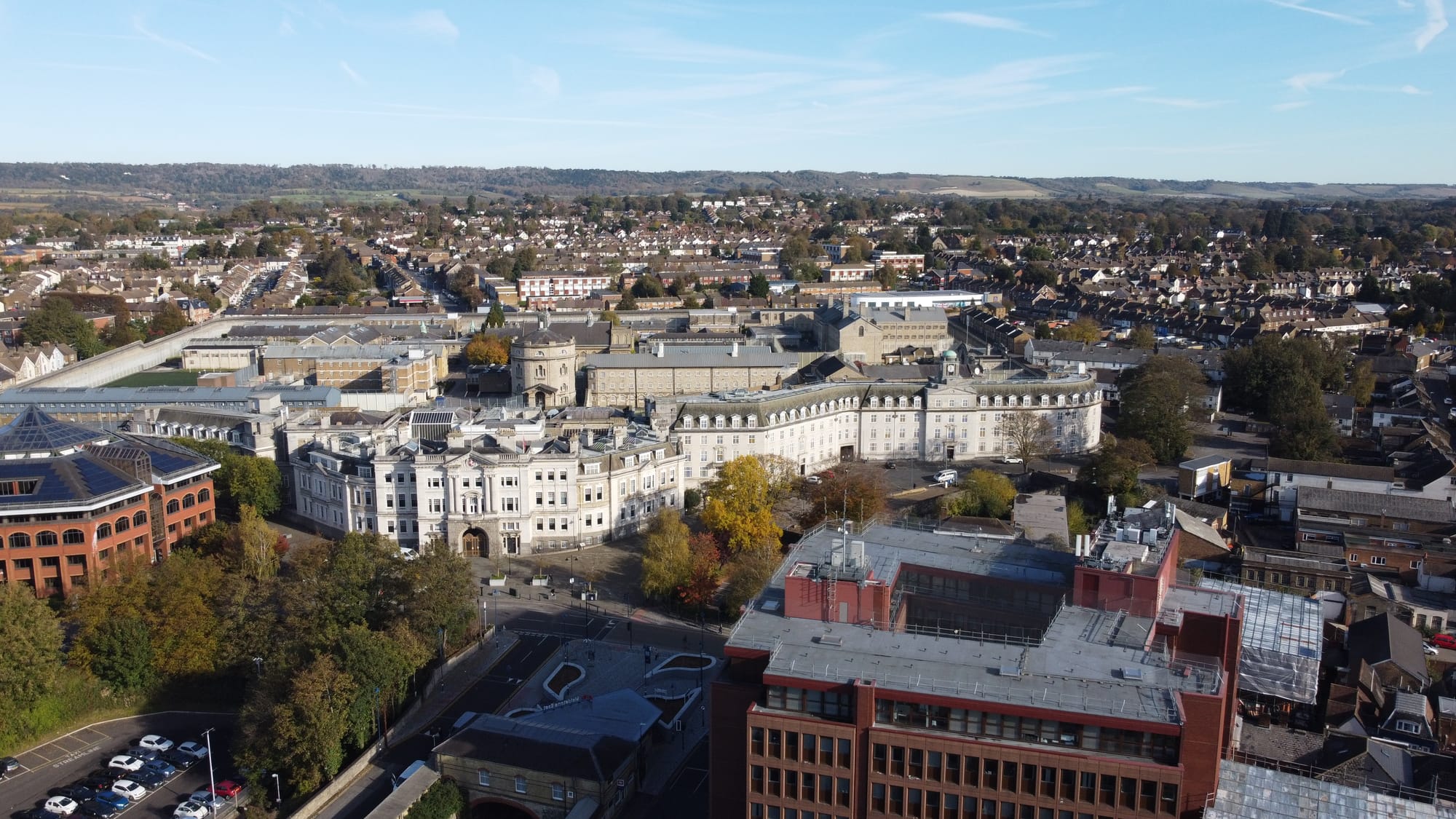
Local government reorganisation will sit over almost everything Kent’s councils do in 2026. Not because of any one decision, but because of the way the process has been imposed and the speed at which it is being driven.
Every council in Kent has now submitted its preferred model for replacing Kent County Council, Medway Council and the 12 district authorities with a new unitary structure. Ministers will choose a model in the summer following consultation, legislate in the autumn, hold shadow elections in 2027 and switch to new councils in April 2028.
The route to this point has been disorderly. Kent and Medway initially pursued a devolution deal, submitting an expression of interest and seeking entry to the government’s Devolution Priority Programme. When ministers published their white paper, Kent was not included. Instead, the county was instructed to reorganise its entire system of local government first.
That instruction triggered a compressed and fragmented process. An interim plan was produced in March. Feedback arrived in May. A November deadline was set for full business cases. Councils are now working to a fixed national timetable while holding very different views about what Kent’s future governance should look like.
Five options have emerged, all built on the same evidence base and all accepting the same basic premise: reorganisation will be expensive and disruptive in the short term, but cheaper in the long run once duplicated services are removed. Where they differ is scale, political credibility and risk.
At one extreme sits Kent County Council’s preferred model, a single authority covering the entire county and Medway. Its financial case is simple. It is the cheapest to establish and promises the largest annual savings. But it would create the largest unitary council in England, something ministers have already signalled they do not want. The proposal was further weakened when a leaked internal meeting revealed it was designed, at least in part, to obstruct the wider reform process. Few expect it to progress.
At the other end is the five-unitary model promoted by Dartford and Gravesham. Its set-up costs are high, its savings are limited, and its payback period is long or non-existent. Nothing in the modelling suggests it meets the government’s tests.
The serious debate sits between the middle options: a three-unitary model and two four-unitary variants. These fall within the population ranges ministers appear to favour and produce credible, if still contested, savings. Even here, there is no shared position. Councils are edging towards different conclusions, some cautiously, others tactically, as they watch how the wider process unfolds.
This matters because 2026 will be lived largely in the shadow of choices that have yet to be made. Now submissions are in, control shifts to Whitehall. Ministers will select the structure that best fits national criteria, not necessarily the one with the broadest local support. After that, Kent enters a prolonged transition, with existing councils still responsible for services while preparing for their own abolition.
The incentive in that situation is caution. Senior officers begin to reposition themselves. Recruitment becomes harder. Long-term projects slow. Capital programmes are reassessed. Councils retain responsibility without certainty, authority without longevity. Residents will not see reorganisation happening day to day, but they will feel it in delayed decisions and reduced ambition.
The shared evidence base underpinning all the proposals carries a consistent warning: service disruption is a real risk if adult social care, safeguarding, education and digital access are not handled carefully during transition. These are already the most pressured parts of the system, and they do not sit neatly within council boundaries.
Last chance to get 25% off. We have big plans for our reporting on Kent in 2026, but we can only do it if readers choose to support our work. If you value our journalism, please consider becoming a paid supporter. Right now, you can get 25% off a full year's subscription to the Kent Current and help us build a better way of telling the stories that matter to our county.
Health is one of the clearest examples. The Kent and Medway NHS system continues to struggle with discharge delays, access to primary care and mental health provision. When hospitals cannot move patients on, councils absorb the cost through social care. When mental health support is unavailable, demand reappears in housing, policing and emergency services. Reorganisation complicates joint working at precisely the moment it is most needed.
Overlaying this institutional uncertainty is the most disruptive political development in Kent for decades: Reform’s takeover of Kent County Council in 2025.