How Canterbury’s Victorian lampposts are being lost
Years of drift between councils have left replacement as the default option.

Good morning, and welcome to the first Kent Current news briefing of the year. We hope you’ve managed to keep warm after a properly cold start to January. Much of the county has already seen snow, the ground feels permanently frozen, and 2026 has wasted no time in reminding us it is still very much winter.
On Saturday night, I found myself at a Wassail at Loddington Farm, following a drumbeat through frozen orchards and blessing the apple trees for the year ahead. The whole point of it is care and continuity. If you want something to last, you have to tend it, year after year.
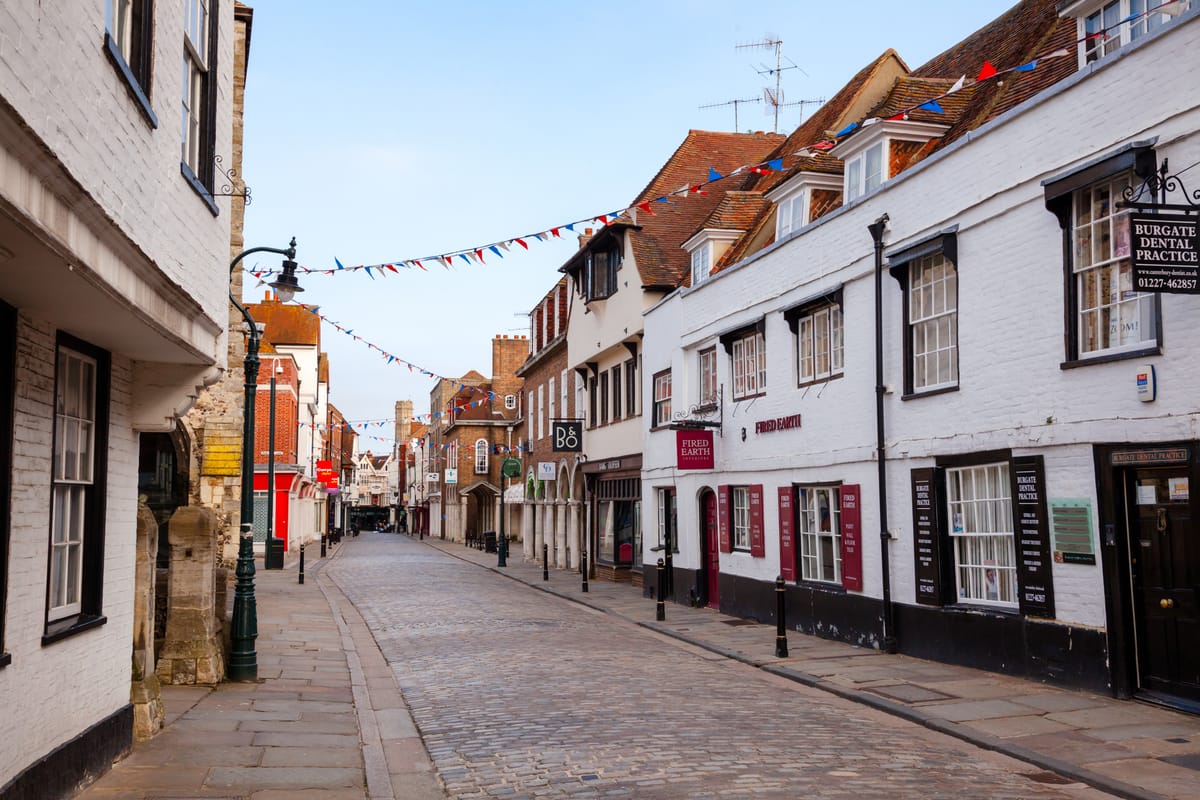
That idea turns out to be relevant in Canterbury, where Victorian cast-iron lampposts are being removed and replaced, not because anyone has clearly decided they should go, but because responsibility has drifted for so long that replacement has become the default.
Elsewhere, the pause is over. Planning decisions, political manoeuvring, and a grab bag of distinctly Kent stories are already setting the tone for the year ahead.
Alright, let’s begin.
How Canterbury’s Victorian lampposts are being lost
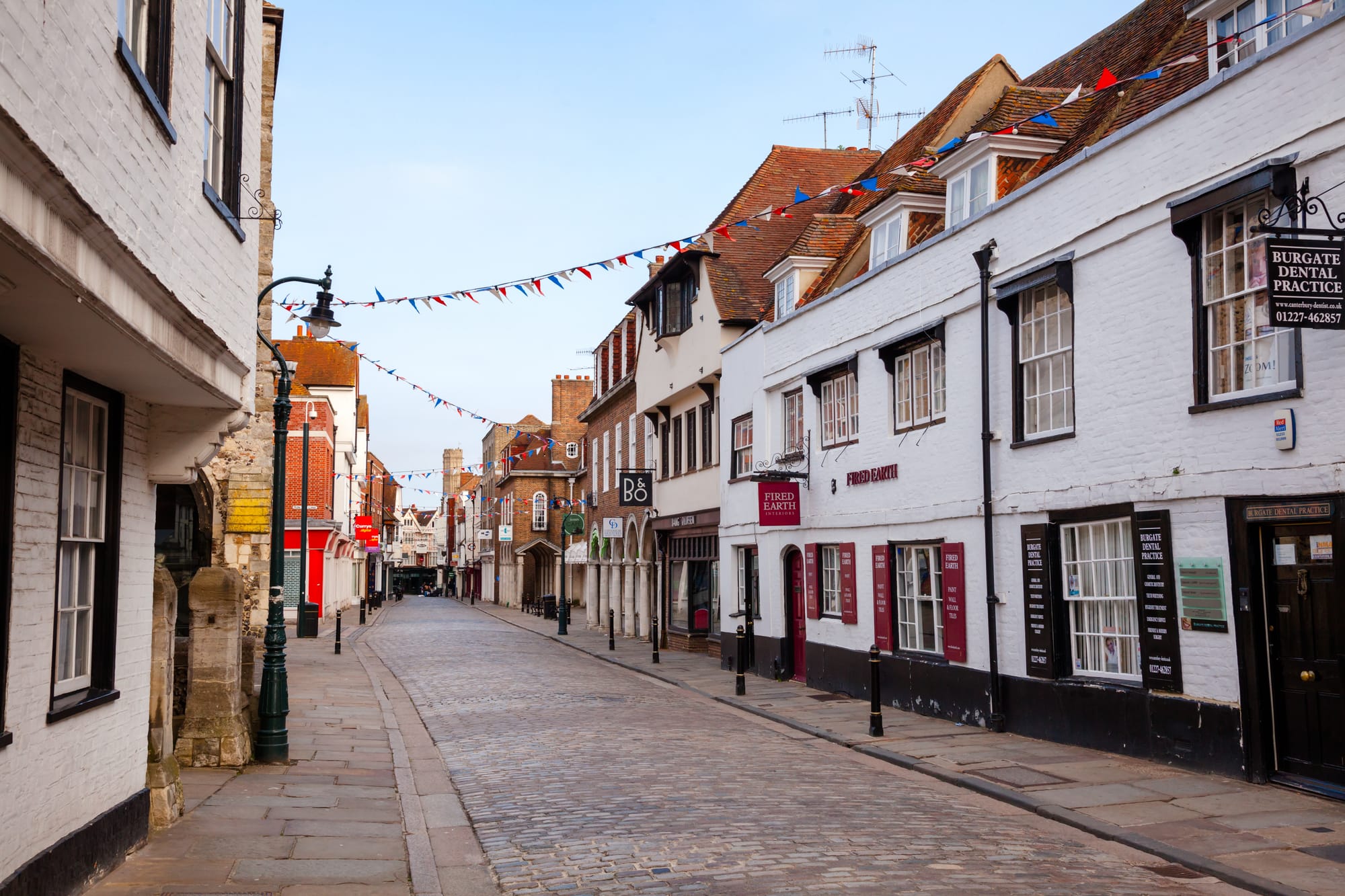
Some of Canterbury’s distinctive cast-iron Victorian lampposts are being taken out and replaced with modern steel columns, following years of unresolved disagreement between the two councils responsible for the city’s streets and heritage.
The immediate flashpoint is Cossington Road, a residential street in a conservation area, where nine historic lampposts are due to be removed. But the row has widened into something more fundamental about how historic street features are lost when responsibility is split.
Around 250 similar columns are thought to survive across the city.
Why this matters
This is how heritage disappears without a decision ever being taken.
No council has formally voted to remove Canterbury’s Victorian lampposts. Instead, years of stalled coordination have left Kent County Council acting under highway safety powers, with replacement becoming the default outcome.
Campaigners fear that unless the rules change, the same process will quietly repeat itself across the city.
What makes Canterbury’s lampposts unusual
Many of the city’s cast-iron columns are based on designs supplied for more than a century by H. M. Biggleston & Sons, a Canterbury foundry that operated from 1835 to 1963.
They are recognisable by their curved “swan-neck” arms, decorative ironwork and, in some cases, the old Canterbury City Corporation crest. Historic groups say only a handful of British cities retain such a consistent collection of bespoke Victorian lamp standards.
Kent County Council’s case
Kent County Council, which owns and maintains highway lighting, says some of the columns have “multiple defects” and pose safety risks.
It has previously told KentOnline that refurbishing the original posts would cost roughly three times as much as replacing them. The council has put refurbishment at around £4,000 per column, compared with about £1,255 for a modern steel replacement fitted with decorative “heritage-style” additions.
The authority says structural inspections carried out in August identified problems that could not be ignored, and that it is not legally required to install heritage lighting in conservation areas.
Some replacement columns have already been installed elsewhere in Canterbury, including Orchard Street.
Why residents are pushing back
Local residents and heritage groups accept that a small number of columns may require significant work. Their argument is that most could be repaired and repainted, and that years of limited routine maintenance have allowed conditions to worsen.
They point to examples elsewhere in Canterbury where residents paid for professional repainting at a fraction of the council’s refurbishment estimates, and to other cities, such as Brighton and Hove, which are restoring original Victorian lighting rather than replacing it.
They also argue that the steel replacements now being installed are generic and weaken the character of conservation-area streets.
The unresolved issue beneath it all
The deeper problem is not the lampposts themselves, but who decides what replaces them.
Kent County Council owns the lighting and carries out the work. Canterbury City Council is the local planning authority, responsible for protecting heritage and setting design standards in conservation areas.
Campaigners say correspondence released under environmental information rules shows that between 2020 and 2024, Kent repeatedly sought heritage guidance and design approval from the city council. No binding design standard, heritage impact assessment or formal specification was ever agreed.
With no clear framework in place, Kent proceeded under its permitted development rights as the highways authority, citing safety obligations.
Campaigners say the steel column design currently being installed has never been formally approved by Canterbury City Council’s planning or heritage teams, not because it was rejected, but because no decision was reached.
Why Article 4 is now central
Heritage groups are calling on Canterbury City Council to issue an emergency Article 4 Direction. This would remove automatic permitted development rights for street lighting in conservation areas and bring future replacements under planning control.
They also point out that the city council already holds casting moulds, created under Levelling Up Fund public-realm works, that could be used to produce like-for-like replicas of the historic columns.
None of those tools have yet been used.
The political context
The dispute has continued since Reform took control of Kent County Council last May on a platform of cutting costs and reshaping how the authority operates.
But the underlying issue predates that election and reflects years of unresolved responsibility between the county and city councils.
What happens next
A petition calling on Canterbury City Council to intervene is due to be presented to council leaders.
Absent a clear decision or enforceable standard, the concern locally is that Canterbury’s historic streetscape will continue to change incrementally, not through a plan, but by default.
Council matters
Meetings this week:
- Kent: Cabinet meets on Thursday to discuss the provisional local government settlement, quarterly performance reports, and more.
- Canterbury: Council is on Thursday, where the council tax base will be discussed, as well as motions on homelessness and community governance.
- Thanet: Council will hold an extraordinary meeting on Thursday to discuss the establishment of a parish council for Margate.
- Ashford: Cabinet gathers on Thursday to debate writing off debt, the council tax reduction strategy, the parking 'vision' and more.
New planning applications:
- Maidstone: A scoping opinion has been submitted for 2,000 homes to form the Lidsing Garden Village on the edge of Medway.
- Tonbridge & Malling: 350 homes could be built on the former Coblands Nursery site in Tonbridge.
- Canterbury: Plans have been submitted for 34 new homes on the former Chaucer School site.
We can only do this kind of deep-dive reporting thanks to the readers who generously choose to support our work. If you value our journalism, please consider joining them. A paid subscription works out as £1.15 per week, and helps us build a better way of telling the stories that matter to our county.
In brief
🪧 A far-right protest in Margate shortly before Christmas went about as well as you might expect.
🏚️ Napier Barracks, the notorious military barracks used to house asylum seekers in Folkestone, has closed.
🏘️ Thanet has been put forward for a government pilot scheme that would see local councils buy or refurbish housing to house asylum seekers.
🚔 A second child has been arrested following vandalism at a Swale Borough Council meeting last month.
➡️ Sevenoaks District Council has gained its first Reform councillor following a defection from the Conservatives.
🗳️ Plans are moving forward to create a new Maidstone Town Council.
🏢 Maidstone Borough Council are racing to block Invicta House from being sold off for HMO housing by Kent County Council.
🎸 Thanet District Council has agreed to fund the purchase of the Pie Factory, a youth centre in Ramsgate, after Kent County Council proposed selling it off.
🏗️ £40m Ebbsfleet stadium and thousands of homes could be blocked after concerns were raised about less pollution and supply chain disruption.
🔋 A proposed green energy waste-processing plant between Folkestone and Dover could generate power for 7,000 homes.
🚒 Faversham arts venue, the Alexander Centre, has had to close its main hall following a fire on New Year's Eve.
🚓 Four men have been arrested following a disturbance at Sri Guru Nanak Darbar Gurdwara in Gravesend on New Year's Day that left one person injured.
👮 Over 300 drink and drug driving offences were detected by Kent Police in December.
🪲 The Colorado potato beetle has been eradicated in the UK after being discovered in Kent in 2023, leading to apocalyptic concerns about what it could do to crops.
🐑 Maidstone Borough Council is experimenting with using sheep instead of lawnmowers.
🐚 Thousands of starfish washed up on Margate beach on Boxing Day.
🚛 Remembering Euro Route, the slightly deranged plan to connect Kent with France using multiple tunnels, a massive bridge, and artificial islands.
❄️ It's been snowing.
🚗 You can't park there, sir.
Footnotes
Follow us on social media! We’re on Facebook, BlueSky, and Instagram for now.