Is Kent facing a bird flu winter?
Plus Lower Thames Crossing to get underway next year, news in brief, and more

Kent enters December with warning signs on multiple fronts, with early commercial and captive-bird outbreaks, suspected wild-bird deaths on the coast, and thousands of wintering birds arriving just as national avian flu levels climb far faster than last year. This week, we look at what that convergence means, how local cases are rippling through farms and wildlife sites, and where the pressures are building as winter takes hold. Plus the latest on the Lower Thames Crossing’s move into construction, news in brief, and more.
Is Kent facing a bird flu winter?
Wintering waders are starting to gather at Dungeness just as Kent records two avian flu outbreaks and rising signs of disease in local wildlife. It is far from clear how severe the season will become, but the timing could hardly be worse.
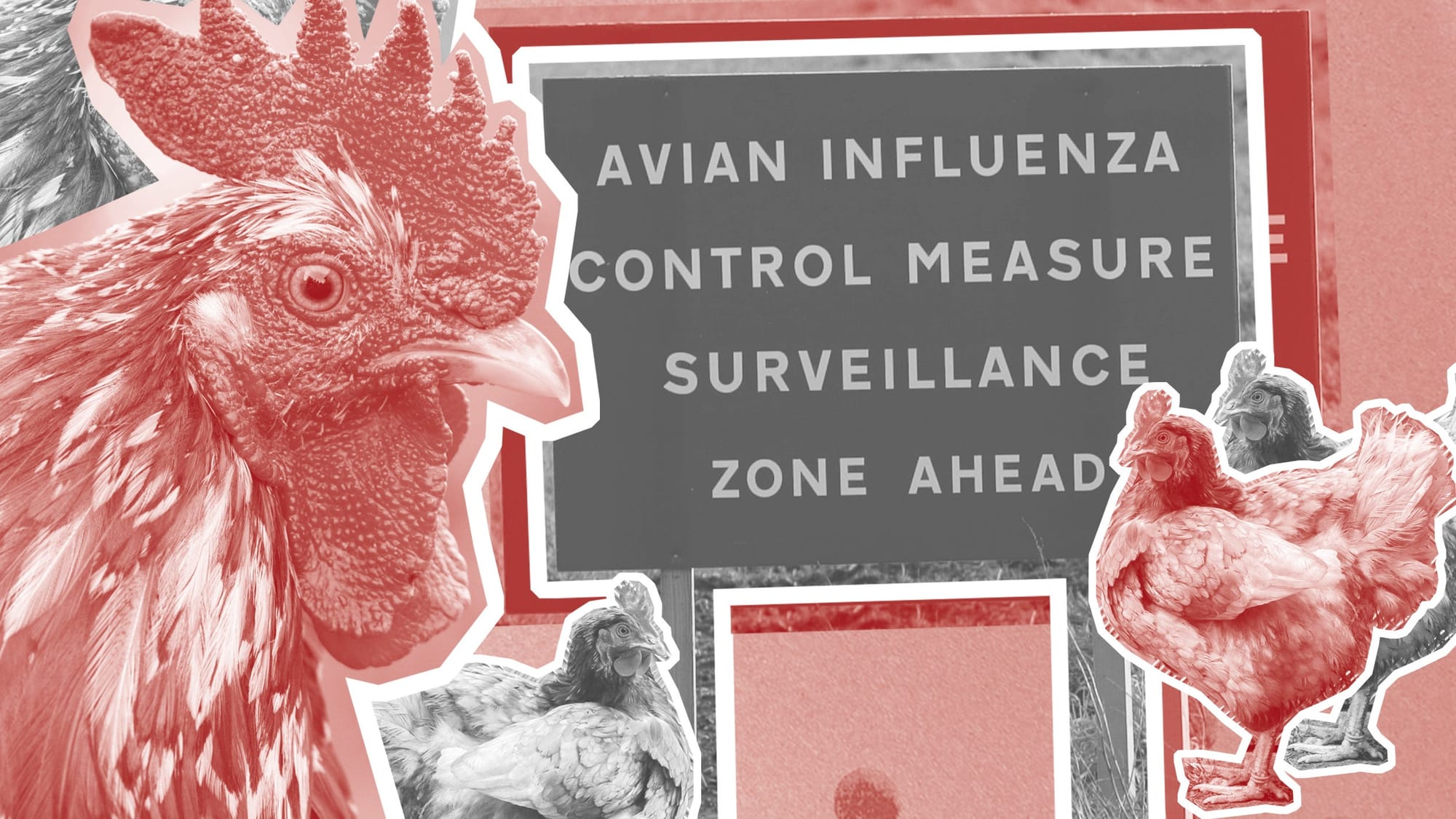
Kent has entered winter with confirmed cases in both commercial and captive birds, suspected wild-bird deaths on the coast, and national disease levels climbing much earlier than last year. England is already under mandatory housing measures for many keepers, and the UK has logged more than 50 cases since October, a faster pace than at the same point in the 2024–25 season. Taken together, the picture is sharpening. Kent is not in crisis, and the risk to people remains very low. But the county is entering a winter in which several conditions for avian influenza are unusually aligned, with colder weather, large numbers of migratory birds arriving, commercial outbreaks concentrated in the south east, and a national poultry sector under strain.
The most recent Kent case was confirmed on 25 November, when DEFRA identified highly pathogenic avian influenza H5N1 in commercial poultry near Lydd. All birds on the site will be culled, and disease-control zones have been declared across Romney Marsh and into East Sussex. It is one of several commercial outbreaks recorded nationally in the past fortnight, part of a pattern stretching across the country. While Kent’s poultry sector is not one of the UK’s largest, these cases still inevitably have an impact. They are early in the season, geographically clustered, and they push biosecurity demands onto small farms, backyard keepers, and businesses in ways that ripple far beyond a single unit.
Further north, Canterbury City Council has warned residents to avoid dead wildlife after a number of birds were found at Chislet Marshes with suspected avian flu. Public information signs are now up on key footpaths, and dog walkers are being urged to keep pets on leads and away from carcasses. “Avian influenza is circulating in seabirds and other wildlife in the area,” the council said, requesting that anyone who finds dead birds or mammals report them so they can be removed safely. While the cause has not yet been confirmed through laboratory testing, the presence of multiple carcasses at once is consistent with the pattern seen in previous winters when wild waterfowl and gulls carry the virus asymptomatically.
Kent has also had one confirmed outbreak this season in other captive birds. On 27 October, DEFRA confirmed H5N1 at a premises near Newington in Swale. That case took place at Happy Pants Ranch, an animal sanctuary that lost more than 160 birds ranging from chickens and ducks to geese, turkeys, guinea fowl, pigeons and an emu. In a Facebook post, the sanctuary described the cull and the subsequent cleansing and licensing requirements as devastating, and said the financial consequences of rebuilding were severe for a volunteer-run site already struggling with the loss.
The Newington case triggered a 3km controlled zone, and its effects reached beyond the sanctuary. Hen Weekend Chicken Boarding in Upchurch found itself just inside the boundary and had to close temporarily for both arrivals and departures. “By law, all poultry must be housed or kept fully enclosed, and no birds can move on or off the premises until restrictions are lifted,” owner Katriona Shovlin told customers. These are the sorts of impacts that rarely make national coverage but matter deeply to the people and businesses operating in these zones, where even short closures can disrupt income and animal care arrangements.
What makes this winter feel particularly sensitive is the overlap between these outbreaks and the annual rise in bird numbers at Dungeness. Thousands of wintering waders, geese and wildfowl are now building across the reserve. The RSPB told the BBC that the Lydd outbreak “could not have come at a worse time”, given the influx of birds arriving from regions where avian influenza is circulating. Migrating birds were badly affected during the 2022–23 wave of the disease, when colonies of gulls, terns and other seabirds experienced significant losses.
National survey data published this year reinforces those concerns. The RSPB’s UK-wide seabird counts found population declines of more than 10% in nine species since avian flu became widespread. Gannet numbers at surveyed colonies have fallen by around a quarter. Great Skua populations in Scotland have dropped by more than 75%, wiping out decades of conservation progress. Even Roseate Terns, already one of the UK’s rarest species, declined further at their only English breeding colony. The charity now describes H5N1 as a significant new threat to the UK’s internationally important seabird populations. While Kent is not one of the UK’s major seabird-breeding regions, it does support several critical local colonies of terns and gulls, particularly at Dungeness and along the north Kent coast.
The ecological pressures coincide with a series of national and seasonal trends that make this winter harder than usual. Migration is well underway, bringing large numbers of waterfowl and gull species into the UK from areas where avian influenza is circulating at high levels. England has recorded more than 45 cases so far this season, far higher than at this point last year. Housing measures for flocks of more than 50 birds came into force on 6 November, reflecting DEFRA’s heightened risk assessment. The national poultry sector is also under pressure, with industry figures warning of a ‘bad season’ and about 5% of the UK’s Christmas flock already culled.
This tension between wild and domestic bird populations is at the core of the issue. Bird flu first spreads through wild birds, particularly migratory waterfowl. When these populations arrive in areas with commercial units, smallholdings or backyard flocks, the risk rises. The virus spreads through faeces, feathers, and contaminated ground or standing water. This is why routine winter flooding on marshland, including in parts of Kent, can create additional risks. It is also why dog-walking hotspots and access paths around coastal marshes become points of concern. None of these factors alone guarantees a severe winter in Kent, but their convergence increases uncertainty.
For Kent’s bird keepers, this means a more demanding winter than usual. The entire county remains in an Avian Influenza Prevention Zone, requiring mandatory enhanced biosecurity measures. Most backyard keepers with fewer than 50 birds do not need to house them if they do not sell eggs, unless they are within a 3km protection or captive-bird zone. Those who do sell eggs or have larger flocks must house their birds, store feed and water undercover, disinfect footwear and equipment, prevent wild-bird access and limit visitors. Even for casual keepers, the rules can be burdensome, and many small-scale owners say they are struggling with rising feed costs and practical challenges of housing birds accustomed to roaming.
Public-health advice remains unchanged. The UK Health Security Agency says the risk to people is very low, and the Food Standards Agency says properly cooked poultry and eggs remain safe to eat. There is no evidence of sustained human-to-human transmission of the H5N1 strain currently circulating in the UK.
Kent is not experiencing an uncontrolled outbreak. Two confirmed cases in two months do not, in and of themselves, signal a local crisis. But the warning signs this winter are clearer and earlier than last year. Suspected wild-bird deaths at Chislet, sensitive timing at Dungeness, a sanctuary wiped out at Newington and a commercial farm cull at Lydd, all set against a national backdrop of rising infections.
Kent is facing a riskier winter than last year, and the next few weeks will determine how severe it becomes.
Lower Thames Crossing set for 2026 construction start
After 16 years of planning, never-ending arguments, and more than £1bn spent getting the scheme to this point, the Lower Thames Crossing is finally moving into construction. The government has confirmed another £891m for the publicly funded early stages of the £9bn project, completing the package needed before private finance takes over the main build.
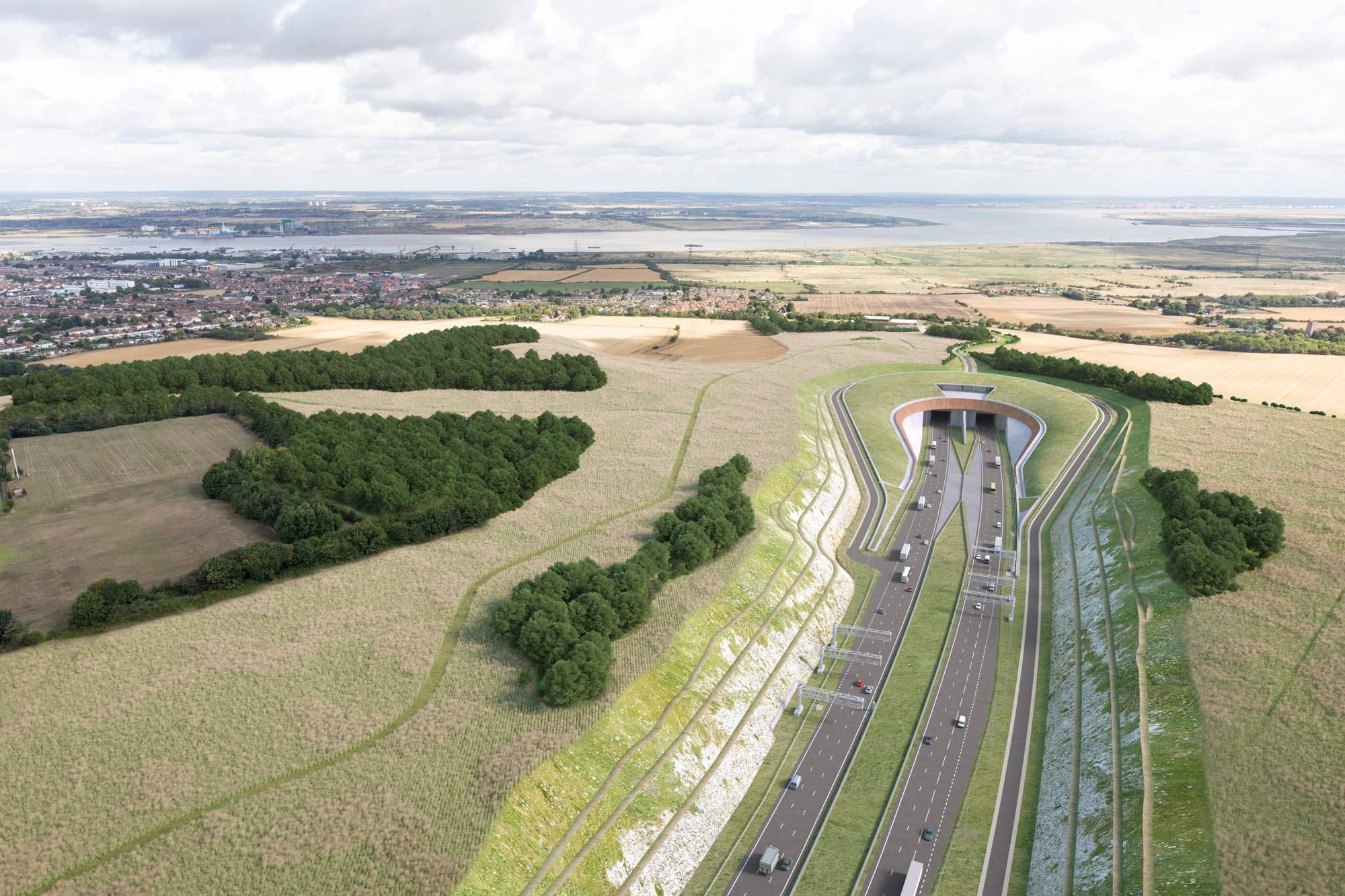
The approval granted in March has now translated into a firm timetable. National Highways says work will start next year, with the crossing still pencilled in to open in the early 2030s. Chancellor Rachel Reeves called the scheme part of the “backbone of economic growth” and confirmed the Budget funding as the final green light.
The scale remains vast. The 14.5 mile route will connect the A2 and M2 in Kent with the A13 and M25 in Essex through a pair of tunnels beneath the Thames, creating what would be the longest road tunnel in the country. It is intended to relieve pressure on the Dartford Crossing and reshape how traffic moves across the region, though the benefits and drawbacks remain sharply contested.
The delivery of the build is now split across three major contractors. Bouygues and Murphy will construct the tunnel, Balfour Beatty will lead the northern approach roads, and Skanska will take on the Kent side. National Highways says the construction phase will support local jobs and skills, while positioning the scheme as part of a new wave of lower-carbon infrastructure.
Before the main dig begins, the project team will continue reworking the detailed design with councils, landowners and campaigners, aiming to reduce local disruption. Archaeological, ecological and ground surveys are underway across the route. Concerns remain significant, particularly around the impact on ancient woodland and habitats near Shorne and Thong Lane, where opposition groups have long argued the scheme represents unnecessary environmental damage for limited gain.
And while the funding announcement marks a major milestone, a project of this size inevitably comes with its own hazards. The timeline, the budget and the final shape of the scheme are all likely to shift once construction begins. North Kent will soon find out how quickly a decades-long plan can move from paper to reality, and how much of that reality matches the promises made.
In brief
🚓 Harry Hilden, the prominent anti-immigration campaigner from Faversham that we wrote about on Monday, has been arrested and charged with assault. It is understood that the confrontation was connected to the removal of flags from lampposts in the town.
🕯️ Anti-housing campaigners held a ‘funeral’ for the Green Belt outside a Sevenoaks District Council meeting this week, where a new local plan to build 17,000 new homes was being discussed. Campaigners arrived armed with candles and terrible AI banners.
➡️ Kent County Council leader Linden Kemkaran has registered her unhappiness with the lifting of the two-child benefit cap in the budget, claiming that ‘contraception is available.’
Footnotes
Have a Kent story you think we might be interested in? Get in touch via hello(at)kentcurrent(dot)news - We’re always happy to talk off the record in the first instance…
Follow us on social media! We’re on Facebook, BlueSky, and Instagram for now.
Enjoying the Kent Current? Pass it on. If you know someone who’d like this too, forward this email to them and invite them to subscribe.