“It's a very privileged role”
What we asked Jonathan Neame, the High Sheriff of Kent
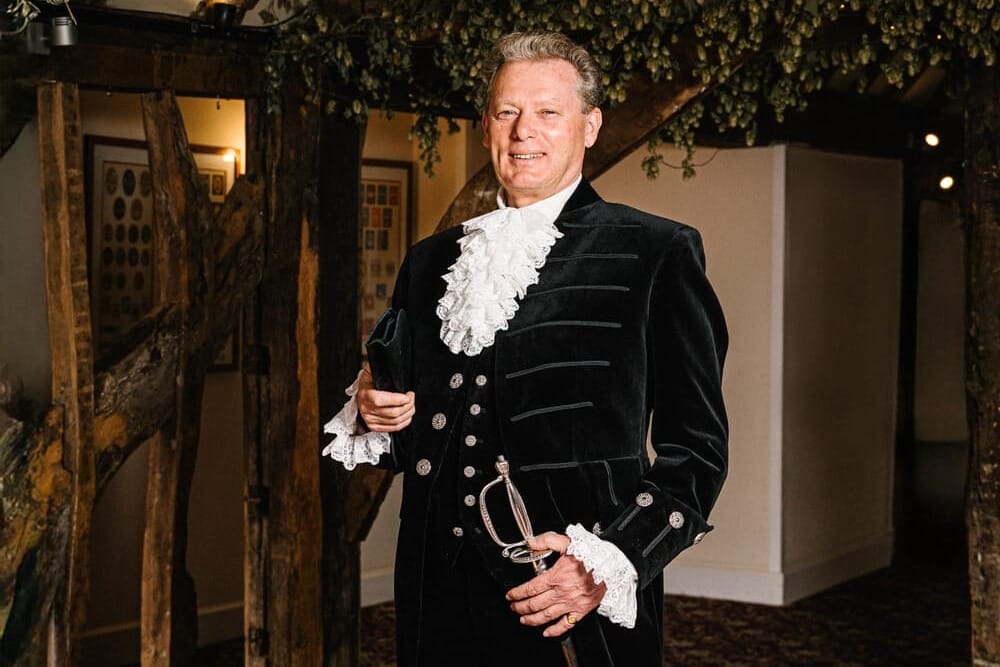
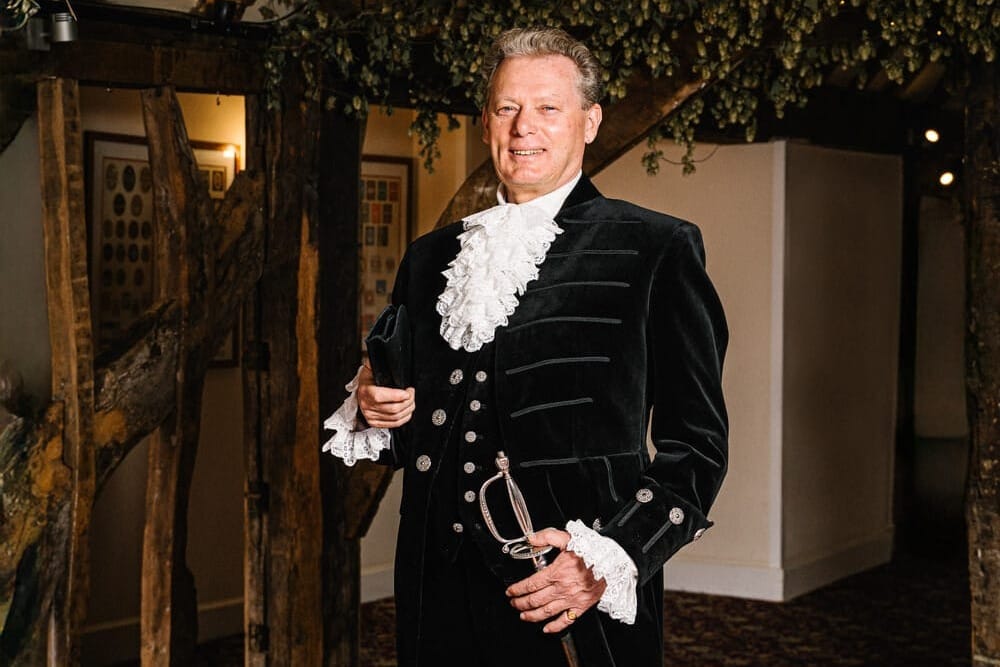
Jonathan Neame is the Chief Executive of Shepherd Neame and, for one year, the High Sheriff of Kent. Steven met him at the Shepherd Neame headquarters in Faversham, where they talked about the role of High Sheriff, whether he had a choice in becoming the Chief Executive, and whether, as a sheriff, he could arrest you...
What is your official occupation?
I am Chief Executive of Shepherd Neame. I have been since 2003.
And do you have any other roles, paid or unpaid?
For one year and one year only, I'm High Sheriff.
I've got various industry-related committees and roles and boards that I chair, but that's more to do with policy, industry policy, our trade association and our livery company, et cetera. But otherwise, that's it.
I saw you have an honorary doctorate.
Yes.
So you're Dr Jonathan Neame?
In theory, yes.
You don't use it?
I certainly don't.
What did you get the doctorate for?
Well, it's for civil law, which is a recognition of what I've done in the business world.
We want the brewery to be at the centre of Faversham.
I appreciate that Shepherd Neame has been going for a long time. In brief, how would you describe it? How is it different to other brewers?
Interesting question. Shepherd Neame is, I think, a unique business. It's pretty unique amongst the small and regional breweries, the small and regional family companies, in that we are still brewing. There are one or two like Adnams in Southwold, Harveys in Lewes.
But many of the other ones that are similar, like Fullers, Youngs have both stopped brewing. That of itself means that we're a rarer and rarer beast. I think our heritage speaks for itself. We've been on the same site since 1573. Our history goes back to 1147, which is pretty amazing. We evolved originally out of the abbey in Faversham, which is 500 yards up the road. No longer exists. We've got an unusual history of evolution from a church-oriented entity to a state-run. Originally, the mayor of the town ran the organisation after the church was no longer involved, and then it became a family business in 1698. It's gone through many different evolutions, but I think the other third dimension comes out of that story, which is that here we are in the town centre. We are integral to the town both geographically but also in terms of our attitude. I think we are a very strongly community-focused business. We like our pubs to be the centre of their community. We support any number of activities, sporting activities, charitable activities, whatever it might be. We want the brewery to be at the centre of Faversham. Here we sponsor a number of events, the literary festival, the hop festival, to name but two, but many other things beside. We're not a classic business where there is some sole focus, to build a number of pubs and sell the company or whatever. We behave in a very different way. I think that means that our brand, our culture, our behaviour is pretty different, pretty unique.
Is there a Mr Shepherd involved in that story at all?
There's been no Shepherd involved since 1877. In fact, Shepherd Neame as a partnership only existed for 13 years from 1864 to 1877. It was the Shepherd business before that. Then we had the short partnership, and then the Shepherd family left the business, which again is quite unusual. We kept the name.
Was there something about Faversham that meant it started here?
It's a very good question. The reason we're on this side is the water. The source of water is right in the centre of the brewery. That's pretty key and very important. Essentially, it goes back to hops. We're right in the heart of the hop country. We're surrounded by hop gardens in Faversham. We still get 80% of our hops today from Kent. We're loyal to that classic Kentish hop, which is the East Kent Golding, which gives a particular flavour characteristic, quite grassy, quite mellow, quite different from, for example, the US type hops, which are full of smoky flavours or citrus flavours, although we have that in one or two of our beers. I think the other thing that's important is that going way back, I'm talking a thousand years, beer in this country was basically classic English ale, a malted barley-based beverage, but they would have had other herbs in it, such as coriander and bog myrtle. I'm talking here about the world of Friar Tuck.
What we produce is ale with hops. That's called beer. There's a difference between beer and ale. Not only is this the home of the hop, but arguably it's the home of beer of the style that we drink today. When people talk about real ale, it's a little bit of a misnomer because it doesn't really compare with the traditional ale of a thousand years ago, except arguably mead, which is ale with honey.
In Faversham,there are a number of drinking establishments. Does someone need to get Shepherd Neame's permission to open up an independent inn?
(laughs) No, I like to think we have the best pubs in the town. Not all of them, there are a couple of other nice ones. But I think that's the way the world has gone. If you're a long-established business, here, Herne Bay, Whitstable, Canterbury, we've owned pubs, that's our core territory, and we've owned pubs here for hundreds of years and we're proud of them. We want to keep them going as much as we can.
What would signify that someone was in a Shepherd Neame pub?
I think that the golden thread that we hope runs through our pubs is that they are a unique building. There's something special about the building. Might be its age, might be its character. A unique location. We've got a lot of pubs near water, by the sea, rivers. Hopefully, quite a busy location, either for the weekend destination, a great place to go for a walk, great place on a beach, great place to stay, et cetera. I hope that the fact that we're a family business means that you get a warm, friendly welcome. We've got fantastic team members, lots of people who work with us for a long time. Hopefully that sense of culture of smiley faces, warm welcome comes across in our tenanted pubs or our managed pubs. Then, of course, the beer range is quite different. I mean, it's obviously our beer range. We supply beers from other brewers like Moretti and Guinness. Our beer range should have something of interest for other folk, and beer is part of the reason to go there. I suppose the final thing is that we like to support as much as possible, not always easy, local producers. We encourage people use local suppliers for their food and their drink, et cetera.
You mentioned that people come to your pubs on a walk. Have you been on any of the Shepherd Neame pub walks?
Most of them. Walking is a pastime of mine. I love doing it. I'm surrounded by the nature reserve where I live and walk pretty much every day. Sometimes in the dark, in the rain, in the snow, whatever it might be. Walking is what I do. It clears the head. Kent has got an amazing variety of topography and landscape. The North Downs, the coastal areas, the marshlands. It’s a very remarkable county in that respect.
What is a Master of the Worshipful Company of Brewers?
The Worshipful Company of Brewers is the livery company based in the city of London. There are about 120 different livery companies, which originally in the 13th, 14th century would have controlled their trade. It would have defined the standards you need for beer. It would have regulated the trade. Nowadays, all regulation is done by central government or trading standards. But that's what the liveries were originally there for. If you're a brewer, you've got to meet these standards. If you're a clothmaker, you've got to meet these standards. Like many livery companies, it has evolved and changed. It still has an influence over the beer industry, we have a trade association that does the lobbying with government, which is called the British Beer and Pub Association. The livery, over the years, have been left with lots of charitable legacies. Nowadays it's more of an educational charity. We manage various schools, we give money to schools in particular in North London. We manage funds, property and investment that have been bequeathed to us to make charitable donations. What is unusual is that it's the only livery where you still have to be a brewer to qualify. Most of them invite other people in. It's still a brilliant place where people chat, meet, convene, do a bit of business on the side, and it's based in our classic old hall off London Wall.
The Master basically is chairman for a year.
You're the King's representative for law and order and the emergency services in your county.
How would you describe the role of High Sheriff?
The role of High Sheriff, you're the King's representative for law and order and the emergency services in your county. All of England and Wales have a High Sheriff. Scotland has a slightly different system, but you're there to represent the King and work with the police, probation, prisons, courts, judges, and all the charities associated with the emergency services or law and order.
If you go way back, the role of High Sheriff was to assemble the courts, assemble juries, run law and order, collect taxes, control the militia before the police came in and so on and so forth. All those powers have been stripped away. It's a ceremonial role.