Kent becomes a test site for Restore
A new hard-right brand takes seats at County Hall

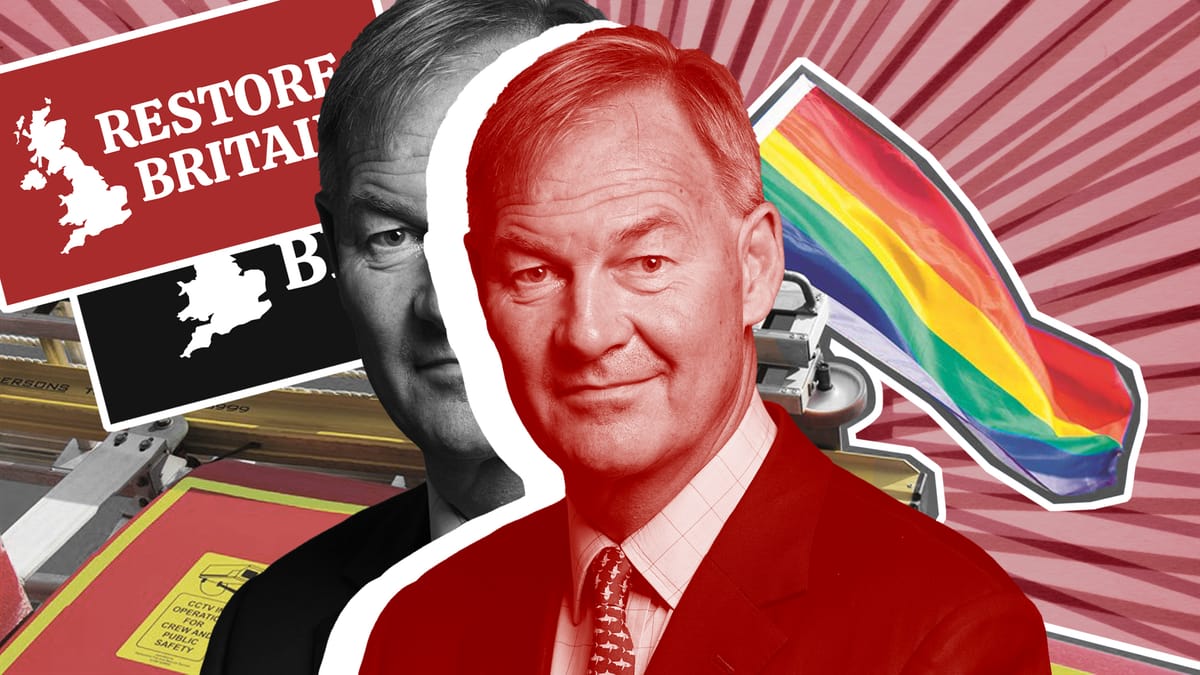
Seven Kent County Council councillors have formed a new Restore Britain group at County Hall, bringing a new national hard-right brand into Kent politics after months of turmoil inside Reform. The move raises questions about what Restore is seeking to build locally and whether it marks the start of another round of defections...
A new hard-right brand takes seats at County Hall as Restore forms at Kent County Council
Seven Kent County Council councillors have defected to Rupert Lowe’s Restore Britain project, creating a new bloc of seven at County Hall. If that sounds like a straightforward hard right story, their first visible intervention in Kent makes it messier. At this week’s Kent and Medway Fire and Rescue Authority meeting, they helped to defeat Reform’s push to ban Pride flags from fire stations, backing an amendment to put the decision to staff consultation instead. So what exactly is this new group, what do they believe, and how did Kent’s ruling party end up spawning a rival bloc under a national brand that is pitching itself to Reform’s right?
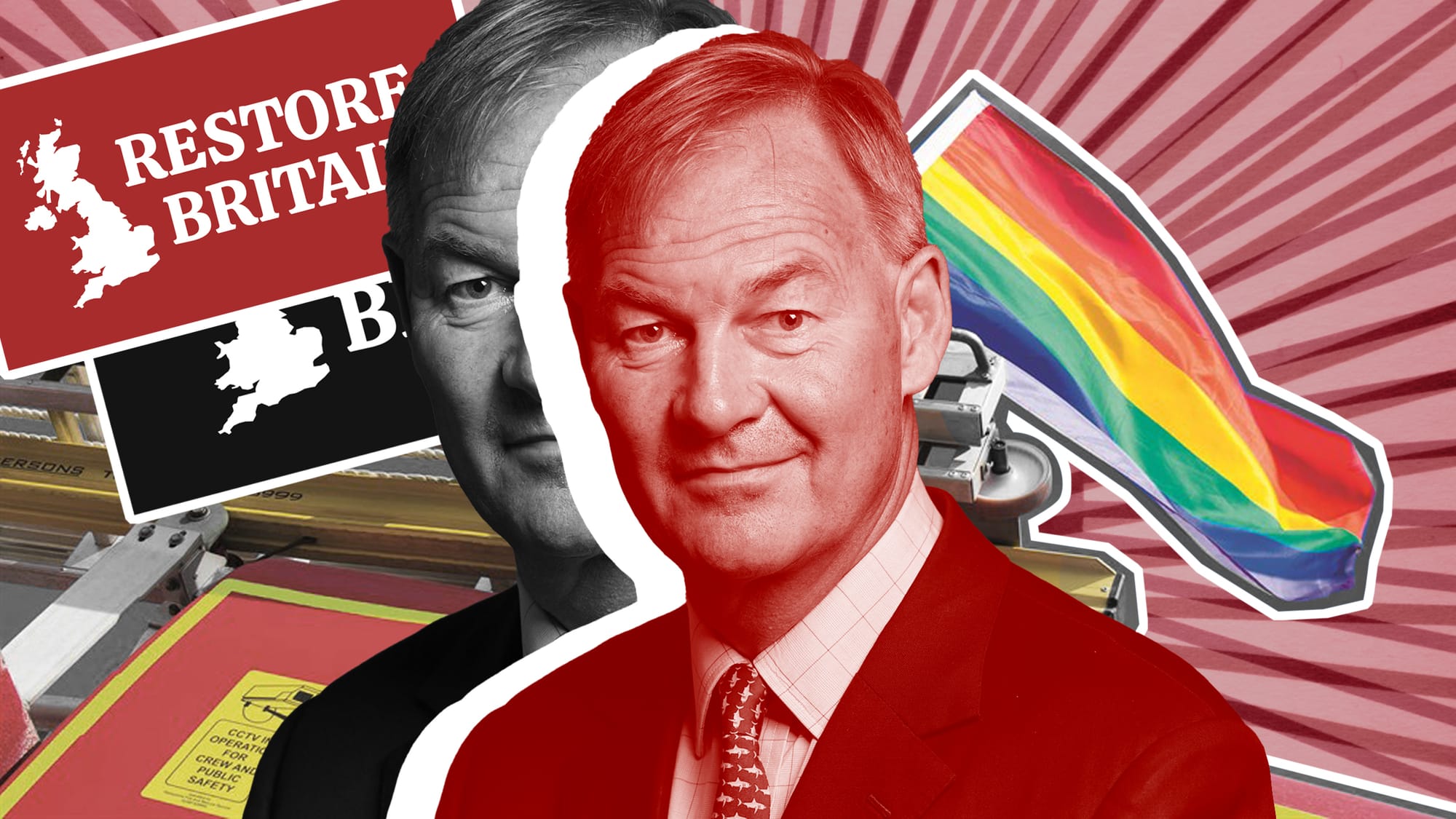
In numerical terms, the immediate shift is modest for the administration itself. Reform drops by one, from 48 councillors to 47, with Dean Burns the only sitting Reform councillor to make the move. But Restore arrives as a group of seven, larger than the Conservative, Green, and Labour groups, and immediately substantial enough not to be treated as a curiosity on the margins.
The seven councillors are Maxine Fothergill, Oliver Bradshaw, Brian Black, Paul Thomas, Robert Ford, Isabella Kemp, and Burns. All seven were elected in May 2025 as part of Reform’s breakthrough at Kent County Council, when the party took control of the authority with a large majority. By the end of 2025, six of the seven had already been suspended or expelled in the internal rows that tore through Reform’s Kent group.
Immediately before the move, their KCC group labels reflected the fragmentation that followed. Thomas, Black and Bradshaw were sitting as The Independent Group. Ford and Kemp were sitting as Independent Reformers. Fothergill was sitting as an independent, while Burns was still sitting as a Reform councillor.
This is the key context for understanding what Restore is doing at County Hall. For most of these councillors, this is not a clean leap from one settled group to another. It is the latest stage of an internal collapse that has been playing out loudly since last summer and has already produced suspensions, expulsions, and splinter groups. Restore gives that fallout a new shared banner.
There is also one notable absence. Bill Barrett, the third Independent Reformer, has not joined Restore. He told us he had no record of any contact from Restore Britain and added that “whilst I wish my colleagues well on KCC who have joined Restore Britain, it is not for me.” He signed off as group leader of the Independent Reformers. With Ford and Kemp now part of Restore, that label is now attached to a group that appears to consist of only him.
 Ed Jennings
The public flashpoints that led to this came in stages. In August 2025, five Reform KCC councillors, including Burns and Bradshaw, attended a 'stop the boats' protest in Maidstone and were photographed with a protestor draped in a neo-Nazi flag. The bigger rupture arrived in October, when a leaked internal Reform group meeting became public. Councillors complained about briefings, internal culture and how the group was being run, and the leadership response turned an internal row into a national story.
 Ed Jennings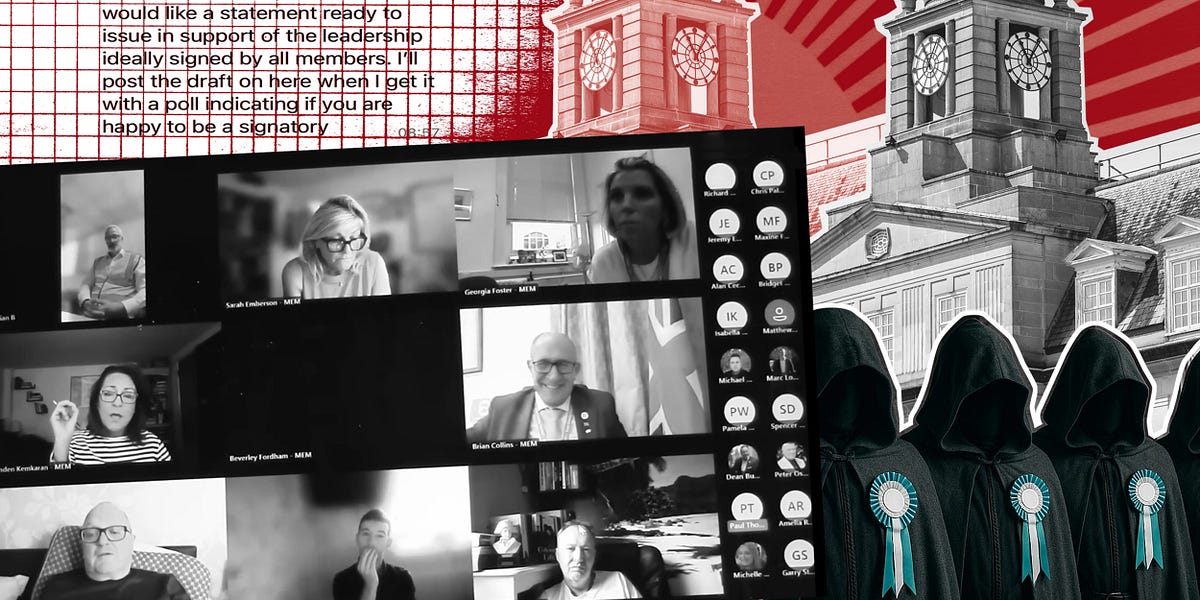
Within days, Reform suspended the whip from four councillors: Paul Thomas, Oliver Bradshaw, Maxine Fothergill and Bill Barrett. Expulsions followed in waves. Ford was expelled alongside Barrett in late October. By the end of October, Thomas, Bradshaw and Black were removed in another wave. In early November, Kemp was suspended, and she said she had been dismissed from a role at Reform HQ and was pursuing action. Around the same time, expelled councillors began to organise into named blocs at County Hall rather than sit as unattached independents.
The dispute also spilt into governance. In November, Kent and Medway Fire and Rescue Authority was left unable to function properly after losing five Reform members amid suspensions and removals, including Black, Kemp, Ford, Thomas and Bradshaw. Further expulsions were confirmed later in November, including Kemp and Fothergill.
 Ed Jennings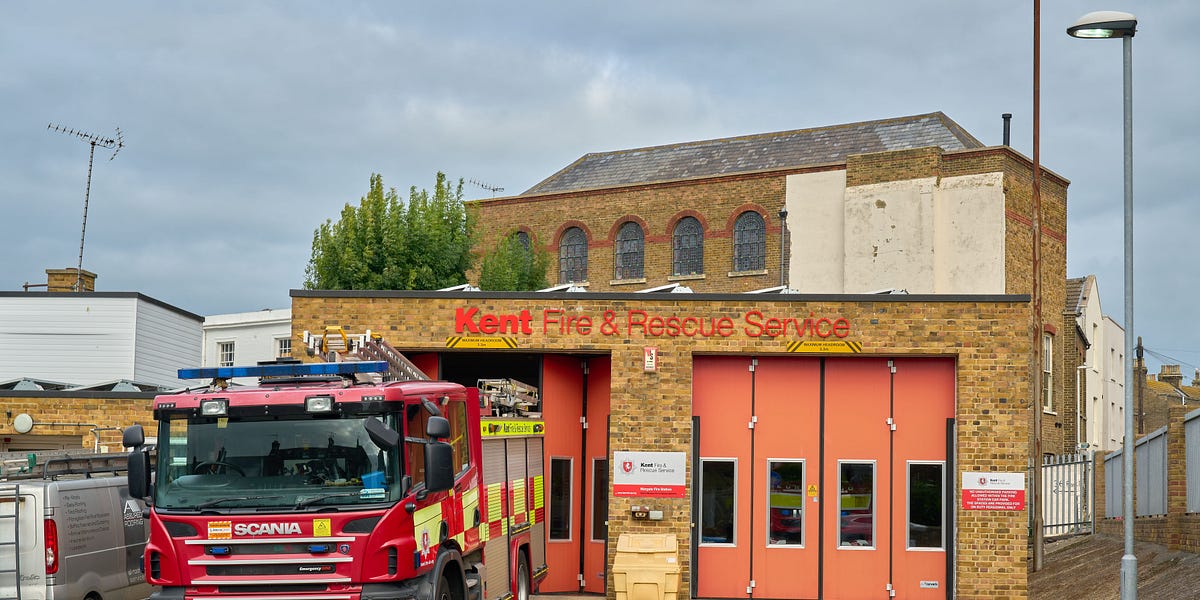
Ironically, this week’s meeting of the Kent and Medway Fire and Rescue Authority has now provided a new context for what Restore looks like in practice. Reform put forward a proposal to ban fire stations displaying pride flags, only to be struck down by opposition councillors and three Restore members who still sit on the authority, much to the surprise of Reform councillors.
Afterwards, Dean Burns posted a lengthy account on Facebook describing what he said was one of Restore’s first actions on the fire authority. He said Restore did not vote with Reform on the ban and instead pushed an amendment to consult the workforce so firefighters could choose. He framed the amendment passing as democracy being restored, while adding, “Would I have a pride flag myself? No, but if it's what the colleagues want to show inclusion, then Restore won’t take away your rights. We are on your side.”
There is an unavoidable irony here. Restore is being sold nationally as a vehicle for hard right politics, and Burns has pitched his own defection as an escape from party control and enforced voting. Yet one of the first high-profile things Restore councillors in Kent appear to have done is align with other parties to stop a ban on pride flags, and to back staff consultation as the deciding principle. Even if you strip out the branding and the slogans, it is a reminder that this new bloc is going to collide quickly with the messy reality of local governance, where the first test is often not immigration or national culture war theatre, but a vote on what a public service is allowed to put on a flagpole.
Kent Current only exists because some readers choose to pay for it. If you value independent reporting on Kent that doesn’t rely on clickbait or theatre, please consider becoming a supporter. An annual subscription costs £1.15 a week and helps keep this work sustainable.
Burns also provided the most striking statement about why he left Reform. Posting on social media after his defection, he wrote: “Every speech I gave had to be vetted and re-scripted, every vote I gave was whipped and forced on me. To be given to respect [sic] to now vote and speak on behalf of my constituents means so much to me. Thank you Rupert.” He continued: “Call us what you want, but my new boss has a clear view. Pandering and posturing to win vote wont save our country. It will not protect our women and venerable [sic] girls behind a shield of false hope and promises.”
Those are not mild complaints about party management. Burns explicitly alleges that speeches were controlled to the point of being rewritten and that his voting was forced. We asked Reform for comment on Burns' departure and the formation of a Restore group at KCC, but received no response.
Other Restore councillors have been less specific. Bradshaw posted: “I am proud to be representing Restore Britain on KCC. Reform has failed in its promises to the Kent residents.” Paul Thomas said: “At last we can now get on with delivering for our local communities and County.”
If the story ended there, it would still be a big County Hall reshuffle. But it matters more than that because Restore Britain is not just an empty local label. It is a national project with an explicit platform that goes beyond anything most mainstream parties would touch, and it is not yet a registered political party.
Restore’s own published material includes a policy on mass deportations presented as an operational blueprint for removing 'every person living in Britain illegally.' It also includes a law and order platform that explicitly backs reinstating the death penalty. Alongside that sit other proposals framed around cultural conflict and national decline, including targeting religious dress and minority practices, and a welfare position that includes removing access to benefits for 'every single foreign national living in Britain.'
That is why this is not a footnote to a local government story. A councillor aligning themselves with Restore is openly attaching themselves to an agenda built around mass removal, aggressive enforcement, and reopening political questions that have been settled in Britain for decades.
The other reason Restore matters is the ecosystem around it. Rupert Lowe has been embraced by Tommy Robinson. He has been amplified by Elon Musk, who has publicly attacked Nigel Farage and Reform, urging Reform to change its leader while promoting Lowe as the alternative. Hope Not Hate has published an explainer on Lowe and Restore Britain, setting out its view of what the project aims to build and the networks promoting it.
There is also the question of money and scale. Lowe has claimed that Restore signed up 60,000 members in the week since launch, each paying £20. If true, that would imply a substantial pot of membership income for a new political project. But there is no evidence for the membership figure beyond Restore’s own claims, and no independent way to verify it publicly.
Restore’s seven councillors at KCC may also not be the end of the story. BBC journalist Michael Keohan reported this week that he was told by insiders that conversations were taking place with unhappy backbench Reform councillors, and that around six defections could change the formal opposition picture at County Hall. He also reported comments from a 'senior Reform source,' who told him that “Restore are welcome to our dregs. Let’s not forget that six of these councillors were expelled from Reform for dishonesty. If this is the Restore’s bar for councillors, then it must be very low indeed.” Lowe simply replied: “There will be more.”
That might prove to be hype, and Reform still has 47 councillors at County Hall. We know there has been internal grumbling on Reform’s backbenches, but we do not know whether any others are willing to make the leap. But Restore is clearly trying to present itself as the next destination for anyone who thinks Reform is either too chaotic to function or not radical enough to satisfy its angriest supporters.
Across the council, other parties have framed the move as another symptom of instability in the Reform administration. Labour group leader Alister Brady said, “The chaos continues at KCC. There are massive questions over Kemkaran and Collins leadership after the riskiest budget in KCC history.” Lib Dem leader of the opposition, Antony Hook, said: “It is hard to keep track of the ever-changing groups leaving Reform,” adding that his party would continue to argue for “council policies that benefit all the people who live in our wonderful county.”
Kent Green group leader Mark Hood said voters who backed Reform “told me they were voting for Nigel, now they find they have voted for Rupert Lowe,” and described Restore as a “flag of convenience” that “flies above a vessel whose cargo is hate and its destination is division.”
Conservative leader Harry Rayner described the expulsions as indicative of a “toxic atmosphere” under KCC leadership, and accused Reform’s leadership of being “asleep at the wheel.” He also said he understood Maxine Fothergill was most likely to lead the new grouping. Fothergill told us that the group leadership position will be voted on internally next Tuesday.
At this stage, the practical machinery of the council matters less than it might normally. Committees will be adjusted. Groups will be relabelled. Seats will move. The bigger question is what it means to have an unregistered national project with an extreme platform establishing a foothold inside England’s biggest county council, and whether this is simply a consolidation of the councillors already ejected from Reform, or the beginning of a wider attempt to hollow out Reform’s Kent group from the inside.
The next milestone is Tuesday’s internal vote on Restore’s KCC leadership. After that, the more important test is whether Restore’s seven councillors operate as a coherent faction, and whether they choose to anchor themselves locally in the national platform Lowe has published, including mass deportations and reinstating the death penalty, or treat Restore primarily as a local vehicle for grievances about how Reform ran its group.
Footnotes
Follow us on social media! We’re on Facebook, BlueSky, and Instagram for now.