"My job is to try and bring everyone together"
What we asked Kevin MᶜKenna, MP for Sittingbourne and Sheppey
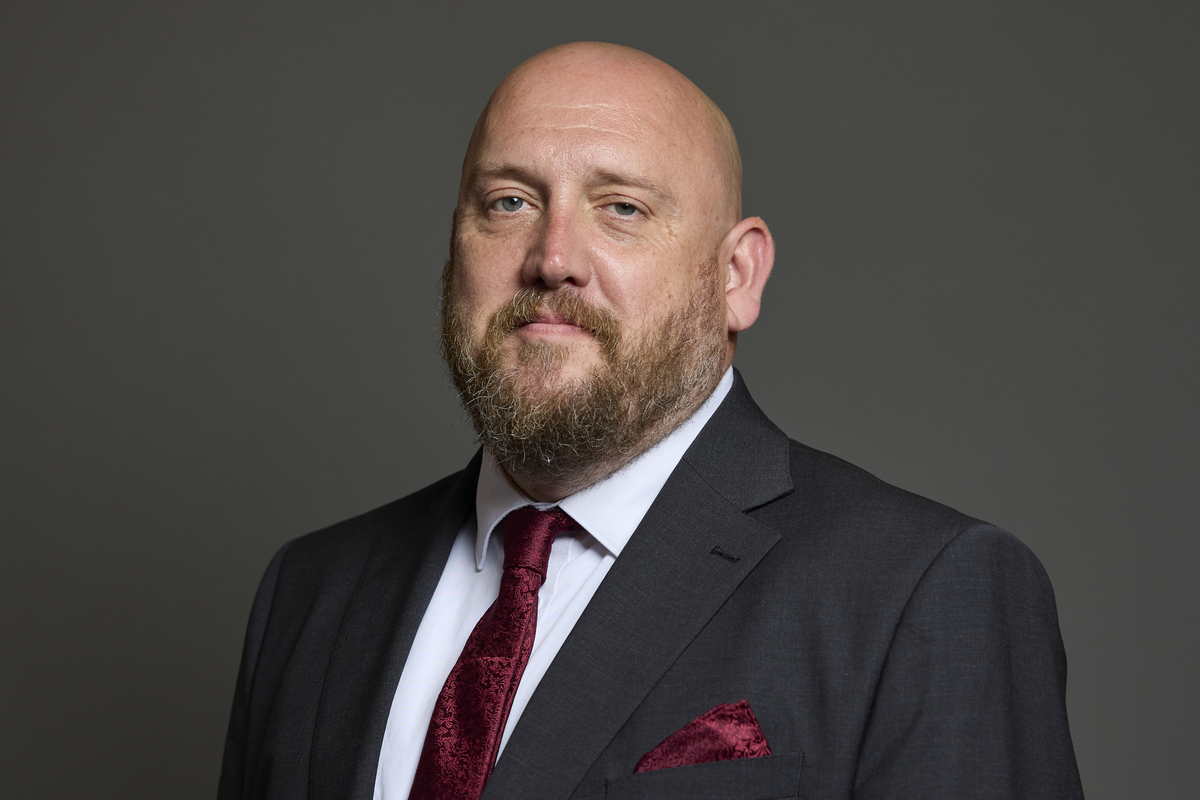
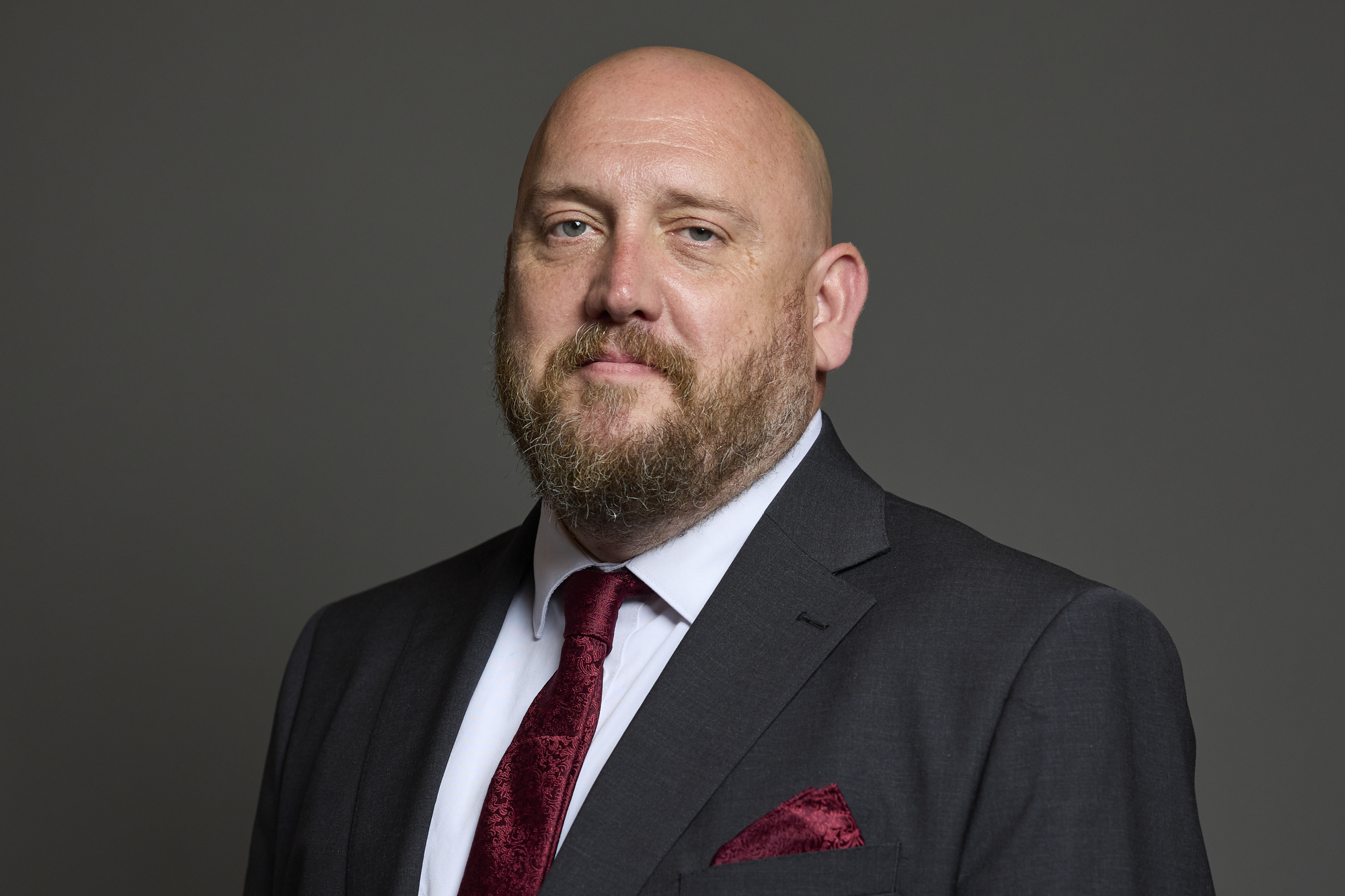
Kevin MᶜKenna was elected to parliament as the Labour MP for Sittingbourne and Sheppey in 2024. Having almost met Kevin in parliament, Steven met him, less excitingly, via Zoom. Steven asked Kevin about becoming an MP, being an intensive care nurse during covid, living with HIV, and lots more.
Please spell your name.
Yeah, it's Kevin MᶜKenna. K-E-V-I-N M-C-K-E-N-N-A.
Obviously, I'm quite precious about this because I need to fight for my heritage. M, lowercase C, capital K. Ideally with the C as a superscript, but I know you'll never do that. So don't worry. I go potty on forms where it all comes out as capitals. Thank you for overriding my cultural heritage with your English whatever.
I will pass that note on to the editor and see what they can do.
What is your official occupation?
I'm the Member of Parliament for Sittingbourne and Sheppey.
Why that constituency?
I grew up in southeast London, Kent borders. I really grew up in Welling, and we always came out here a lot as kids. Weekend trips were always into Kent. I've also got a lot of family around here. My aunt used to live in Walderslade. My godson lives just outside of Sittingbourne, my aunt and uncle have moved here. It was always very contiguous. But then I spent most of my adult life. After I left university, I moved into London, largely because, let's be very clear, where I grew up in Welling, it wasn't the friendliest place to be a young gay man. We had the British National Party headquarters in Welling. We had all of that stuff going on. The 80s and 90s were not so comfortable. After I finished at uni and hooked up with a guy who lived in Tower Hamlets, I found it a lot safer, frankly, to be in that part of the world than it was in the London fringes and into Kent as well.
It's changed so much in my lifetime. Massive change as to how inclusive and open it is. It shifted back that way. There's still something about being an out gay man who's married and lives in the area. That actually has made a bit of difference. There are people locally that feel that part of representation matters and works, just talking to people in the constituency. But equally, in the 90s, I wouldn't have felt safe there. I spent all that time living in London. But then, particularly after I got involved in politics again and started canvassing back in the area... We had the Sidcup by-election, and then I was doing stuff in Medway when my friend [Medway councillor] David Field moved down here. This is very familiar. This is the culture I grew up in. This is actually where I came from. This is a really great place to learn politics. Incredibly complicated, very unusual politics, really quiet on the edge.
"There's a hidden population on Sheppey that makes it more complicated."
How would you describe Sittingbourne and Sheppey as a constituency?
Every MP says the same thing. It's the most beautiful constituency in the country with the most incredible heritage and people. It's got lots of really rich issues to get stuck into.
Now, the truth is Sittingbourne and Sheppey is that with bells and whistles on. You've got a mainland section and an inhabited island section in one constituency, and it's well inhabited. 37,000 people. It's more than that. There's a hidden population on Sheppey that makes it more complicated. You've got the dynamic between the mainland and the island, which is really interesting as an MP, because my job is to try and bring everyone together, to represent everyone. What are the commonalities between the two parts, even though there's often friction? At the same time, we are really unusual in the southeast of England. If you look at the stats, we are massively an industrial economy. Most of the businesses here are industrial. Sittingbourne is an industrial town with a commuter fringe. The southern side of Sittingbourne, that's closer to the default for a lot of Kent, particularly somewhere that isn't actually that far out of London. But the bulk of Sittingbourne isn't like that. The bulk of Sittingbourne, a whole quarter of it by land area, is a big industrial district with some major, primary manufacturing, some nationally important industries. There's logistics, and there's manufacturing, food output, COOK, and other food and logistics firms. We recycle a third of the cardboard and paper in the country. We recycle a quarter of the electronics in the country. On the island, you've got Sheerness Docks. It's closest to the Port of London, and a lot of the stuff that comes in here is very specialist. We're very industrial, whereas most of Kent and most of the southeast as a whole is all service economy. We're really unusual, and it's not actually that well understood across Kent as a whole.
In terms of levels of deprivation, social exclusion, challenges with accessing services, life expectancy, we are really, really challenged. Ourselves and bits of Thanet very much stand out as the areas with the most social challenge in Kent, bits of Medway as well. We stand together within the southeast. The only place that's like us on those stats is Hastings. But unlike Hastings and unlike Thanet, which are very much tourist economy and seasonal economy, which we've got here on the island, but not in as not on as big a scale. Plus, I've also got the rural areas. We're in the Garden of England, and we're in apple and pear country. There's only one small band in the country where you can really grow dessert apples and pears. In the West Country where my dad was born, and in Hereford, where my husband had his teenage years, it's all cider apples. They think they're apple country, and that's great. I love a nice cloudy cider. Right here, above the North Downs, it is the best growing area in the country for apples. In fact, in many ways, the only really properly strong area for that. There's some in Rainham, little bit on the Strood side, but not much. There's nothing in Thanet. I’m the only Labour MP that's got a really big handle on the apple and pear orchard growing. I've got an extra responsibility for that.
Then we're a coastal community, and a lot of the constituency is at or below sea level. There's a real movement at the moment to understand why it is that in coastal areas we've got lower life expectancy, challenges accessing services, the challenges of seasonal employment and the social impacts that has and it gets reflected. It's almost like a magnifier for everything else. Industrial towns as a whole are really under pressure, and that's why the north of England gets so much attention and south Wales and places like that. But, economically, we're a red wall seat, but in the southeast.
Why is there a hidden population?
Have you been to Warden Bay? Leysdown? Places like that? You'll notice there's a lot of caravan parks. Probably more than you even realise. If you look on a satellite map, you can see it a bit more clearly, but even then, that's not always up to date. Because a lot are a bit hidden from the road, you can't see the full extent of them. It's much bigger than the ones on the Hoo Peninsula, where you've got Allhallows. But we have holiday homes, and they're all licensed as holiday homes, not as permanent housing, which is part of the issue. At the same time, house prices on the east of Sheppey are lower than they are in Sheerness and Queenborough, which is cheaper than they are in Sittingbourne, which is cheaper than they are in the rest of Kent and the southeast. You can automatically see there's a financial gradient, in terms of housing and accommodation, from the bulk of the southeast into Sittingbourne onto the island and then to the east of the island. On the east of the island, housing is really cheap because you've got a lot of holiday accommodation which people can get in there and use as real permanent accommodation.
On top of that, you've got three prisons at Eastchurch, and they're all men's prisons. If you have a family member inside, then their wives, girlfriends, mothers of their kids, in particular, there's an incentive for them to come and live there, closer to the prison, where it's cheap. They can either rent out a caravan or, for 10, 20, 30 grand or whatever, you can get yourself a holiday home. That's not like buying a house. It's not a mortgage, therefore it's easier. But in truth, you've probably only got it for about 30 years before it gets sold off underneath you by the site owner. You've got less protections. People can either rent or buy property there and then use it 12 months of the year. But they're only licensed normally for 10 months of the year. Over the winter, people are supposed to move out of it.
Although they'll have electricity and water, they normally won't have standard utility bills. You can do, but normally people don't. Normally, it's off the site account. You don't have a postal address if you live in a place like that. You don't have internet connections in the same way. In terms of services that people expect, you've got a lot less of those. And you're not really officially on the books. Although we've got people that are paying council tax for 12 months of the year, even though they're only allowed to live there for 10. Now nominally, people are supposed to move off for the winter, but of course they're not, because these are their actual permanent accommodations. It's not every single caravan there. A lot of them are still used as holiday homes. But literally, I don't know. The council doesn't know. The county council doesn't know. No one knows. The NHS does not know what the actual population is there. It could be a few hundred extras. It could be several thousand. It could be 10,000, 20,000. Literally, the range that I've heard is from 2,000 to 20,000. I'm sure that seems a lot. The potential of that is enormous, and that really messes up everything about local government funding, how you plan services, and people drop off the grid. Everyone I've spoken to knows that the population is higher. No one's actually been able to get a concrete answer.
Why did you decide to stand for parliament?
Well, because I could see a lot of other people doing it. I like to follow the crowd. Obviously, I'm easily led. But more than that, I ran for council in London. I got very involved in Bethnal Green. I used to live on Columbia Road, where the flower market is, which is something we need to replicate versions of that around here, because that's another really strong community. There's a strong affinity between the docks culture in Sheerness and the old docks culture in the old East End. I see an affinity between the two, and there's actually a bit of a population link as well. There are quite a few people here who've still got families in the East End, across all communities, actually. Not just white communities, but Bangladeshi friends and so on have got links here.
I was living there, and it's a double whammy really, I've done in my professional life in nursing. I'd started doing something called the Darzi Fellowship. I was in intensive care as my clinical speciality. As I'd gone through that I'd increasingly got interested in how you make how do you make services work better. How do you deliver better results? That led to me first getting involved in lots of quality improvement work in the health system. The Darzi Fellowship is supposed to be about that. Turns out it wasn't really about that, it was trying to get clinicians to understand everything possible about the whole health system and turn those people into future clinical future leaders in the health system. There is a habit in the health system of it being non-clinicians, who are often great but they're not a doctor, a nurse or a physio, becoming the senior leaders in the NHS. This was trying to make sure that we got more people with a clinical background doing that. The thing it uncovers is it's great that you work in intensive care right in the heart of a hospital with the most acute patients, because of what's happening in their day-to-day lives. The real way you help people's health is by improving their housing situation, their employment, and improving the food that they eat, the amount of exercise they do and the social connections they have, the wider determinants of health. But how do you even get into that? Is that something I could get into?
I started expanding my knowledge there, and the most important thing was in shifting that job, I was no longer doing nights and weekends. Suddenly, I had time to get more involved in my local community. Because it's really hard when you're doing shift work. You engage with a lot of community organisations, and they thrive on having a regular meeting and really active people in the community, but tends to be the same set of people, often retired people come together, and they do a lot of community action. The answer is if you're a nurse, it's really hard, and if you're doing lots of jobs, it's really hard, but that freed me up to start attending my local residents association. I became chair of my residents association, tried to pull in stuff that I'd learned from other parts of the country that worked really well in communities, doing that locally in Bethnal Green. At the same time, it also freed up time so I could get involved in the Labour Party.
What age were you when you joined the Labour Party?
Oh God, whatever age I was in 2015. 41. I've always been a political obsessive, which I mostly get from my dad. I've always followed politics closely. I never, up to that point, felt I needed to get too heavily involved in it, partly because I knew not to get involved in politics in Tower Hamlets. I had friends who were, and it was absolutely brutal and not the best place for your mental health to be involved in.
When I was at university back in 1992, my first year at uni, the Lesbian and Gay Society, which it was before we used LGBT and things like that, one of the first big debates we had was what we should call ourselves because I suddenly realised that actually bisexual people existed, which was apparently a novel thought. Actually, maybe we shouldn't put men at the front, because there are an awful lot of gay and bisexual women. We had this whole debate about calling ourselves the Lesbian Gay Society. Anyway, big battles about that.
In my first term there, we invited all the political groups in the Students' Union to speak to us. Now, unsurprisingly, at the time, the Conservatives just said no. More surprisingly, probably to a lot of people, is that the Lib Dems said no, and the Labour said no. Lib Dems and Labour were, 'We support you, but we don't want to be seen with you.' It was a weird time when you had a lot of Labour people in the student union wandering around in suit jackets and ties because this was off the back of that disastrous election in 92 for Labour. A lot of people had gone to university, and wanted to get involved in the Labour Party as Labour people. They didn't want to be seen with us because it was still a time when getting involved in queer politics was very controversial. They didn't want to come and they sent us a letter. The two people that came along were two really hard left groups. One was a Militant offshoot. The other was probably SWP. They came along, and they talked to us. And theirs was, 'Your struggle is really important, but don't upset the working classes.' I was sitting there going, 'Okay, you may think you were working class, but now you've come out as gay, you're no longer working class.' It's a middle-class affectation. At the time, Militant was a very macho organisation. They came and said, 'We support your liberation struggle, but that's not as important as the class struggle.'
That completely drove me away from all organised politics. Then, during the 90s, the noughties, we had a Labour government doing really good things. There wasn't much reason for me to get involved, but equally, I was busy learning to be a nurse. I was learning my profession as a nurse. By the time we got to 2015, the coalition had gone, and we'd lost an election. It was a very fractious time in the Labour Party, obviously with Corbyn and with all the things that went on. Me and my husband were both, well, we'd better get involved because it's all going to hell in the handcart. That's where we both learned how to operate in the political world. All those things came together. So, all those things together are why I ran for council in Bethnal Green. I didn't win. And that was a classic blessing in disguise. Because I remember a month and a half after the ‘22 council elections in London, I sat there going, we know all these people that are running for parliament, and they're all great, but I've got those skills too. I could definitely do some of that. Let's give it a go.
How did you come to be selected for Parliament?
We started looking [at constituencies], and a lot of had already been selected, but where really matters to me and where would I feel I fitted in? A lot of the north Kent seats hadn't been selected. I started getting to know people engaged in Labour politics around here. Medway were incredibly welcoming. The Labour team in Medway was very much on the up and had been getting itself out of some doldrums. Frankly, they wanted people to come down and campaign with them because they had the big election coming up the following year. I thought, well, I'll give that a go, around selection in Rochester and Stood. I didn't get that, but Lauren [Edwards] did and having a lot of fun doing that. After that, I'm not sure where I want to go next. But Sittingbourne and Sheppey came up, and I don't know it as well, let's be blunt, at the time, and now it's this is the best place to be.
What do you remember of election night?
I was shattered. I remember sitting there in the cafeteria upstairs, desperately drinking several Monsters that night to try and stay awake. You get absolutely knackered on the polling day. It's weeks and weeks and weeks of just constant work all around the clock. And actually, it was just really hard to tell. In the room, I couldn't see. We could see that Labour, the Conservatives, and Reform were really close, but no one could actually tell. I was completely gobsmacked when the returning officer gives us preliminary numbers, and they said I'd won. I don't remember much. You get this really fancy piece of card handed to you from the king. I thought, 'Oh, that looks real.' My husband had been busy working in London on a campaign, so to be honest, I'd already crashed by the time he got home.
"If you've got HIV, it isn't the death sentence that you probably think it is."