Regulator proposes £22m fine for South East Water
Supply failures, a looming Cliftonville by-election, and another far-right controversy in Swale

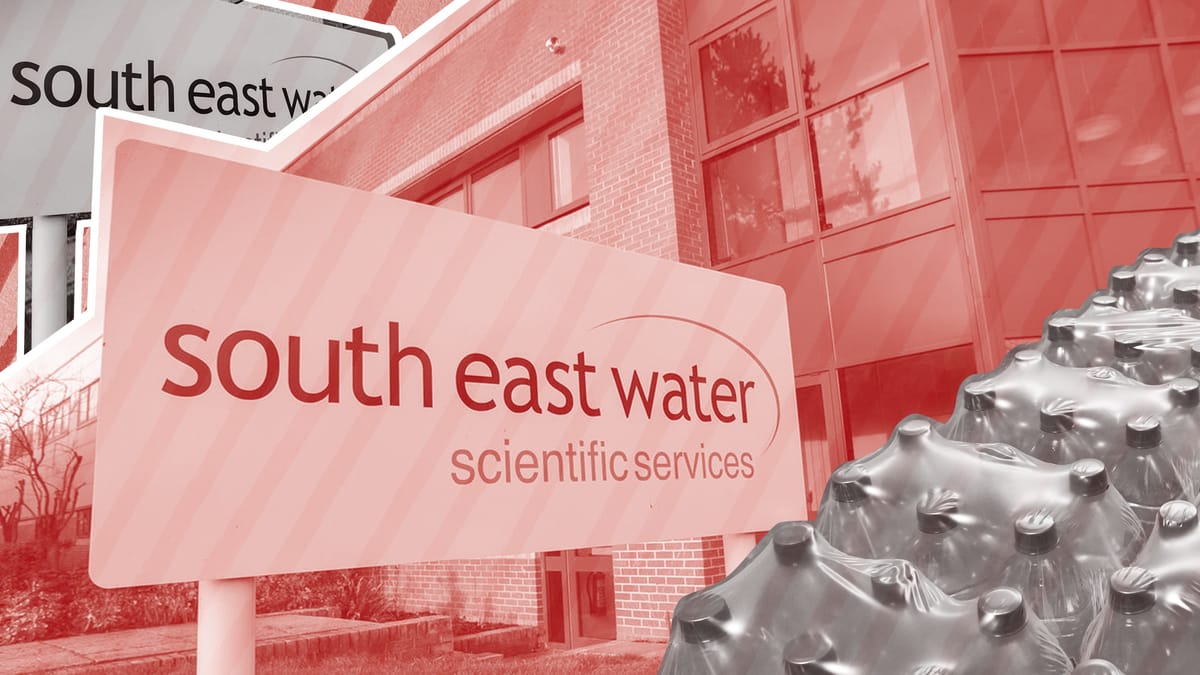
Ofwat has proposed a £22.46m fine and an enforcement order against South East Water over supply failures affecting more than 286,000 people between 2020 and 2023, accusing the company of poor maintenance, weak planning and a slow, disorganised response when incidents hit. Further down, we also look at a confirmed by-election in Cliftonville on 9 April, and the fallout, or lack thereof, after a Swale councillor reposted a graphic containing racist and antisemitic slurs days after defecting to Restore...
Ofwat proposes £22m fine and says South East Water response was slow and disorganised
South East Water is facing a £22.46m penalty from Ofwat.
Not, strictly speaking, for the chaos in Tunbridge Wells over this winter. That is being handled separately.
This one is for the years before that. Ofwat says repeated supply failures across Kent and Sussex between 2020 and 2023 affected more than 286,000 people. The regulator is proposing both a fine and an enforcement order designed to force the company to fix what it describes as basic resilience problems.
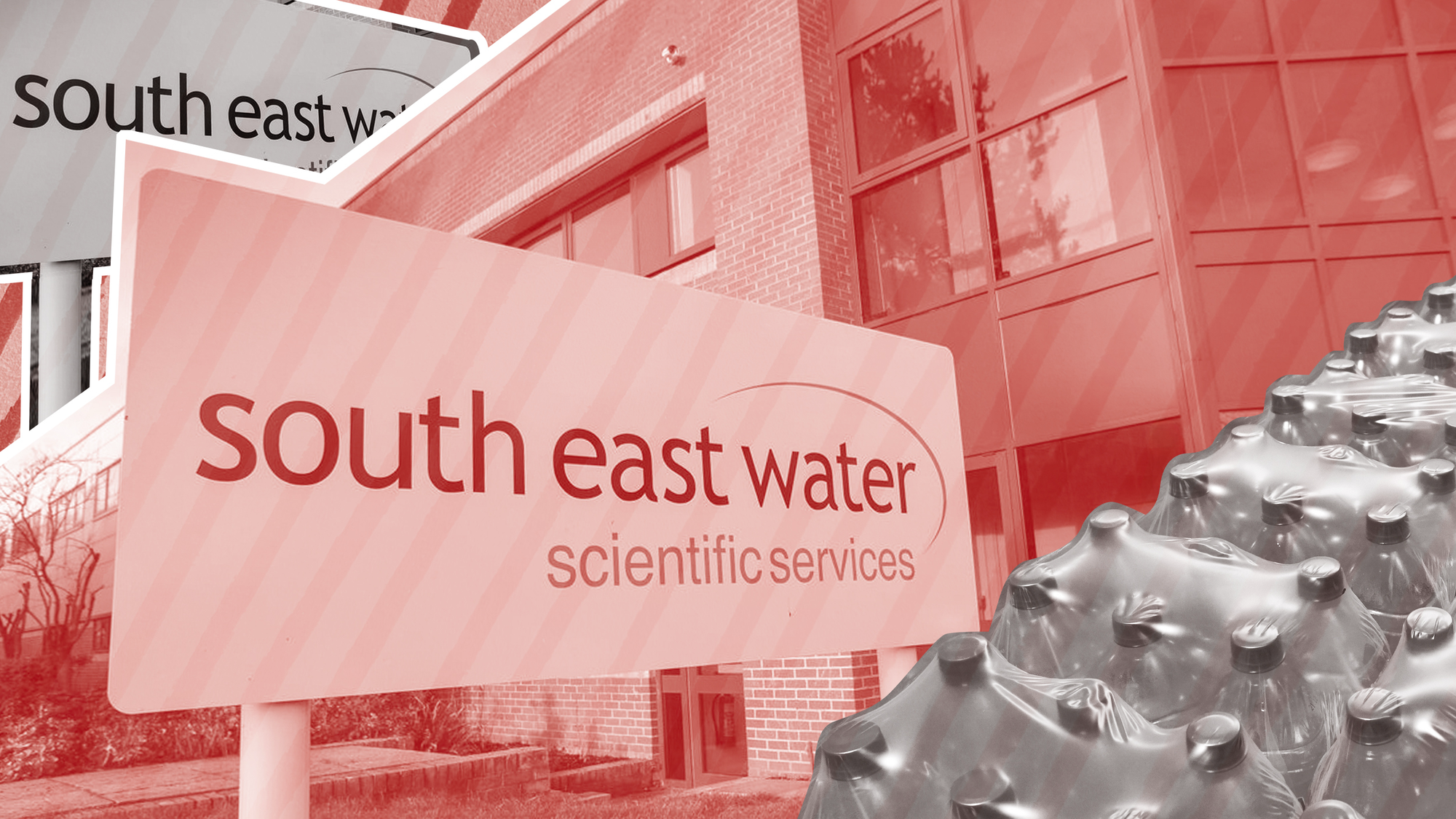
This is not final yet. It is a proposal. Ofwat is consulting until 13 April, then it will decide what it actually imposes. But even at the proposal stage, the language is not gentle. Ofwat says South East Water failed to maintain key assets, failed to plan properly for high demand and extreme weather, failed to learn lessons from earlier incidents, and then failed again in its response when the system fell over.
The regulator says the company relied too much on reactive maintenance and not enough on preventative work that keeps the network in decent shape before it is under stress. It says it did not keep sufficient headroom in the system, the margin between what can be supplied and what customers need in peak conditions. That headroom is the difference between a tough day and a week of bottled water, closed businesses, and cancelled appointments.
Ofwat also says the company did not conduct sufficient root-cause analysis and did not learn lessons from previous incidents. That matters because if you do not treat failures as repeatable problems with repeatable causes, you just end up collecting new anecdotes.
Then there is the customer experience. Ofwat spells it out bluntly, with no tap water, no showers, no flushing toilets, and the stress that comes with it. It says South East Water’s response was too often slow and disorganised, with shortages of bottled water and not enough tankers, alongside inadequate support for vulnerable customers.
The enforcement order element matters because it sets out how South East Water is to fix the problems, rather than just highlighting where they went wrong. Ofwat wants the company to accept senior management responsibility for preventing repeats and to subject its processes to independent scrutiny. The idea is to force the company to show, in public, that it understands the root causes and is doing the unglamorous work like planning, modelling, maintenance, and rehearsed emergency response.
Before we go any further, the timeline needs to be clear, because there are two Ofwat tracks running at once.
This proposed £22.46m penalty and enforcement order is about failures between 2020 and 2023. Ofwat has separately opened a new investigation into the recent run of outages since November 2025, including the sustained Tunbridge Wells problems in November and December and further disruption in January. That separate investigation is about whether the company met a newer customer-focused licence condition around service and support when things go wrong. That condition only came into force in February 2024, which is why it cannot be used for 2020 to 2023.
If the Ofwat proposal was the week’s main course, there are two side dishes that say a lot about how South East Water handles things.
The first was a small BBC item that landed at the worst possible time. A resident in Tonbridge said he was disgusted after seeing dozens of shrink-wrapped multipacks of bottled water thrown into a skip by the company. South East Water’s explanation was that the bottles had been collected back from water stations or returned by customers and could not be redistributed because the company could not guarantee storage conditions or prevent tampering, so they would be emptied and recycled.
That explanation is not absurd. Food safety is real. But it is also the kind of image that tells you how thin public confidence is. When people have spent weeks relying on emergency water, bottles in a skip become a symbol, whether the company likes it or not.
The second side dish is more serious. KentOnline, to their credit, did some proper journalism and discovered that South East Water tried to block Ofwat from publishing its enforcement proposal at all.
According to their report, the company applied for judicial review on 24 February and sought an interim injunction to prevent publication of Ofwat’s proposed enforcement order and penalty notice. It argued publication would damage investor confidence, risk a credit rating downgrade, and trigger what was described as a financial 'doom spiral.' KentOnline reports the High Court of Justice refused the interim injunction on Monday, allowing Ofwat’s proposal to be published today, and quotes a judge who was plainly unimpressed with the attempt.
South East Water’s own statement does not dispute the basics of that sequence. It says it sought judicial review and an injunction, the court did not grant the interim injunction, it respects the decision, and it will respond through the appropriate channels ahead of the final decision.
If you are a customer, you do not need to be an expert in utility finance to raise an eyebrow that a company being criticised for not doing enough proactive maintenance also appears to have found time and money for lawyers.
In comments reported by KentOnline, Tunbridge Wells MP Mike Martin called the legal fight “absolutely crazy” and argued the company spends too much effort fighting regulators rather than investing in the network. He is unlikely to be the last politician to make that point.
You can see that shift in Faversham and Mid Kent MP Helen Whately's reaction. In a post today, she reiterates that the fine is for 2020 to 2023, not the most recent outages, and says it is right that the company is penalised. She also says, once again, that she has no confidence in the current Chief Executive David Hinton's ability to turn things around and argues that there must be accountability at the top.
Ofwat, meanwhile, is trying to force the debate away from outrage and into compliance. Its interim Chief Executive, and Nominative Determinism of the Month champion Chris Walters, says South East Water’s failings caused major disruption, that the company fell short on supporting customers who lost supply, and that it must take more responsibility and fix the underlying resilience problems.
That is the story in a sentence. The regulator is proposing a big fine and a set of remedial obligations because it believes the failures were structural, repeated, and avoidable. The company says it will respond through the appropriate channels.
Two dates now matter.
The first is 13 April, when Ofwat’s consultation closes. After that, Ofwat will decide whether to confirm the enforcement order and impose the penalty.
The second is not a date, but an inevitability. Kent will have another high-demand period or another cold snap, during which the network will be tested again.
When that happens, nobody will grade South East Water on how gracefully it navigated the appropriate legal channels. They will grade it on whether water comes out of the tap.
Cliftonville heads back to the polls
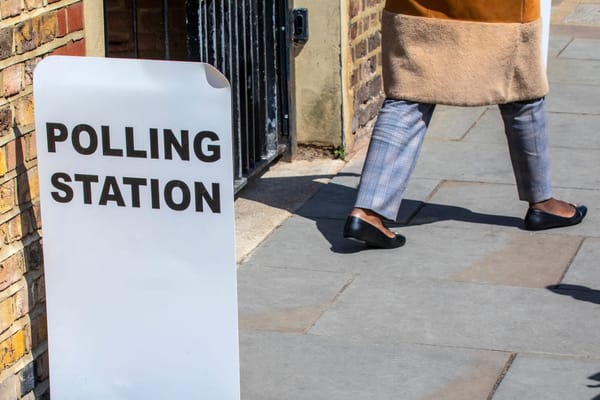
Cliftonville has a confirmed date for its by-election, with voters returning to the polls on 9 April to elect a new Kent County Council representative. This was triggered by the jailing of Daniel Taylor, and several parties are already out of the blocks early.
 Ed Jennings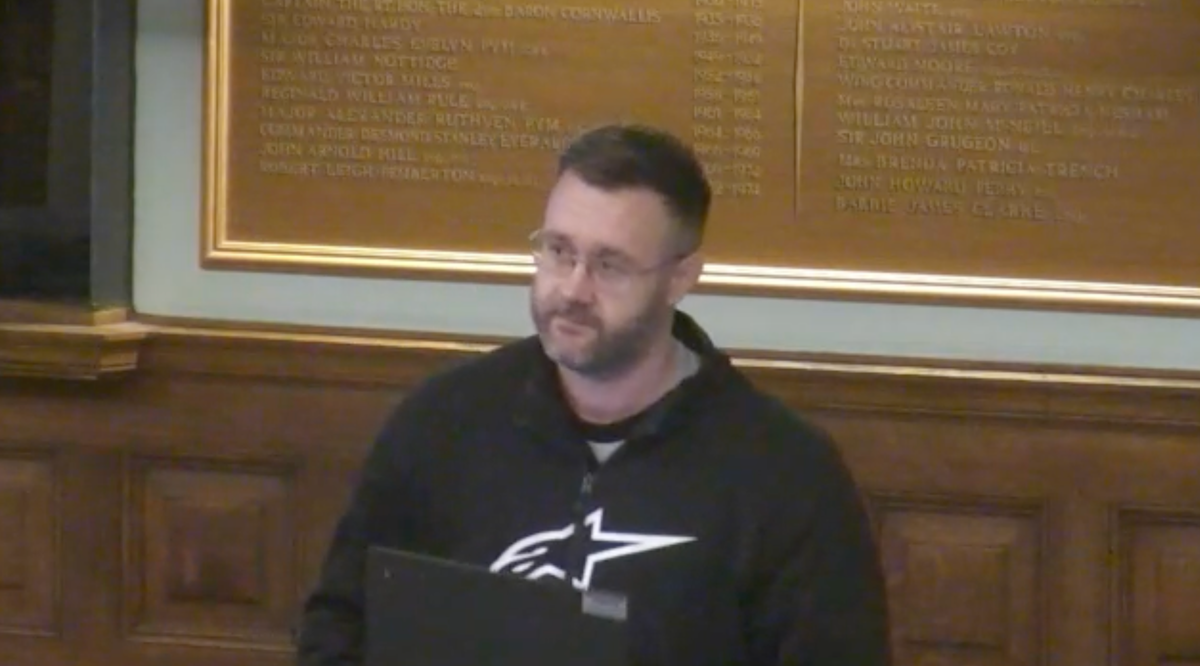
The early shape of this race is less about a single killer issue and more about the kind of by-election story each party is trying to tell. The Greens want it to feel like momentum. They have told us they are going hard on Cliftonville and are hoping leader Zack Polanski will come down to support the campaign.
But their candidate, Rob Yates, is also a very obvious example of the Greens' rapid recruitment. He is a sitting Thanet councillor who only joined the party in September after being elected as Labour, and has never previously stood as a Green candidate. His own pitch on Facebook is competence and delivery, offshore wind experience, and pledges to fight for free buses for young people and sorting out the financial mess ahead of local government reorganisation. All of this is slightly undermined, though, by the fact that the pinned post on his X account is still him waving a Labour banner, which is not the cleanest visual for a campaign that is meant to be about a reset.
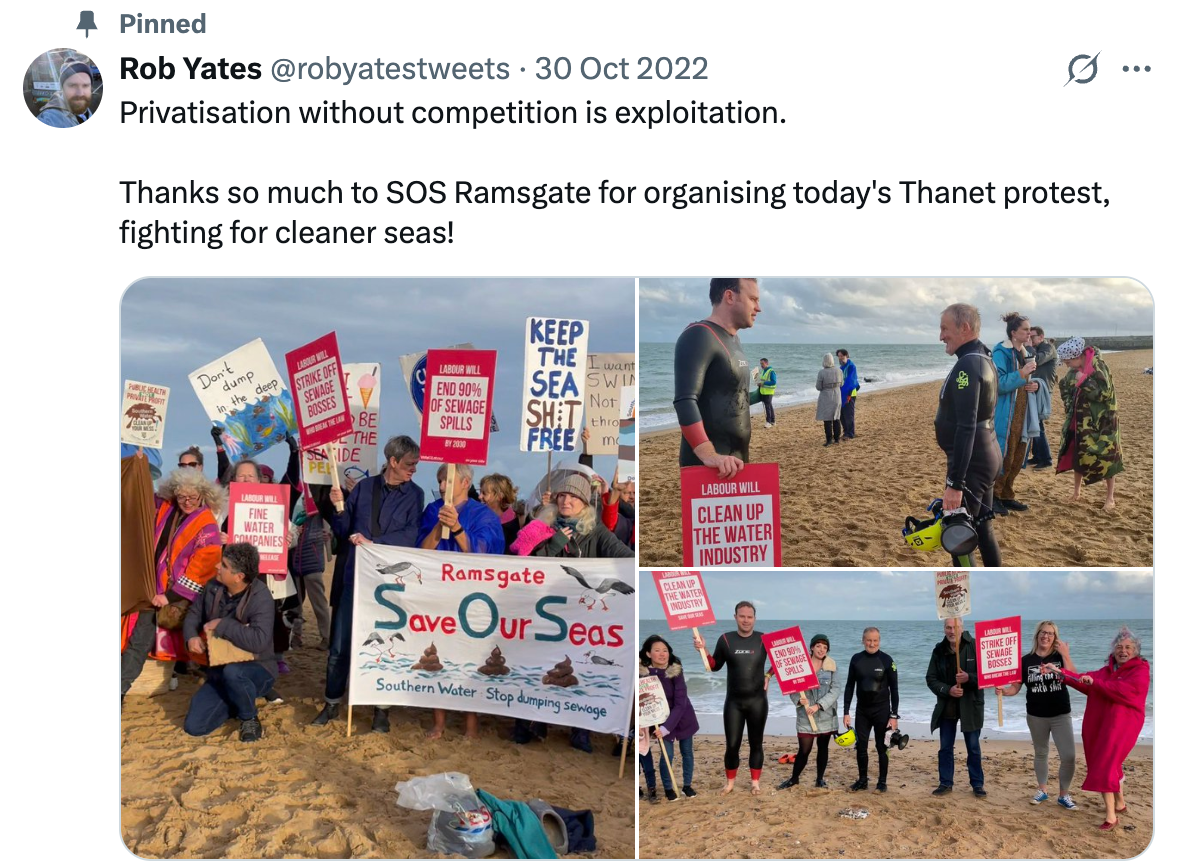
That defection theme is already being weaponised. Thanet Labour councillor Jack Packman has posted about candidates standing as recent defectors and suggested this should prompt questions about whether local politics is becoming a brand game rather than a service job. He is not an uninterested observer here, but the point will resonate with anyone who has watched people swap rosettes and then act surprised when voters act with suspicion.
Elsewhere, you can see the other classic by-election moves being rolled out. The Conservatives have picked Charlie Leys, a Broadstairs town councillor, and the messaging is basically born here, raised here, lives here. As in, his leaflets literally say that. The Lib Dems, meanwhile, have gone back to Mo Shafaei, who stood here in 2025 and polled 147 votes of nearly 5,000 cast. His pitch is the usual list of priorities, like housing standards, services and healthcare, and cleaning up the area, plus the quiet implication that they would like to be taken a bit more seriously this time around.
We still do not have confirmed candidates from Labour or Reform. Restore says they cannot yet confirm whether they will stand at all, which is not ideal for a party that wants to be seen as an insurgent force rather than an intermittent hobby.
Hanging over all of this is the fact that this by-election exists because the last councillor became the story. The real question next month is whether voters decide they have had enough drama and pick someone duller who will just turn up and get on with it, or whether they roll the dice again and hope this time it does not blow up in their faces.
The repost that tells you everything you need to know
There are a lot of ways to embarrass yourself on social media. Most of them are harmless, quickly deleted, and limited to the people who already think you’re a bit of an idiot.
This is not that.
Cllr Kieran Mishchuk, the 19-year-old councillor for Milton Regis on Swale Borough Council, has come under fire after reposting a graphic on X that included the N-word twice, another racist slur aimed at Middle Eastern people, and antisemitic language applied to politicians. The post was presented as a kind of political grid of public figures from the US, UK and Japan, mixing policy slogans with outright racist and antisemitic language.
The Local Democracy Reporting Service report on KentOnline about the incident said Mishchuk apologised and distanced himself from the repost. But it is worth being clear about what the public can actually see. Mishchuk did not post an apology on his own channels, and the quotes included in the report are explanation and disavowal rather than a direct apology.
His account, given to the LDRS, is that he reposted the graphic without properly reading it while scrolling and removed it once it was brought to his attention. The post was up for a day before it was deleted on Tuesday.
The problem with that explanation is not subtle. The slurs were not buried somewhere obscure. They were right at the top of the image. This was not missing a footnote. It was missing the headline, leaving readers to choose between two options. Either he is not being straight about how this happened, or he genuinely did not register what he was broadcasting to thousands of people.
Neither option is reassuring, because he has also said he noticed and agreed with the mass deportations line in the graphic. That is supposed to explain why he shared it. Instead, it underlines the point that he was prepared to amplify something extreme on the basis of a skim, and then claim not to have noticed the racism sitting directly above it.
This comes at an awkward political moment because Mishchuk only defected from Reform to Restore Britain last week. That move is part of a wider churn on the right where people aren’t so much drifting between parties as bouncing through an ecosystem, with each step marketed as a grand awakening rather than a change of badge. In Mishchuk’s case, the new party is led by Rupert Lowe, and it has been keen to present itself as the sharper, harder alternative to Reform.
 Ed Jennings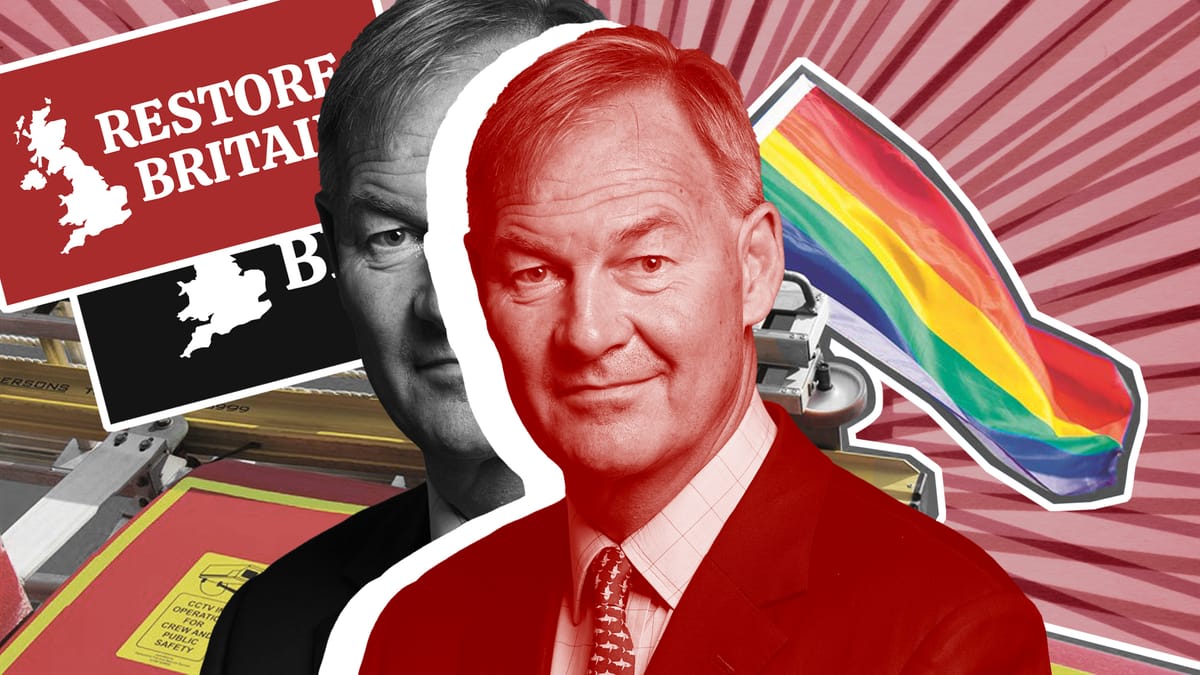
So when a councillor who has just joined your brand-new project is caught reposting content containing slurs, you would expect at least some visible reaction. Political parties can act quickly when they want to, or decide that some things are disqualifying.
Instead, there were no visible immediate consequences.
The following day, Mishchuk was pictured at County Hall in Maidstone, meeting Rupert Lowe, smiling for the camera like the previous 24 hours had been a minor technical glitch rather than an elected representative amplifying slurs. Any formal standards route through the council, if it happens, is likely to take weeks or months, and it is not known whether any complaint has been lodged. But this was not a standards decision. It was a political choice to carry on as normal.
There is also a bigger context here that makes the accident line even thinner. We have been reporting for months on how far-right influencers and activists in Kent have built a fast-moving ecosystem that blends online agitation with real-world mobilisation and intimidation. In Swale, that has meant repeated disruption to council meetings, abuse directed at councillors and staff, and a general effort to make local democracy harder to function in practice.
 Kent Current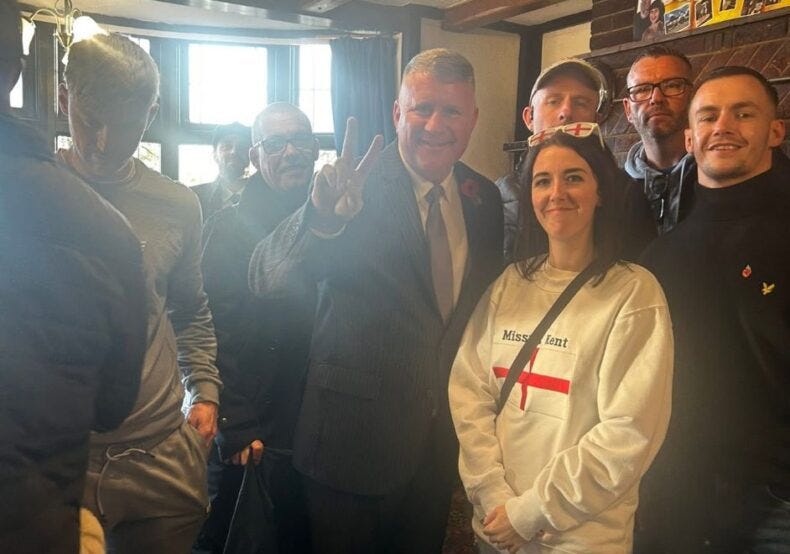
Since this incident, Mishchuk has received public support from Harry Hilden and Jodie Scott, both of whom we have previously covered in the context of that mobilisation and disorder at Swale meetings. That matters because it places this episode less as a one-off lapse and more as something happening within a network where this kind of behaviour is not treated as disqualifying.
Yes, the repost itself is disgusting, but the more revealing story is what happened afterwards.
At some point, the question is no longer whether you believe the explanation but what level of judgment we are now prepared to accept from elected representatives, and what is supposed to happen when they fail even the most basic test of competence.
Footnotes
Follow us on social media! We’re on Facebook, BlueSky, and Instagram for now.