South East Water said outage was unforeseeable the day before it happened again
Water failures, delayed megaprojects and a contested library sale put accountability and long-term planning back in the spotlight across Kent


Kent’s infrastructure and public services are under renewed scrutiny this week. We examine South East Water’s evidence to MPs after the Tunbridge Wells outage, and the fresh disruption that followed almost immediately. We also look at what the start of early works on the Lower Thames Crossing really means, as the project’s main construction phase slips further into the future, and at Kent County Council’s plans to sell Folkestone’s historic library building as a long-running dispute reaches a decision point.
South East Water’s CEO told MPs the Tunbridge Wells outage was unforeseeable. Homes lost water again the next day.
Barely 24 hours after South East Water’s chief executive told MPs that last month’s Tunbridge Wells water outage could not have been anticipated, thousands of homes across the town were without water again.
For residents, the return of bottled water stations this week felt grimly familiar. For South East Water, the timing could hardly have been worse.

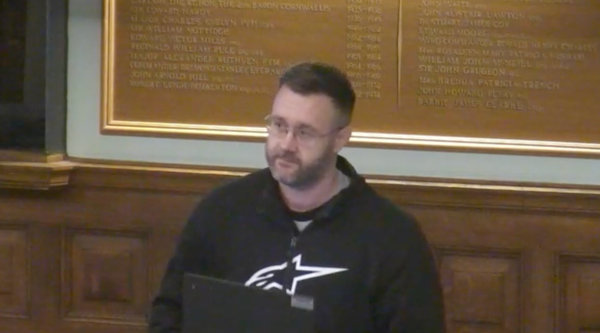
On Tuesday, David Hinton, chief executive of the supplier, appeared before the House of Commons Environment, Food and Rural Affairs Committee to account for the outage that left around 24,000 homes in and around Tunbridge Wells without drinking water for nearly two weeks between late November and mid-December.
By Wednesday, South East Water confirmed a fresh disruption. Around 6,500 households in south Tunbridge Wells and nearby villages were without water or facing intermittent supply, this time blamed on burst mains and depleted storage levels during cold weather.
The sequence of events has become central to the growing scrutiny of the company’s leadership.
In evidence, Hinton described the December crisis as the result of an “unexpected” change in raw water chemistry at the Pembury water treatment works, where a coagulant chemical stopped performing as expected. He told MPs it was not something the company had seen in 20 years.
He rejected the suggestion that the failure should have been anticipated and repeatedly framed the incident as the product of wider pressures, including climate conditions, housing growth and what he described as the absence of national resilience standards in the water industry. When pressed on accountability, he said his responsibility lay in securing future investment rather than preventing the incident itself.
Asked directly to rate South East Water’s handling of the outage, Hinton resisted giving a single answer before eventually settling on three scores. He rated the operational response at 8/10, communications at 6/10, and preventing the incident in the first place at 6/10.
That self-assessment set the tone for much of the session. MPs repeatedly pushed for clearer admissions of fault, while Hinton returned to explanations about systems, regulation and long-term infrastructure rather than immediate decision-making.
Within the same hearing, that account was directly contradicted.
Drinking Water Inspectorate chief inspector Marcus Rink told MPs that, in the view of his inspectors, the failure at Pembury was visible weeks before taps ran dry across Tunbridge Wells.
Rink said there was a noticeable deterioration at the treatment works from 9 November, around 20 days before the outage began. He told the committee the company had failed to carry out appropriate testing requested by the regulator and was operating without the data needed to understand what was happening in real time.
In his assessment, had the correct monitoring been in place, the original chemical would likely have continued to work.
“It shouldn’t have been a surprise,” he said.
The contrast between the two accounts was stark. One described an unforeseeable event driven by rare conditions. The other described a deterioration that was visible, measurable, and insufficiently addressed.
The regulator’s evidence also placed the December outage in a longer context. The Pembury works is the sole treatment plant supplying Tunbridge Wells and has been under an enforcement notice since 2024 over contamination risks. That notice did not prevent the plant from continuing to operate, but it did identify vulnerabilities that would later prove central to the crisis.
What it did not do, Rink explained, was give the regulator the power to intervene decisively before harm occurred. Once South East Water issued a boil water notice during the outage, the scope for further enforcement narrowed significantly under existing legislation.
That regulatory constraint has since become part of the wider debate. But for MPs, it did not explain the gap between what the regulator said was known and what the company told Parliament.
The chair of the committee, Alistair Carmichael, has since written to South East Water, raising serious questions about the accuracy and intent of the evidence given by its chief executive. He warned that providing misleading information to Parliament can amount to contempt of the House and asked the company to respond formally.
South East Water has said it is reviewing the letter and will reply to the committee. There is no public record, at the time of writing, of any correction to Hinton’s evidence.
The hearing also revealed strains beyond the technical detail.
During questioning, Hinton was asked about his relationship with Tunbridge Wells MP Mike Martin in the days following the outage. He confirmed that he had phoned Martin on the evening the MP publicly called for his resignation, after earlier discussions during the crisis itself.
Pressed on whether he had accused Martin of politicising the issue and asked how he could “sleep at night,” Hinton did not fully deny the exchange. He said he could not recall his exact words, described the call as not his finest moment and said it followed comments from Martin, which elicited that kind of response.
The exchange sat uneasily alongside repeated assurances about customer focus and accountability, and committee members returned to questions of tone, leadership and transparency several times.
MPs also questioned why Pembury continued to operate without certain safeguards in place. Rink confirmed that his inspectorate had previously requested the installation of a micro-filtration unit to prevent potential contamination, but that it has not yet been fitted. No public timeline has been given for when, or if, that will change.
Taken together, the evidence sketched a timeline that was hard to reconcile with the claim of surprise.
A treatment works under enforcement. Deterioration visible weeks before the outage. Testing not carried out as requested. A crisis described as unforeseeable. And then, the day after the company’s chief executive defended that position under oath, Kent households were without water again.
If the parliamentary scrutiny was intended to reassure residents that December’s disruption was an anomaly, events on the ground quickly cut against that narrative.
This week’s renewed outage left parts of Tunbridge Wells and nearby villages once again reliant on bottled water, with South East Water acknowledging that reservoir levels were so low the system depended on a continuous stream of tanker deliveries to function at all.
Martin publicly contradicted the company’s restoration timelines, warning that intermittent supply could persist for days. He described a network with no margin for error, where leaks or bursts immediately drained storage and tipped whole areas back into outage.
While South East Water continues to argue that regulation and investment rules lie at the heart of the problem, the regulator’s evidence points to something narrower and more troubling. Known risks were present, monitoring was incomplete, and safeguards were not in place at a critical site serving tens of thousands of people.
Those failures have now prompted MPs to raise questions not just about operational decisions but also about corporate governance and the company's credibility. Those questions sit with South East Water’s board as well as its chief executive.
For residents and businesses in Tunbridge Wells, however, the debate in Westminster is measured against a simpler reality. Within weeks of a major, supposedly unforeseeable crisis, and days after the company’s leadership defended its handling in Parliament, taps ran dry again.
Different causes, different explanations, the same result, and for Tunbridge Wells, the patience is running out.
We can only do this kind of reporting thanks to the readers who generously choose to support our work. If you value our journalism, please consider joining them. A Kent Current subscription costs £1.15 per week over a year and helps us build a better way of telling the stories that matter to our county.
Lower Thames Crossing construction starts, but tunnelling still years away
Early construction work has started on the Lower Thames Crossing, even though the main tunnelling phase remains two years away.
The current focus is on preparation rather than excavation. On the Essex side in particular, engineers are stabilising difficult ground comprising deep peat, alluvium and historic landfill before a tunnel-boring machine can be launched. Large-scale ground treatment and drainage will be needed before that can happen.
Archaeology and ecology are also shaping the programme. Roman-era remains are being excavated along parts of the route, while mitigation sites are being created ahead of major civil works. Both are on the project’s critical path and must be completed before construction can fully ramp up.
The first permanent structures, including the tunnel portals, are due to start construction this summer, with the tunnel boring machine launch targeted for late 2028.
Despite work now beginning on site, the overall timetable has slipped again. Government documents now confirm completion is expected in 2034, with responsibility for delivery moved from National Highways to the Department for Transport and the scheme set to be sold to private investors. The main construction and long-term operation would be funded through tolls under a regulated private finance model, similar to the one in place at the Dartford Crossing.
For now, most of the progress is happening quietly, with the most visible part of the project still years away.
KCC plans sale of Folkestone Library building
After more than three years without a full town centre library, Kent County Council is preparing to formalise a decision that has triggered cross-party criticism and exposed tensions within the ruling Reform group itself.
A report going to councillors next week confirms the council’s preferred option is to base Folkestone’s library and registration service in Sandgate Road, with conversion works underway and a full library due to open in spring 2026. Officers say the site will provide a comprehensive service alongside adult education, replacing the temporary and fragmented arrangements in place since the Grace Hill building closed in 2022.
The former Central Library at Grace Hill, first opened in 1888 and extended in 1910, is proposed for open-market disposal. Council officers estimate that reopening the listed building would require around £2.9m in capital investment, while holding the empty site costs more than £100,000 a year. They argue these costs cannot be justified under current financial pressures.
That assessment is disputed by campaigners and opposition parties. Creative Folkestone, working with community partners, submitted a proposal to restore Grace Hill as a community and cultural hub, combining a publicly operated library with education space, creative studios, digital workspaces, archive facilities and community uses. The proposal was framed around a partnership approach, with plans to seek central government funding to carry out the extensive repairs required.
Council officers conclude the proposal carries too much uncertainty, citing reliance on external grant funding, a lack of clarity around ownership and long-term liabilities, and the risk of ongoing costs to the council while funding bids are pursued. On that basis, officers recommend confirming Sandgate Road as the library’s base and proceeding with the sale of the Grace Hill building.
Political opposition has been strong. Liberal Democrat councillor Tim Prater has said he cannot support the recommendation and will challenge what he describes as flawed assumptions in the report. Labour MP Tony Vaughan has accused the Reform-run council of rejecting a genuine community partnership without properly engaging with it, while the Shepway Green Party says the decision effectively closes the door on the library returning to its historic home.
However, not all Reform councillors are aligned. John Baker, county councillor for Folkestone West, said he understood the financial case for moving the library to Sandgate Road but described the loss of Grace Hill as “disappointing” given its cultural and community importance. Baker said he remained strongly supportive of Creative Folkestone’s vision for the building and stressed that the decision did not rule out a future return.
Crucially, the Sandgate Road site is held on a 15-year lease with a break clause in December 2030. The council has confirmed a formal review around 2028, creating a potential route for the library to relocate again if a restored Grace Hill or another viable option emerges.
For now, however, the council’s position remains that Sandgate Road will serve as Folkestone’s library “for the foreseeable future,” with the fate of the Grace Hill building set to be decided through an open-market sale.
In brief
💷 Medway Council will still need to apply for Exceptional Financial Support from the government to pass a balanced budget despite increased funding levels.
🚌 A school bus carrying children crashed into a ditch near Ashford in icy conditions yesterday.
🚆 Network Rail completed work to upgrade track and equipment around Ashford over the Christmas period. Elsewhere, a project to protect the railway from landslips at Folkestone Warren is underway.
⛴️ Thanet District Council is seeking to remove its duty to keep Ramsgate Port open, in an effort to dispose of the mothballed terminal.
🏗️ The tendering process has begun for £115m of enabling works for the central phase of Ebbsfleet Garden City.
➡️ Expelled Reform councillor for Sheppey Isabella Kemp has joined the Independent Reformers group at Kent County Council, bringing their number to three.
🗳️ Sevenoaks councillor Gary Williamson has passed away. This will trigger a by-election in his Halstead, Knockholt and Badgers Mount ward.
Footnotes
Follow us on social media! We’re on Facebook, BlueSky, and Instagram for now.