“The only way you do anything in life is by failing”
What we asked Ian Ballard, owner of Damaged Goods Records
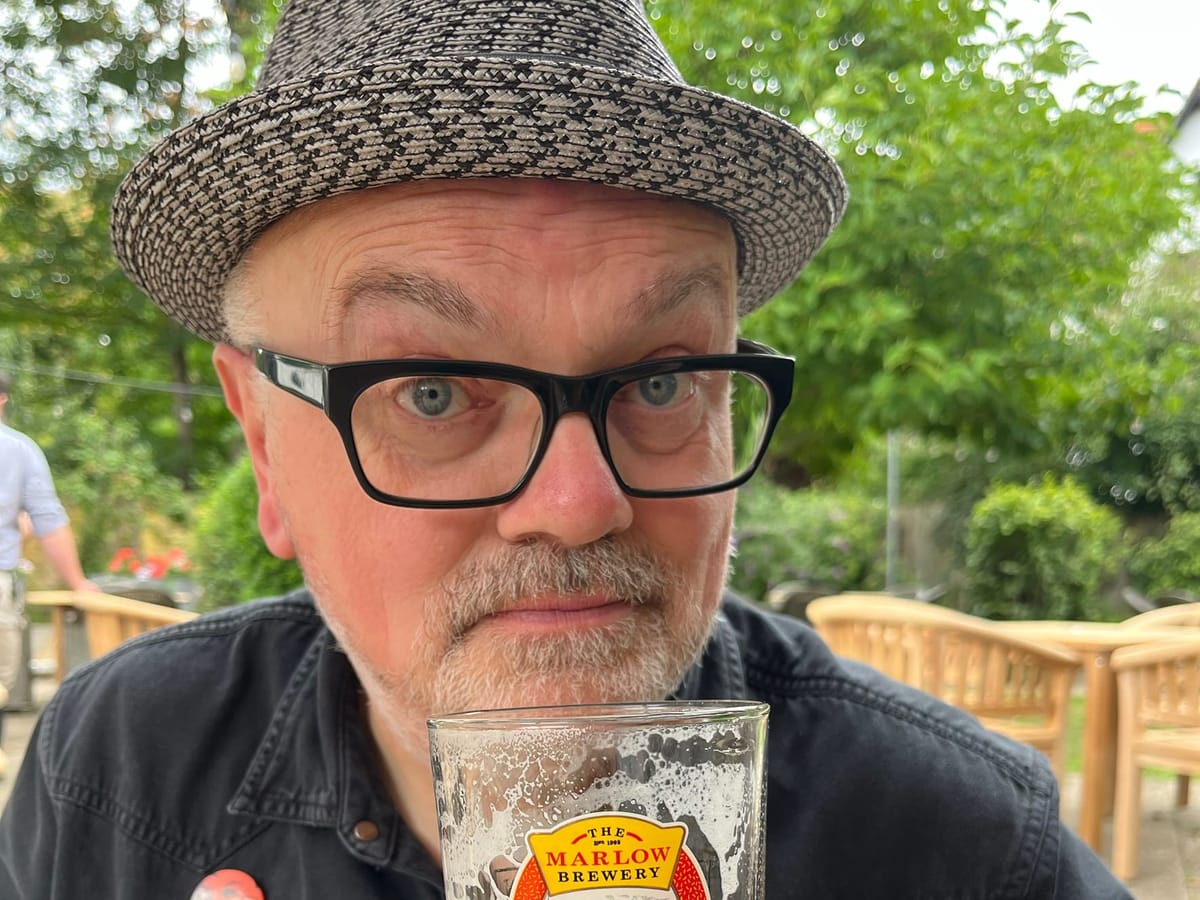
Steven visited Broadstairs to meet with Ian Ballard, of the Damaged Goods record label. They talked about why Broadstairs, setting up a record label when you don't know how, and causing a 'riot' at a football match...
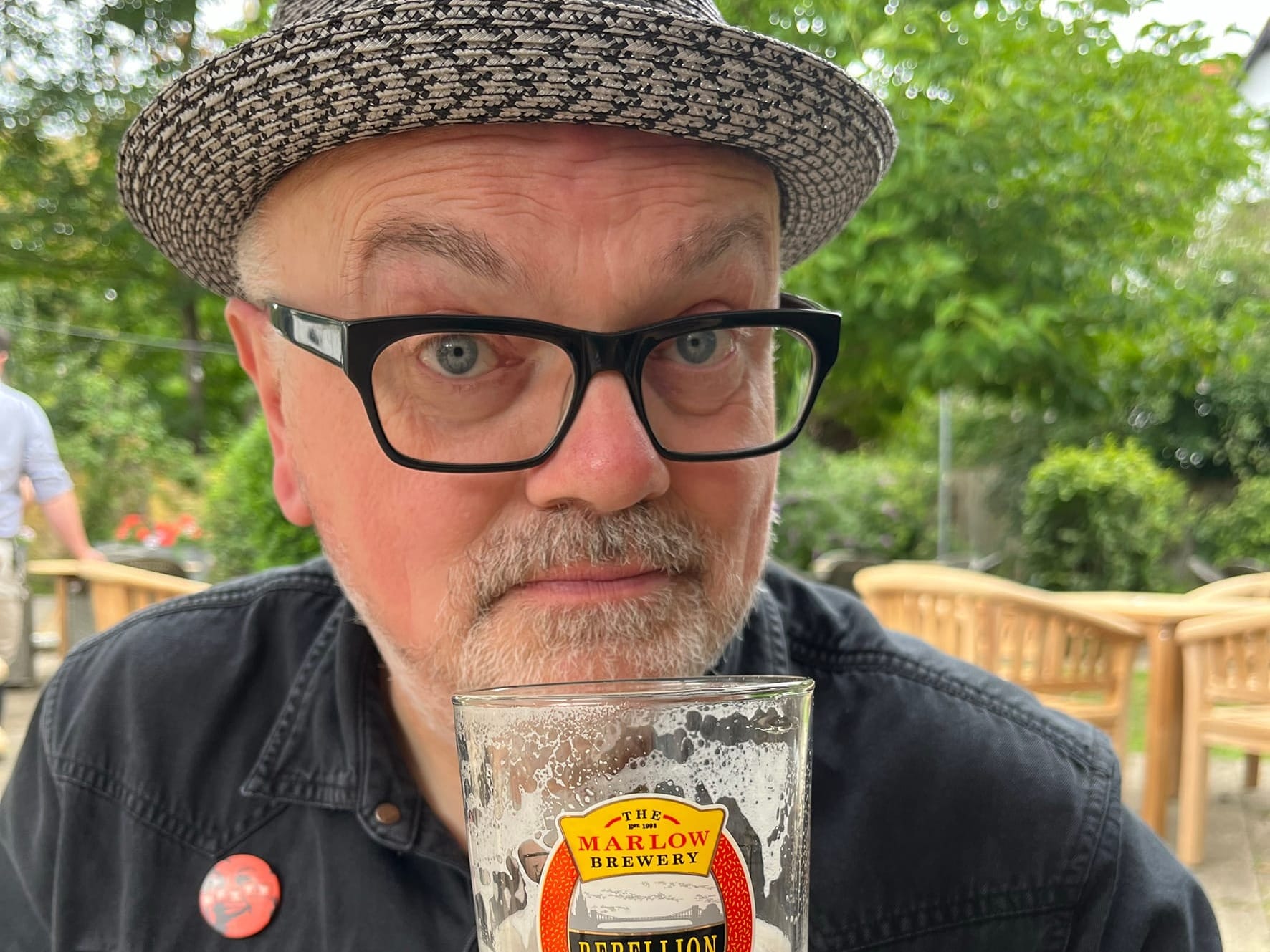
What is your official occupation?
I run a record company. I'm the boss of Damaged Goods Records. We have one other employee, Duncan, who, without him, nothing would work. Damaged Goods have other people working with us, doing press, a bit of promo work and various things, artwork sometimes. Mainly, it's just me seeing bands and going, 'quite like that, let's do a record.' Then sometimes bitterly regretting it and other times being over the moon about it. The chances of success are minimal. You can have a great time doing it, even if no one makes any money. With a record label, you need a few that do make some money to pay for the ones that don't. It's good that we have the odd successful ones, and we've been going 38 years now.
Sometimes you have releases that don't make any money, and the general impression of the music industry is it's full of scum and villainy. How have you managed to keep going financially?
By not being scummy or villainy. Being fairly straight and saying, if we do a seven-inch single, no one makes any money. We don't make any money on a seven-inch single, even if you sell 10,000. If you do 500 singles, you're probably going to lose 200 quid. That doesn't take any account of your work or the effort you put in, or all the beers and everything else.
Starting a record label wasn't to make money. It was just to do one record. My grandad gave me a stack of records that he didn't want because they were little ones, and he liked the bigger ones because he didn't have to turn them over so often. I basically had these singles, and like your average boy, you have to collect something or be obsessed by something. I was obsessed by records. The punk rock movement changed everything for me as well, even though I was a bit too young sort of for the first wave gigs and everything.
It was more just to do a record, because I collected records. There was obviously no internet. But you phoned up people and asked people in record shops, and they go, 'You get it cut, and then they do something with it, make it the other way round and then you tell them how many you want and they make them, and then you make sleeves and then you…” I just did one. That was how Damage Goods started. No plan. 500 quid was what I had at that time. I made some money from a job I had, which in ‘88 was a reasonable amount. I think the singles cost me about 350 for 500. Basically, I licensed it off a label called Decca, a big, major label. They had a band called Slaughter & The Dogs, Manchester punk band. Not a very successful Manchester punk band, but they released three singles and an album. I got in touch with them, with the naivety of never having done it before, because if I'd have gone through official channels and everything else, I probably wouldn't have made it. By phoning up and talking to some bloke who was leaving the place soon, he said, “Yeah, I'm sure we could do that.” He said, “How are you selling them?” I used to go to a lot of record shops. I'd spend all my Saturdays in record shops around London, and I thought, “I'll just go in there, and they'll buy some and whatever.” I knew the music press, I sent a copy to all the music papers, and that was really how it started. It was just one single, and it sold out. I sold the 500 over a couple of months just myself. One of the distribution companies in the UK got in touch and asked who distributes the records to shops. “We can sell it to Scotland and abroad in Japan.” Okay. Then I realised what they give you back is a lot less. I had no chance of making any money on a single. But it was really good fun. I didn't care if the money came back or not, really. People kept saying, “Well you've done the single by Slaughter & The Dogs, why don't you reissue the album?”
This was in '88 when punk rock was fairly dirty work. It was at that ten year period where almost everything is a bit shit. After 20 years, people start remembering. Now 50 years on, everyone's like, that was the best time of my life. Sex Pistols are playing Dreamland in Margate and things like that. All old people touring the country one last time.
That's how it started, really. Once I did the album, and that sold better than the single, and you make a bit of money on albums, because at the time they cost about 50% more than the single, but instead of selling it for a pound at the time, I'd be getting three quid for them, the profit margin is there. That led me to have a little bit of money, and then I did another one, then another one. I could bore you all the way through. There are 700 releases. The money is not in singles. Singles are for fun. Singles are because I'm old and I like singles.
If you sell a thousand, you probably should more or less break even
In the modern era, how successful does an album need to be for it to be financially successful?
If you sell a thousand, you probably should more or less break even, unless you've paid an awful lot recording it. Some bands, you just say, I'll put the album out, it's their recording, I'll just license it from them. That's the record that we do a 50/50 split on. Very straightforward. It's the best way. It's the best way for the bands. If you make a grand, then 500 quid for the band, 500 quid for us. It works out quite well. If you make 10 grand, then obviously our percentage is good for us. It means we can invest in something else, go on holiday. But mainly, we end up doing more records.
How would you describe Damaged Goods?
Damaged Goods are whatever I like, which doesn't help. But it is basically a punk rock, garage, and indie record label. That's what I always say. We do punk rock, do garage, 60s, and we do indiepop as well, because I quite like a pop song. It is basically anything I like.
What brings you to Broadstairs? Why have we met here today?
I'm in Broadstairs because I just love coming down this bit of the country. I didn't go on holiday here when I was young, but I think it was around the end of the 90s, I may have come down for a gig or something in Ramsgate or Margate. I like the fact that there's these three little places next to each other. Ramsgate, Margate, Broadstairs is in the middle, and it's just a really lovely area. I really like the people. I like everything about the sea.
I still technically live in East London. I've got a place down here. I quite like doing up old houses. I got an old house years ago, did it up, more than that, tiny little thing. We let it out sometimes down here. Things go wrong with it all the time because it's 400 years old. I came down today because the front door wouldn't open. I had to force my way in and then sand it and saw a bit off, and now it closes perfectly.
What led you to buy the place?
A friend of ours had already got one, was in a band as well. They were a band called Heavenly, and they found the place, and we met them down there, and we were looking going, “It'd be really good to get a place, if we could find something natural that needs doing up.” People had put tin foil on the walls and papered over it and over these holes, and we had to take everything out and then do it again. It was more for the fun of it, really. It's a good release from the records.
When you first started, you were focusing on re-releases. What led to your first original release?
I guess it was inevitable. I went to loads of gigs. Eventually, bands would start saying, “We looked for someone to put a record out.” I was only doing reissues. As well as Slaughter & The Dogs, I worked with Snivelling Shits. It was an album I put together with the original lead singer, who found tapes under his mum's bed. We went to a legendary producer called Dave Goodman. That was one of my proudest things on Damaged Goods. That wouldn't have existed unless I'd have met him in this record shop at that point, and he took us round his mum and dad's house, and we pulled all this stuff out, these cassettes of stuff that had never been released. It was quite a legendary band, but no one knew them. One single they ever had out. I've forgotten the question.
What led you to releasing your first original?
Oh, right, yes. So it was a single with the drummer from a band called the Revillos. A bloke called Rocky Rhythm. I saw his band, and he was going on about doing a record with Damaged Goods? I was like, go on then, people will know him, and that's bound to sell. I've still got some. They all got some. It didn't sell. But it was a good single, and I really liked him. It fell flat on his face. Red vinyl, 7 inch. A thousand copies and yeah, definitely still got some.
You've also released an album with the Manic Street Preachers?
No, I did their first proper single. I did their first EP. The fourth new release we did.
How did you meet them?
It was just going to a gig. 1989, July, I think it was, a pub called the Horse and Groom in Great Portland Street in London near the BBC. They were playing upstairs in this little pub, and they did this little seven-inch themselves called Suicide Alley, and I went along, and they were just amazing. There was no stage, they were jumping about, the energy was brilliant. Couldn't understand anything. The sound was pretty ropey. But it was a really good gig. It was their first ever gig in London. Hardly anyone there, but it was really good.
It's a pretty brutal, terrible business in a lot of ways.
When you look at where the band got to, are they the most high-profile band you've worked with?
Yeah, I'd say so. Recently, we did the first record by Amyl and the Sniffers.
That was in 2018. That one did really well. That's one of the ones that pays for the mistakes. They're not always mistakes. They're going to do 500 singles, you're going to lose some money, but you want to do it. They're probably not going to get anywhere, never going to be on a major label. It's the underdog sometimes, or just a cool, interesting single, and you would rather do it than not and then some people go “What did do that for?” Why not?