The week the water stopped
A week of dry taps, false deadlines and emergency queues reveals a broken system and a town running out of patience

This week’s edition arrives on a new platform as our first full newsletter sent from Ghost, but the story leading it is one all too familiar to thousands of Kent residents. Tunbridge Wells has endured nearly a week of water failures, broken deadlines and a boil notice that will stretch well beyond the return of supply, exposing long-flagged weaknesses in South East Water’s network and a collapse of trust across the town. We unpack how the crisis unfolded, why it keeps recurring, and what it means for the wider county, plus the key developments from across Kent.
The week the water stopped
By Thursday afternoon, most of Tunbridge Wells finally had water coming out of their taps again.
Drinking it was still out of the question. South East Water told residents they would need to boil every drop meant for cooking, brushing teeth or swallowing for at least the next ten days.
After nearly a week without running water, the supply was back, but not in any way resembling normality.
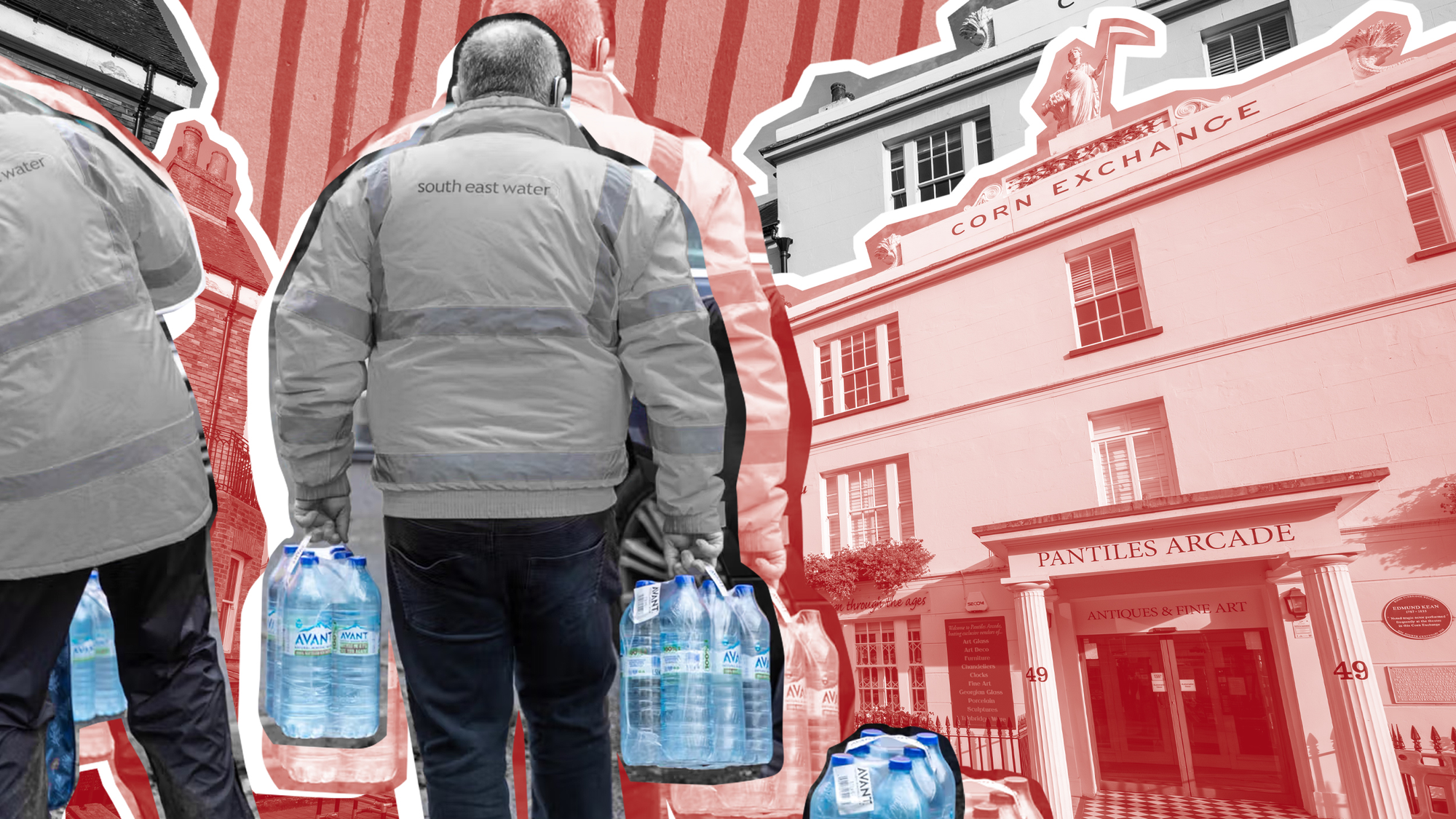
The partial return did little to erase what had built up since Saturday night, when 24,000 homes across Tunbridge Wells, Pembury, and surrounding villages first lost water or saw their pressure collapse to a trickle.
Heating systems had been switched off in many homes over fears of running boilers without water supply. Toilets were flushed with bottled water poured slowly into cisterns. Households had gone days without washing properly. Streets were filled with residents carrying plastic containers.
Care homes struggled to keep residents clean with bottled water deliveries. Shops, schools, GP surgeries and community buildings shut their doors, leaving the town centre eerily quiet.
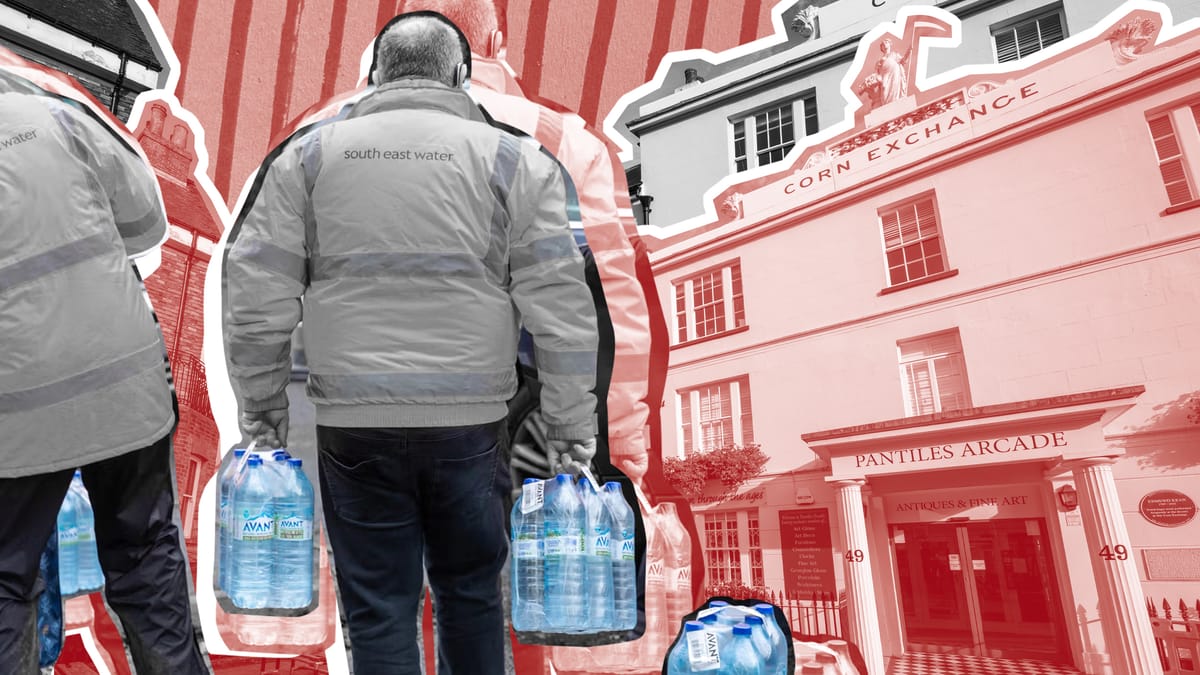
People spoke about the strangeness of daily routines being rearranged around water collection. Cars queued far back along St John’s Road as drivers waited for volunteers in high-visibility jackets to open their boots and load in packs of bottles without a word wasted. For many, the queue was the clearest sign of how little the town could now take for granted.
Tunbridge Wells resident Erica Jones described her week as one prolonged exercise in improvisation. Every household job had turned into a workaround. Toilets flushed with 2-litre bottles, handwashing replaced by antibacterial gel, and dishes stacked because no one wanted to risk rinsing them. Showers replaced by quick wipe downs. “It’s been a cold, dirty and miserable few days,” she said.
Even with water back, she did not trust what came from the taps enough to use it.
To understand how the town reached this point, it helps to trace the week back to its beginning.
Taps first fell silent on Saturday evening. Residents began reporting that their water had disappeared entirely. South East Water blamed a problem with a batch of chemicals at the Pembury Water Treatment Works. The company said storage tanks could not be filled safely.
People assumed it would be brief, but Sunday brought the first missed promise.
South East Water suggested that the water would return that day. It did not. Some households still had no supply at all. Others had only a fading dribble.
By afternoon, supermarkets were busy with people buying bottled water. The sense grew that this was more than a short interruption. The experience of 2022, when an outage lasted six days, hung in the back of many conversations.
Monday opened with more problems. Another estimate from the company came and went. Some homes still had nothing.
Schools closed. Cafés closed. Health services cancelled appointments. Hairdressers, restaurants and nurseries could not operate. Offices shut because their buildings no longer met basic hygiene standards.
By late morning, Tunbridge Wells Borough Council declared a major incident.
“This situation is wholly unacceptable,” said chief executive William Benson, warning that families were unable to wash, cook or send children to school and that businesses were suffering “significant disruption.”
Kent County Council followed later that day. Its leader, Linden Kemkaran, said the council was “really disappointed that lessons have not been learnt” and added “we won’t stop until South East Water has resolved this issue.”
Temporary toilets were installed. Bottled water stations were expanded. Walk-in collection points were created for people who could not queue by car.
By Tuesday, the cracks were widening.
Another confident deadline was given. Another slipped away. People began to see a pattern: each assurance of a return within hours collapsed into the next delay. Homes began preparing properly for a multi day outage only after it had already become one.
Businesses counted the cost. A beer café threw out more than one hundred litres of spoiled stock. A restaurant wrote off thousands of pounds in produce. A café said losses had reached at least £15,000 already. Staff were sent home. Deliveries were cancelled.
WhatsApp groups filled with updates on where bottled water was available and how long the queues were, while residents began reading regulatory documents for themselves.
One detail began to change how residents viewed the crisis. In 2024, the Drinking Water Inspectorate formally designated Pembury Water Treatment Works as a site presenting a “significant risk” to public health unless urgent upgrades were carried out. The notice warned of potential contamination from pesticides and several bacterial pathogens. What had looked like a sudden breakdown now resembled the failure of a weakness already identified.
By Wednesday, that weakness was playing out in real time. As the network was slowly refilled, South East Water’s head of water quality, Dr Neil Hudson, said the same water quality issues that caused the initial shutdown had reappeared. Pembury, he said, was “unable to produce drinking water that meets the strict regulatory standards required for consumption.” The problem was now a “potential fault in the final disinfection process.”
Water was safe only for flushing and showering. It remained unsafe for drinking, cooking, brushing teeth or washing food. Residents were told to boil water for at least ten days.
Some households saw water briefly return late on Wednesday, but the relief did not last. Pressure faded again within hours as the fault resurfaced, leaving people back where they had started. The boil notice took hold at the same moment that taps which had sputtered back into life fell silent again. By Thursday morning, much of the town was effectively on its sixth day without a reliable supply, waiting to see whether the latest restoration would hold.
The political reaction hardened. Tunbridge Wells MP Mike Martin described the episode as “a total failure of leadership.” He criticised bottled water stations being placed in the wrong town, vulnerable residents being left without support and restoration deadlines that had been “wrong every time.”
“David Hinton must resign,” he said of the South East Water’s chief executive, noting that he had been assured after the 2022 outage that such a failure would not happen again.
The Environment, Food and Rural Affairs Committee wrote directly to the company. “We are significantly concerned by your company’s performance,” it said. It highlighted the earlier warning about Pembury and reminded the utility that urgent upgrades had been required to protect consumers.
The Drinking Water Inspectorate said it was investigating and could take enforcement or legal action.
Ofwat, the water regulator, previously opened an enforcement case against the company in 2023. “Too many customers have been failed too often,” said chief executive David Black. South East Water had been the worst performer in England and Wales in terms of supply interruptions at the time, and little appears to have changed.
At one bottled water station, the local Green Party offered its own view. Campaigner Joe Mattei said that “the fact that South East Water keep breaking their promises for when the water supply will be back on shows how incompetent they are. Firing the CEO of South East Water, as Mike Martin MP has called for, isn’t enough. We need to bring the water companies back into public ownership.”
For South East Water, this is only the latest in a run of failures. The six-day outage over Christmas 2022, last year’s summer supply problems in parts of their patch, a treatment works shutdown after a power cut earlier this year, and now a contamination-driven shutdown at Pembury.
The company says it has invested heavily and improved its crisis response systems. It also argues that it needs greater funding in the next regulatory cycle to address the region's specific risks, including work at Pembury.
Yet the same reports show repeated failure to meet supply interruption targets, rising penalties and unresolved vulnerabilities across its network.
By Thursday afternoon, water returned to most households, though unevenly. Some saw clear water, others saw cloudy water. Care homes still could not offer baths or showers. Schools were deciding whether to reopen. Businesses weighed up the weekend.
The boil notice remained. For some households, the water was back in name only.
Throughout the week, the most consistent theme was the collapse of trust. Residents said their confidence dropped with each missed timescale and each shift in explanation. Erica Jones said she was “not brave enough” to follow the boil notice exactly because earlier guidance had already proven unreliable.
Six days after the outage began, a wider pattern is clear.
This is not the first time a major water failure has hit the area. It is another in a series of breakdowns affecting the same communities in different ways over recent years.
The water is back for now. But the questions that matter most to the town remain: Why does this keep happening here, and what will finally stop it?
In brief
🗣️ All 14 council leaders in Kent have come together to lobby the government for a devolution deal after initial efforts were rejected.
🏛️ Kent County Council have chosen to replace outgoing Chief Executive Amanda Beer with... Amanda Beer. She had already deferred her retirement twice and will now stay on until the council is abolished under local government reorganisation plans.
🏢 Maidstone Borough Council is considering a move that would stop Kent County Council from selling off Invicta House in the town for conversion into flats without planning permission.
🗳️ Meanwhile, the leader of Maidstone Borough Council, Stuart Jeffery, survived a no confidence vote in his leadership by a 28 to 14 margin.
🥀 The leader of Ashford Borough Council's Labour group has not taken a defection of one of his councillors to the Green Party well.
🦢 Bird flu latest: A farm near Newington has become the third location with a confirmed case, leading to a new exclusion zone being set up. Elsewhere, swans are continuing to succumb in large numbers around Thanet and Canterbury.
Footnotes
Follow us on social media! We’re on Facebook, BlueSky, and Instagram for now.