"Without planning and development, you haven't got an economy"
What we asked Andrew Metcalf, Director of Maxim PR and Chair of Kent Invicta Chamber of Commerce
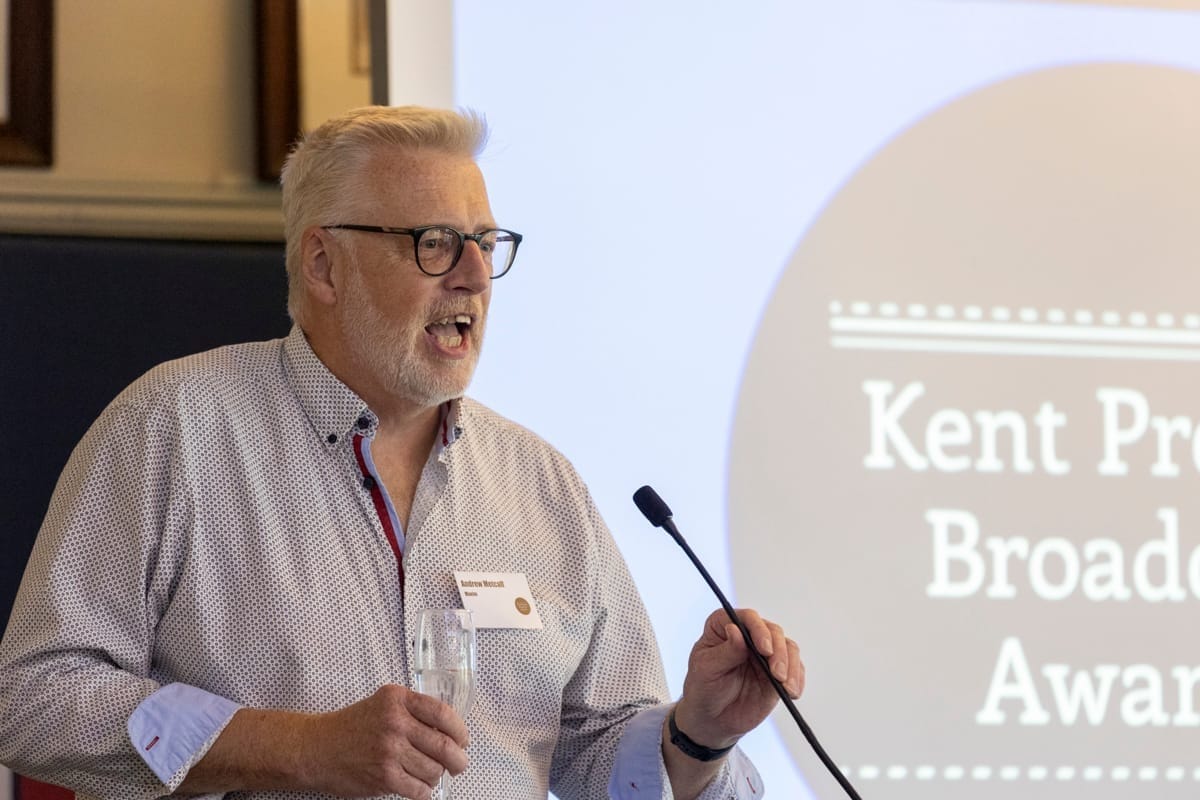
Steven visited the Maxim PR offices in Tunbridge Wells to meet Andrew Metcalf following his ascension to chair of Kent Invicta Chamber of Commerce, where they talked about how Kent has improved in the last 25 years, what Andrew thinks about local government reorganisation and his PR advice for a hypothetical independent regional news website...
What is your official occupation?
Managing Director of Maxim PR.
Do you have additional roles, paid or unpaid?
I am also the chair of Kent Invicta Chamber of Commerce. I also sit on the board of the Kent and Medway Economic Partnership, which is the public-private sector partnership. I'm also on the Kent and Medway Business Advisory Board.
What does Maxim do?
We are a PR, public affairs and marketing agency. We've got more involved in what's going on in terms of politics, the economic development agenda, although we've always done that for the last 30 years since we formed in '95. We advise businesses who are looking to grow, looking to invest, looking to build their reputation, develop relationships with local authorities, other businesses, et cetera. A lot of it is involved in the planning arena, which is always fun.
Are you part of the problem when it comes to the devastation of the Kent countryside?
We're never part of the problem. We're part of the solution in terms of hopefully bringing about sustainable development. Because yes, nobody wants to see development in the wrong place of the wrong type, whether it be housing, factories, whatever. But there has to be an understanding that without planning and development, you haven't got an economy, you haven't got places for people to live, work and play. You've got nothing. While there are certain parts of the community who would like to wrap it in aspic and never have it changed at all, and just keep talking about the genteel Garden of England, the reality is it's not going to be the case anymore. But it has to be proper development. That's what we're getting forward with.
What does the Kent Invicta Chamber of Commerce do?
Kent Invicta Chamber of Commerce is the county-wide chamber of commerce for Kent. It is affiliated to the British Chamber of Commerce, and therefore we can tap into those networks that are not only regional, but national and international. They've got chambers in various countries around the world. It's being part of a bigger organisation while at the same time delivering locally for companies in Kent and Medway. That's ultimately what it's about. It's about trying to support them through advice, events and generating business growth, networking, strengthening supply chains, keeping them up to date with what's going on legislation-wise, whether it be employment law and the new laws that are coming in, or whether it be just general business advice really, alongside Thinking Business magazine and their website.
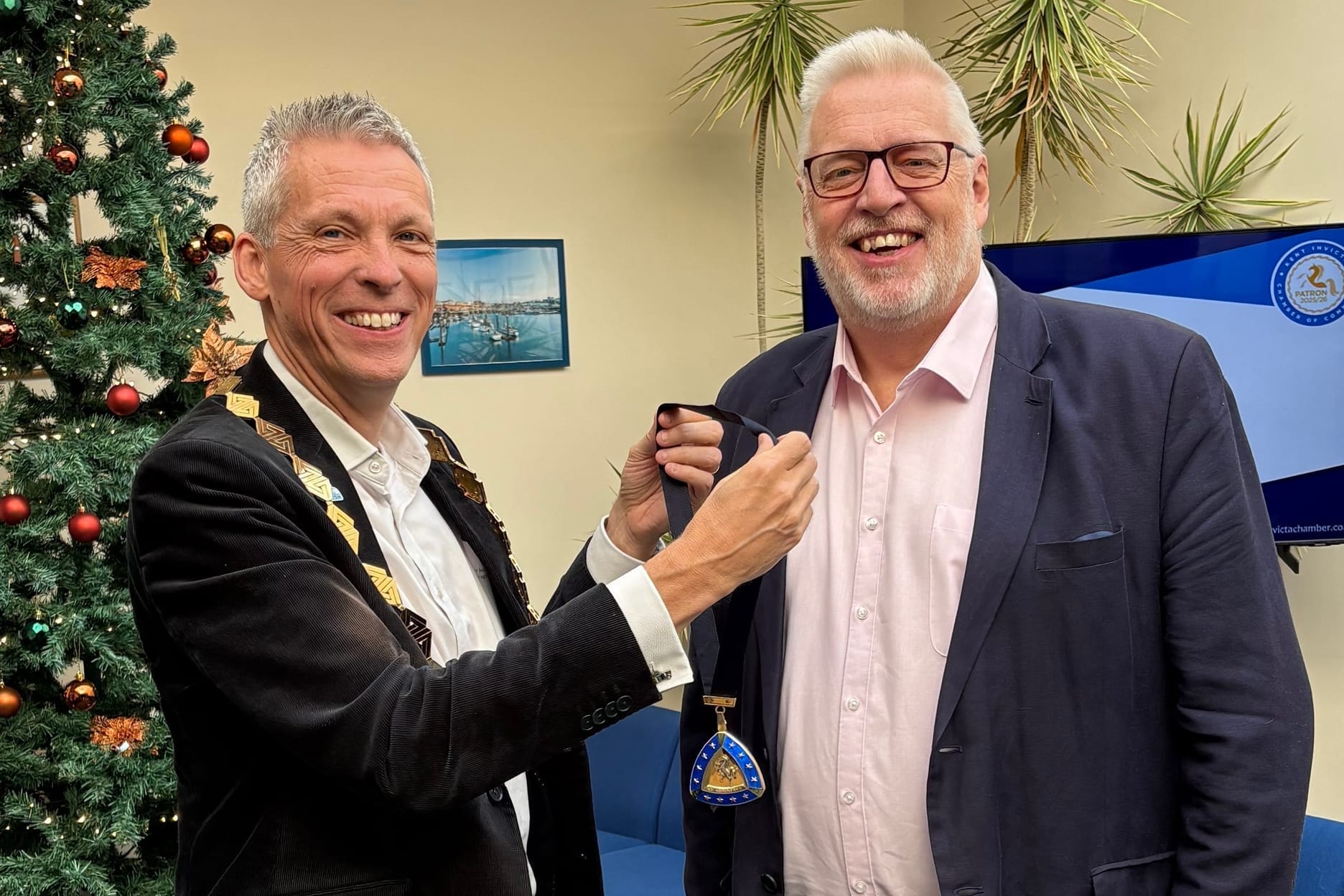
How did you come to be the chair?
I think everyone else took a step backwards.
I've been involved in the chamber for about nine years, and about three years ago, I was asked to be vice chair. What happens is you do your time as vice and then after two years, the chair steps down, and you become the chair. It's about that continuity of understanding of how the chamber operates, the challenges it faces, and there are challenges just like every business at the moment. Having a good board behind you and also a chief exec and the management team. They do a lot of good work, and given we set up Maxim 30 years ago, and we've always been in the space of economic development, it seemed like a natural organisation to give some time to. I enjoy it. The work they do trying to influence the economic development agenda is really important.
It'll be an ongoing role talking to political leaders, talking to economic development officers, where necessarily going up to the House of Commons, talking to them, talking about what's going on across the region, and then also connecting with other chambers of commerce, whether it be Sussex or Essex or everywhere else. It's that cross-Thames collaboration, cooperation, and I think we need more of that. That regional agenda disappeared, which is a shame.
How did you come to launch the Kent Press & Broadcast Awards?
I think they came about because there was the Kent Press Awards, and they were sponsored by one Kent company and organised by one Kent PR agency. Then overnight they closed, they stopped. The sponsor pulled out, and they didn't have any way of getting that level of funding to make it happen. We watched this, we thought that's interesting, we still think, and this is obviously 13 years ago, when the landscape was totally different, that there was a need for an award scheme that recognised and rewarded the work of local press in the county and that being an agency that had always been involved in PR and already having good relations with lots and lots of the major companies in the county and at the same time with all the editors, news desks, individual publications, all that sort of stuff. We had the platform on which we thought we could build something. It's something we think is important in terms of celebrating the hard work that goes largely unnoticed at best, and at worst, it gets criticised for actually holding people to account for doing things that they probably shouldn't do. There's a need for it now more so than ever. We've been very lucky. We've got some really great sponsors. We've got some really good judges who give their time for free. Obviously, we pay them expenses, we buy them a lunch and whatever, but they feel that they want to help young journalists coming through publications that are independent to make the next step, and they realise that they also understand news and what makes a good story, and that's what we celebrate. This year will be no different, I'm sure. We've just literally sent out the press release, and we've just confirmed the speaker, which should be good. I'm looking forward to another day of interesting people, times and conversations in Canterbury.
Businesses have had some difficult times the last few years, and the first thing that gets cut is training, and the second thing is marketing
When you mention why it happened to the original press awards, is there a risk in the current economic climate of not getting enough sponsorship for the current KPBA?
I think there's always a risk and we've struggled. Last year we were full, the year before was a challenge. I think that comes with economics. Businesses have had some difficult times the last few years, and the first thing that gets cut is training, and the second thing is marketing. We have to put the case, but there are some businesses who are such advocates of what we do in terms of why the awards are important, whether it be Port of Dover or Eurotunnel, they're great. That's what we want, and it's reflected in the awards and the level of entries, and also it's reflected on the day with the actual enthusiasm of winning an award that actually matters. We went over to KMTV the other week, and we met the team, and on their walls, they've got all the alumni who have gone on from there to ITV or BBC or whatever and the vast majority at one point have won a Kent Press Broadcast Award and that for us is why it's so important. It's great to see that and feel that just winning that award has probably made some sort of difference in their ability to get shortlisted and then put themselves forward.
Are you on the judging panel for the Kent Press & Broadcast Awards?
No. The KPBAs, which is something that Maxim has organised, I think this will be its 12th year. That is a not-for-profit project. The judges themselves are all journalists or have been in the media, and therefore, unlike a lot of business awards, it maintains that the entries are properly judged and there's integrity in terms of the results.
So you just go for the lunch…
I turn up with Rachel [Knight, Director at Maxim PR], and we have the judges' lunch where they battle it out around the table as to who should win what category, who should be shortlisted, who's the finalist, et cetera. That's interesting to watch in itself. We have no input into it. We literally monitor, write down the results and then keep them under wraps until the big day.
The county hasn't got a great history in terms of collaboration
Whether it be from Maxim’s involvement in local development or the chamber of commerce, what are your thoughts on local government reorganisation?
I think LGR is an incredibly difficult one. The aims behind it make total sense. The duplication of effort, budgets, cost savings of bringing people together, although quite frankly, in the past, the county hasn't got a great history in terms of collaboration. I do think the idea is sane.
The problem is there's a risk that we lose our heritage and history and our connections because, for instance, look at Swale. The possibility of cutting Swale in half and having Faversham, which has probably got more in common with Canterbury and Sittingbourne having more in common with Medway, to me seems like a logical, rational thought. But I don't live in Swale, and that's really a decision that they should be making. There needs to be a proper case put as to why LGR is important. At the moment, businesses don't feel they have been engaged with on what LGR means. The reality is what we do want is something that we can be part of, to have a business voice that reflects the new landscape of local government. Whether it be three or four unitaries with some mayoral authority, or foundation authority, or whatever they want to call it next Tuesday, I don't know.
At the moment, my worry is that it's now gone up to the Minister, the Minister will decide, and it'll be, 'There you go.'