Greens stun Reform in Cliftonville by-election shock
From fourth place to victory, the Greens land a blow on Reform while Labour’s anti-Reform argument falls apart

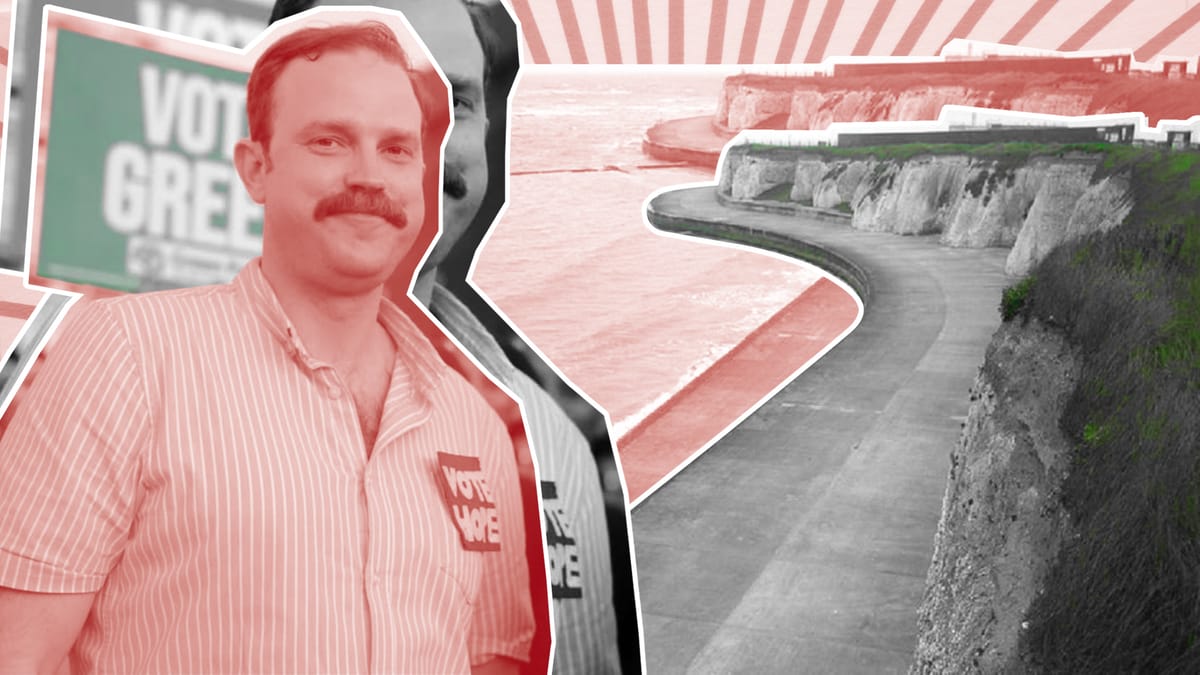
The Greens have won the Cliftonville by-election, taking a seat Reform should have been able to hold and handing Linden Kemkaran’s party its first real electoral setback since taking control of Kent County Council. This edition looks at how Rob Yates came from fourth place last year to win for the party, why Labour’s tactical squeeze pitch collapsed, and what the result says about Reform’s position in Kent...
Greens stun Reform in Cliftonville by-election shock
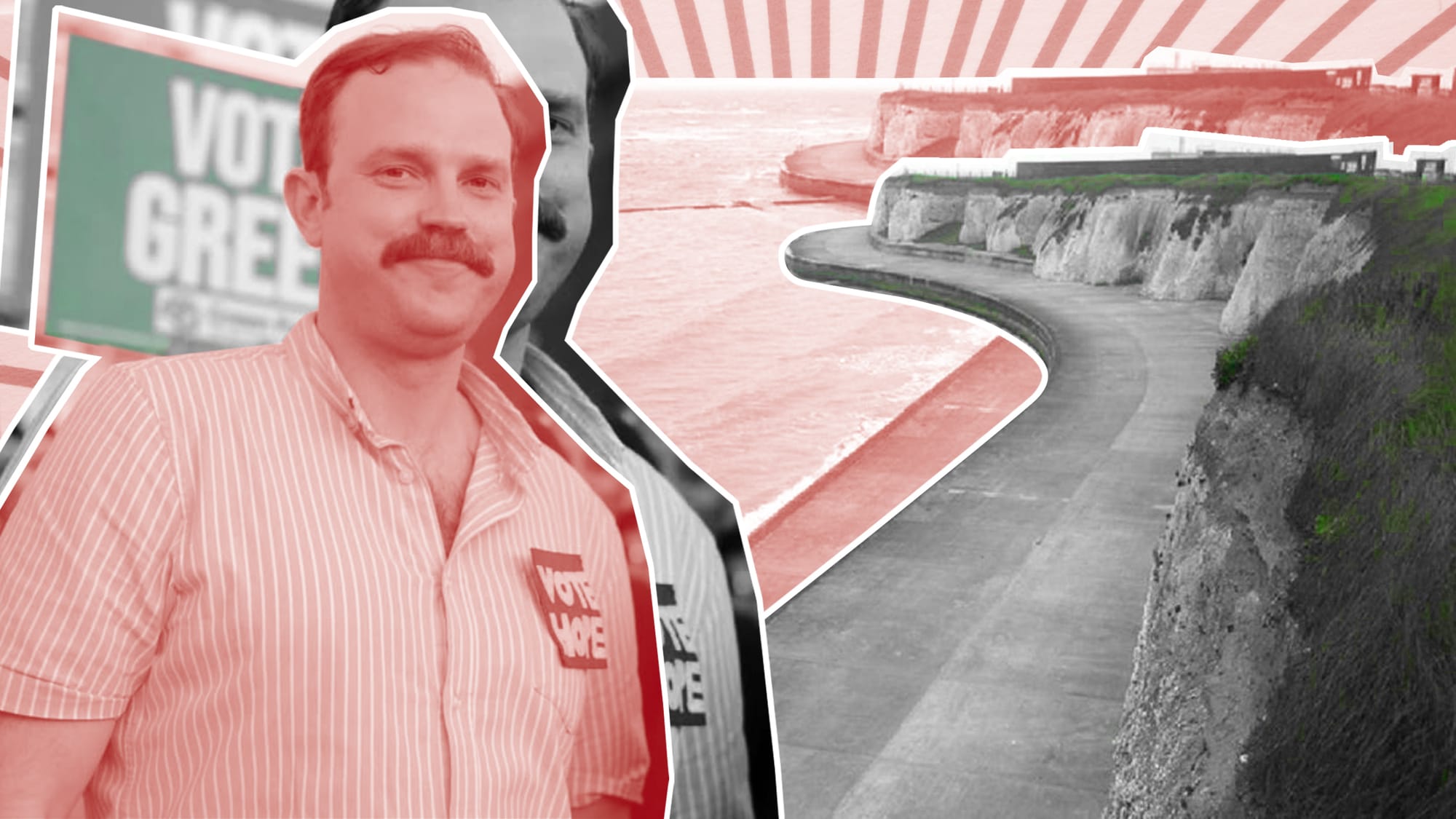
Rob Yates has won the Cliftonville by-election for the Greens, taking a seat that Reform should have been able to hold and handing Linden Kemkaran’s party its first real electoral setback since taking control of Kent County Council.
Cliftonville by-election result:
🟢 Rob Yates (Green) - 2068 - Elected
➡️ Marc Rattigan (Reform) - 1767
🌳 Charlie Leys (Conservative) - 811
🌹 Joanne Bright (Labour) - 557
⚪ Lucy Gray (Independent) - 68
🔶 Mo Shafaei (LDem) - 63
For the Greens, it is a striking breakthrough. For Reform, it is a bad result whichever way you dress it up. For Labour, after spending much of the campaign loudly insisting only it could beat Reform here, it is a fairly brutal humiliation.
Cliftonville was never just another county council by-election. The contest was triggered after Daniel Taylor, who won the seat for Reform in the party’s 2025 Kent landslide, was jailed for 12 months for controlling or coercive behaviour towards his wife. He had already lost the whip and sat as an independent, but only his sentence and immediate disqualification finally vacated the seat. Cliftonville went back to the polls in circumstances that were already ugly before the campaigning even began.
From there, things only got stranger.
What should have been a fairly straightforward Labour versus Reform fight became a messier and more interesting contest, with the Greens steadily building momentum, the Conservatives refusing to go quietly, and a wider campaign atmosphere that often felt closer to a parliamentary by-election than a routine county council poll. National figures were hauled in from all sides. Tactical voting pleas got louder and more desperate. Candidates and parties alike seemed to treat normal political biographies as optional.
By the end, though, the result was clearer than the campaign was. The Greens won. Reform lost a seat it had every reason to think it could defend. Labour’s pitch to voters collapsed. The first live electoral test of Reform in power at County Hall produced the sort of answer Kemkaran’s party could have done without.
The scale of the Green move is the first thing that stands out. In the county elections last year, the party was a distant fourth in Cliftonville on 576 votes and 12%. This time, it took 2,068 votes and 39%, jumping from the margins of the race to first place in the span of 11 months. That is not a small local improvement or a tidy squeeze on another party’s vote, but a major shift.
Reform, by contrast, dropped from 1,922 votes and 40% in 2025 to 1,767 and 33% now. In ordinary circumstances, losing seven points in a by-election would already be uncomfortable for a party leading national polls. In these circumstances, after all the effort Reform put into Cliftonville, it looks worse.
Labour’s performance is worse still. Joanne Bright had begun the campaign from second place in the 2025 result, and Labour spent weeks insisting it was the only plausible anti-Reform vehicle, with East Thanet MP Polly Billington heavily pushing that line. Emily Thornberry came down to support Bright and make the case that anything other than a Labour vote risked helping Reform. Tactical voting website StopReformUK was invoked with great enthusiasm. None of it worked. Labour’s vote fell from 1,055 and 22% last year to 557 and 10% now. It did not just fail to win. It finished behind Reform, the Greens and the Conservatives.
Labour did not run a campaign that left itself much room for anything other than success. The whole pitch was that voters had to line up behind Labour if they wanted to stop Reform. Cliftonville’s voters looked at that argument and, in effect, picked someone else.
The Conservatives, meanwhile, will see little comfort in finishing third. Charlie Leys ran a serious local campaign and ended up with 811 votes, down from the party’s 942 and 20% in 2025. That is not a collapse on Labour’s scale, but neither is it much of a comeback. The Conservatives remain present in the seat, but not plausibly resurgent.
Leys himself offered one of the clearest post-result readings of what happened. Thanking the 811 residents who had backed him on social media, he said: “This result is a referendum on Reform’s leadership at KCC and local government more broadly, the voters chose the candidate they thought who was best placed to beat Reform.” It is both a concession and a fairly direct summary of how the race ultimately functioned. Voters who wanted to land a blow on Reform coalesced around the Greens, not Labour or the Conservatives.
For Rob Yates, a recent winner of the Best Moustache award at the Mr Margate Beard and Moustache Competition, the result completes a remarkable reversal. He had fought Cliftonville for the Greens as a former Labour councillor, part of a contest full of candidates whose party labels had changed faster than their local biographies. Before the result, he told the Kent Current the campaign had “felt more like a General Election” and said Green momentum had been building fast in the closing days. After the result, he was still taking it in. “From fourth place last year to first this year,” he said. “Wow, yeah, what can I say? This is big.”
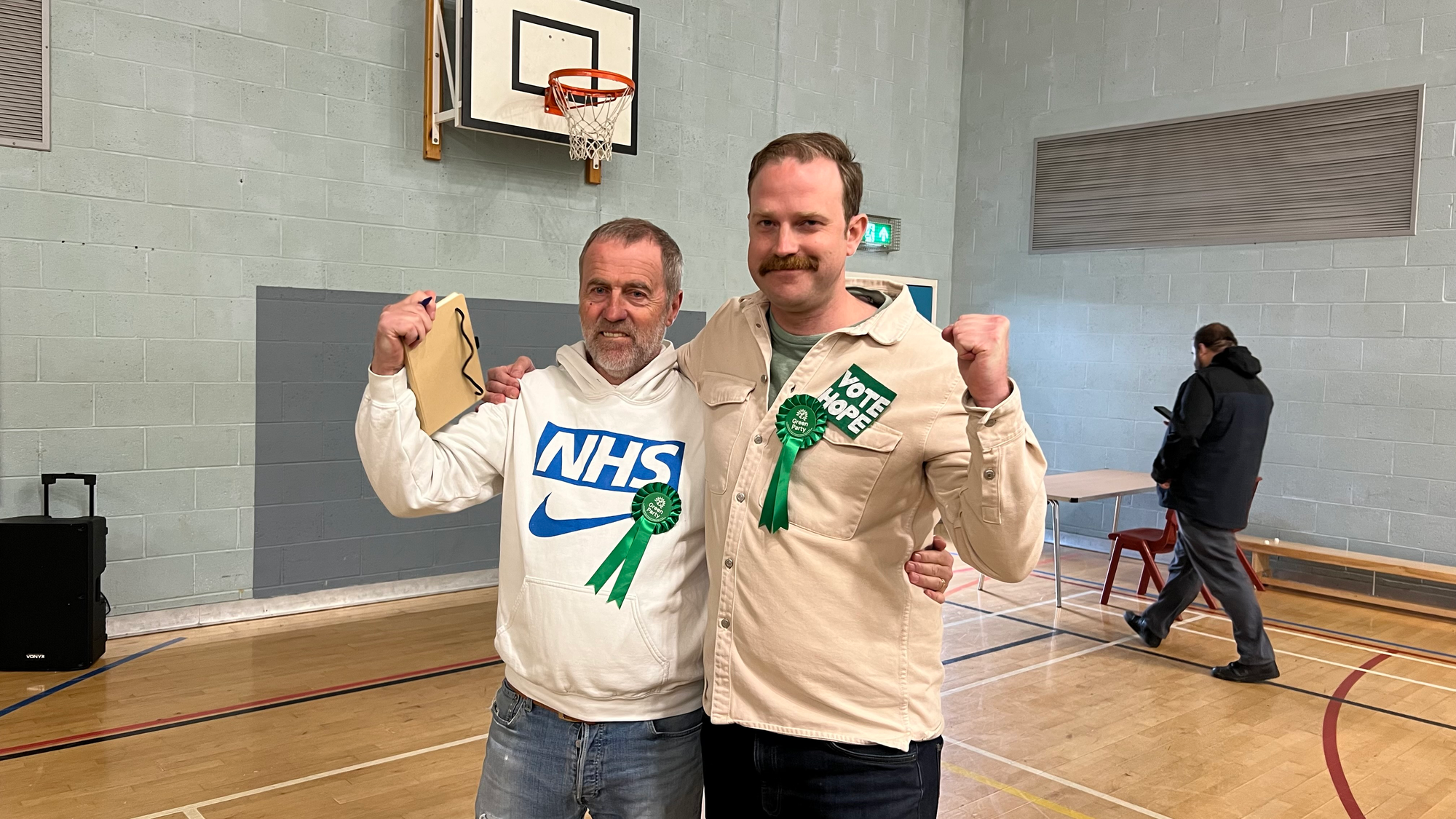
He also offered the most politically expansive reading of the result. “I believe that the population aren’t stupid and they see what’s happening at KCC. They don’t like that,” he said, arguing voters had backed a candidate with a local record rather than one trading on division. His campaign line was that Cliftonville deserved better. On the numbers, that plainly landed.
The Greens were quick to claim the wider significance. KCC Green group leader Mark Hood called it “seismic for Kent” and said Cliftonville had delivered its verdict on Reform’s “appalling record” running the county council. Zack Polanski, the party’s national leader, went for a slightly simpler formulation: “Greens making a habit of taking on Reform - and winning!” It is easy to dismiss that sort of thing as victory day overstatement. In Cliftonville, though, the broad point is fair enough. The Greens, not Labour, were the party that turned anti-Reform sentiment into an actual win.
It was not hard to see, as the count went on, where the race had really settled. There was a notable Green and Reform presence around the room, with some Labour figures, some Conservatives, the independent candidate, and one token Liberal Democrat who was not even the candidate. For all the weeks of talk about a four-way fight, by the time the ballots were being sorted and people were trying to read the tables, it increasingly felt like the real contest had narrowed to Green versus Reform.
The mood shifted with it. Labour figures looked deflated and sounded defensive as the shape of the result became clearer. Reform, meanwhile, appeared to move quickly into damage-limitation mode. As the count slipped away from them, KCC Reform whip Maxwell Harrison told party representatives not to speak to the press. Kemkaran later left the count surrounded by journalists asking whether the result represented a failure of her leadership.

That was not just theatre. It reflected the obvious political problem for Reform. Cliftonville was supposed to be the first real chance to show that the party’s grip on Kent remained solid enough despite months of rows, defections and awkward headlines at County Hall. Instead, it has produced the opposite impression. A seat won comfortably less than a year ago has gone, and gone not to Labour but to the Greens.
Kemkaran, for her part, attempted to post through it. While declining to speak to journalists at the count, she took to X afterwards to insist the setback changed little. “The moral of this story is, if you vote Conservative, you get Green,” she wrote. In another post, she added: “Disappointed? Yes. Disrupted? No. Our majority at KCC hasn’t changed, so it’s onwards and upwards for Reform!!”
That is true in the narrow arithmetic sense. Reform still controls KCC. It is also the sort of thing parties say when they are keen to sound unbothered by something that has plainly bothered them. Cliftonville does not change who runs County Hall. It does change the mood around that project. Reform has now had its first electoral test since taking power, and it did not pass it.
Kemkaran also praised Rattigan as a “fantastic candidate” who “could not have done any more or worked any harder”, and said Reform had run a “clean and positive campaign throughout.”
That was a generous description of a campaign in which Reform was not only defending a seat vacated by a jailed councillor, but also saw Jamie Henderson, its cabinet member for environment, coastal regeneration and public health, declare there were “far too many junkies already in Thanet” following the visit of Green Party leader Zack Polanski. In a seat in one of Kent’s more deprived areas, and with Henderson holding the public health brief, it was an impressively sloppy intervention.
The Greens seized on it. Stuart Jeffery, the Green group’s public health spokesperson at KCC, said Henderson was “not fit to hold public office” and argued addiction should be treated as a health issue rather than met with chastisement. Henderson and the KCC Reform group were both approached by Kent Current for comment, but did not respond.
The Conservatives were trying to present Leys as the grown-up in the race. That pitch was slightly undercut by the fact that their campaign was being supported at the count by former MP Peter Bone, who was ejected from Parliament after an independent process upheld allegations of bullying, harassment and sexual misconduct against a staff member. In a contest triggered by the jailing of the outgoing councillor, it was a striking choice of backroom help. Labour, meanwhile, spent much of the race behaving as though it had a God-given claim to the anti-Reform vote, only to end up watching the Greens walk off with it.
That mixture of noise, visiting grandees and self-importance is part of what made Cliftonville such a revealing little contest. Robert Jenrick came to support Reform. Emily Thornberry came for Labour. Caroline Lucas and then Zack Polanski appeared for the Greens. Craig Mackinlay was out for the Conservatives. All of them treated Cliftonville like something more than a routine local by-election because it plainly was. It was a test seat, an early barometer, a chance to show whether Reform’s takeover of KCC still had some electoral force behind it.
The answer from Cliftonville is not that Reform is suddenly finished in Kent. The party remains the largest force at County Hall and still polled substantially here. The aura of inevitability is weaker than it was. The seat was defendable. The opposition was divided. The right was not split by a Restore candidate after all.
The party that beat it matters. Had Labour won, it would have claimed its tactical squeeze line had been vindicated. Had the Conservatives won, the story would have been about a right-of-centre recovery. Instead, the Greens took a seat where they had been fourth less than a year ago, and did so while presenting themselves as the principal anti-Reform option in a part of Kent not usually treated as natural Green territory. That is a more disruptive result than a straightforward Labour gain would have been.
For Cliftonville residents, the immediate point is simpler. After months in which the division was represented by a councillor whose criminal case and eventual imprisonment made him the story, they now have a new councillor and a cleaner slate. Whether Yates delivers what he promises is a question for another day. For now, the by-election has done what it was there to do. It has forced a reset.
For everyone else watching Kent politics, it has done something more. It has shown that Reform can be beaten, that Labour is not automatically the beneficiary when anti-Reform voters go looking for somewhere to land, and that the Greens are no longer just an interesting side note in the county’s electoral story.
Cliftonville was meant to be the first real electoral test of Reform in power.
Reform lost it.
Cliftonville is the kind of result that gets flattened into a headline very quickly. What matters is everything underneath it.
The Kent Current is backed by readers, which means we can stay on these stories properly, not just drop in when they get noisy. You can currently get 25% off an annual subscription, which works out to around 87p per week.
Footnotes
Follow us on social media! We’re on Facebook, BlueSky, and Instagram for now.