“I think there's a lot gone wrong with politics, not just in Kent”
What we asked Linden Kemkaran, the new Reform leader of Kent County Council
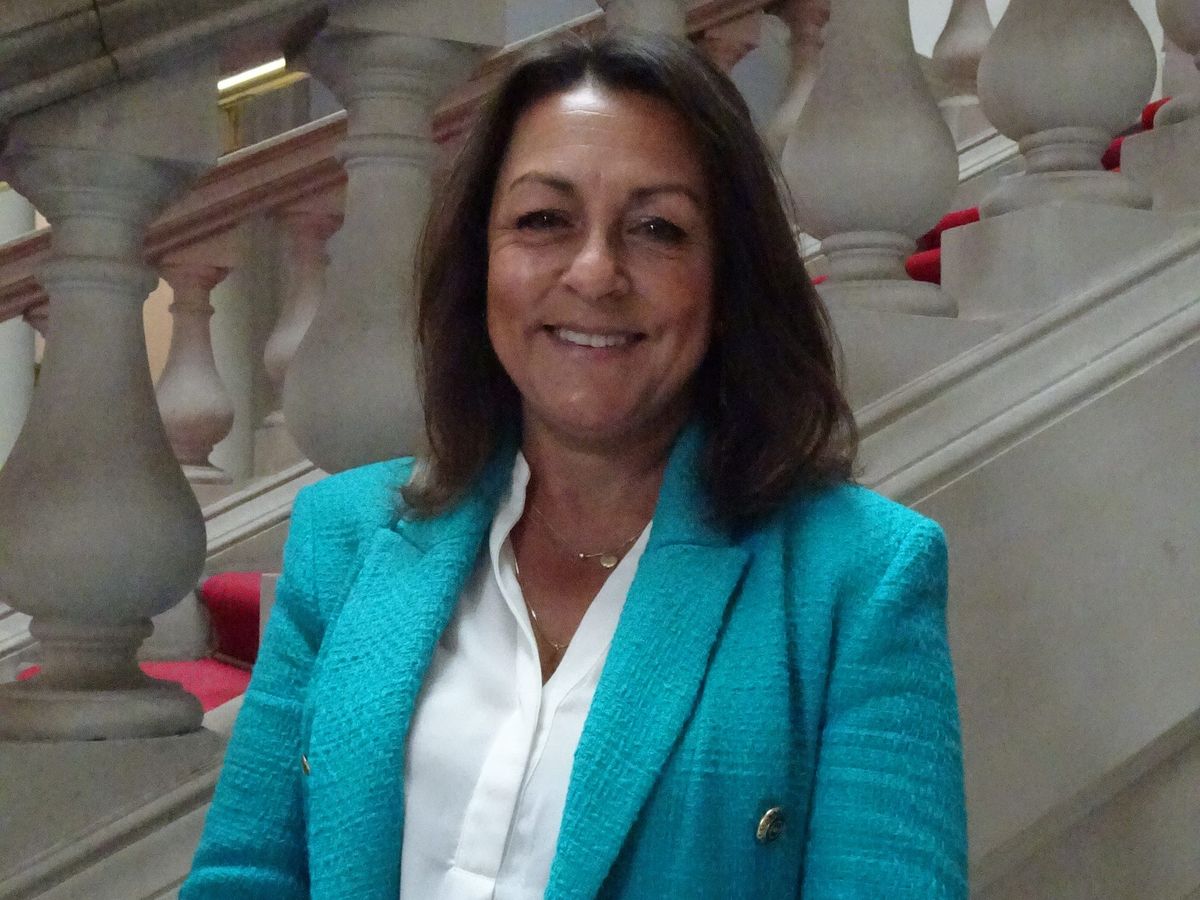
In May, Reform swept to power at Kent County Council, taking 57 of 81 seats. Linden Kemkaran emerged as their new leader from that group. We met her at County Hall to discuss her experiences as the child of the Windrush generation, why she joined and left the Conservative Party, Brexit, running the UK’s largest local council, and lots more.
How did you come to be leader of the Reform group?
I can't speak for anybody else, but obviously we won a heck of a lot of seats on May the 1st, and I still remember that moment sitting in the count. I'd won my seat. I was very happy about that. I thought, I'm a councillor, this is amazing. What a great opportunity, what an honour, what a privilege. Then it flashed up on my phone that Reform had suddenly won control of Kent County Council.
Bear in mind, I only knew a handful of people I'd been campaigning with in and around Maidstone and this bit of Kent. Anybody else, I had no idea who they were, and suddenly we've got 57 councillors. We were now a group. Then, of course, we had control, and we knew we'd have to elect a leader. The next morning after the count, Saturday morning, we all met in a hotel in Maidstone, in a room that was far too small, because I don't think the person that booked it ever thought we'd get 57. We're all crammed in a tiny room, just trying to get to know each other. We were told we had to elect a leader there and then.
I think from memory, there was a moment where people stood up and said, ‘Well, I'd like to be considered,’ and they gave a little pitch. I was one of them because I thought, well, why not? Someone's got to be the leader. Then we were launched into this very intense week of a leadership campaign, knowing that on the Thursday night, we would have to elect our group leader. That was very intense. It involved a lot of phone calls, a lot of going around to meet people, basically to sound people out and work out where the support was going to go. I think there were five of us on the night of the actual leadership election, here in Sessions House, and I won. I got the most votes out of everybody.
Why do you think you got the most votes?
I presume that my fellow members thought I would be the best person to get started straight away because of my media experience. I think they knew that the media pressure was intense from day one. Before day one, it was absolutely intense. I think everybody realised there'd be no time to find your feet. You would win, and then you'd be wheeled straight out to face the media, and that's exactly what happened. Maybe there was that feeling that because I had the experience of having been a broadcast journalist, I would be very well placed to be able to give interviews straight away without having to undergo weeks of media training. Maybe I was able to sell them a vision of the direction I wanted to take Kent County Council in. Maybe it was because I stressed about the stakes being so high here for us in Kent that now we were in control of this council, we were effectively the shop window through which the electorate was going to be looking to see if they could trust a Reform government in a few years' time. Maybe it was a combination of those factors. Maybe I just did a good speech on the night, and I carried the crowd with me, as can sometimes happen.
You then had to pick from a group of strangers who could make the best cabinet. Was there any particular process you went through with that?
It was probably the most difficult thing I've ever attempted, and I've done a few difficult things in my time. I selected the deputy leader straight away, because this was somebody I'd identified, having got to know Brian Collins. I thought he would be very good in lots of ways. We're complementary in our style, but different. I thought I need someone who's not a clone of me. I need someone who's going to bring a different viewpoint to the table. That was good. I got him in place.
I started asking all the members to email me if they would like to be considered for cabinet or deputy cabinet. I said, tell me who you are, what makes you tick, what your experience is, basically send me a mini-CV. I had so many replies. That was the most amazing thing. I knew then I was leading a group of committed, enthusiastic, talented individuals. But then it was trying to sift through and work out, sitting down with Brian and saying, well, this person says they'd like this, but I think this person might be a better fit. Then it was a case of trying to get as many people up to see us as we could, doing mini-interviews, and just trying to thrash out who we thought we could slot into which role. All the appointments were made on the understanding that there might be a reshuffle because, naturally, I didn't know the people, they didn't know me, I didn't know if it's going to work. I would say we've been probably 95% successful, which I think is pretty good considering the timescale we were operating within and the ridiculousness of the situation.
If we can just take a moment to reflect on that 5%, there was a member of the cabinet who has recently been replaced. Why was that needed?
What I've had to do with every single cabinet member, they all know they're being reviewed all the time. Obviously, I'm watching them in meetings, I'm getting them in for one-to-ones, I'm evaluating, working out how it's going. It's not just about how they're doing the job. Is that person really going to thrive in that role? Sometimes you have to make very tough decisions early on, and I think it's always better if you can address something early on. I think that's good management. The worst thing you can do to somebody is keep them in a role where they're clearly not going to thrive. That is actually bad management. I knew straight away that I would have to make tough decisions, and luckily, I'm not afraid to make tough decisions.
There is another member of the council who is no longer a member of the party. I won't ask you to comment on a current court case, but do you think they should stand down? Should there be a by-election?
Well, there are very odd laws in this country. Unless somebody is sent to prison for a certain number of days, weeks and months, there is nothing the party or anyone can do to stop that person being an elected representative. I think it's crazy. As you said, I cannot comment on an active court case, nor would I wish to. I think the law needs to be looked at by the government because I don't think it's a healthy position for anybody to be in.
Should this councillor resign?
I'm not going to comment on that case.
I think when we came in as Reform UK, there were a lot of worried people inside and outside the building because the media portrays us as being neo-Nazis walking around with horns and a tail. It's appalling.
You are almost coming up to 100 days. What do you feel is your biggest achievement in that period of time?
I think our biggest achievement is giving a sense of direction to this place. I think when we came in as Reform UK, there were a lot of worried people inside and outside the building because the media portrays us as being neo-Nazis walking around with horns and a tail. It's appalling. The press we had, when we came in, I think there was a huge sigh of relief that everybody thought we were quite normal. ‘They happen to be Reform, but they essentially want the best for the residents of Kent.’
The second thing I think we've achieved is we found savings already. I appointed my Department of Local Government Efficiency, my DOLGE, on day one, and they have done fantastic work. Now, bearing in mind it's only been a hundred days, that's nothing when you look at the grand scheme of things and an organisation of size and sheer scale of KCC, they have done amazing work. While they've been getting to grips with their roles and undergoing all the essential training, they've still managed to find me already over £40 million worth of savings. That's a modest estimation of what they found me. There's much more to come, but what I'm not going to do is drip-feed things into the media or give you figures that I can't back up. Being a journalist, it's all about being able to back up what you say. I'm sure you'll appreciate that. I'll be releasing the information as and when it's ready to be released, and it's been fully costed, fully checked, substantiated. Then it will come out in full council as is right and proper.
Do you have any interaction with the opposition leaders within the council?
Far too much, far too much. They're great. I mean, bless them. I feel sorry for them because they have to sit there and look at all of us together, and we are very united. We are very strong as I think was evidenced in the last full council meeting. They tried to throw the usual words that the opposition try and throw, that we're racist and we're bigoted and we're xenophobic. It just bounces off, because we don't accept it. We know we're not. We know we're none of those things. I think it was a very significant show of strength in the last full council meeting. They tried all the usual tricks. Two of them stormed out of the chamber, which you might have seen, because they have no argument. They have no political argument. They've become so used to throwing insults at people like us over the years. Back then, it used to shut down the debate. If somebody called you a racist or an Islamophobe, you would scurry off feeling ashamed and probably be cancelled. I don't think that's working anymore because the people of Kent have spoken. They wanted Reform to be in charge because they wanted the changes that Reform are going to bring to this council. Whatever the opposition throw at us, it really doesn't matter. I feel sorry for them because they've never been in that position before. They've always held the power because they could use the words, but now it's the actions that are speaking and not the words.
One of the savings you have is the reduction in councillor allowances. Why was that important to bring forward so quickly?
That was something I really wanted to do from the off because when do you ever see a politician taking a pay cut? You don't, do you? Up in parliament, I know it's not controlled by them, it's controlled by IPSA, but it’s the snouts in the trough image that all politicians have got. I wanted Reform to be different. I thought, what's the best way of showing we are not here to make money out of this? We are here because we want to make something, break something, change something. That's our driving passions. I thought, let's take a 5% pay cut across all of us. That's the opposition as well. That generates quite a lot of money. It's over £200,000. Instead of just absorbing that into the debt mountain that is KCC, let's use that money, let's divide it up between us. We've got an extra £2,500 that's going to go straight into our community member grant funds. We can use that. That could repaint a church hall, that could buy a bench, that could refurbish a children's playground. There are so many things we can do with that money in our individual division. I'm really excited to see how that money is going to be spent.
You mentioned the debt mountain. How concerned should residents be about the council going bankrupt?
I don't think residents need to worry about the council going bankrupt. It has been managed well. £740 million of debt. I think it's less than that now because it's gone down since we've been elected. It's still a huge number. But having now familiarised myself with levels of council debt, Kent is not in a terrible, terrible position. We're okay. It's not brilliant, but it's okay. I don't think residents need to worry about that.
You said you are ‘leading Kent to be the capital of common sense.’ What did you mean by that?
Well, essentially, I think I demonstrated on day one, it's things like taking down the flag of Ukraine that was in the council chamber and replacing it with the flag of Kent. I thought we need to refocus our minds. I think there's a lot gone wrong with politics, not just in Kent, but on a national level recently. Politicians have become addicted to cheap virtue signalling tricks like flying a flag, wearing an armband, or taking the knee. It doesn't actually mean anything. It doesn't change anything. All it does is signal, ‘I’m a lovely person, you should like me because I'm doing a lovely thing.’ It's nonsense. We need to sort out the mess in our backyard before we start virtue signalling about other parts of the world. We are here for Kent. We're not an international council, we are a county council.
To me, that was a massive red flag, if you like, a massive Ukrainian flag, that things were not right within this building and to bring everyone's focus back to the fact of the matter, what we're here for is to represent the people who voted for us, the people in Kent. We're here to represent everybody. I thought that was a really important change to make on day one. Yes, it's only a flag, but look at the press coverage it received and the message I was able to send out to the residents of Kent. It was me basically saying, ‘I am here for you, my members are here for you, do not worry, we have your back.’
What are your thoughts currently on local government reorganisation?
Well, where do I start? I think it's something that's being imposed upon us from on high. It's something that's not being thought through very well, and I think it's something that's not necessarily the best answer for Kent.
Do you feel that it's no reorganisation or just needs more time?
I think it needs reorganisation because the county council and the various layers beneath it are not perfect. I definitely think we can improve how we do things, how we provide services for people, and how we save money. But do I think LGR is the answer? No.
Would you support a mayor for Kent?
Not sure. Because that would involve obviously becoming a devolved authority. There are issues with all these options.
Which political parties have you been a member of?
I was a Conservative. I had a political awakening quite late in life. I really was not very political before my late 40s, when I left my job as a journalist and got involved in politics. I was a Conservative from, I think, 2017-ish, just after the Brexit referendum, up until just before Christmas last year, late 2024. Then I joined Reform on the very same morning.
Was it the Brexit campaign that led you to join the Conservatives?
I had been feeling a bit of a stirring. I was a BBC journalist for many years, so apolitical, I did not really have a strong political opinion either way. But around about 2014, I started looking at the country in a different way. Maybe it's because I was a mother of two by then, and you see things slightly differently when you're a parent. You suddenly realise the implications that certain things are going to have on how your children are going to grow up. I think it was around then I started shouting back at the radio.
When I wasn't on the radio or producing the radio, I was shouting back at Radio 4 and saying, “No, you're missing the point. What needs to happen is this, this and this.” I started to feel quite strongly about things. Then I decided I was going to leave the BBC and do something about it. It was a slow awakening really, but I think Brexit really encapsulated to me just how far gone the BBC was, in the fact that it didn't see the Brexit vote going the way it did at all.
I was in that newsroom when it happened, and it was like a nuclear bomb had gone off. I was the only person I knew who'd voted for Brexit and when my BBC colleagues found out, and bearing in mind these are people I'd worked with day in day out for 20 odd years, I was told by some of them that I was possibly racist and or thick and or stupid and possibly xenophobic as well for having voted a certain way. Then, of course, the Brexiteers won the vote, and I just thought crikey, if they think that about me, what do the BBC people think about the rest of the country out there? This is shocking, and it made me realise how myopic BBC News had become at that moment. I realised I probably no longer really felt I fitted.
Did you leave the BBC?
Yes, after a fashion. I mean, I think I left in 2016 and then ended up bouncing back. The BBC was like my Hotel California. I could check out any time I like, but I could never actually leave, because I was a freelance journalist by then. I was working for lots of people, but of course, the BBC is a very big employer. It was very easy for me to just pop back to see my old friends and colleagues, just slot straight back in, earn a bit of money and then pop off to do something else again. That was the pattern I got myself into. I had to finally call it a day in 2018, because I realised that it was like living a double life. I could no longer do it.
When you joined the Conservatives, did you stand for election?
I did. I got involved locally at first because I knew nothing about the party structure. I knew nothing about how one went about campaigning. I got into my local Conservative association in Sevenoaks, where I lived then, and just started learning the ropes. Started going out campaigning. I got asked if I would stand in a losing seat as a paper candidate in 2019 in the local elections. I said, ‘Sure,’ get some more experience. Then, of course, Boris became leader. I felt a great surge of hope that we would actually start to turn things around and get Brexit done. I felt we should have done years ago. I put my name on the list to become a parliamentary candidate and again was given another losing seat. I think you can detect a pattern here. Losing seat at Bradford to go and get some experience. I stood, obviously didn't win, but it was a very good experience of campaigning in fairly hostile territories. It was a good grounding.
During that period, it is fair to say that the Conservatives had a number of leaders. What was your experience of the leadership of the party in that time period?
Well, it was a funny time. Obviously, as soon as we won that 2019 election, which was amazing, it was amazing to think I played a small part in propelling Boris Johnson into number 10, because, of course, we all thought he was a Conservative then. How silly we were. But we got him into number 10, thought, yes, here we go. Then we had covid. I can't say it was why Boris Johnson failed to deliver, but I think it was a very big reason why the country was knocked off course. Who knows what would have happened if the covid pandemic hadn't come along when it did, but it did. Then we were in a very different territory. We were fighting a war against an asymmetric enemy none of us could see, but obviously, it was doing a great deal of damage. It was a very, very odd time.
I think the country lost the plot. I think the Conservative Party definitely lost the plot. And of course, then they defenestrated Boris in 2022. Now, by that point, I was the chair of Sevenoaks Conservative Association. I had a close relationship with my MP, Laura Trott. But I felt very uncomfortable with the rumblings that suddenly started and the fact that it seemed to be a coordinated campaign to bring down Boris, who had been democratically elected for all of his faults, and there were many. He'd been democratically elected by the members and then the country. That bothered me. I did support my MP, she was part of the effort to bring him down. Sometimes you have to put your own personal thoughts aside and do what you think is best for the party at that moment in time, but it was very uncomfortable. Then, of course, we saw the ridiculous situation of having to choose between having Liz Truss and Rishi Sunak. What a ridiculous choice that was. Then it all just went into a farce after that.
Was there a definitive moment that made you go ‘I'm leaving the Conservatives’?
There were so many moments where I kind of wobbled, but the trouble is, like any situation in life, it's very difficult to leave one thing if there's nowhere to actually go. Until Nigel Farage came back on June 3rd, 2024, there was nowhere really for me to go. I still had that burning ambition to be a politician, to change things, because I think you need that to go into politics. It's not about wanting to be someone, it's about wanting to do something. I had that inside of me, to get in there and do something. But where could I do it? Nigel came back. At the time, I was working for a Tory MP, and we were mid-election campaign. I'm actually a very loyal person, I didn't feel I could ditch my MP, and dash off to Nigel, much as I really, really wanted to. I just couldn't do it. It would have been horribly disloyal and a really awful thing to do to somebody. I stayed put, but watched from afar as Reform coalesced around Nigel, who is very talismanic, as we know, and went from strength to strength.
But I still hung on in there because I thought, we're going through yet another leadership election. Maybe this time we'll get it right in the Conservative Party. I liked Kemi. I wanted her to win in 2022. I thought if Kemi wins, maybe the Tories can get back to the right of centre ground where they need to be firmly and remember what being a Conservative is all about. I hung on. Kemi got elected. It was just before Christmas. I watched yet another dismal PMQs and I thought, ‘I cannot do this anymore.’ How much longer do I give these people to wake up and realise what they have to do? So I left. I sent a message to CCHQ saying, ‘Please cancel my membership. I am no longer a member. Please stop emailing me, blah, blah. Take me off your list.’ Thirty seconds later, I emailed Reform and said, ‘Please may I join?’ Just like that.
Reform was unapologetic about what it stood for. I thought, ‘This is where I belong.’
How would you describe what makes Reform different?
I know people criticise Reform for taking on former Tories, but what you have to realise is a proper Conservative, which is how I class myself, is somebody who has very traditional right of centre views on family, community, country. I don't think it's a bad thing to be proud of your country. I don't think it's a bad thing to want the place where you grew up or the place where you live to roughly stay the same and not have huge demographic change inflicted upon it. The Conservative Party used to stand for that. I guess I'm an old-fashioned conservative, but the trouble is the Conservative Party forgot that. They started to move towards the centre ground, because they thought that is how to win elections and then they went beyond the centre ground, I think, way too much and started losing. As soon as you do that, you lose your founding principles, your core beliefs. Who are you? What do you stand for? Nobody knows. They didn't even know. Reform was unapologetic about what it stood for. I thought, ‘This is where I belong.’ Finding your tribe, and it's been that feeling from day one.
Let’s go back to the beginning. Where were you born?
In Dartford.
What brought your parents to Kent?
Well, my father was an immigrant. That will be a shock to some people listening to me bang on about immigration, but he was. He came over on the Windrush from Trinidad in the 1960s and met my mum at Teacher Training College. They married and they lived in southeast London, and then they wanted space to raise a family. They moved out to the green and pleasant garden of England.
Were they both teachers when you were growing up?
Yes. My mother did primary and secondary, and my father was secondary.
Did you enjoy school? Was it difficult having parents for teachers?
Well, I'll tell you the most difficult part was, and this might seem odd, but there was a lot of racial abuse back in the day. We were a mixed-race family. That was back in the days when my mother would get spat at in the street for having a mixed-race baby in a pram. Things were very different back in the 1970s and 80s. I was the only brown kid in the school, as were my siblings, and there was a lot of racial abuse. Getting beaten up after school by the skinheads was fairly run-of-the-mill. If you got through a day or a week without getting beaten up or called very, very unpleasant names, that was a good week. That was something I spent a lot of time dealing with, probably up to the age of about 14, where I think everyone suddenly turns into a teenager, and suddenly being brown was very fashionable. Everybody wanted the old fake tan from Boots. Everybody wanted skin like me. Suddenly everything flipped, and suddenly it was okay to be different. But up to that point, I'd say school was quite tough.
Did you stay on for sixth form?
Briefly, yes, but I didn't take A-levels.
Did you leave education and go into work?
I did, yes. I bought my first house age 18, because in those days you could get 100% mortgage with no trouble at all. I bought my first house in Strood in the Medway Towns. Then of course, once you've got a mortgage, you have to pay that mortgage. I was trapped in the world of working to pay the mortgage, because interest rates went up to 15%. I had negative equity on the house that I bought, I couldn't afford to sell it. It was a case of hanging on. But then age 24, I had a very bad road traffic accident, which gave me time to think about where I was going in life and what I wanted to do. After I'd recovered from that, I went to university, aged 25, and got a degree, and then I joined the BBC.
What did you study at university?
English, drama and theatre. I got some very good advice from somebody I worked with when I was 24, after I'd had my bad motorbike crash. I was working at the Ministry of Defence at the time, and I was working with a squadron leader in the RAF, and he became a mentor for me. He could obviously see something in me that he thought he should try and nurture. He came to see me in hospital when I was recovering and said, ‘You're a bright girl, you can do a lot more than you're doing now.’ He said, ‘Go to university, get a degree, doesn't matter what in,’ and I think he used the phrase, ‘can be underwater basket weaving,’ go and get a degree and see where it takes you. That was the first time anybody had said that to me. Do what you're good at, don't make it more difficult, don't try and pretend to be mega academic if you're not. He said, ‘What are you good at?’ I said English. I love drama. He said, ‘Do that.’ So I did. It was a little light bulb coming on. Somebody saying do what you enjoy and you'll succeed. That was one of those turning points in life. I don't think we tell our kids that enough, actually.
You became a playwright?
I've written plays. It was an additional thing. I wrote plays as part of my degree course, and I've always written creative writing. I did advise BBC Drama on a comedy. They were doing a place called the Headley Court, which is a military rehabilitation centre, which I'd spent time in recovering from my motorbike crash. They wanted me to advise them on what it was actually like to be in there and getting rehabilitated.
Was there a novel? News, Blues and High-Heeled Shoes?
Yes, that was novel number one. I've written novel number two. I started novel number three just before I joined Reform. After I lost my job, after the last election, and my MP lost her seat, I thought it's time to get to grips with that novel that's been going around in your head. I started it and I was doing really well. I think I'm about 60 or 70,000 words, and then I joined Reform and got selected to be a candidate, and that's had to be put on the shelf now. But I think every time you start a new piece of writing, you just improve slightly. Maybe one day, maybe novel number four.
Are the novels available?
No, not yet. One, two weren't quite there. Number three, I think, is probably the closest. I've got high hopes for that one. It's as yet unfinished, but you know, it’s all here. Just got to get it down.
Can you give us any teaser?
Well, it involves a bit of journalism, a bit of politics and a bit of terrorism.
Do you rescue battery chickens?
Yes, I've got four currently. I’m a bit concerned, one looks not very well at the moment. She might be on her way out, but at least she's had a lovely end to her life.
How did that start?
I don't know. I think I just thought it's something I wanted to do. I had a coop left by the previous owners in our new house. My husband is a very good man, cleans it all out, got it all ready, made a run and I rescued some chickens. I've since supplemented my flock with some posh birds, which I've written about in the Spectator.
When did you illegally obtain testosterone?
Oh my God. That was an article I wrote for The Spectator about the difficulties of women being able to access proper HRT. My friend passed me a little sachet and said, ‘Try this. I get it in Dubai.’ I tried it and was ‘Oh my God, that is the missing ingredient.’ I went to the GP and said, ‘I know I shouldn't have tried this, but I did. Please forgive me. But can I have some of this?’ She said, ‘It's not licensed on the NHS. You can get it, but you have to go private.’ I found myself in a ridiculous merry-go-round of trying to work out how, having never been private for anything in my life, to find a private menopause clinic to go have my blood tests, all the tests done, and then I could buy very expensive testosterone cream, which has made all the difference. I feel like myself again.
But the point about the article was it is disgraceful that women, we are the backbone of society, especially women my age, we've raised a family, we're often juggling looking after our elderly parents and children and holding down a job, paying taxes, all those useful things. We can't access the drugs that we rightfully need to keep ourselves going because you cannot function. Once your hormones have started going… Everybody's different. Some women managed to get through menopause quite well. I wasn't one of them. It really is terrible how women suffer. The fact you can't just go to your GP, and they will give you the drugs you need. You have to jump through all these hoops and get the second-rate stuff because it's cheaper. It's an utter disgrace. That was the point of the article. It was shining a light on this one vital hormone, because it's three hormones, oestrogen, progesterone and testosterone. Women produce all three naturally. Why do we not get all three in HRT? It's ridiculous.
Who has been the best Prime Minister of your lifetime?
It's got to be Margaret Thatcher. At the time, I couldn't see it, but now looking back, oh my goodness, what a woman. She knew what she stood for. She wasn't cowed, she wouldn't be bullied. She could express her feelings very eloquently. What a woman.
When you say at the time you couldn't see it, what do you mean by that?
Well, both my parents were teachers, don't forget. I would say maybe a bit left of centre. In my house, Maggie Thatcher was a dirty word. Taking on the unions and just trying to change the country, trying to drag it up by its bootstraps to be the great country that it briefly was when she was in power.
Having left of centre teacher parents, and now being the leader of a Reform council, has that led to some interesting family dynamics?
Yes, possibly, but I think it's probably wise you don't talk about politics when you're in family gatherings.
Do you support votes for 16-year-olds?
No. It would be great for Reform because they all love Nigel. I think it will help us in the polls no end. Not that we need any help at the moment, but you never know. But I think actually no, 16 is not an adult, and I think you have to have a cut-off age for certain things. Voting is such a huge responsibility. I think it must be something that is kept when people are officially adults, and 16 is not that.
What action should KCC be taking with regard to climate change?
Nothing. The way I see it, the climate is always changing. I think the whole net-zero is absolutely nonsense. I think whatever we do on this little, tiny island of ours is not going to make a jot of difference. All we are doing is shipping our problems overseas for someone else to deal with, like all the waste that we ship to India and China and all the rest of it. We're importing really key important ingredients like steel. We no longer make anything ourselves. We're not tapping into our own resources. We're buying them in from overseas. Utter nonsense. It's made us all poorer, it’s made us carry a massive guilt complex around on our shoulders for no reason at all. The climate will do what the climate will do, and I think the emphasis has to be on adaptation rather than trying to prevent it in some way.
As council leader, if raw sewage is poured into our rivers or coastline, do you have any powers to do anything about that?
Well, this is something I'm working on. You'll see some results hopefully in the next few months. I've asked two of my cabinet members to convene a clean water summit. The first of many, which we're going to hold at various points around the Kent coast. As you know, we have over 350 miles of beautiful coastline, which is frequently ruined by sewage spills. I think the water companies need to be held to account properly, not just by letter or Zoom call. They need to come when they're summoned and meet the people who are affected by their actions. That's what I'm going to convene. I've seen it being done in other places around the country. It's a model I want to copy because I think it's extremely effective, bringing everybody together under one roof and making it happen on regular basis. We agree a set of actions at the first summit, everybody goes away. At the next summit, we call the same people back and ask them to tick off which actions they've achieved. I find that's a very effective way of keeping people's minds focused.
Why are you against supporting SEN students getting to school?
I'm certainly not against SEN children getting to school. What I am in favour of is trying to discover why so many children are being diagnosed with special educational needs. It's going up year on year in a quite alarming fashion, and I think we need to start looking at the root causes. We keep throwing money at the end problem, the result is not sustainable. We can't afford it. I think parents need to be asked if they could possibly get their own child to and from school because, at the moment, we don't even ask. The transport is just provided. I think that's ludicrous. It's your job as a parent to make sure your child can get to and from school. We need to look at different ways. If somebody needs funding, then obviously, we should give them that funding because obviously, the child has to get to school and back again, but it's how we do that because the budget is astronomical, and it can't continue.
What has been the biggest benefit to Kent from Brexit?
You'd have to assume that Brexit was done properly, which clearly it wasn't. I don't think Kent has had the benefits yet because I don't think we've actually achieved proper Brexit. Just the other day, we saw Keir Starmer selling our fishermen down the road yet again by not reclaiming our fishing waters, which was part of the Brexit deal. I think it's disgraceful what’s happened to the whole country, not just Kent. I think we need a Prime Minister who is going to take it seriously and is going to have to grow a pair and do some very tough negotiations with the rest of the world to make sure that we get the benefits that should have come our way after Brexit. But as we see, the whole process is being thwarted again and again. It's still being thwarted now. It's incredibly frustrating.
I don't want to use the phrase ‘civil war’ because it's a frightening phrase, but if you look at the signposts that normally lead up to some big civil disturbance happening, we are quite far down the road already.
Why do you think voters have turned to Reform UK in Kent?
I think they've turned to Reform UK in Kent because they can see what a change we've made at the county council level already. People are fed up, they feel that the social contract is broken. They feel that if you're one of the alarm clock classes, you get up in the morning, go to work and pay your taxes. There's an increasing feeling of why on earth should I do that when I can have a much easier life, so-and-so down the road, who claims benefits and has a very nice lifestyle. The scales have been tipped in this country. Nigel Farage spoke about it yesterday. I feel we are teetering on the brink of something quite unpleasant happening. Nobody wants that. I don't want to use the phrase ‘civil war’ because it's a frightening phrase, but if you look at the signposts that normally lead up to some big civil disturbance happening, we are quite far down the road already. People are seething, they’re seething.
The levels of immigration, of course, here in Kent. We've got small boats landing on our shores every day that’s sucking up huge amounts of resources that could otherwise be going to something else. We're dealing with the problem of unaccompanied asylum-seeking children. We've got enough problems of our own to deal with, we cannot keep looking after the rest of the world. I think people aren't daft. They know what's happening. They feel it, even if they can't always articulate it. But I think having Reform politicians in positions now of elected power and responsibility, people can feel there is somebody speaking up for them. That's why they're going to keep voting for us, because we get it. We feel the same as them, and we're not afraid to say it out loud. We won't be bullied. We won't be put off by people calling us racists or bigots, all the other ridiculous abusive terms thrown at us. We don't care. We know why we're here. We've got to save Kent, and then we've got to save the country. It's as simple as that.
Footnotes
This interview has been lightly edited for length and clarity.