“I certainly don't have the level of celebrity, which means that I should create the amount I'm creating”
What we finally asked Robin Ince, comedian, author, and broadcaster

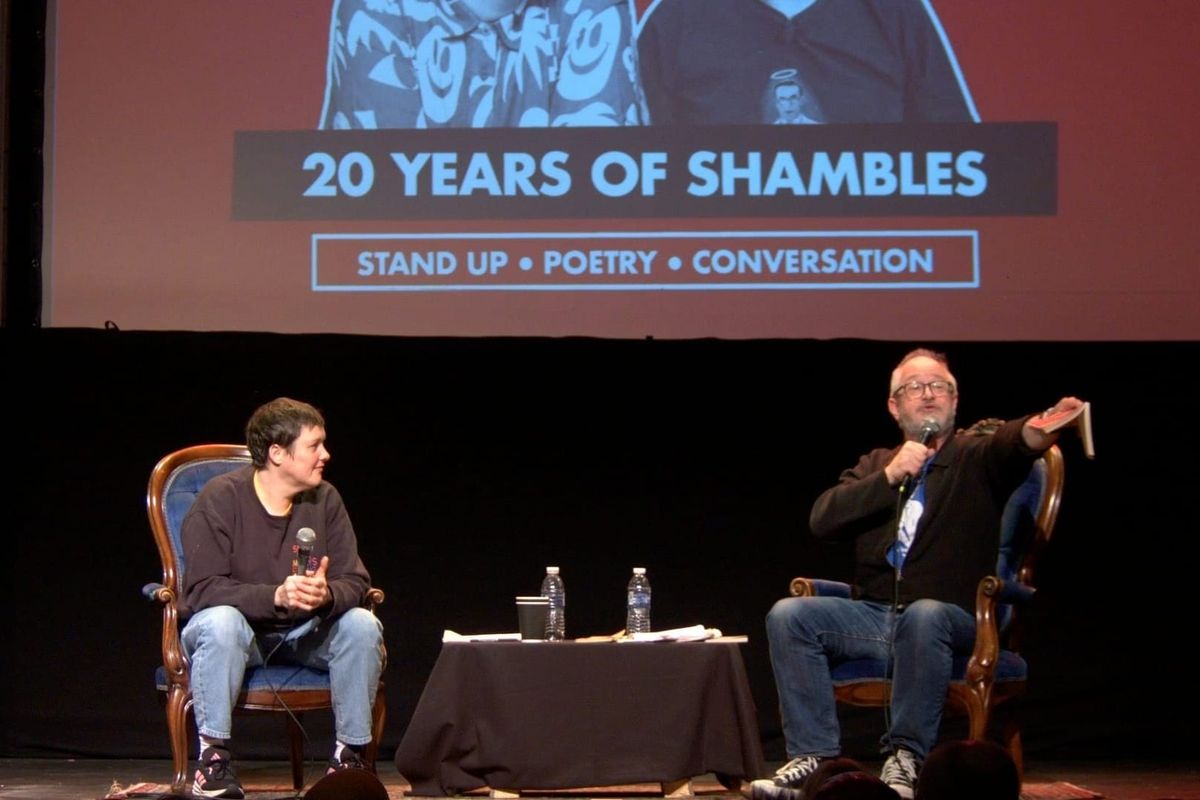
After Robin Ince disappeared into the wilds of central London during last week’s interview, we reconvened on Zoom a few days later. This time he was safely in his office, the signal worked, and Steven was finally able to continue.
In the second half of our interview with the hosts of the Utter Shambles tour, which still isn’t visiting Kent, Steven talks to Robin about books, podcasts, creative compulsion, his friendship with Josie Long and, eventually, finds several increasingly tenuous ways to justify interviewing him for a Kent publication.
Speaking of which...
I start by asking whether the secret of Robin and Josie’s successful partnership is spending much of their time living and working in different places.
“I was almost the one who was the best at being actually in charge. I think that's started to fall apart now with age.”
When Utter Shambles evolved into Book Shambles, one recurring feature was wondering who might guest host while Josie was unavailable.
“And then she would arrive and eat an apple loudly, because she hadn't eaten anything that day and really did need to eat something.”
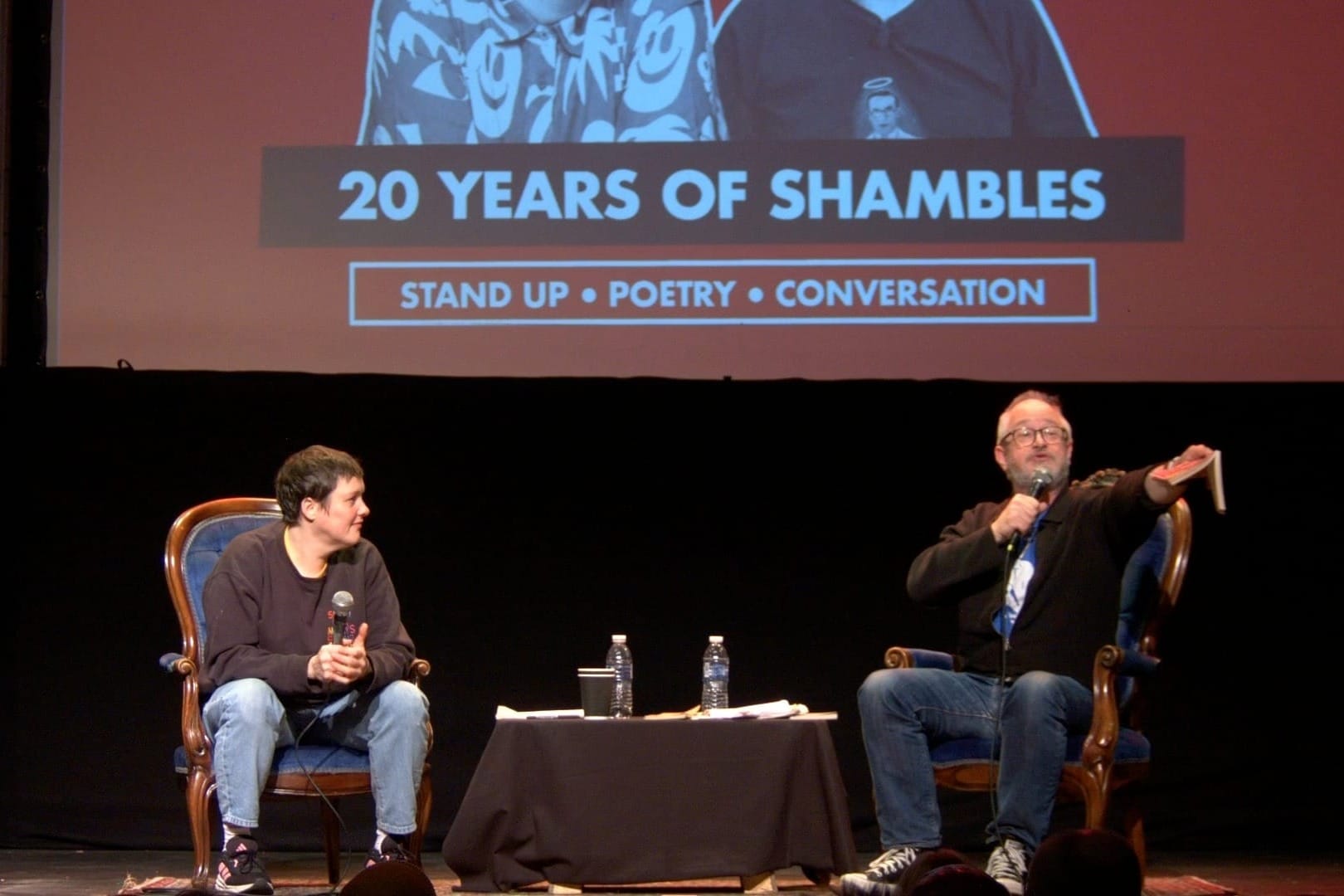
Before the signal gave up in part one, we had started talking about Robin’s increasingly prolific writing career.
“It took me a while.”
His first book was The Bad Book Club. “That was funny, because when I wrote that, this is a typical neurodivergent thing…”
“I wrote it with as many pages as I thought a book was meant to have and didn't consider that the font size that I was using on my computer was nothing like the size of letters on the page of a book. And I wrote a book that was about four times longer than it was meant to be.”
Robin describes that first book as “a piece of chaos”, written without an editor. His next, I’m a Joke and So Are You, did have one, which created a different problem. “They told me things that were wrong with the book, and I absolutely crashed.”
“I thought I must have written utter shit.”
It took a conversation with comedian and author Sara Pascoe to explain that this was, in fact, what editors were for. “I hadn't realised that.”
One of my favourite episodes of Book Shambles features Robin conducting an interview while Stewart Lee sits in the background chuckling his way through I Hate the Internet by Jarrett Kobek. I bought the book on the strength of that and have since devoured everything Kobek has written.
“That's why I brought back a book podcast,” Robin tells me. “I literally recorded the first four yesterday, because I just thought there's so many authors out there, like my friend Zena Barrie, who's written a book called Two Similar Looking Men with Umbilical Hernias.
Which is quite a title, and therefore leaves me with little choice but to add it to my wishlist.
The book contains the line: ‘I once had a boyfriend with an umbilical hernia. Eventually he had to have his belly button removed, which made him look as inhuman as he turned out to be.’
“I think that's great,” Robin tells me, delightedly.
It's what will kill me, the hypertension when I can't stop making things
Robin has also launched a new Patreon, partly “to highlight the voices that were the reason I had to leave The Infinite Monkey Cage.” He has spoken publicly about “the regressive politics” that led him to leave the BBC Radio 4 comedy and science programme he had loved making.
Previously, much of Robin’s crowdfunded work had been produced through Cosmic Shambles, including science podcasts and the annual Nine Lessons and Carols for Curious People.
Cosmic Shambles is not disappearing altogether. “We are still going to do a new, science panel show.” That is due next year.
“It's what will kill me, the hypertension when I can't stop making things.” Robin is aware that neither demand nor the available hours in other people’s lives necessarily justify the volume of material he creates. “I certainly don't have the level of celebrity which means that I should create the amount I'm creating.”
Still, “I do know there's a group of people that really enjoy it.”