“I'd always think, wouldn't it be amazing to write a history book?”
What we asked Dr Jane Secker, professor, author, and trustee at the Faversham Society


Dr Jane Secker is a trustee of the Faversham Society and one of the people behind a new book exploring the women who helped shape the town. Steven met her to discuss why she fell for Faversham, the Society’s underused archives, and how a book Griselda Mussett began decades ago was finally completed after her death.
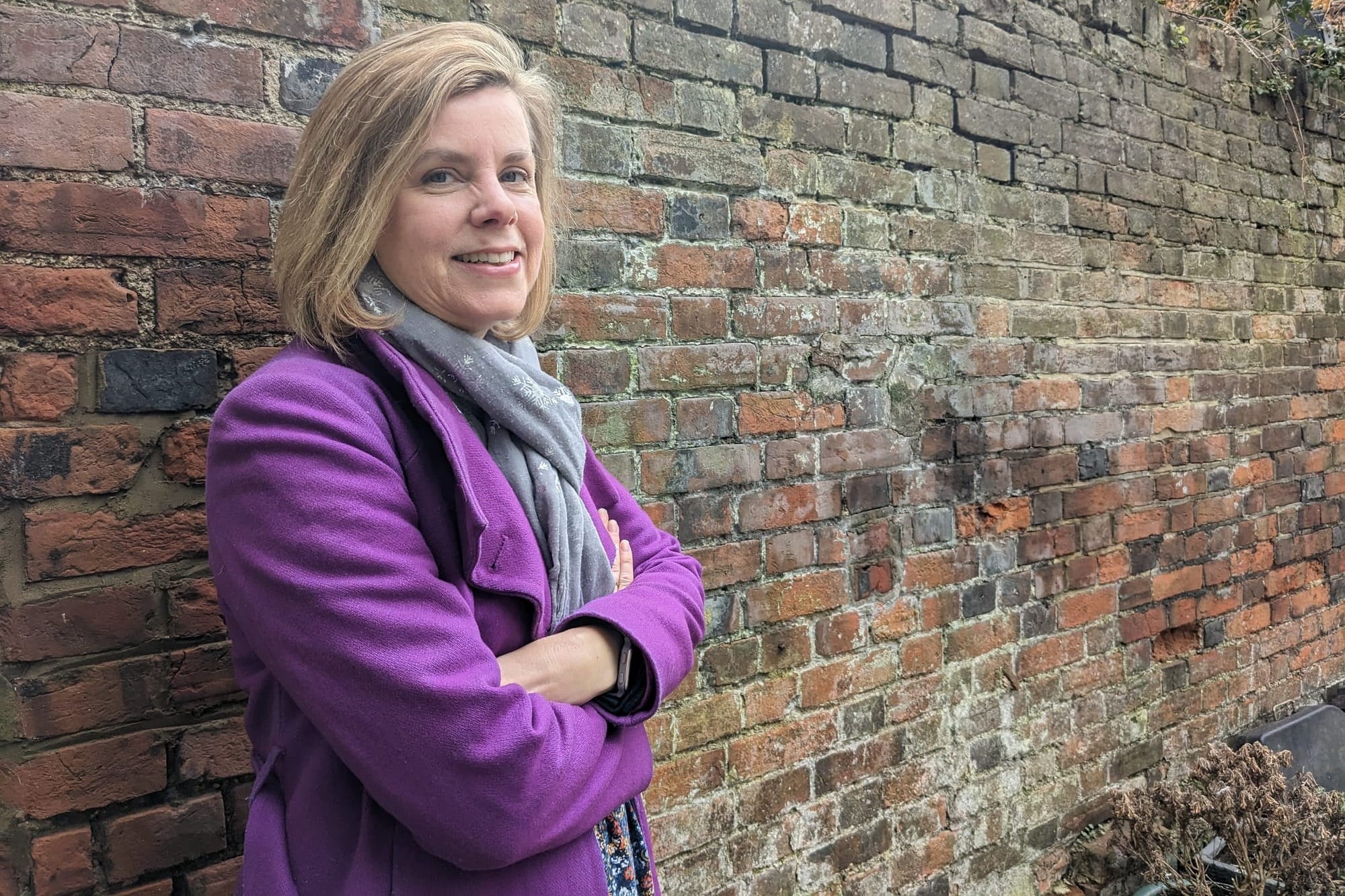
Jane Secker is an associate professor specialising in educational development. “I mainly teach lecturers how to teach.” Her work now focuses heavily on technology, though her academic roots are in history.
The Faversham Society was founded in 1962, after plans emerged to demolish much of Abbey Street. “It was derelict, and basically four people got together and campaigned to save that street. Which is now the most beautiful street in the whole of Faversham.”
Jane thinks Faversham has an unusual mix of identities. “It’s a market town, but it is on the edge. It has a tidal creek, a boatyard and is home to Britain's oldest brewery, Shepherd Neame.” The town also has a long connection with the gunpowder industry.
Before moving to Kent in 2019, Jane had lived in Bromley and had never even visited Faversham. Ashford was among the places she considered. “I was disappointed. There is not really any character.”
Then she visited Faversham’s market square and “literally went, 'Wow!'”
The Faversham Society now runs a museum, visitor information centre and, most importantly, an excellent second-hand bookshop “that brings in quite a lot of revenue.” It also organises monthly talks and an archaeology group, and helps residents research family histories and their homes. “We help people if they want to research their family history or trace the history of their house.”
“We've got over 900 members, and we're hoping to get to a thousand members, which is pretty good going.”
We've got the most amazing library and archive collection
Jane became involved with the Society soon after moving to Faversham in 2019 and has now been a trustee for four years. “I had to be re-elected because it is a three-year term, and I really enjoy doing it.”
One area Jane has taken particular interest in is the Society’s archive. “We've got the most amazing library and archive collection. We've got a museum as well, but particularly the archive collection, it's under-exploited. It's not properly digitised.”
As a small charity, the Society lacks the resources and systems needed to make much of that material easily accessible. “That's what I've tasked myself with. We've commissioned a new website, and we have lots of ideas about outreach.”
Jane’s background made the archive problem a natural fit. “My first degree was in history.” Her PhD examined how historians use newspapers for research. “I was looking at what libraries and archives were doing to preserve them and make them available.”
That work began in the late 1990s, during the early stages of large-scale digitisation. Jane went on to work on research projects with libraries looking at what happened when collections were digitised, “and how do we make them accessible?”
Jane later worked on a project exploring how readings could be made available digitally to students, before ebooks and e-journals were widely available.
She then spent 15 years at the London School of Economics, eventually becoming a copyright and digital literacy adviser, before moving to City University as a senior lecturer. “But I got into teaching people about how to do research as well.”
That included teaching people how to find, evaluate and use information, skills which would turn out to be rather useful when somebody handed her a half-finished local history book.
“I'd always think, wouldn't it be amazing to actually write a proper history book?”
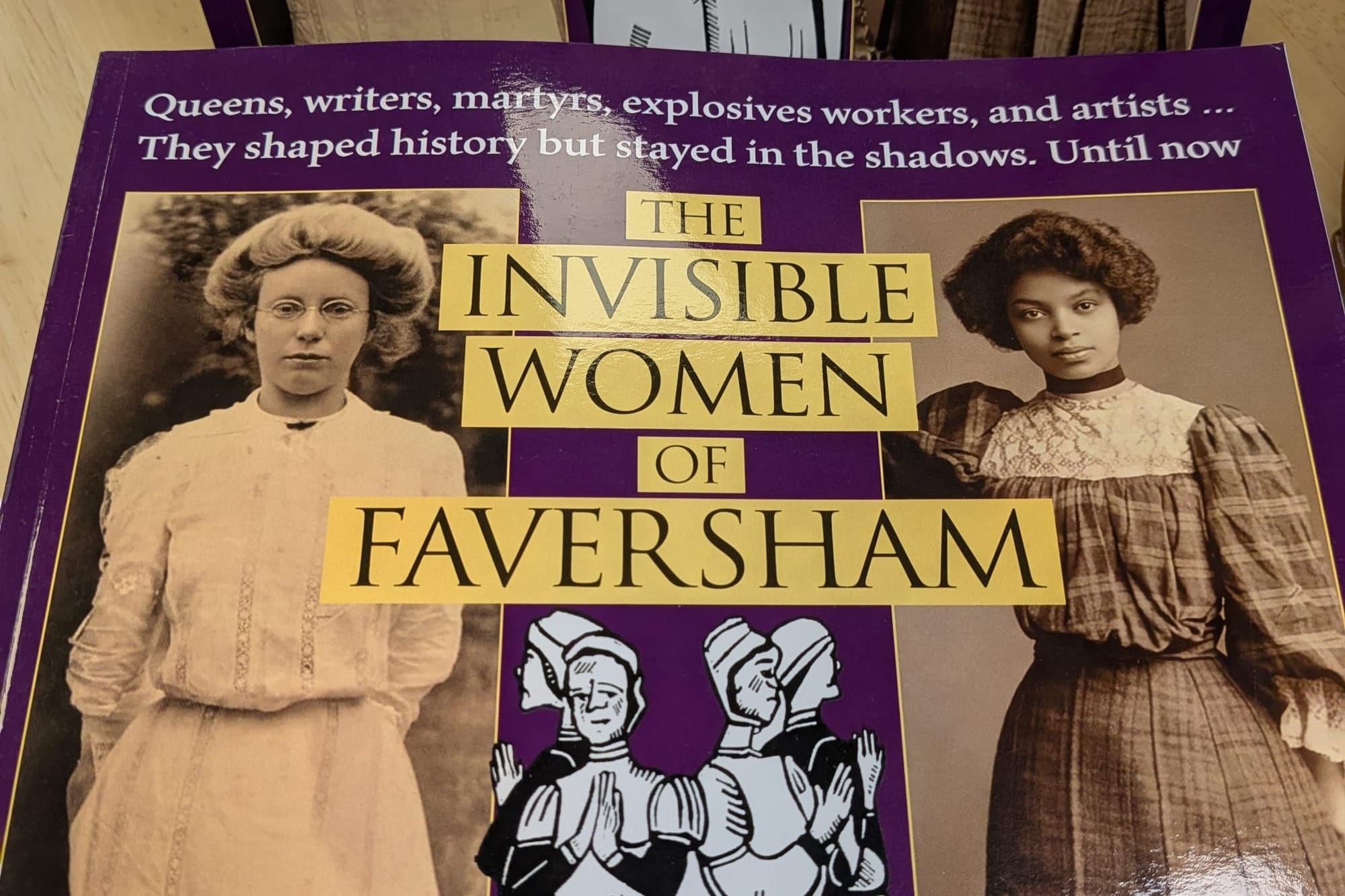
Griselda Mussett had been developing The Invisible Women of Faversham for years, but had run into problems around the copyright of images she wanted to use. Faversham Society’s Stephen Rayner, former Medway news hound and friend of the Kent Current, asked Jane to help.
Stephen arranged a meeting between Jane and Griselda. “And sadly, she died the week that I was meant to go and see her.”
Jane and the Society inherited a “massive bag full of all sorts of stuff, and loads of the images” collected by Griselda for the project. “She'd been collecting for years and had images that she thought she could put in the book and acknowledge and it would all be fine.”
Jane’s first instinct was that much of the work might need rebuilding. “I'll get involved, and I'll help you, but I think we might have to start from scratch.”
That meant finding images they could legally use without expensive permissions. “Otherwise, we'll probably be spending a whole load of money getting permission.” Jane knew that some collections were openly available under Creative Commons licences.
Stephen, however, wanted rather more than copyright advice. He wanted Jane to start writing parts of the book.
Jane already knew where some useful material might be. The Women’s Library collection is held at the LSE, and she had been working there when it was transferred from East London. “I knew they had amazing stuff.”