“I'm forever curious about the world”
What we asked Christine Rayner, former editor of newspapers across Kent
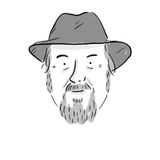
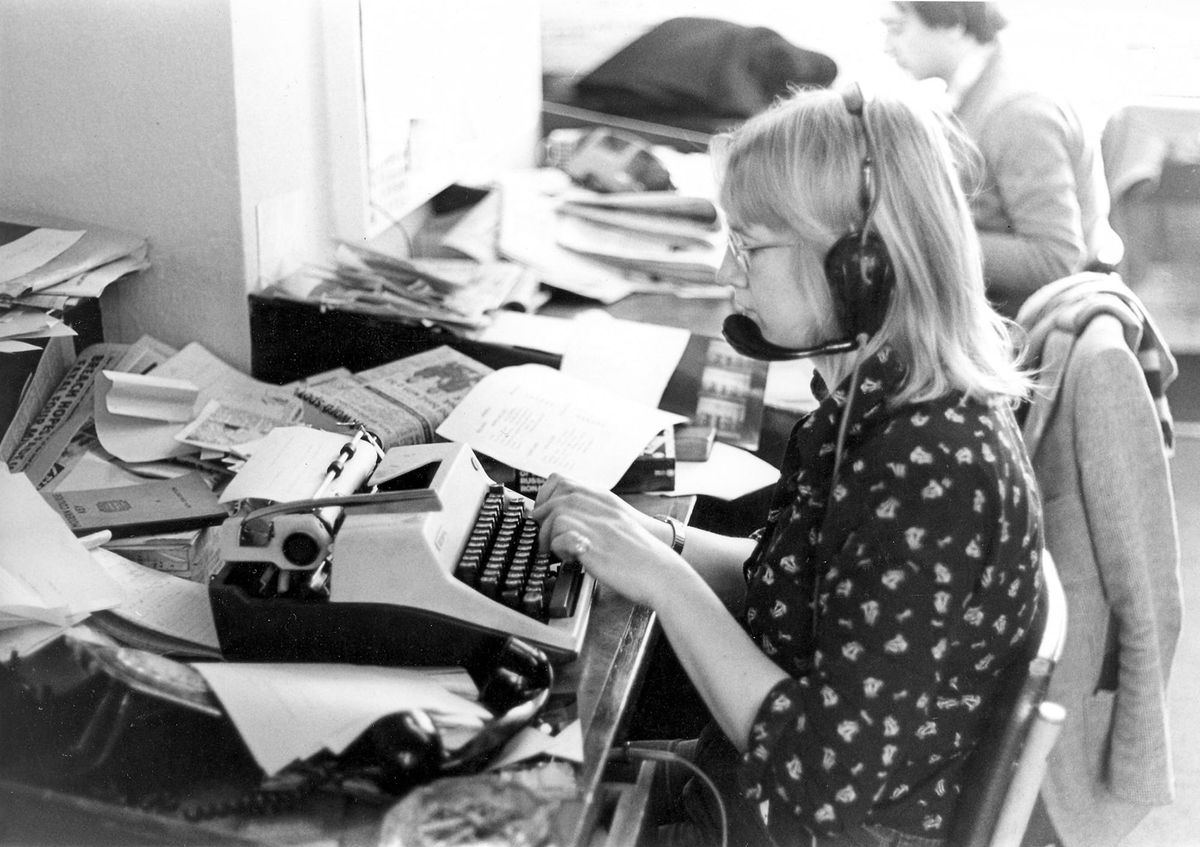
Christine Rayner was a journalist at the Chatham News in the 1970s when local news was well represented and financially supported. Imagine. She went on to become the editor of a number of Kent-based titles before a successful career as a journalism teacher before the closure of the Centre for Journalism. Steven met her at her home to talk about her coming to Kent against her wishes, why she isn't a fashion journalist and the legendary Gerald Hinks.
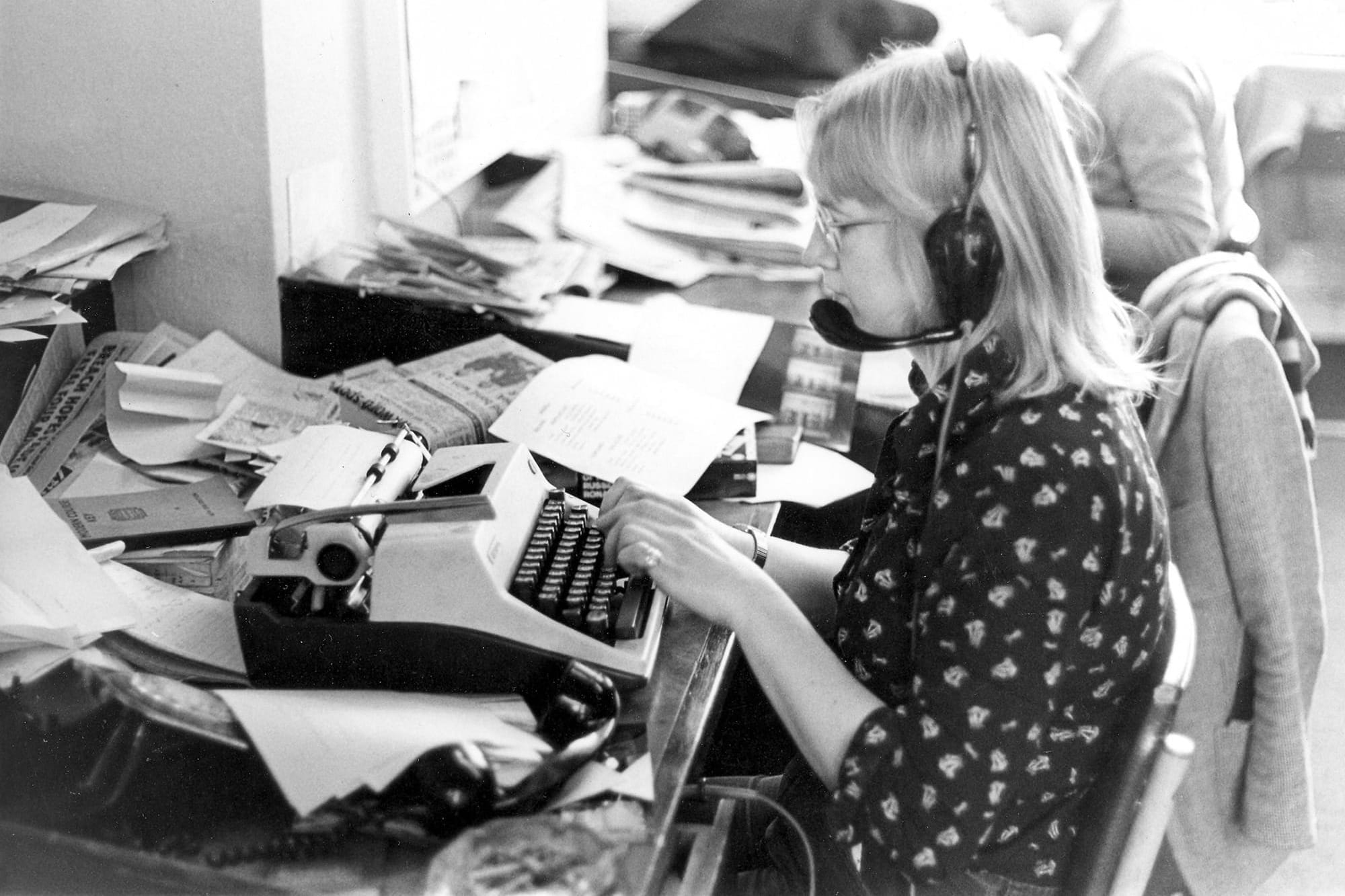
Christine Rayner, who emphasises the “e” in her surname “because so many people add an ‘o’ of their own volition,” is a freelance journalist based in what will soon become Mid Kent Council. We meet at her home to talk about a career spanning reporting, editing and teaching journalism across Medway and Kent, and to hear her advice on the art of interviewing people.
Christine has never had a particular journalistic specialism. “I've always said I can write almost anything about almost anything,” she explains, although there are subjects she steers clear of because she knows her limitations.
When Christine isn’t working, she helps look after her grandchildren and works with her husband, Stephen Rayner, on Bygone Kent, the history publication they own and publish.
As opportunities in journalism and teaching have narrowed, more time has opened up for those projects. “I'm afraid the work has pretty much dried up now, ever since, in their wisdom, University of Kent closed the Centre for Journalism,” she says.
She still occasionally teaches short courses in journalism and effective writing technique for the University of the Arts London.
Christine, the middle of three sisters, was born in the New Forest, where her father worked as a forester. “We had an idyllic childhood. We lived in a forestry cottage and were about four miles from the nearest house,” she says.
In 1970, her father was promoted, and the family moved to Kent.
Christine was less enthusiastic. “I was resistant to the move. I wasn’t really a rebellious teenager, but I did rebel against my parents’ insistence that we moved 130 miles, or whatever it was, to Kent, which seemed the end of the world.”
She is rather happier about the decision now.
Christine does not remember herself as particularly academic, although she worked hard. At Ashford Grammar School she took A-levels in English, French and art. “I liked the idea of working, once I found the subjects I was comfortable with,” she says.
She left school unsure what to do next and took a gap year.
During the year she combined work in the village shop with a part-time secretarial course, learning shorthand and typing, “which proved extremely useful once I got into journalism.”
She then enrolled on a fashion journalism course at the London College of Fashion. “It was a year's course, and I realised pretty quickly that I didn't want to be a fashion writer,” she says with a smile.
The journalism classes were the part of the course Christine enjoyed most, so she began applying to local newspapers.
“I was fortunate to get a job on what was then called the Chatham News, working under the absolutely brilliant editor Gerald Hinks, who taught me the hard way all that I believe I now know about journalism.”
Looking back on her years as a reporter and editor, Christine says the central purpose of the job was simple: finding out what was true.
“This meant you had to be determined and sometimes one did come up against people who were trying to stop you finding something out.”
One lesson Christine repeatedly gave trainee reporters and, later, university students was to listen carefully.
“Sometimes people are keeping something back from you, and you need to have skill in interviewing, so that you can ask the right questions,” she says.
Editing also meant standing up to people who disliked what her newspapers were reporting.
“I was frequently put under tough scrutiny from people who didn't like what the newspaper was saying about them,” she says. “But if you believe that what you are doing is right, you find the ability to stand up and say, ‘no, this will not do.’”
There were threats of legal action over stories published under Christine’s editorship, but no successful libel case.
Ultimately we were trying to put out what we believe to be true
Christine has never been a member of a political party, having covered local politics from all sides. She is proud to have been accused of bias by all parties while editing a newspaper, a sentiment this organ recognises.
“Ultimately we were trying to put out what we believe to be true,” she says.
Christine spent four years working across the Chatham News and its Tuesday edition, the Chatham Standard. “It was very much an apprenticeship,” she says.
After three years of training, including two blocks of classroom study, reporters sat the National Council for the Training of Journalists’ “pretty tough exams.”
The Proficiency Test was considered “stringent in the extreme” and referred to as the equivalent of a degree. “I never did a degree, but I have that professional qualification,” Christine says proudly.
Christine started in journalism in the mid-1970s, in what she describes as “entirely a different world to what it is today.”
You had to be prepared to talk to anybody about anything
Her first day gave her an immediate sense of newsroom life. “It was press day and 12 reporters, almost all of them puffing anxiously on cigarettes, were noisily bashing out their stories on huge, heavy typewriters. The room was filled with smoke, and as a lifetime non-smoker it was a physically demanding environment.”
Reporters were expected to get out of the office as well as work the phones. “You had to be prepared to talk to anybody about anything,” Christine recalls.
That is one of the biggest differences she sees in modern newsrooms, where smaller teams and constant deadlines can leave reporters stuck at their desks. “They do everything online and rarely meet people face-to-face,” she says.
Christine does acknowledge one major improvement: finding people has become much easier.
“In the early days you had to actually find somebody's number in an old-fashioned phone book. I guess the ease of modern communication's a good thing, although it does have its downside if you can only interview someone via email. It doesn’t have the same impact.”
Reporters also routinely worked alongside professional photographers. Today, Christine says, almost anyone can take a picture “with a camera in their pocket,” but she does not think that replaces the experience of going out with trained photographers.
“They were good mentors, though they would tease you because they were always frustrated journalists and perhaps drop a question in for you at the crucial time,” Christine recalls.
When Christine moved into university teaching in the 2010s, she found some students deeply uncomfortable with the idea of “actually go and talk to a person face-to-face.”
For her, interviewing is a “very specialist piece of work practice,” and she reproaches me for referring to it as a conversation. “If you're on a deadline, you need to be very disciplined and keep the interviewee to the subject.”
She does at least approve of the fact I have written questions.
“You need to be listening to what the person is saying and have the next question in your head, ready to ask. Sometimes the question that you spin off into is not the question you thought you were going to be asking at the beginning of the interview. I'm far too interested in people really. I'm forever curious about the world and want to find out more.”
Christine’s career took her from smoky 1970s newsrooms to editing six local newspapers, covering the courts and teaching the next generation of journalists.
Register for free to keep reading about what she thinks local journalism has lost, why fewer reporters means more stories go uncovered, and why she still believes it is one of the best careers there is.