KCC’s finance and payroll overhaul heads for £38m
Another £7.5m is needed, with payroll still in testing and the system’s future undecided

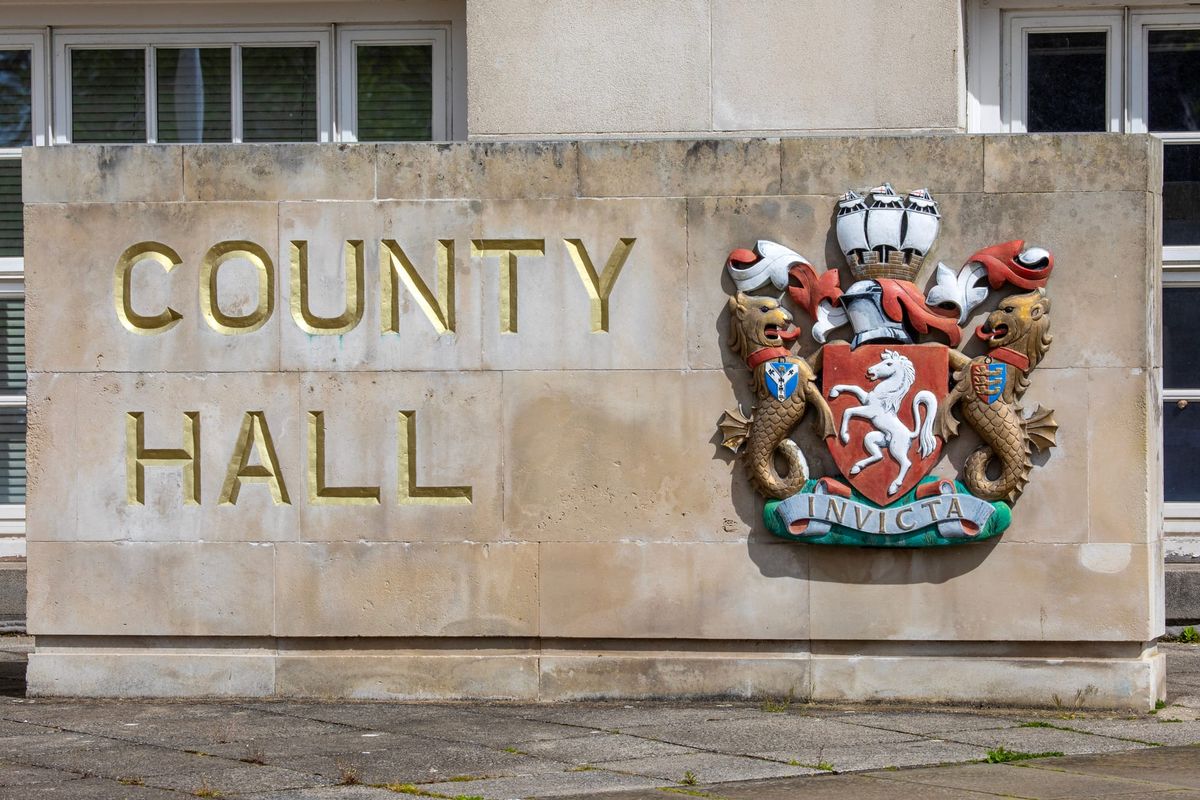
Kent County Council is preparing to spend almost £38m on the back office software it uses to pay suppliers, approve purchases, manage its finances and, eventually, run payroll.
That software is Oracle Cloud. Despite the name, it is not an online storage service. It is a collection of programs covering finance, purchasing, staff records and payroll, delivered online rather than run through KCC’s old technology.
Only the first of its two phases is live. Finance and procurement launched in August 2025. HR and payroll were supposed to follow in April this year, but remain in testing without a firm launch date.
For a council with an annual net budget of around £1.6bn, Oracle sits at the centre of how money is approved, recorded and paid. It is the organisational plumbing, with an awful lot of public money running through it.
KCC is now seeking another £7.56m to complete the programme. This money comes on top of the council’s previous £30.4m forecast.
The Kent Current asked KCC directly whether the additional funding was included in that figure.
“The £7.5 million is in addition to the £30.4m,” the council replied.
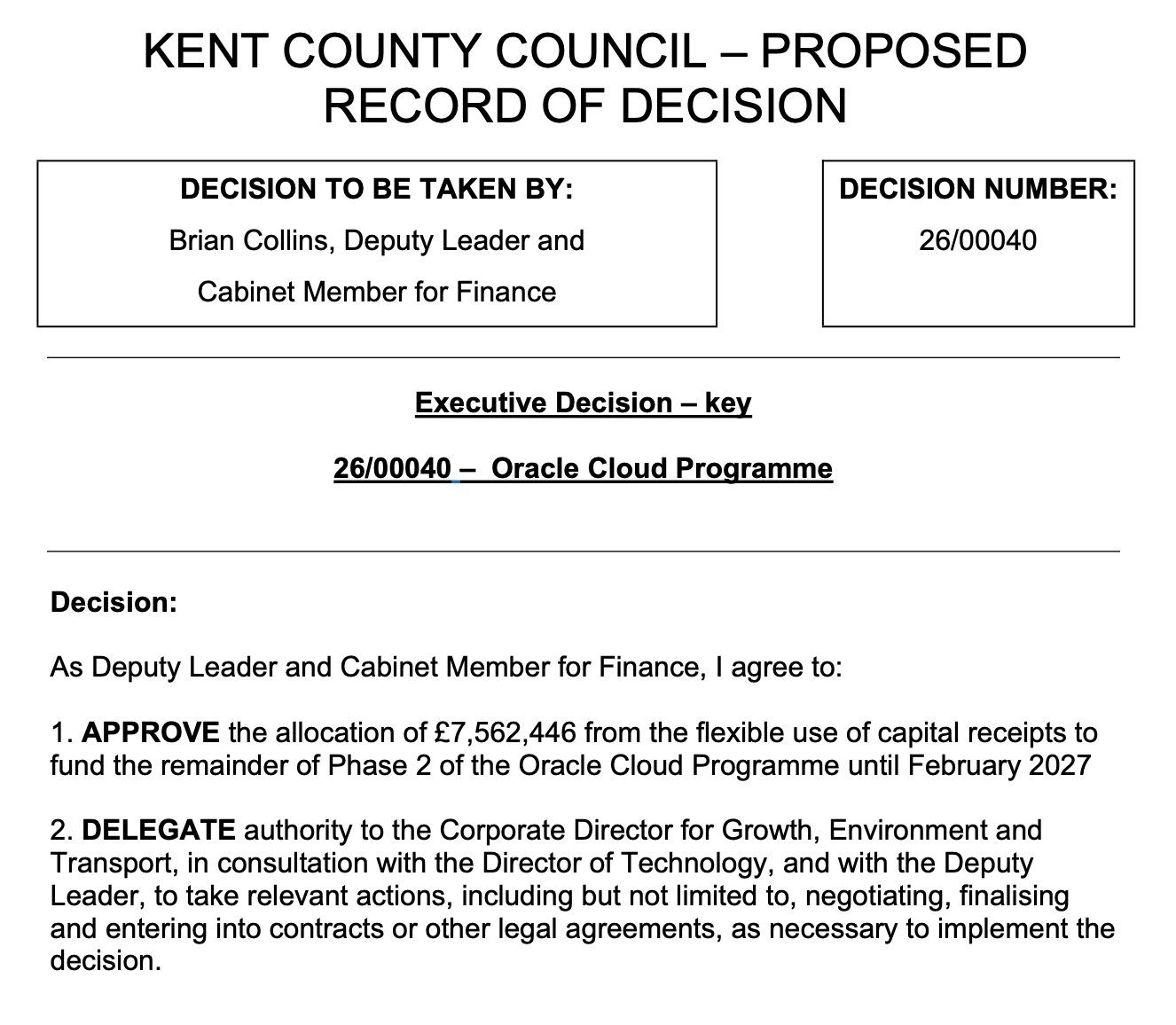
Using the precise £7,562,446 contained in the proposed decision, that produces an expected programme cost of £37.96m.
KCC did not provide a separate revised total when asked. It did, however, confirm the two numbers should be added together, which rather limits the available arithmetic.
The allocation has not yet appeared on KCC’s cabinet member decision list, so it remains a request rather than an approved increase.
But the direction is clear. Payroll is not live, there is no firm launch date, the lessons learned work remains unpublished, and nobody has started planning what happens to the system when KCC disappears.
This is not a full-blown IT failure. The finance and purchasing system is operating, and external auditors have not identified significant problems with moving financial records from the old Oracle system into the new one.
But the cost has climbed, a major deadline has been missed, and several important checks remain unfinished.
The cost has been moving rather more confidently than the launch date.
The first £13m was approved in February 2022 for what KCC called the Extended Discovery phase. This was the period in which the council was establishing what it needed and how the replacement should work.
That £13m was not presented as a complete lifetime price for the finished system. It is an important qualification when comparing it with today’s figure, although it also means the programme began without councillors being given a full public price for where it might end.
By November 2024, approved funding had reached £25.4m. It rose to £29.8m a year later.
A Freedom of Information response to the Kent Current showed that £29.2m had already been spent, while KCC separately put the programme’s current forecast at £30.4m.
The route by which that figure became public was not especially straightforward.
KCC initially refused to provide the forecast through FOI. It said the number was under review with its commercial partners and that releasing it could damage continuing contract discussions.
When approached separately for comment, the council’s press office supplied the £30.4m figure. Two months later, it has confirmed that another £7.56m was required on top.
That is a substantial development to emerge from a forecast previously considered too commercially sensitive for disclosure through the formal information regime.
The new money is intended to fund the second phase until February 2027. KCC wants to take it from the flexible use of capital receipts, which essentially means using proceeds from selling property or other assets to pay eligible transformation costs.
Councils would normally use capital receipts for buildings, infrastructure and other long-term investment. Government rules also allow the money to support projects expected to transform services or produce continuing savings.
KCC used the same approach during 2025/26, when £8m of Oracle spending was met from capital receipts rather than its reserves. Its strategy for 2026/27 then proposed using a further £9m across Oracle and several other transformation schemes. Any remaining Oracle costs would be met from money set aside for IT projects.
The council says the latest £7.56m has already been identified and should be enough to complete the programme while leaving sufficient funding for its other digital priorities.
Using capital receipts does not make the cost disappear. KCC says it received £9m more from asset sales than expected, so the proposed use should not increase its borrowing.
The rising bill is only part of the story.
KCC’s own auditors identified financial weaknesses, testing problems and gaps in oversight. Register for free to continue reading about what remains unfinished and why nobody has started planning for Oracle’s future after KCC disappears.