Kent faces £15 police council tax rise
Funding pressures meet neighbourhood policing promises, and a council meeting again derailed by far-right disruption

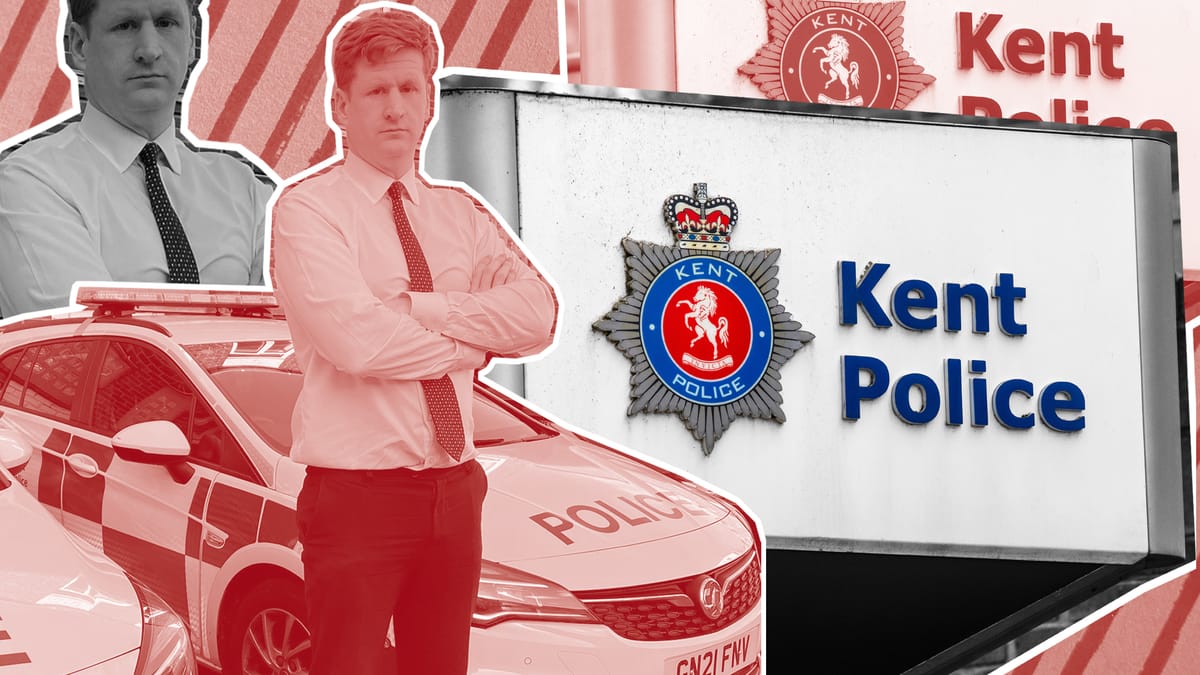
Kent residents are being asked to pay more for policing as the Police and Crime Commissioner seeks the maximum £15 council tax rise to protect neighbourhood services amid rising costs and looming national reforms. We also report further disruption at a Swale Borough Council meeting from far-right activists during a Reform immigration debate, highlighting growing pressures on how local democracy functions in practice.
Kent residents asked to pay more as Police and Crime Commissioner seeks £15 council tax rise
Kent residents are being asked to pay more for policing next year after Police and Crime Commissioner Matthew Scott formally proposed a £15 increase in the policing element of council tax, a decision he will be questioned on by councillors at the Kent and Medway Police and Crime Panel next week as wider reforms to policing are debated nationally.
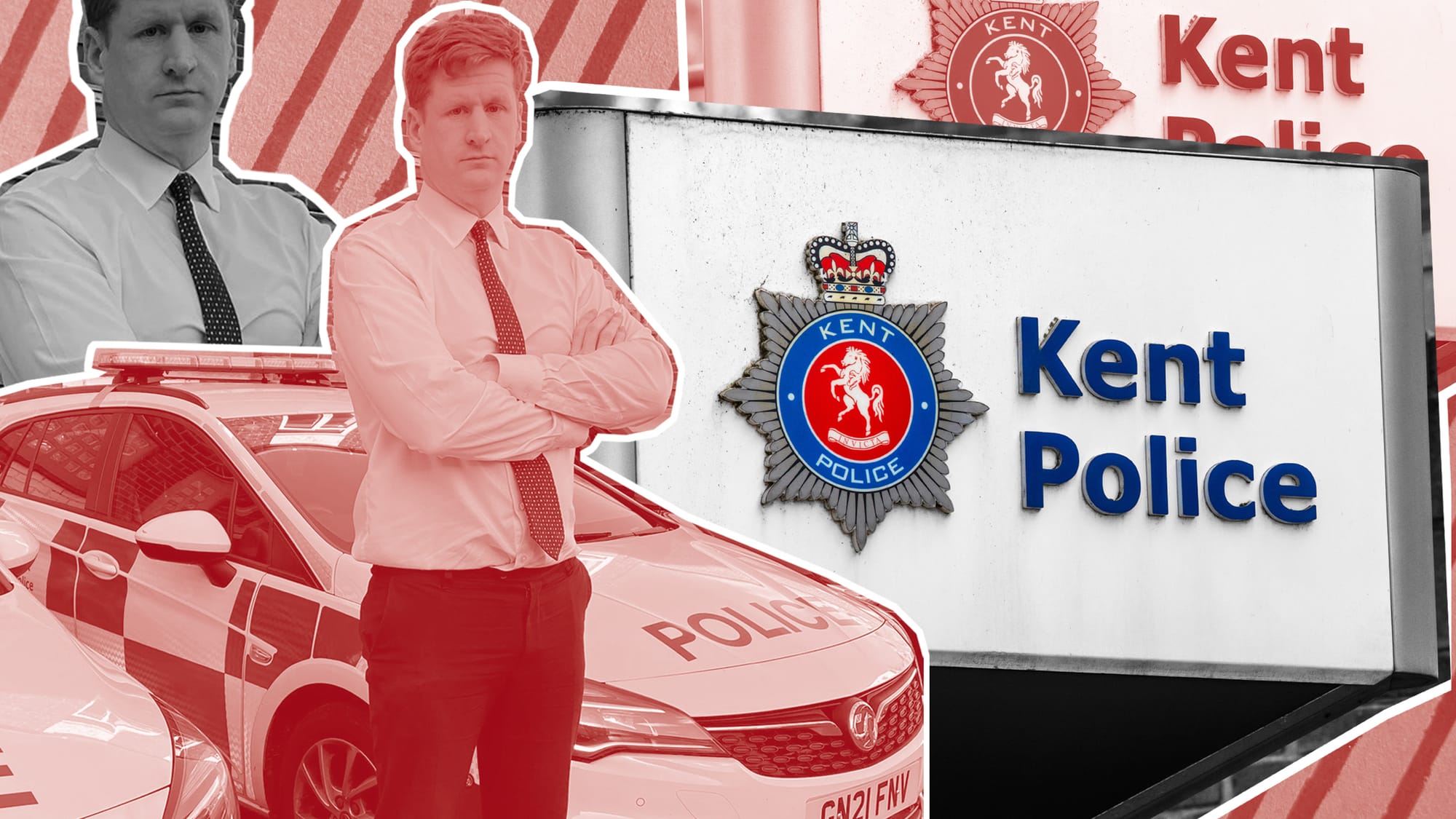
Scott is seeking to raise the charge for a Band D household by £15 to £285.15 a year, the maximum increase permitted without triggering a local referendum. He argues that the rise is now necessary to prevent deeper cuts to policing services and to protect neighbourhood policing, as national funding is failing to keep pace with rising costs.
The proposal sits alongside a refreshed Police and Crime Plan covering the period to 2029, which Scott is required to submit to the panel for scrutiny. While the plan has been updated, it does not represent a change in direction. Its priorities remain broadly the same, with Scott continuing to emphasise neighbourhood policing, tackling anti-social behaviour, supporting victims, and maintaining public confidence in Kent Police. The refresh sharpens language around town-centre crime, retail theft, and violence against women and girls, but it does not introduce major new initiatives. Instead, it sets out the framework Scott says justifies the funding increase now being requested.
The financial case he is making is stark. Government funding for Kent Police is due to rise by around £12.9m next year, but Scott’s own finance officers warn that this increase is outweighed by rising costs. Pay awards, incremental salary increases, inflation on contracts, and other unavoidable pressures are forecast to add more than £30m to the budget in 2026/27 alone. Police pay awards account for £16.4m of that figure, with no additional central government funding to meet them.
Even with the full £15 rise, Kent Police will still need to find £2.9m in savings next year, with around £40m of savings required over the medium term. Scott accepts the precept increase does not close the funding gap, but argues it limits the scale of cuts that would otherwise be required.
In the report he has submitted to the panel, Scott is explicit about where responsibility now sits. The national police funding settlement assumes every Police and Crime Commissioner will raise council tax by the maximum amount, effectively treating local tax rises as part of government funding for policing. Over time, this has shifted an increasing share of the cost away from Westminster and onto households.
In Kent, that shift is pronounced. In 2010, central government provided 73% of police funding. By next year, only 56% of Kent Police funding will come from government, with 44% raised locally through council tax and other income. Scott argues that Kent’s relatively low precept leaves the county particularly exposed, a point he is expected to make again when he appears before the panel.
The clearest pledge attached to the increase is Scott’s commitment to protect neighbourhood policing. Under his proposal, Kent Police would deploy 43 additional neighbourhood officers in 2026/27, on top of 65 added this year, taking the total to 108 extra officers working in local communities across Kent and Medway. Neighbourhood policing is now the only part of the workforce with a specific government-backed headcount requirement, leaving other areas more vulnerable if savings deepen.
Scott warns that taking less than the full £15 increase would sharply worsen the position. A smaller rise would add several million pounds to the savings gap in a single year, forcing deeper staffing reductions and risking recent improvements in areas such as call handling and visible patrols.
The debate is unfolding as ministers pursue plans to overhaul policing nationally, including proposals to merge England and Wales’ 43 police forces into a much smaller number of large regional bodies and to replace locally elected Police and Crime Commissioners with new governance arrangements. Scott has been a vocal critic of those proposals, arguing publicly that centralisation risks weakening local accountability and drawing policing further away from communities.
Others within policing have taken a different view, with the former chief constable of Kent, Michael Fuller, arguing that the current force structure is inefficient and that mergers are overdue, even if difficult to deliver well. Those arguments have been playing out publicly this week, underlining how contested the government’s reform plans remain.
That uncertainty forms the backdrop to Scott’s current proposal. While he is being asked to set out a four-year plan and a funding decision for the year ahead, the government has already signalled that the governance model underpinning both may soon change, with little clarity about what will replace it or how local oversight will work in practice.
Public reaction to the proposed council tax rise reflects reluctant acceptance rather than enthusiasm. Consultation results show that most respondents accept the £15 increase as necessary, but fewer than half are happy to pay it. Many argue that policing should be funded more heavily by central government rather than through council tax, seeing the rise as the consequence of national funding choices rather than a local preference.
That frustration is echoed in Scott’s annual policing survey. While overall confidence in Kent Police has edged up slightly, satisfaction drops sharply among people who have actually experienced crime or anti-social behaviour. Anti-social behaviour remains widespread, frequently unreported, and a major source of dissatisfaction when it is reported, particularly where residents feel little changes as a result.
For Scott, the refreshed plan and proposed precept rise amount to a holding operation rather than a reset. He is not arguing that the increase will transform policing in Kent, but that it will help maintain services, protect neighbourhood policing where possible, and slow the pace of future cuts in a system that increasingly relies on local taxpayers while its long-term structure remains unresolved.
 Steven Keevil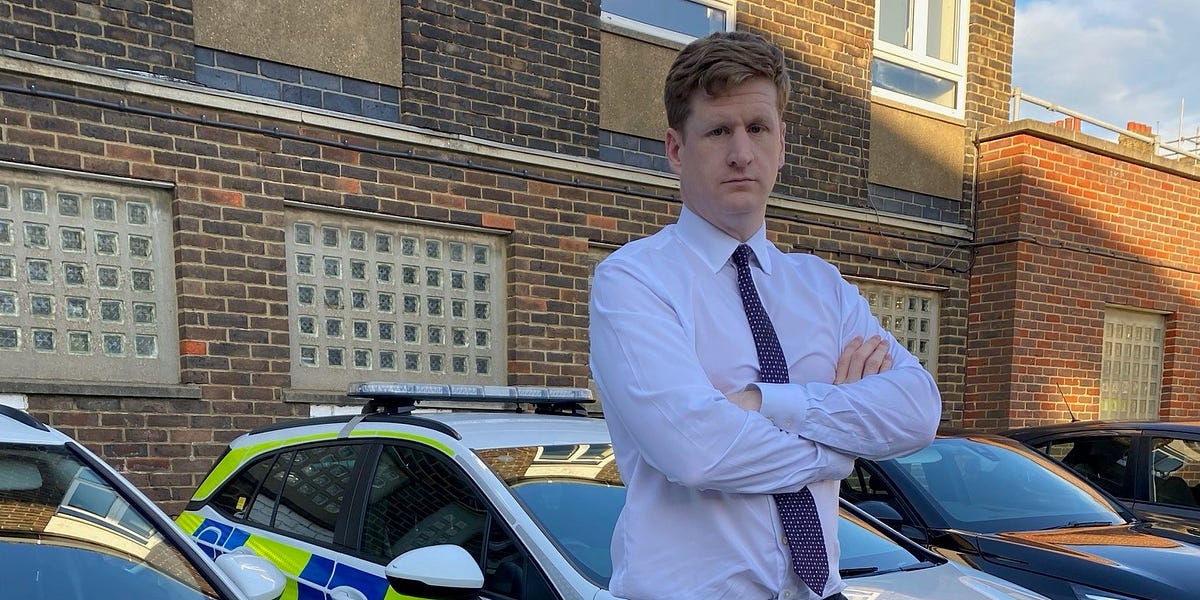
With only one year of funding certainty from government, active proposals to reshape policing nationally, and staff costs continuing to rise, Scott faces a searching panel next week. For Kent residents, the decision now before councillors is not whether policing should improve, but whether they are willing to pay more locally to prevent it getting worse.
Swale council meeting adjourned after far-right disruption during Reform immigration debate
A Swale Borough Council meeting was adjourned and the public gallery cleared last night after repeated disruption during a debate on a Reform motion on immigration, despite heightened security measures introduced following similar disorder at a meeting in December.
The meeting, held at Swale House in Sittingbourne, had been ticketed in advance, with access to the public gallery limited to 34 people. An overflow livestream was available in the building's reception, and around a dozen police officers and security guards were on duty. Even so, the debate again descended into disorder, driven by a small group of far-right activists in the public gallery who cheered, jeered and shouted at councillors before being removed.
The trigger for the evening was a Reform motion declaring a so-called 'Border Emergency,' brought forward by Cllr Richard Palmer and seconded by Cllr Kieran Mishchuk. The motion argued that immigration was placing pressure on housing, public services and community cohesion in Swale, and called on the council leader to lobby central government to recognise and respond to those pressures.
Immigration policy sits firmly outside the powers of a district council, but the motion had already attracted attention in the days leading up to the meeting. Reform councillors promoted it on social media using stark language and imagery, including a graphic purportedly showing Faversham that councillors from other parties later said did not resemble the town. That material was widely shared by far-right activists who had mobilised supporters ahead of a Swale council meeting in December, when a separate debate on becoming a sanctuary district was derailed by abuse, vandalism and flooding inside the council building.
An amendment to the motion was proposed by Liberal Democrat councillor Hannah Perkin, which sought to correct factual claims in the motion and narrow its scope. During the debate, Cllr Palmer complained that Reform councillors were being “sniggered at” for holding a different opinion, a claim that drew applause from the public gallery.
Lib Dem councillor Ben Martin described the Reform motion as a political weapon designed to stoke the same atmosphere that had engulfed the council in December. He reminded councillors that he had been subjected to homophobic abuse at that meeting and told the chamber that his home had later been attacked, with a swastika painted on it. At that point, laughter and derisive reactions could be heard from the public gallery. Footage from a livestream broadcast from inside the chamber captured that reaction.
When Cllr Mishchuk rose to speak, the atmosphere deteriorated further. He blamed migrants for housing shortages and job competition, claimed they were setting up businesses that employed only other migrants, and said concerns about immigration were being dismissed and laughed at. He described the Lib Dem amendment as “a kick in the teeth” to residents worried about what he called the “demographic decimation” of the country and Swale, adding that “we shouldn’t be mixing together loads of different nationalities.” He claimed that areas such as London and Birmingham were “absolutely hell on earth.”
We can only do this kind of reporting thanks to the readers who generously choose to support our work. If you value our journalism, please consider joining them. A Kent Current subscription costs £1.15 per week over a year and helps us build a better way of telling the stories that matter to our county.
The public gallery responded with loud cheering and clapping. As the noise escalated, far-right activist Harry Hilden, who was in the gallery, began shouting at councillors. The Mayor adjourned the meeting and ordered the public gallery to be cleared.
Footage from a livestream by fellow activist Jodie Scott shows what followed. As security staff moved in, Hilden could be heard yelling at them and questioning their nationality, asking whether they were “English nationals” and whether they were “British or a foreigner.” Others made comments suggesting the guards came from migrant hotels, claiming that's “where they get them from” and asking them “which hotel did you come from?” One voice can be heard saying, “Let’s go laugh at swastika boy,” as people were escorted out.
After the gallery was cleared, councillors returned to the chamber to continue the meeting. The amendments were voted down, and the council moved on to the Reform motion itself.
During that debate, Swale Independents councillor Mike Baldock directly challenged the internal logic of the motion. Addressing Cllr Mishchuk as its seconder, he questioned whether the argument that immigration created pressure on Swale should also apply to people who had migrated in the past, including councillors and council staff.
“There are some councillors here who are immigrants,” he said. “Cllr Mishchuk, you’re from an immigrant family. Whose job are you taking? When you were at school, were you taking the place of somebody, a true Brit? Do you live in a house that a true Brit could be living in? Or is it okay because that was in the past? Is it okay because you’re white? I don’t know. I’m trying to see the difference.”
Baldock concluded that the motion was “a pile of hogwash.”
Several councillors also questioned the relevance of the motion, reiterating that border control and asylum policy were matters for national government rather than a district council. When the vote was taken, only Reform councillors supported the motion, leading to its defeat.
Cllr Mishchuk later confirmed that the Reform group left the meeting after the vote, missing the remaining agenda items.
In the hours that followed, those involved in the disruption took to social media to justify their actions. In a video posted after the meeting, Harry Hilden defended his behaviour, rejected the legitimacy of the adjournment and accused councillors of silencing the public.
Cllr Mishchuk posted that the debate had been “intense” and that the motion had been “shot down by all other councillors,” reiterating his belief that there was a border emergency and inviting followers to agree that population growth was linked to declining services.
The reaction has not stopped at Swale. In recent days, Hilden and others involved in the disruption have openly encouraged supporters to attend other council meetings across Kent. He has urged people to “give councillors a piece of your mind” at an upcoming Faversham Town Council meeting and has promoted plans to target Kent County Council, including a march on County Hall.
The message is increasingly explicit. Elections are dismissed as ineffective. Councils are framed as illegitimate. Pressure, disruption and confrontation are presented as acceptable tactics to force outcomes.
For local authorities, this presents a growing dilemma. Open meetings and public galleries are a basic feature of democratic transparency. When that openness is exploited to intimidate councillors, abuse staff or shut down debate altogether, councils are left balancing access against safety.
Swale’s response, including ticketing the meeting, limiting gallery numbers and increasing security and police presence, reflects that tension. So does the decision to adjourn once the disruption escalated. These are not measures councils want to normalise, but they are increasingly being treated as unavoidable.
The impact is not confined to a single night. On Wednesday, councillors were laughed at while describing attacks on their homes, and security staff were subjected to racist abuse while carrying out their duties. The effect is to narrow who feels able to participate in local politics at all.
The vote on Wednesday was clear. Reform’s motion was rejected overwhelmingly, and council business resumed once order was restored. But local democracy depends on more than votes being counted. It depends on debates being able to take place at all. In Swale, and increasingly across Kent, that assumption is now under strain.
Footnotes
Follow us on social media! We’re on Facebook, BlueSky, and Instagram for now.