"We’re still standing by what we were elected to do"
What we asked Cllr Paul Thomas, leader of the new Restore Britain Group on Kent County Council

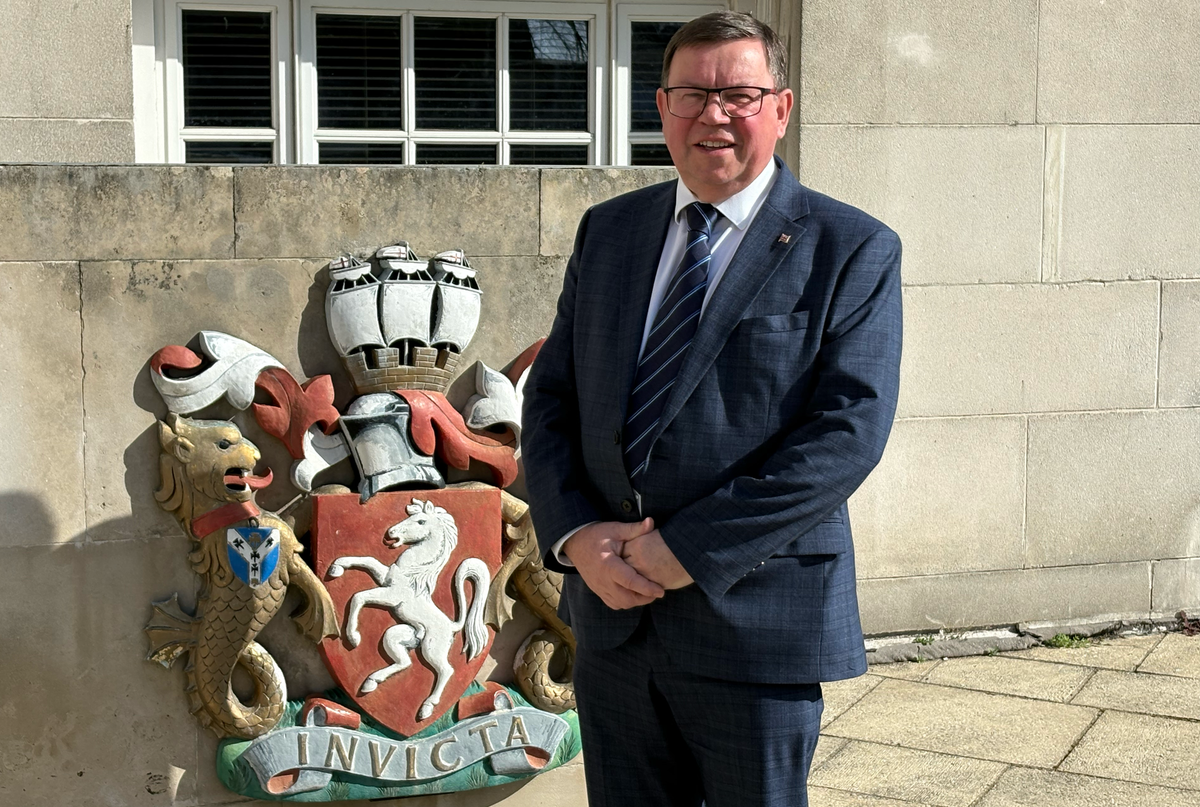
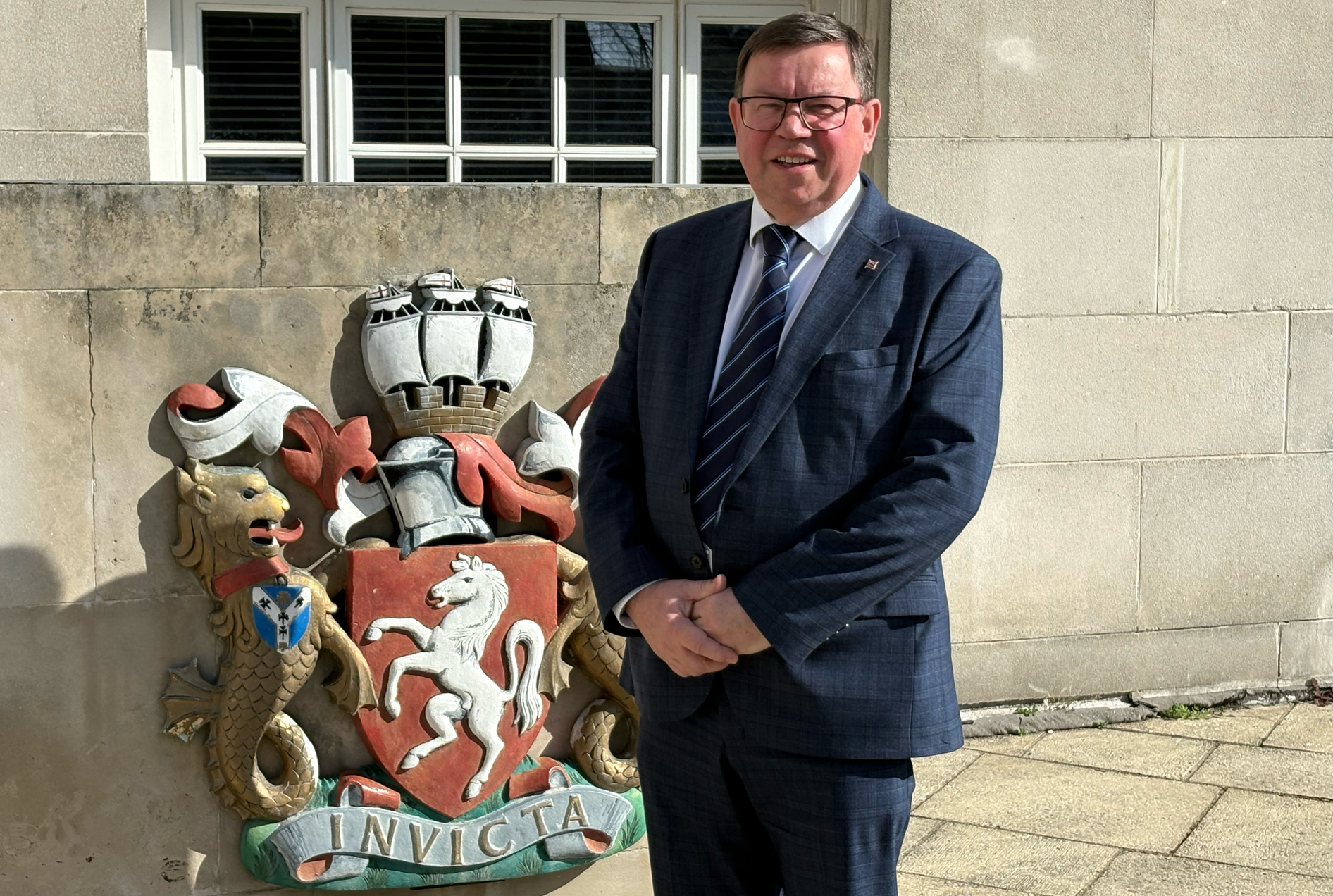
Steven met Cllr Paul Thomas in the new Restore Britain Group office at Kent County Council. Having only recently joined the party and been elected group leader, they had a lot to talk about, including why Paul joined and left the Conservatives, why he is no longer a member of Reform, and why he landed on Restore. He also asked him about his path into politics, whether he supports far-right individuals joining Restore, and if he has curtains up in his front room...
What is it you like about Rupert Lowe?
It's refreshing that you've got somebody that speaks their mind, takes a common sense approach, and empowers us at the grassroots level. He came to visit us in County Hall. His main purpose was to thank us for joining the party, which was a no brainer, to be honest. It's all about serving your division, but collectively do the best you can for the county. A lot of the obvious ways to fix things are staring you in the face. But politicians, per se, and it seems to be the case across the board, seem to ignore that, and they start to have their own agendas.
A lot of people started accusing us of being things that we're not. I said to them, “Hold on a minute. I've been elected. I'm Paul Thomas, county councillor for Maidstone South. I live in my division, and we try and pick candidates from the communities because you then live in it.” Whereas you see a lot of other parties keep throwing people in from out of area. They don't understand it.
You're now the leader of the Restore Britain group. How would you describe Restore Britain?
To be absolutely honest, a lot of the things we used to say in Reform, like family, community, country, I always added the strapline 'with consideration.' Because if you assume things, you can get things wrong. Another issue that we always like to look at is the unintended consequences. Before we take action or suggest something, what are the unintended consequences within our area? We try and sound that out. One of the biggest issues and Reform bang the table, Rupert was an integral part, it now transpires, his idea for mass deportation was the real reason he was pushed out of the party. Yes, it's a hard policy. Yes, we're going to have those that criticise us about it, but we can't afford to pay for all of these illegal immigrants coming through.
The approach Restore are taking is to rather make these big sweeping promises, this is what we're to do. It's the same thing I was elected on. I didn't say I wasn't going to put council tax up. What I said is you vote for me, and I will go in there, and I will look at the inefficient practices or the contracts that we're doing, or what we strategically need to do. It won't happen overnight, but that will then generate savings and efficiencies, which means you can deliver more for less or if you then manage to work within surpluses, we've got choices. Those choices can be reducing the tax for people, which then means there's more money in their pockets they can spend. That will boost the local economy. But more importantly, the refreshing big difference is we're not going to be whipped locally. We've been empowered to go out, understand what needs to be done, and make those proposals, put the motions forward, chase, cajole, to ensure that we deliver what the people of Kent want.
Restore has positioned itself as right of Reform. I know you said you don’t like labels, but Restore has support from groups that have been referred to as far-right or fascist. Does that concern you?
One of the things that's always occurred to me is I can't stop people voting for me.
No, but you can stop people who've got a conviction for a hate crime, for example, from joining the party.
Yeah. Now, that's where we will be looking out to make sure that people that have done that don't join the party. Because where I was saying labels are always dangerous, is it hard right saying we need mass deportations? We've explained why it's a sensible approach.
Want to read the full interview? You’ll need to be a Kent Current supporter. Paid subscribers receive the full versions of all of our interviews. You can support the Kent Current from £1.15 a week on an annual plan.
There are people who have said, Rishi Sunak, for example, isn't really British or who would say that Linden Kemkaren isn't really British and therefore shouldn't be able to be a councillor and Leader of Kent County Council.
Funny enough, I asked him [Rupert Lowe] that question, and he said, “Go and read the mass deportation policy. Say where it says people like Linden Kemkaren and Rishi Sunak…”
But people who are supporting the party are saying that. Do you welcome that support?
There's a line. When it crosses that line, the answer's no.
Just to be clear, where is that line?
That line is when people are actively in this country, earning a living, paying their taxes, being part of the community, don't want to change the laws of this country. Yes, there's laws I want to change, because they're unfunctional, they don't work anymore. But the fundamental ones, if you go back and look at this country, we're predominantly a Christian country. I know a lot of people aren't practising Christians anymore. But if you look at the principles, which were basically family, community, country with consideration. We're considerate. We embrace other people coming out of the years that helped rebuild the country, doing the various bits when we needed them. But those people in the main have become part of the community. When you get this divisiveness, and this is what frustrates me when they say, “You're an extreme party that's designed purely for one thing,” what you've got to remember is you talk to people on your journeys, I'm talking to ordinary people that are middle of the road people, the salt of the earth saying “Enough's enough. We need you lot because we need people that are prepared to be brave.” All the other parties, well, there were those on the left saying, “No, we're not going to do it.” What I assume, if you don't want to do that, it's a bit like putting CCTV up. It's the criminals that don't want that. I don't have a problem walking down the high street, walking around this building with the CCTV cameras on me.
But do you have curtains in your front room?
Yeah.
Why do you need curtains in your front room?
Because there's times when you want privacy, without people looking at you.
That's a variation between that and CCTV, isn't it?
No, it's not. Because you're not in a public space, you're in a private space. People are getting concerned on security. People are starting to feel unsafe. What are the root causes of this? How do you make people feel safe? You deal with the root causes and the issues. Why are we not enforcing our borders? My grandfather was in the Navy through two world wars. He would be appalled with now, with people that come over here and take priority over people that fought hard for this country and died. Some of the people that voted for me, we got the Gurkhas. I was chatting to some of the ex-officers. They had two tours of Afghanistan. They went out to reclaim the Falkland Islands. Yet they're still waiting for their dual passports. People have put their lives on the line fighting for the British in this country, and they don't get in.
But isn't part of Restore policy that Afghans that served with the British Army in Afghanistan shouldn't be given settled status here and they should be sent somewhere else?
That I need to get back to you on. Because like everything, what I said to them is, my concentration is purely at this moment in time, what I've been elected to do, which is to look after the divisions in Kent and the county of Kent. I'm happy to talk on national things, but what I would prefer to do is reread it, so I understand exactly what it is, because that is a national policy and I totally agree with it. There are certain areas, and this is where we are being encouraged, and this is a refreshing bit, if there's unintended consequences of our policies, somebody that's a member of the party can comment on it if they believe there's an unintended consequence. Because there's certain times when if somebody has gone out of their way to help us, then they deserve the support. A lot of people, when you talk to some of them, want to be back in their own countries. They don't necessarily want to be here. It's how you repatriate those people if that's how they want to do it. But at the end of the day, what you've got to look at is, we've only got a finite amount of money.
You've got to look at the divisiveness over the slave trade. This country's apologised often, but just google the West African slave trade. The money that the British put in and the lives that were lost stopping the slave trade. That was British life doing it, but yet they're trying to change history to say that didn't exist. Plus, who was effectively encouraging people to take those slaves or sell? Tribal leaders selling because they want to get rid of the problems. I'm not going to compare that with… It's like in Reform. They want to get rid of the people that the leadership don’t want questioning in the party. Is that healthy? My answer is, and I've encouraged my group, challenge us. If you've elected me as leader, it's your job to keep my feet on the ground. It's like when I'm walking around to the electorate, don't walk away and say, “That's Paul from the party.” Come up to me and say, “When are you going to sort this out?” We'll have that dialogue.
I’ll be judged when I go back to the electorate.
You were elected as a Reform councillor. Shouldn't you go to a by-election now that you're a Restore councillor to get your residents' support for your party change?
No, simply because the person is elected on the ballot box. I haven't changed or moved away from the pledges I'd personally made on my leaflets and what I said to people on the doorstep. When I've spoken to everybody within our group, we all come from that principle. We're still standing by what we were elected to do. With Restore, they said, “We are not asking you to do anything other than what you believe is right for the people that have elected you.” I'll be judged when I go back to the electorate. If I was to say, I'm now going from what I call predominantly right-wing politics and going extreme left-wing, I would say “No, that's a big change. I need to ask the people that voted for me, are they still happy for me to represent them?” Rupert's confirmation to us was something we already knew. “Work with the other political groups, because it's local issues. If you all agree, locally, this is what it is. That's how you vote.”
Obviously, as a small group, Reform has the numbers that they can vote against all of that, all of the time. But the point I'll put to them that, “You're just being foolhardy just because you won't acknowledge someone else has come up with a good idea.” I want my politicians or the ruling parties to accept there is another way, and this is a sensible solution. We'll embrace it. My personal feeling is if you embrace other people's ideas and what I call enlightened leadership, the electorate will go, “Well, actually they're prepared to listen to other parties, and they're doing their best. I want them to continue because they're doing a damn good job.” What Reform are doing is they're voting down virtually everything suggested by the other parties. It's that fresh approach where if Reform led us to believe that's how they were going to operate, in practice, that isn't what's happening.
Moving forward for Kent is local government reorganisation. Does Restore or you have any policy on that?
I think the timing's wrong. I agree with the principles. The two-tier system isn't working.
Personally, I would have tried to go for a bit like the Kent version, which doesn't really comply. It doesn't follow the full rules, but it's cheaper to deliver than the others. The whole of Kent, including Medway, is the overriding unitary authority. It's significantly big. It breaks all the rules, the government are unlikely to say yes to it. If you look at the big-ticket issues, there's special educational needs, the highways, adult social care, the debt between each of the local authorities. You say to those local authorities, “You've got to work yourself out of your debts.” Because why, when you merge one with that's got a massive debt, another one that hasn't, you merge the two together, where does the debt go? Who's now responsible for that debt? Is that fair? Plus, you're then breaking up the overall control over the adult social care. In the smaller areas, is that going to work? What happens on the borders? You've got a duty to cooperate, but that's failed.
The bit that frustrates me to a point is you've got all of the cabinets, but there's sometimes when you look at it, and I notice we're starting to look at it, is when you've got cross-cabinet efficiencies. Effectively, you've got two cabinets responsible for home-school transport, but they're not working closely together enough to find true efficiency savings. It's things like that where it takes that enlightened leadership or that different approach.
Was Reform the first political party you were a member of?
No, I was encouraged, it went back to Kent and Medway’s Economic Business Partnership, where you've got a number of councillors sitting there. They said, 'Paul, with your skillset, we think you'd make a good councillor at either borough or county.' I started with the idea of the Lib Dems. They said, 'Well, would you like to come?” I said, “No, sorry, my politics aren't quite like that.” The Tories was a natural one because my attitude in life is I believe you need to create wealth to pay for things. That's more of a capitalist approach. By nature, you're going to be right of centre. It was a natural fit. I joined the Tories. I then met our local MP on a more regular basis and realised, 'You aren't the answer to this.' I'd campaigned hard in my area. It was when Boris was starting to make his mistakes. If you knocked on the door, you got a mixed reaction. They either loved him or hated him. You found a reduction in the Tory vote. Where I stood, because I was making it all about the local issues, I made it clear to people, yes, I'm Tory brand, but I'm fighting on the local issues. You can get cross over the things, but have our local councillors delivered?
I actually went up 10% when others were dropping down.
Which election was this?
This was Maidstone Borough Council in 2022.
That was your first time standing for election in 2022? Did you win?
No, I didn't.
You went up compared to other Conservatives, but you didn't win?
Yeah. That encouraged me to do it, but then I thought I don't agree with the way the Tories are going. I sat down with the local MP, and I discussed my findings by listening to people on the door. People criticise me, saying I talk a lot, but actually I do listen a lot. They said, “Well, that's irrelevant.” I go, “Why is it irrelevant? It's communities.” I said, “It is because the government sets the regulations and the statutory requirements. They're saying that this isn't working for them. Are you going to take it up?” “I'm dealing with these other things.”
I thought, 'You're a waste of time then.' I then found the squabbling that I didn't like within the party. Yes, we can have differences of opinion. Your politics may be different to mine. I'll accept you might not ever vote for me. It doesn't stop us having those discussions to understand if you get elected and I don't, at least hopefully then you'll listen to some of the other aspects which people might not talk to you about, which is then betterment for our communities. That's what I was trying to drive through. People said, “Paul, you're an idealist.”
Was there a particular moment that led you to leave the Conservatives?
It was at the time when my membership was up for renewal. I was monitoring this element called Reform. They were there as a common sense party. I liked a lot of the fresh approach they were taking. It offered exactly what I believed the country needed. The unfortunate thing with it is, and it wasn't my choice, and this is what I said in the chamber, Reform have openly said, “We're here because the Tories have failed to deliver what the people want. We're filling that void.”
Restore Britain now….
Before we get to that, did you join Reform straight away?
Yes, I joined Reform straight away, because they were actually identifying the root causes of what was going wrong in the country and why communities were breaking down. You know you are getting that right because of the way the other parties and the institutions start to criticise you.
I didn't run for them in the following year’s elections, I ran as an independent. I was trying to do it for me. It's a bit like when you're in business and you analyse things, you want to understand how much is a vote for you, and how much is it important for a party.
And what did you find out?
That as an independent, unless you're rich and you've got a good local following that's prepared to put their political allegiance aside, you've got little or no chance of winning. I'd already been selected to run in the July General Election.
Selected by Reform in which constituency?
For Maidstone and Malling.
One thing I learnt about it, I was naive and I’ll admit it, I didn’t realise how nasty politics can be and how underhand they are in trying to destroy the opposition
How do you feel the General Election campaign went?
For my first run out, getting almost 10,000 votes and being just around about 5,000 short of beating the Tories. Labour were in second place, about 2,500 ahead of me. It was interesting. We're talking to them on the ground, and I know you always say in politics the opposition's never your friend, but we were just having general discussions. One thing I learnt about it, I was naive and I'll admit it, I didn't realise how nasty politics can be and how underhand they are in trying to destroy the opposition. Where you say, “Well, you need to tactically vote,” or “A vote for them means you're going to get X in.” What happened was I was closing in, and a lot of the votes I was going for the final push was getting the Tory voters to vote for me. The Lib Dems and the Greens, plus some of the others, were putting it out there was that a vote for Reform is going to get Labour. So, a lot of people went, “Hold on, we're not having them [Labour], we're going to vote Tory.” You saw in that last week that sudden surge back. Plus, you got “Reform are racist, they're this, that, and the other.” Those underhand tactics. What I've said to people is we need to constantly get people to realise who we are. When others waste their time saying we're things that we're not, we've demonstrated by delivery that we are different.
Within Reform, there's a poisonous element.
Last year, you stood for Reform for Kent County Council and got elected. This was well covered at the time, but just to make sure we get it in your own words, why are you no longer a member of the Reform Party?
This time around, I didn't choose to leave them. They chose to...
You've obviously seen the leak of the video. I don’t want to go into too much depth because my attitude is “That's history.” However, I do now believe it needs to come out.
Within Reform, there's a poisonous element. What they chose to do was get rid of experienced councillors because we questioned the leadership. All of that was done behind closed doors. The one thing I've tried to build up for myself, over the 60 years I've walked this planet, is to be a gentleman, honourable, that speaks the truth and has true integrity. You might not like what I've got to say, but I'd much rather stand by my principles.
Are you implying that the leak was someone who is still within Reform?
Oh, they are still within Reform. I'll give you one example, and your readers can make up their own mind. Why do you need three people in the whips’ department? It's all about coercive control.
They then expelled us. They keep saying that we are dishonourable people. We are judged as an elected councillor against the KCC constitution and what they call the Nolan Principles. We haven't broken any of those. Therefore, we can't be these dishonourable lying people. Ask them for the evidence of what we've done wrong. They can't because it will be libellous. When you see things like that, you start to think. Talk to some of the backbenchers, although they probably won't talk to you now because of the coercive control.
People ask, why did you set yourself up as a group? And why did you get leadership if you want to come back to the (Reform) party? I'll only come back if they deal with the issues inside and we get an apology. When you're referred to as collateral damage, you look at the party and go, no, that's not how you behave.
With your experience of the party and of the leadership, when you look at how many members it has shed in a very short period of time, do you think that has stopped or that they will lose more members as the year goes on?
The leadership can't afford to shed any more. They're now having to do what they should have done before they'd even considered expelling anybody. It's call them and ask, “What is this difference of opinion?” I've got texts on my phone to the leader saying, “Can I come and talk to you? There's an issue.” We were never given time to have an appointment to go in there and say, “This is what I'm seeing from the backbenches. We need to do something about it, because otherwise you're going to get fractions, going to get the divisions.”
I believe in an inclusive style of leadership. As a leader, you've got to take difficult decisions, but you need to explain to your party why you're taking those decisions, what we need to do for the greater good.
What is your official occupation?
Oh, I have got my own business, but to be honest, I mothballed it.
What was that?
That was Development Land Services Limited.
I was lucky, because I was a slow learner to start off with. At 13, I’d got academically high enough to go to Maidstone Grammar School. I decided then that there weren’t the A-levels I wanted to do. I went to MidKent College to do what was then a Technical Education Certificate in Building. I qualified with enough merits and distinctions that I was working for what was then Wimpey Homes Holdings Limited at Aylesford. I then got pushed through to head office, who said, “We’d like to take them on to the management stream.” I went to Southbank Poly. I qualified after four years with my honours degree, now it’s the University of the South Bank, and it’s a construction management degree...
You said you mothballed the business? We are currently focusing on your occupation.
So basically, I then got into construction. I went down the housing route. The companies all changed through the various recessions. My last position within the national developers was a regional board director for Taylor Wimpey in the southeast. I then set myself up at Development Land Services, and I was effectively a consultant land director for them. That company demised during the recession again, but I kept the consultancy going. I was doing various work related to the construction industry, business development, just chasing where the money was with a diversity of clients. Then IR35 came out.
Which is?
That's effectively, they don't like consultants. They want you to be directly employed, and that's caused confusion, because what happened is I'd started building up a number of smaller clients that wanted the expertise that I could bring, but couldn't afford or didn't need a land director or business director helping them fill the gaps and analyse their business for them. You don't need that all the time. That created the end of that to a point, even though I had numerous clients. A lot of them were housing associations, especially the for-profit ones, because they wanted to build up to a certain size, and then we then knew that my days would be over because they'd then permanently recruit somebody, and I didn't want to go down that route. As a result, they go, 'Oh no, you've got to be directly employed.' Effectively, that reduced the client base. I didn't want to go back to being direct employed. We’ve got the growing family with grandkids now. You want some time with them. One day, I woke up thinking, 'Who's going to be looking after my autistic granddaughter in years to come? The system's failing. Something's not right.' At which point I thought, 'I'm going to do something about it.'
I then stepped up. I'll run firstly for local politics, and then I'll apply with Reform because they were taking a completely different approach and decided, 'I'm going to run for parliament.' Unfortunately, I didn't win. It was a big eye-opener.
I've got some background questions for you. Where were you born?
I was born in Canterbury. Probably more information than you want, a caesarean section. Maidstone Hospital doesn't do it. We lived in Maidstone at the time. The hospital overlooked the cricket ground, and that's where I got my love of cricket.
What brought your parents to Maidstone?
Well, my father is Cornish, from Saltash. Mum went down there post-teacher-training. They were both in scouting. Then she got a teaching job back here as well, and because her parents were ageing and ailing, they came back to Kent. Dad was a residential welfare officer.
What role has faith played in your life?
I am confirmed. I'm not a practising Christian anymore. I do believe there is something bigger, but I can't put a finger on it. But the way I look at it and describe it is, remember all the Bible stories we had when we were children, there are lessons to be learned in there. If you follow the general principles, the community will actually get on better.
But I do struggle, to be honest, when the Archbishop of Canterbury, the Church of England, where they get too involved with politics. You're now going outside of your scope of your modus operandi. Leave that to us, but guide us.
Who has been the best Prime Minister of your lifetime?
I would probably say Margaret Thatcher, but there's areas I wish I could have been in her ear. But she had the strength of conviction and delivered what she said she was going to do. Whether you liked it or you didn't, she actually did move things forward. I know that’s a divisive answer. I can live with that.
Where do you like to go for dinner in Maidstone?
The one that I quite like is Frederic's. It's not one of these up yourself sort of places. It's relaxed, you get the old-fashioned quality of service. It's service with a smile.
You talked about Restore’s mass deportation policy. What advice would you have for residents in Kent or in your division in Maidstone, who, because of where they were born or their faith, do not feel welcome to live here?
Pick up the phone, and I'll come and have a chat. Because the big issue out there at the moment is misinformation, and that is worrying and anything where they think there's potential change or there's a threat, a lot of the time the threat isn't what it is.
Footnotes
This interview has been lightly edited for length and clarity.
Join us next week when we speak to Jordan Chan, underwear model and director of Swale Pride.
We previously spoke with other KCC group leaders:
 Steven Keevil
 Steven Keevil
 Steven Keevil
If you are a regional MP, or a borough council leader, or represent someone who is, and want to organise an interview, email Steven.