Kent’s budget vote was easy, but the numbers are not

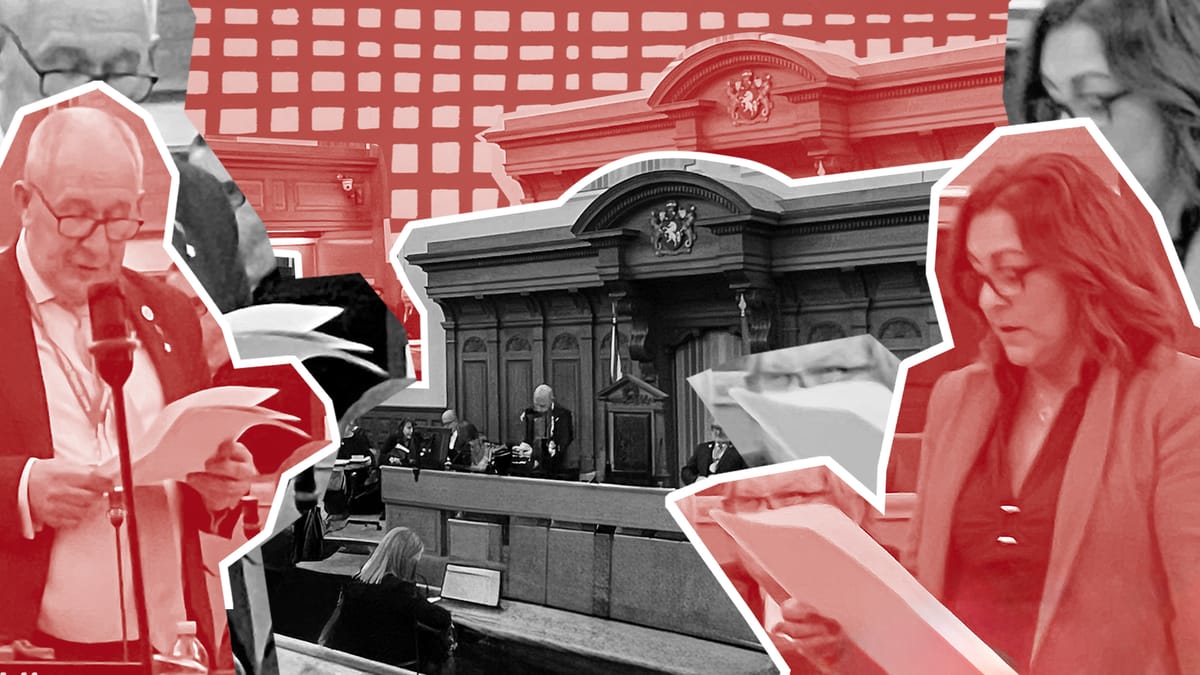
Reform has passed its first budget at Kent County Council, with a 3.99% council tax rise and persistent questions over how long the council can rely on reserves to balance the books...
Kent gets its first Reform budget as the reserves question hangs over it
“Today, we are all witnessing history,” declared Kent County Council's deputy leader Brian Collins as the chamber began debating Reform’s first budget.
It was an ambitious opening line for a meeting that would last from 9:30am into the evening, generate 12 amendments, and eventually include the council chamber’s most urgent policy clarification: “We are not removing the pot plants.”
The basics are simple. KCC has now set its 2026/27 budget, including a 3.99% council tax increase. The budget passed, 48 votes to 26, with one abstention. The press release afterwards presented this as a calm, sensible, low-tax act of competence. The chamber mostly treated it as a referendum on whether Reform can run the place without turning the medium-term finances into performance art.
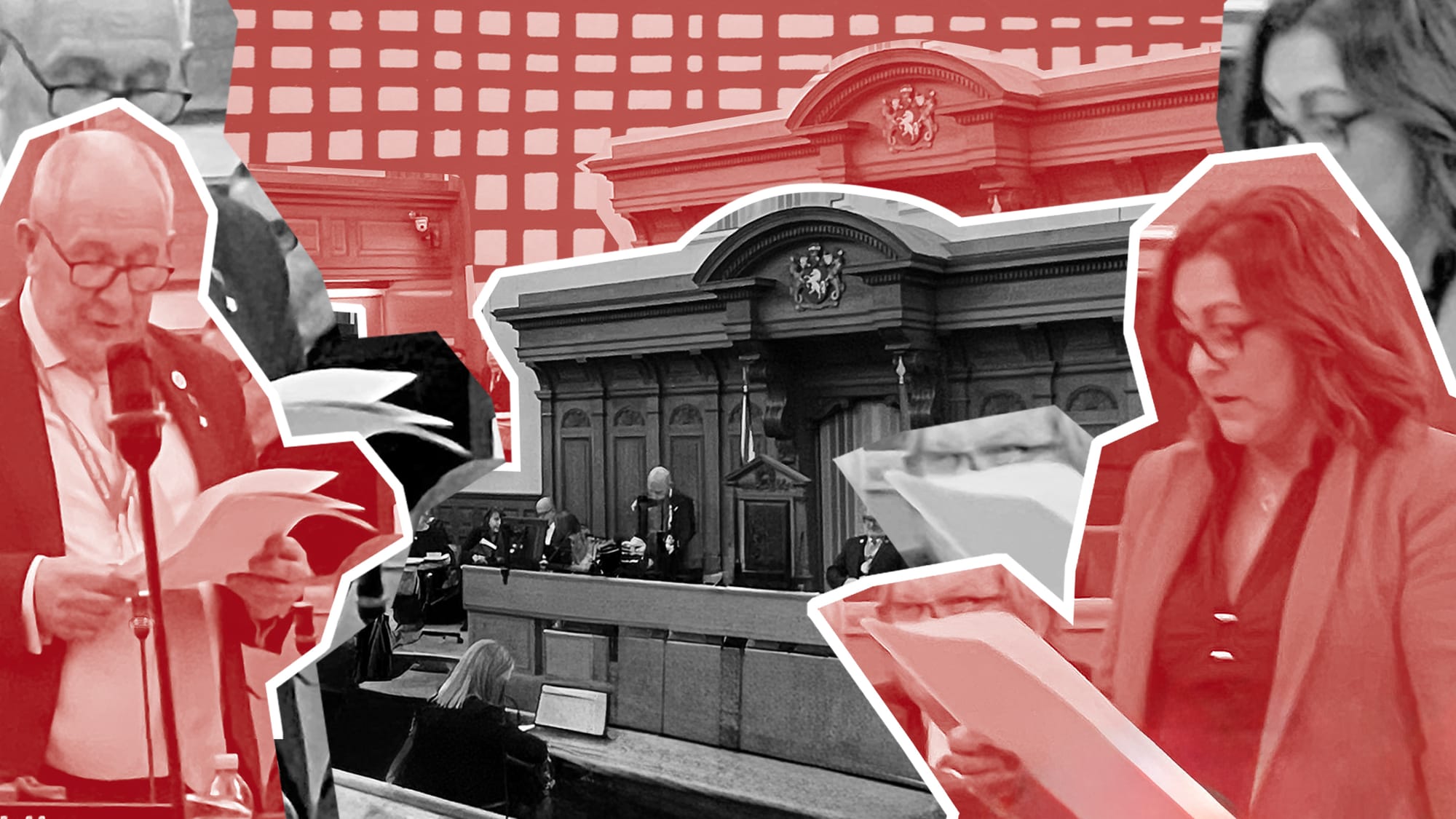
Reform’s pitch was that the council has been left with a debt problem, out-of-control costs, and a general 'why is everything like this' legacy. Collins said the administration’s priorities include “reducing long-term debt while protecting essential services,” referring to paying down significant debt and reducing day-to-day costs. On adult social care, he claimed the overspend is starting to reduce. “The ship is turning slowly but firmly,” he said, a phrase that would later return like a boomerang.
He offered numbers, too. Collins celebrated more than 38,500 potholes being fixed across Kent this year, apparently more than the previous year. He argued that a 3.99% council tax rise would add £47m to the budget while keeping the increase below the national 5% cap. This was meant to sound like Reform doing something different. Today was history, remember. We were all meant to feel it.
Reform’s leader, Cllr Linden Kemkaran, followed with the political framing. She said they had to raise council tax because of the “dire legacy” they were left. She described budget reports as being “impenetrable” to the average person and said the council had produced documents in an easy-to-understand format as a result. She also claimed the administration is planning for no future council tax increases, as council tax rises should be a last resort. It was an attractive promise delivered in a room full of people who have spent years watching “attractive promises” collide with demand, inflation, and reality.
The opposition response began with the sort of polite throat-clearing local government reserves for its fiercest moments. Lib Dem councillor Antony Hook, leader of the opposition, thanked staff for their work in a “year of chaos” and then got straight to the point: Reform candidates promised to cut council tax and are now raising it, and choosing not to go to the maximum comes at a cost. He called it a “casino budget,” saying it exposes KCC to over £400m of financial risk that reserves don’t exist to cover. He listed cuts he said were contained in the budget and noted that the budget book itself describes infrastructure as being in a state of “managed decline.”
It was the turn of the Conservatives next. Cllr Harry Rayner described it as a “gambler’s budget,” with the kind of rhetorical confidence you only develop if you’ve been in county halls long enough to understand that everyone will call it a “gambler’s budget” as soon as it isn’t your budget. “This budget is held together by string and tie,” he said, accusing the administration of “using reserves in industrial quantities,” and arguing Reform has not demonstrated the competence to deliver it.
At this point, the meeting developed a side plot about whether anyone would withdraw anything. Kemkaran objected when Rayner claimed her party used “threats and bluster,” calling it defamatory and asking him to withdraw. He did not.
Then we received the first clear sign that Reform’s tolerance for criticism would not be expressed in the soothing language of cross-party consensus. Collins returned to respond to the opposition and opened with: “What a load of waffle.” He called the Lib Dems “indecisive” with “no policies of any worth.” He said Rayner should hang his head in shame. He dismissed Green comments as “a load of bluster.” He said the Independent Group doesn’t understand the basics of accountancy. And then, in what will almost certainly become the most memorable line of the day for people who do not read budget papers for fun, he insisted that “we are not removing the pot plants.” The budget did say they were removing the pot plants. Collins was here to reassure Kent that indoor greenery would indeed survive.
The amendments then started. The first was from the Greens, proposing funding to mitigate Kent Travel Saver price increases and maintain post-19 services, to be funded through a council tax increase and a series of reductions, including removing political assistant spending and allowances. Cllr Stepto, seconding it, briefly said, “I don’t know why we need cabinet members,” then corrected himself to say deputy cabinet members, drawing laughter. A Reform councillor responded by becoming visibly upset that the Greens were proposing to raise council tax. Another Reform councillor went further, referencing bus pressures and then drifting into a shout about “net stupid zero,” because every political argument eventually tries to escape into a culture war at the first opportunity.
The Greens framed their proposal as small, targeted, and preventative. Reform framed it as irresponsible tax-raising. The vote was decisive with 5 for, 53 against, and 20 abstentions. It would become a familiar pattern.
The second Green amendment sought £4.4m set aside for local government reorganisation, again funded by a council tax increase. Reform responded by emphasising reserves and uncertainty. One councillor described it as “taxing the people of Kent for something that might not happen.” It failed too along similar numbers.
Labour then brought a monster amendment that proposed investing money to save money. Reform members responded with a mixture of “well intentioned” and “already being actioned.” It failed. Labour tried again with a second amendment on efficiency. Collins dismissed it as “an attempt to submit a budget, not an amendment.” It failed. At one point, Cllr Alister Brady accused Collins of making an untrue statement and asked him to withdraw it. “Alas,” he noted, “Cllr Collins has left the room.”
The meeting then moved into the wider debate on the full budget, and the day’s other running theme began to take over: whether rules were going to be enforced consistently, or only as a sort of gentle suggestion.
Reform's Cllr Spencer Dixon opened the debate by criticising other parties and calling Cllr Brady “ChatGPT-powered,” while also sneering that the Greens were “showing their true colours.” The Chair asked if this was on the budget. Dixon said it was. Brady cited the constitution, which states that speeches must not criticise other members. Chair Palmer said it was “close to the knuckle,” but was content to let it go.
The metaphors returned. Lib Dem councillor Cllr Sole called the budget “reckless and shortsighted,” then came back to Collins’ earlier image, noting that he claimed the ship was turning firmly but slowly, before quipping that “the last person to say that was the captain of the Titanic.” It was the sort of line that makes councillors laugh and finance officers stare into the distance.
Kent Current only exists because some readers choose to pay for it. If you value independent reporting on Kent that doesn’t rely on clickbait or theatre, please consider becoming a supporter. An annual subscription costs £1.15 a week and helps keep this work sustainable.
Reform councillors tried to wrestle the narrative back to competence and restraint, but the opposition kept dragging it back to risk and reserves. This reached its purest form when Reform councillor Cllr Wayne Chapman told the chamber, to laughter from opposition benches, that “A budget that relies on reserves to meet funding commitments is not financially responsible.” That is the kind of sentence that sounds completely normal unless you've read the budget documents that Reform were putting forward.
The Section 25 assurance statement confirms the budget is balanced and lawful. But it also warns that choosing a council tax rise below the maximum permitted creates long-term financial risk because the income is forgone from the base, and that reserves are already tight. It goes further than the usual careful phrasing and warns that further unplanned drawdowns would pose a significant and existential risk to the council’s medium-to-long-term sustainability. That is not a headline. It is a warning label.
The budget report itself is explicit about how KCC is balancing the books this year. It relies on £25m of one-off solutions, with £9m from flexible use of capital receipts and £16m from reserves no longer needed for their original purpose. This is not an allegation, it is the plan.
The Section 25 statement then makes the obvious point that turns a balanced budget into a time bomb if you ignore it. One-off measures can be acceptable as a bridge, but they must be replaced with sustainable solutions in 2027/28. In other words, you can get through this year, but you can’t keep doing it without consequences.
This is the core tension Reform is now choosing to live inside. In the chamber, they framed 3.99% as a moral achievement. But leaving council tax headroom unused has a cumulative impact over time.
If the strategic argument was about risk, the symbolic argument was about political assistants.
Over and over, amendments sought to redirect funds earmarked for political assistants to services that sound more defensible on the doorstep. The Lib Dems explicitly framed one run of amendments as forcing Reform to vote down alternative uses for that line repeatedly. “We are going to make you do this three times,” Cllr Streatfeild said.
The fight was not really about £140,000 in a £1.65bn budget. It was about what Reform has chosen to prioritise, while also discussing restraint, risk, and frontline protection. It was also about whether Reform would ever justify that choice in public without reaching for the 'already voted through' defence.
This is where the chairing became part of the story. During a Conservative amendment on the political assistants line, Reform councillor Jeremy Eustace tried to move straight to the vote without debate, and the Chair Richard Palmer, a Reform councillor, was minded to agree. That meant no real debate was allowed on that amendment, after nine previous amendments had been fully debated, with the Chair called the discussions “very repetitive.” Lib Dem Cllr Streatfeild defended the right of the Conservatives to have their motion discussed. It was voted down anyway, but it appeared the administration did not want to keep defending this budget line.
The mood was not exactly softened by what happened elsewhere in the debate. During a point of order later by Labour's Cllr Brady, one Reform councillor yelled “Boring!” and the Chair took no action. At another point, Cllr Eustace encouraged everyone to visit the Grand Canyon. “The photographs don’t do it justice,” he said. Which is certainly true, but it raised the question of whether the budget was performing so well that we could begin offering travel recommendations.
In the middle of the afternoon, Cllr Bill Barrett of the Independent Reformers made what was arguably the most human argument of the day, complaining about funding cuts affecting organisations like Age UK and asking why you would remove crisis grants from a £1.65bn budget. “Not everything we do has to be statutory,” he said. “We have to have a moral angle to what we do.” It was a striking contrast to a debate that had often been reduced to 'tax bad' versus 'risk bad' shouted across the chamber.
Streatfeild returned later with a different kind of moral framing. He accused Reform of delivering “a budget full of broken promises,” and said “Reform is smashing the family piggy bank.” Then he landed the line that will live on far longer than anything in Appendix D: “You can’t polish a turd, but you can cover it in glitter. Here it is, and it stinks.”
At some points, you could feel the Chair’s patience thinning as much as the council’s reserves. He read out the list of those still waiting to speak and announced he would not accept any further speakers so “we can still get lunch at a reasonable time.” Priorities were clarified.
By the time the meeting reached the directorate-by-directorate stage after lunch, the pattern was clear. Adult social care amendments were voted down. Children and young people amendments were voted down. An Independent Reformers amendment proposing an in-house homecare pilot funded from earmarked reserves was mocked by a Reform councillor as “our very own Mills & Boone,” before the chair asked her not to refer to councillors like that. The amendment, of course, still failed.
Given the numbers in the room, it was always likely that the amendments proposed would fail. But it was striking how closed off Reform was to any efforts to tweak even tiny parts of the budget. No concessions, no blinking, then move on.
The chamber was a messy, exhausting demonstration of what Reform’s first year in charge will feel like if nothing changes: a majority determined to hold the line, an opposition determined to brand every decision as reckless, and a finance officer quietly insisting that 'balanced and lawful' does not mean 'safe.'
Reform will now claim it delivered a budget that protects frontline services while keeping council tax below the maximum. It will say that is what competence looks like. Some of its councillors openly promised that every household would receive a leaflet saying the opposition wanted higher council tax. That feels like the sort of 'easy to understand format' Kemkaran had in mind.
The opposition will claim this is a budget that relies on one-offs and reserves while leaving long-term income on the table, and that the council is therefore taking on risk it cannot afford.
Both sides will, in their own way, be right. But the real test is not what happened in a stifling chamber on a Thursday. It is what happens when the next financial pressure hits and the council has to decide whether its “low tax” brand matters more than the warning label already printed on its own paperwork.
Or, to put it in the chamber’s language: the ship may be turning slowly but firmly, but at some point you do have to look up from the pot plants and check whether you’re still heading for open water.
Footnotes
Follow us on social media! We’re on Facebook, BlueSky, and Instagram for now.