"Take every opportunity you can and make the most of it”
What we asked Montgomery Tunnicliff, Regimental Sergeant Major with the Combined Cadet Force

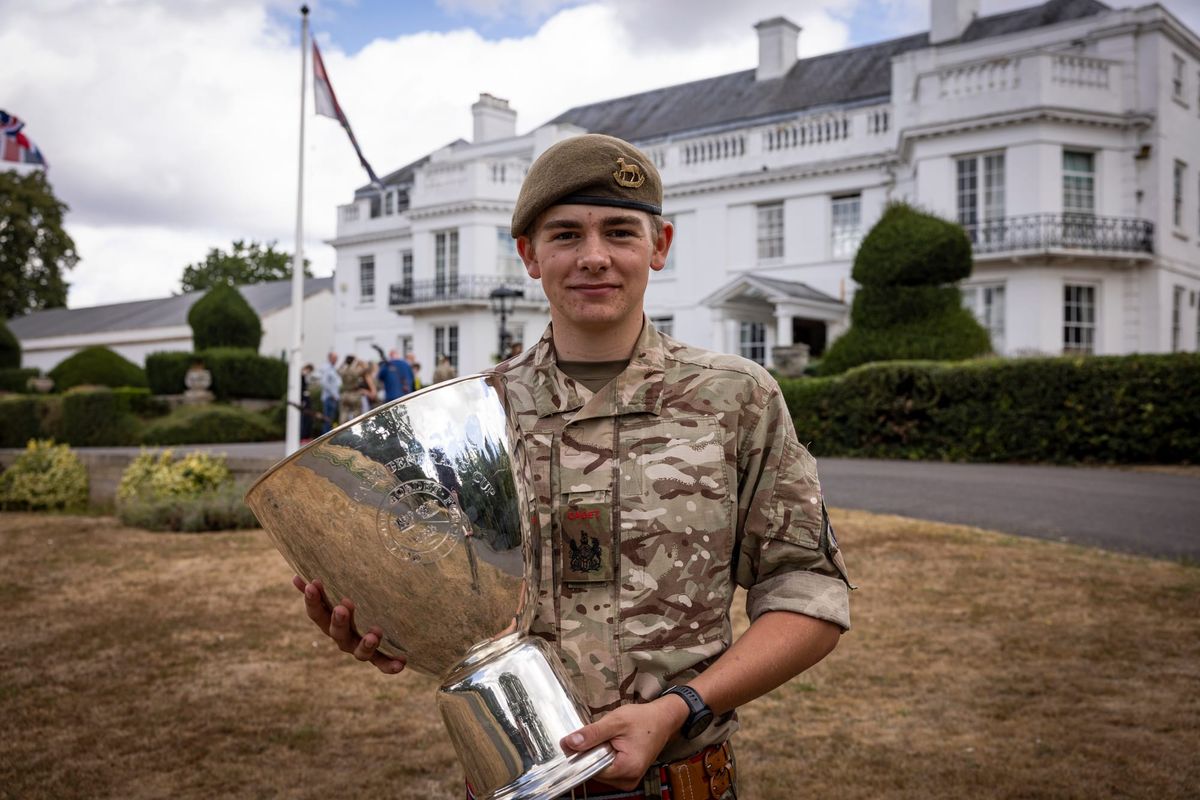
Montgomery 'Monty' Tunnicliff is 17 and one of the highest-ranking cadets in his school’s Combined Cadet Force. Fresh from winning the Captain General’s Trophy at the national Champion Cadet competition, Steven met him to talk about rising through the ranks, whether there really is beef with the Army Cadets, and why he is considering making the military his career.
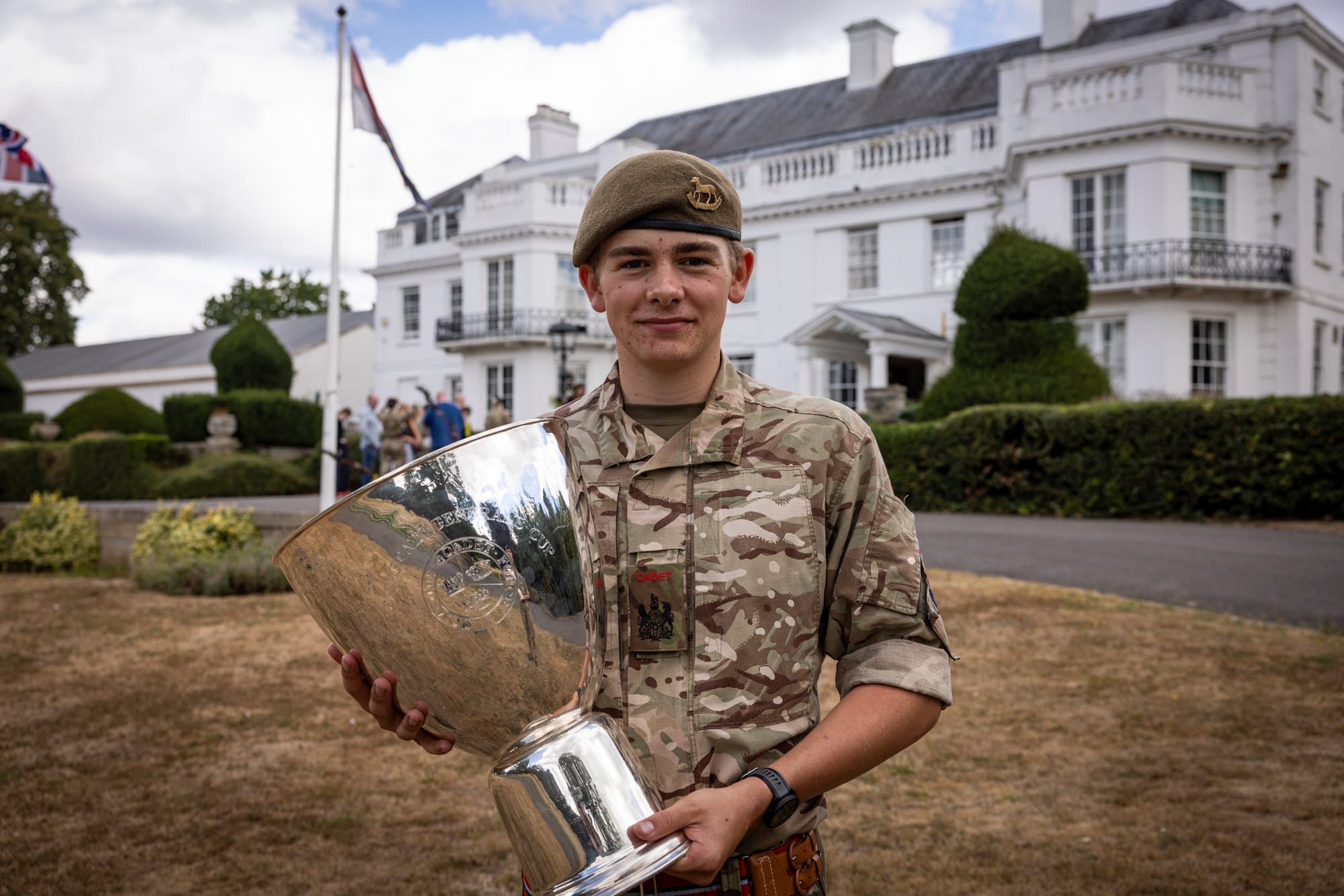
Montgomery “Monty” Tunnicliff is 17, lives just outside Maidstone and is a regimental sergeant major in his school’s Combined Cadet Force, or CCF.
It is the highest rank he can reach as a cadet. “In my school we have a CCF, but then that's subdivided into the army, air and sea cadets.”
The role means overseeing the other non-commissioned officers, “making sure that they're going out, delivering their lessons and setting the standard for the younger cadets who come through.”
For Monty, it is important to “create role models who they want to aspire to be”.
The CCF operates through participating schools, and Monty joined at 13. Over the past four years, he has worked his way through the ranks.
“You must go through certain tests and qualifications to get gradually higher in your ranks. In the CCF, it tends to be more from longevity or experience.”
Some CCFs also have staff sergeants, but Monty says that by that stage cadets tend to move into command roles.
“Generally when it gets to that point that you've been in for that long, you start going into the command appointments.”
Monty is one of two RSMs in his CCF and has completed the Master Cadet Course, which he describes as “the last milestone of Cadet knowledge.”
That took him to Frimley Park, where he entered the Champion Cadet competition and won.
Frimley Park is the national training centre for the Army Cadets. Champion Cadet entrants have already completed Master Cadet, so everyone arriving is operating at a high level.
The competition tests leadership, teamwork, fieldcraft and general Army knowledge.
Master Cadet courses run throughout the year for around 250 cadets, with up to 40 going on to Champion Cadet.
“They select the best CCF and the best ACF cadet in the UK.”
Cadets from across the UK then spend four days competing.
“Master Cadet tests your leadership potential and your skills. Champion Cadet is more about your individual skills.”
Those tests include map reading, shooting, first aid and orienteering, during both day and night, as well as delivering a lesson to other cadets.
“You’re tested on every area of the Army Cadet Syllabus and then at the end of the week at the parade, the top-scoring CCF cadet and the top-scoring ACF cadet are awarded the respective trophies.”
There is a bit of banter and rivalry
The top Army Cadet Force entrant receives the Claire Shore Trophy, while the top CCF cadet receives the Captain General’s Trophy.
So when the CCF and Army Cadet Force meet, is there beef?
“I'd say so.”
Thankfully, not much.
“Normally it's pretty relaxed. No one's going out and throwing fists or anything. But there is a bit of banter and rivalry.”
When Monty attended Master Cadet in April, he was one of very few CCF cadets there.
“They're all more drilled on their actual theory side.”
Despite the rivalry, they got along.
“They were like, ‘I heard the CCF lot were a bunch of this-and-that. You seem like you're all right compared to the rest of them.’”
Monty found this fairly amusing.
“The CCF teams are slightly more relaxed, and it's how you perform in the field that’s important.”
Fortunately for Monty, however well he performs in the field, joining the cadets does not mean he is about to be sent to one.
“You're not bound to the armed forces in any way.”
It can, however, provide a route towards military life.
“It certainly provides a platform for people who are looking to an armed forces career.”
On the rather more hypothetical question of conscription, Monty says, “If they ever did utilise any form of conscription, I guess those who had been in the CCF and ACF have skills that the government might find valuable. Depends how it goes, really.”