Winners and losers emerge as council funding is reset
Plus the latest from Kent County Council, news in brief, and more

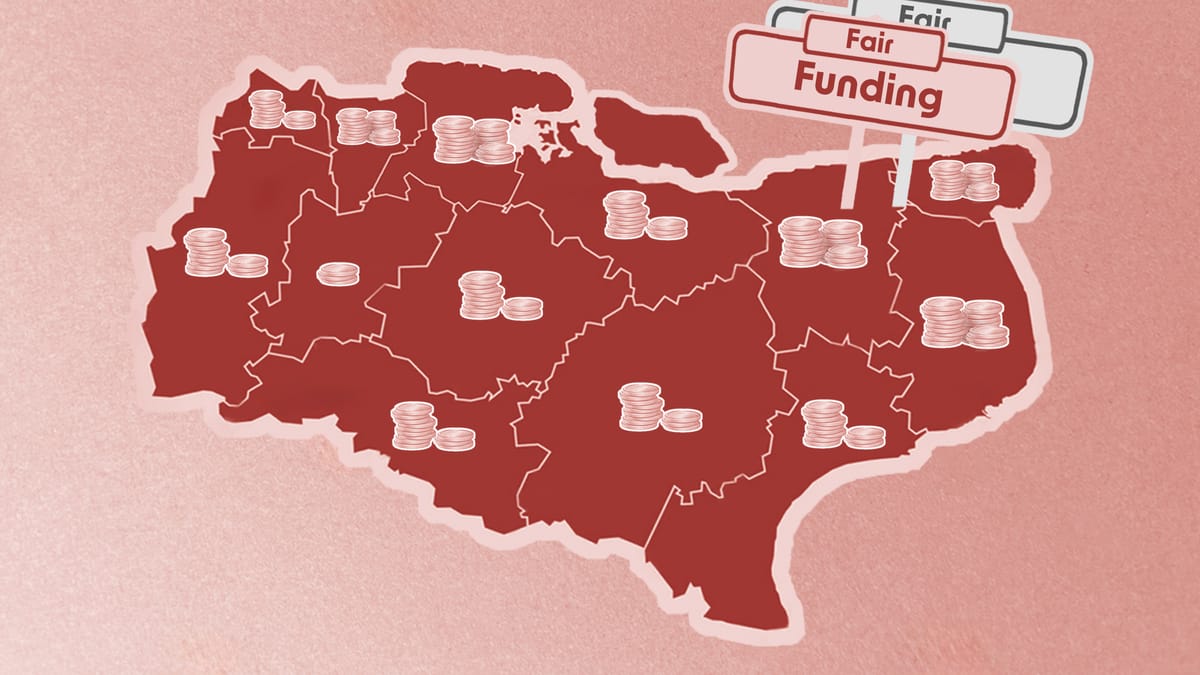
Kent’s funding map is being redrawn, and the consequences are already clear. This week, we examine the winners and losers emerging from the government’s Fair Funding reset, which delivers significant gains to some authorities while imposing sharp reductions on others within the same county. We also report from a tense final meeting of the year at County Hall, where scrutiny was cut, political assistants approved, and tempers frayed, alongside the latest developments shaping Kent as the year draws to a close.
Winners and losers emerge as council funding is reset
The government says its new Fair Funding formula marks a long-overdue reset of how money is shared out between English councils, directing a greater share of resources towards areas with higher deprivation and need. In Kent, the effects are uneven and, in some cases, severe.
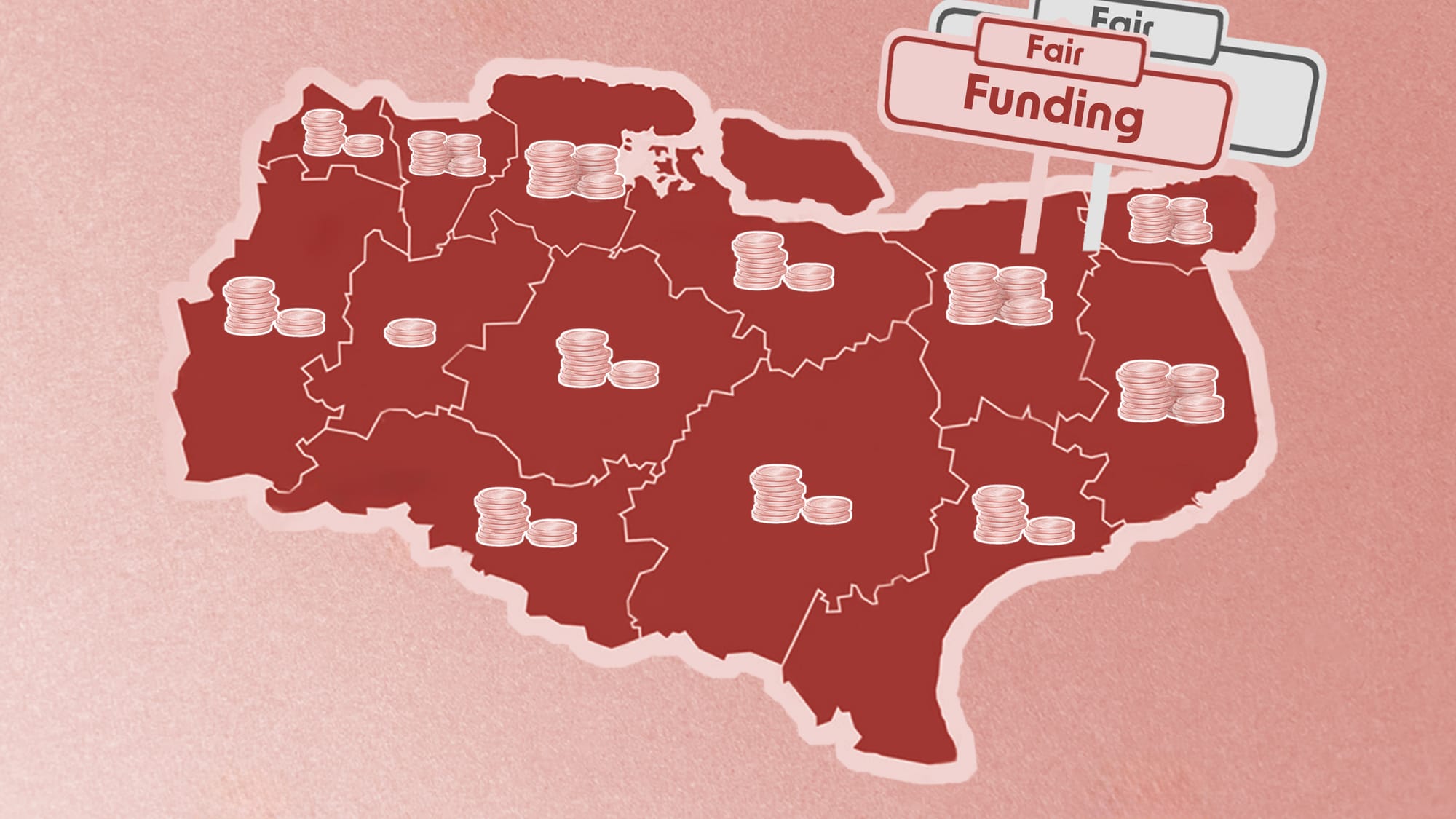
It is being delivered through the first multi-year local government finance settlement in a decade, covering the period from 2026–27 to 2028–29. It is being phased in over three years rather than applied overnight.
The numbers are presented using the government’s measure of Core Spending Power, a notional figure that combines grant funding, retained business rates and assumed council tax increases. Ministers say this gives a clearer picture of councils’ overall funding capacity. Critics counter that it can flatter the position of authorities still facing intense financial pressure. In Kent, both things are true.
At the top tier, the two authorities responsible for the most expensive services see clear headline gains. Kent County Council, which funds adult social care, children’s services and highways, records a 15.5% increase in Core Spending Power between 2024–25 and 2026–27. Medway Council, the county’s only unitary authority, does slightly better, at 16.4%. Both benefit from the new weighting given to deprivation and social care demand, alongside additional funding routed through adult and children’s services. These are substantial uplifts by national standards, though neither authority is insulated from rising demand, particularly in social care and SEND provision.
Below that upper-tier picture, however, the settlement produces a far more fractured map. Several of Kent’s district councils see sizeable gains, concentrated overwhelmingly in coastal or more deprived areas. Dover records a 13.6% increase, Thanet 11.4%, Canterbury 11%, and Gravesham 8.7%. These are precisely the places the new formula is designed to favour, reflecting long-standing concerns that deprivation and health pressures have not been adequately captured in previous funding systems.
A second group of districts technically gains, but only marginally. Sevenoaks rises by 6.1%, Swale by 4.4%, Maidstone by 2.6%, and Tunbridge Wells by just 0.8%. Once inflation and service pressures are factored in, these increases are unlikely to feel transformative. For councils in this bracket, the settlement may slow financial deterioration rather than reverse it.
Three districts fall clearly on the wrong side of the redistribution. Ashford sees a 1.8% reduction in Core Spending Power, Dartford a 2.2% fall, and Tonbridge and Malling a dramatic 16.7% drop. Tonbridge and Malling stands apart not just within Kent but nationally. Even with transitional protections built into the settlement, it is assessed as being far above its new “fair funding” share. It is therefore being pulled down sharply over the first year of the settlement.
That makes Tonbridge and Malling the clearest local illustration of what Fair Funding is now doing. The government’s position is that councils with strong tax bases and historic growth in business rates have been over-funded relative to need, and that the money should be redirected elsewhere. Councils in fast-growing commuter areas argue that the model underestimates the cost of growth, the strain on infrastructure, and the challenges of service delivery in expanding populations. Under the new system, those arguments carry significantly less weight.
Taken as a whole, Kent is not a loser from Fair Funding. Both upper-tier authorities gain substantially, and several districts see double-digit increases. But the settlement reshapes where pressure sits inside the county. Coastal and more deprived districts gain ground, while parts of commuter-belt Kent lose it, in some cases severely. The result is not a single Kent story but a series of divergent local ones.
It is also important to be clear about what these figures do not mean. Core Spending Power includes assumed council tax rises, and almost all councils, winners and losers alike, are still expected to push bills to the maximum allowed. Rising demand for social care, homelessness support and special educational needs means financial pressure remains embedded across the system. Fair Funding changes who feels that pressure most acutely, but it does not remove it.
The government’s consultation on the settlement runs until mid-January, with final allocations due shortly afterwards. No Kent authority has yet commented publicly. When they do, the fault lines are already visible in the numbers. Fair Funding may be sold as a national reset, but in Kent, it redraws the internal map of winners and losers with unusual clarity.
Last few days to save. We can only do this kind of deep-dive reporting thanks to the readers who generously choose to support our work. If you value our journalism, please consider joining them. Right now, you can get 25% off a full year's subscription to the Kent Current and help us build a better way of telling the stories that matter to our county.
Scrutiny cut, assistants approved, and tempers fray at KCC
Kent County Council’s final full meeting of the year was billed as a show of tighter control and improved efficiency. The meeting itself was more unsettled than that.
Proceedings began awkwardly. Journalists were briefly stopped at the entrance and asked to show press cards, something independent outlets often do not carry. The situation was particularly odd given that only a small number of organisations regularly attend County Hall, mainly the BBC, the Press Association, KentOnline, and this publication. Of those, the Kent Current was the only outlet the request could realistically have affected, and appeared to be the only one not informed in advance. Access was eventually granted after a press officer let us in. Later in the meeting, as journalists took seats at the back of the chamber, a Reform councillor walked past and was overheard asking, “What are they doing down here?”
Inside the chamber, in a sea of suits, one councillor stood out. Cllr Tim Prater (Lib Dem) arrived wearing a brightly patterned Christmas jacket, bringing a rare splash of colour to the room.
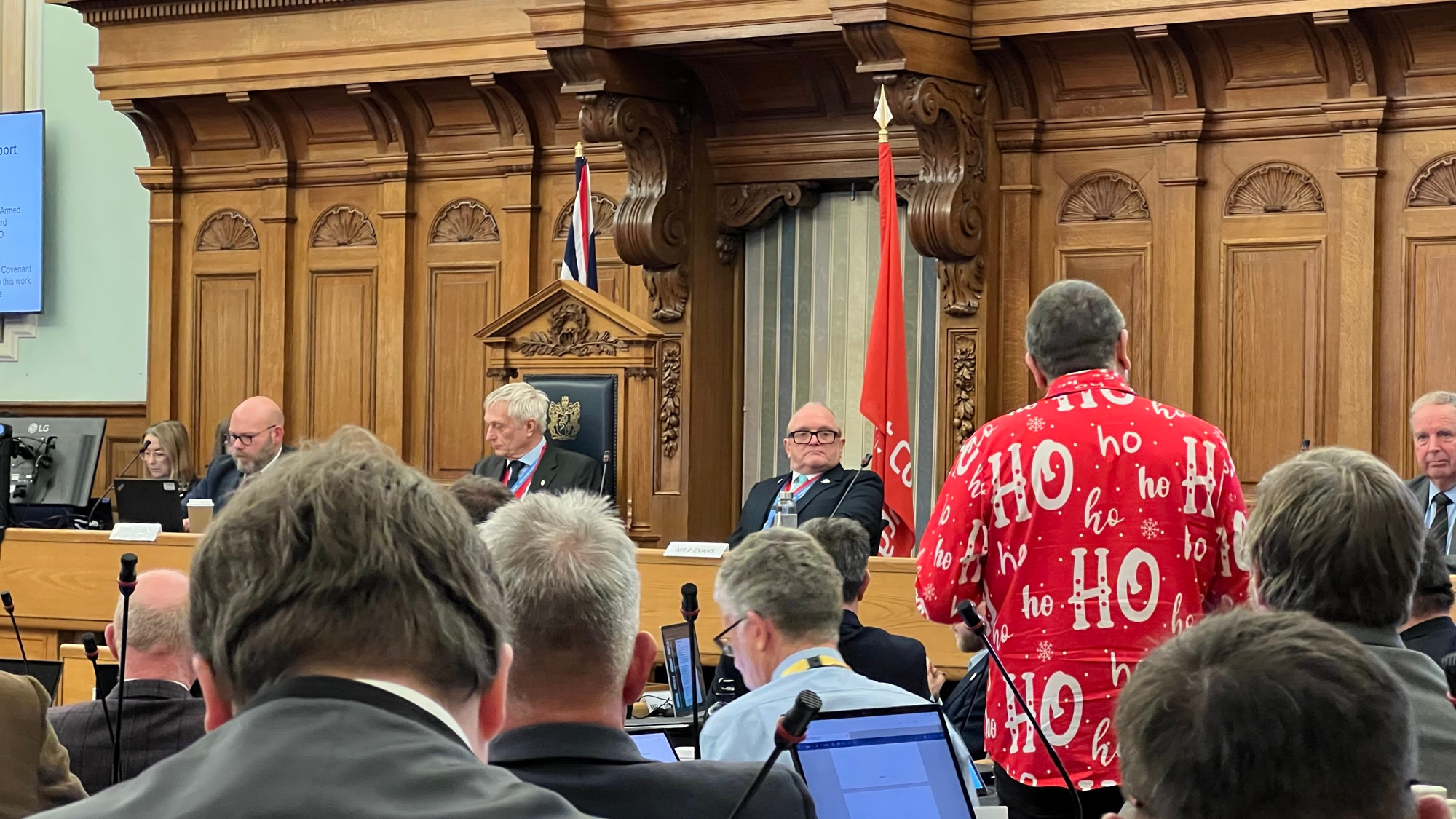
Leader Linden Kemkaran (Reform) delivered a wide-ranging speech on funding, adult social care, SEND and inward investment. She welcomed the latest settlement and defended proposals to reduce the number of committee meetings, arguing they would cut duplication and save £75,000 a year. Claims that the changes would weaken scrutiny were rejected. “Proper scrutiny,” she said, “represents fairness and transparency to the people who pay our wages.”
Shortly afterwards, councillors voted 47–25 to reduce the number of committee meetings. The administration said the change would streamline decision-making. Opposition members said fewer meetings meant fewer chances to question decisions, regardless of who chaired scrutiny.
That disagreement sharpened during the debate on political assistants. Under the proposals, Reform and the Liberal Democrats will each be entitled to appoint one assistant to support the political work of their group. The combined cost is around £100,000 a year, potentially higher once on-costs are included.
Opposition councillors returned repeatedly to the same point. Committees were being cut to save £75,000, while new political roles costing more than that were being created. Earlier in the year, £50,000 in crisis grants for vulnerable residents had been cut, citing the need for urgent savings.
Criticism came from several directions. Cllr Mark Hood (Green) described the move as disgraceful. Cllr Alister Brady (Lab) pointed to the council’s recruitment freeze. Independent councillors questioned the timing. Former Reform councillors, now sitting outside the group, were among the most vocal opponents.
The strangest moment came when Cllr Jamie Henderson (Reform), speaking in support of the proposal, referred to “our new appointment” and said he had already met “the gentleman” who would take up the role. The council had not yet voted to create the posts, let alone approve any appointments, suggesting something of a foregone conclusion to the vote. Opposition benches reacted immediately. Cllr Alex Ricketts (Lib Dem) challenged how such a meeting could have taken place. No explanation was offered in the chamber.
Later, as Cllr Brian Collins (Reform) criticised Labour councillors for raising financial concerns by referring to the state of the national economy, Cllr Brian Black (Ind Group) was heard muttering, “What the fuck does that have to do with anything?”
The proposal was approved by 45 votes to 26, with one abstention. Political assistants will now be introduced at County Hall for the first time in its history.
Elsewhere, the handling of questions added to the tension. The Chair, Richard Palmer (Reform), repeatedly urged councillors to keep questions and answers brief. Opposition members accused Reform councillors of using long supplementary questions and extended answers to eat into the available time. A point of order from Cllr Paul Thomas (Ind Group), accusing the administration of deliberate time-wasting, was met with applause from opposition benches.
One item passed without disagreement. A Liberal Democrat motion responding to the recent water supply failure in Tunbridge Wells, which left around 24,000 households without reliable water for days, was agreed unanimously. Proposed by Cllr Antony Hook and seconded by Cllr Richard Streatfeild, the motion thanked council staff, criticised South East Water’s handling of the incident, and called for a short, focused scrutiny inquiry into what went wrong and how similar failures can be prevented.
Much of the meeting was marked by disagreement over priorities, spending and process. On water, at least, councillors briefly found common ground.
What else is happening at KCC this week?
- A KCC Cabinet member who threatened to punch a colleague in the jaw in a WhatsApp exchange is facing a former complaint. Cllr Peter Osborne (Reform), who oversees the transport portfolio, claimed he hoped "the mole was a bloke so I can punch him right in the jaw" following the infamous Reform video leak earlier in the year. Reform called the complaint a "faux outrage."
- Kemi Badenoch has said that Reform is "making a mess" of Kent County Council. Badenoch, who is... checks notes... the leader of the Conservative Party, made the comments while visiting Brands Hatch.
- East Thanet Labour MP Polly Billington has accused KCC of dodging scrutiny after the authority took five months to respond to a Freedom of Information request about supposed environmental savings.
- KCC leader Linden Kemkaran issued this Christmas card to other councillors, where an awful lot is going on:

In brief
🚓 A 12-year-old boy has been arrested following vandalism at a Swale Borough Council meeting last week.
🚛 The Planning Inspectorate has approved Sevington Inland Border Facility near Ashford being made permanent. The complex carries out checks on goods entering and leaving the UK.
🚚 Changes could be made to Operation Brock, the scheme that holds lorries waiting to cross the Channel on the M20, to reduce disruption.
🚗 In news that will surprise no one, the northbound approach to the Dartford Tunnel is the slowest major road in Kent, with speeds averaging 14.7mph.
🚨 Swaleside Prison on the Isle of Sheppey has been placed in special measures after inspectors found 'dangerous levels of violence.'
🏫 FAR Academy, a specialist school for vulnerable young people, has warned it 'simply cannot survive' unless a funding row with Kent County Council is resolved.
📬 Royal Mail has pledged to improve delivery targets in Kent after many areas barely received post on time two-thirds of the time, well below the 90% minimum standard.
Footnotes
Programming note: This will be our final news briefing of the year unless anything dramatic happens over the Christmas period, so that we can take a short break until the new year. We still have a few pieces scheduled to fill the gap, but we won’t be publishing our usual briefing editions until we come back, hopefully fully refreshed, in the new year.
Follow us on social media! We’re on Facebook, BlueSky, and Instagram for now.