Alan Cecil already has a council seat. He’d like another.
Reform councillor makes Greenwich run, a costly system upgrade, and the ferry everyone wants but no one will fund

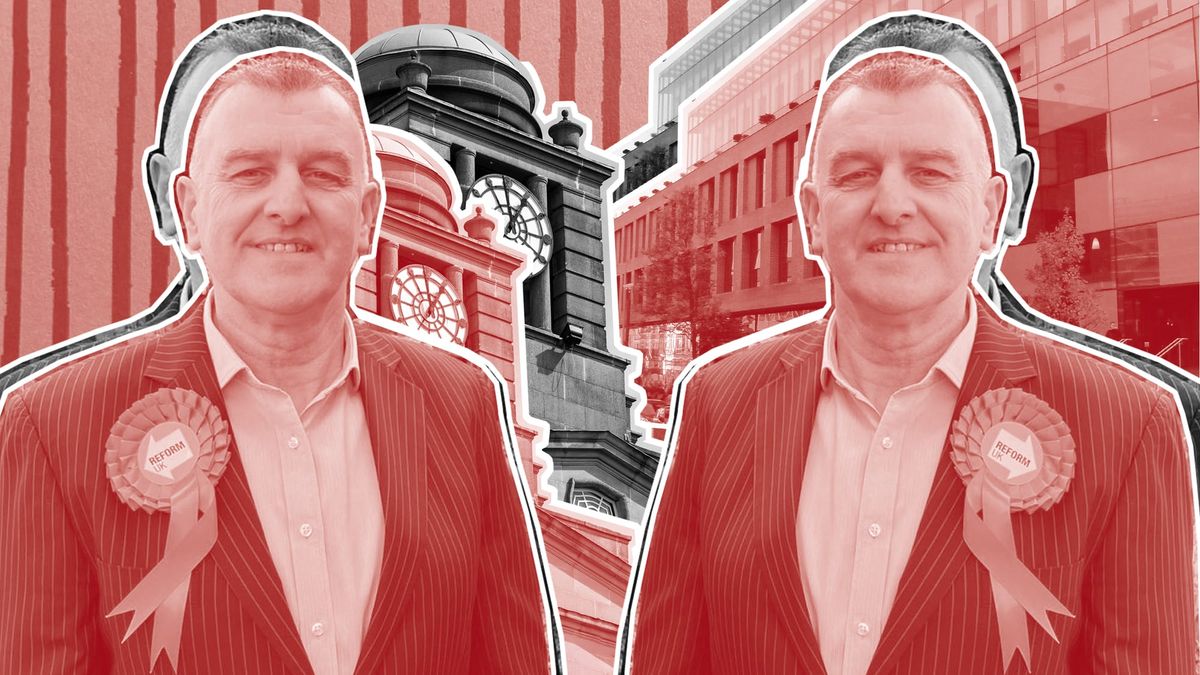
A Reform county councillor elected to represent Wilmington last year is now standing for a second council seat in Greenwich, raising questions about how he would balance two roles in different authorities. We also look at the rising cost of KCC’s Oracle Cloud programme and the uncertain future of the Gravesend to Tilbury ferry.
Alan Cecil already has a council seat. He’d like another.
A Reform councillor elected to represent part of Kent last year is now standing for a second council seat in London.
Alan Cecil was elected to Kent County Council last May during the great Reform tsunami, as the councillor for Wilmington, the village south of Dartford.
He is now also standing for Greenwich Council in Woolwich Common, where local elections take place next week.
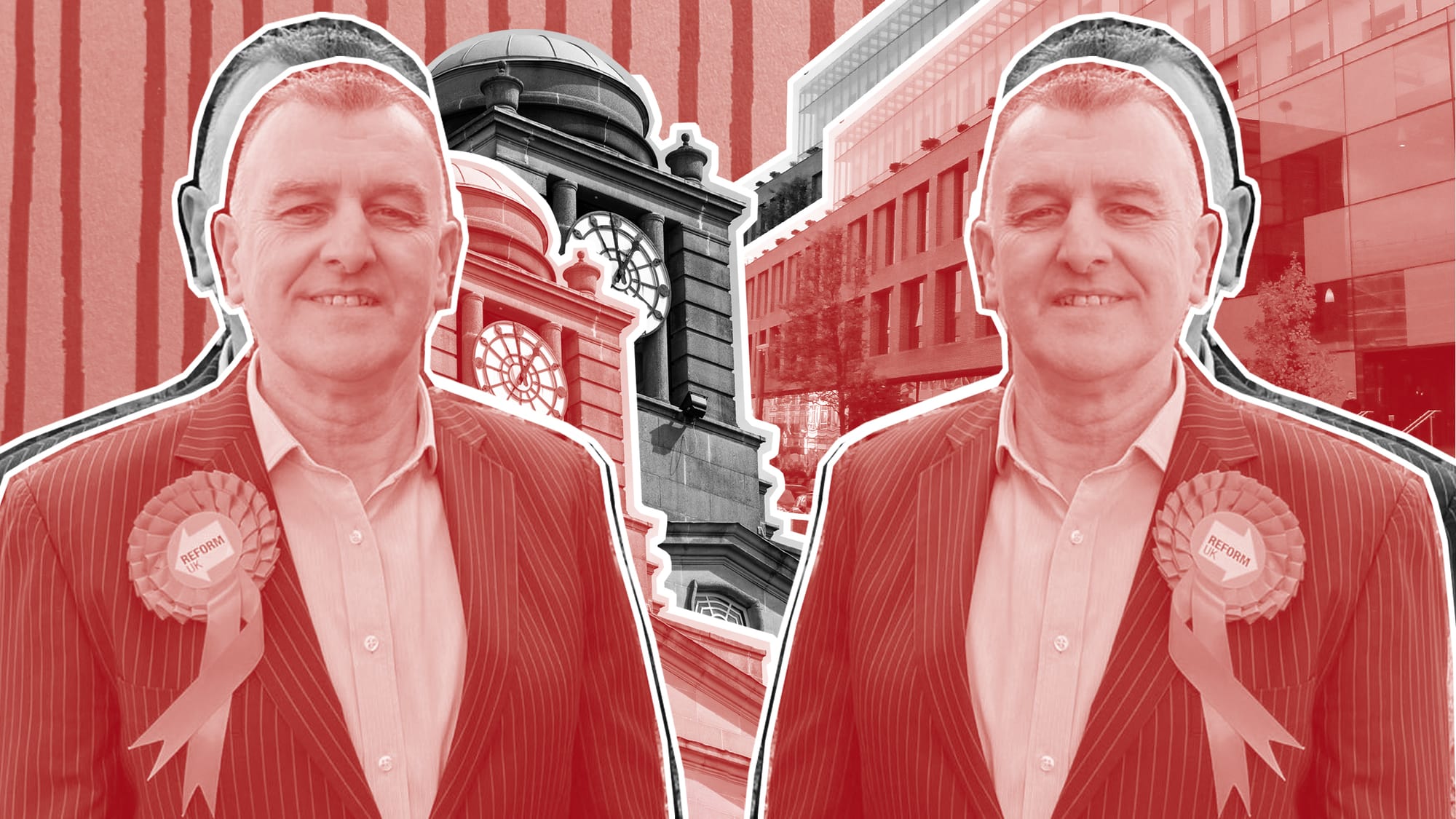
If elected, Cecil could find himself representing Wilmington at County Hall while also sitting on Greenwich Council, representing a ward around nine miles away on the other side of the London border.
Which is certainly one way to keep busy.
Cecil’s home address on Greenwich Council’s statement of persons nominated is listed as being in the borough of Dartford. He is also listed by Reform as the chair of its Greenwich branch.
That means Cecil is not merely a Kent councillor who has ended up on a Greenwich ballot paper. He is already running Reform’s Greenwich operation while serving as a county councillor in Kent.
His political footprint is split in an unusual way. On one side, he is Cllr Alan Cecil of Wilmington, posting about local Kent issues on his Facebook page and his work at County Hall. On the other, he is chair of Reform Greenwich, standing for a council seat in Woolwich Common and promoting party material from an address in London SE2.
That address is also the office of Blue Flame Gas Services Ltd, of which Cecil is a director. The company itself is registered in West Malling.
Candidates for local council elections do not necessarily have to live in the authority area where they are standing. They can also qualify if they work there, own or rent property there, or are registered to vote there.
Greenwich Council confirmed to the Kent Current that all candidates are required to state the qualification or qualifications they meet in order to stand for election in the borough. However, the council said the Returning Officer does not publish which qualification a candidate has used, and that no objection was made to Cecil’s nomination.
So this is not a story about whether Cecil has been validly nominated. Greenwich Council has accepted his nomination, so he is clearly legally allowed to stand.
The question is simpler and more awkward. Should a councillor elected to represent part of Kent less than a year ago now be seeking a second council seat in London?
Cecil was elected to KCC in May last year, when he won the Wilmington division. His role at County Hall is not just ceremonial. He sits on the Governance and Audit Committee and the Pension Fund Committee, where he is vice-chair.
Kent County Council is not exactly short of work at the moment.
The authority is facing severe financial pressure, ongoing demand for social care, the future of special educational needs provision, local government reorganisation, and significant project overspends (see below).
Wilmington voters elected Cecil to represent them through all of that.
Now, less than a year later, voters in Woolwich Common are being asked to elect him to Greenwich Council too.
The Local Democracy Reporting Service in Greenwich first reported concerns over Cecil’s candidacy this week. It reported that Siama Qadar, Reform’s candidate in Eltham Page & Progress, said that although Cecil lived in Dartford, he was born and raised in Woolwich and “knows the area well.”
 Cameron Blackshaw, Local Democracy Reporter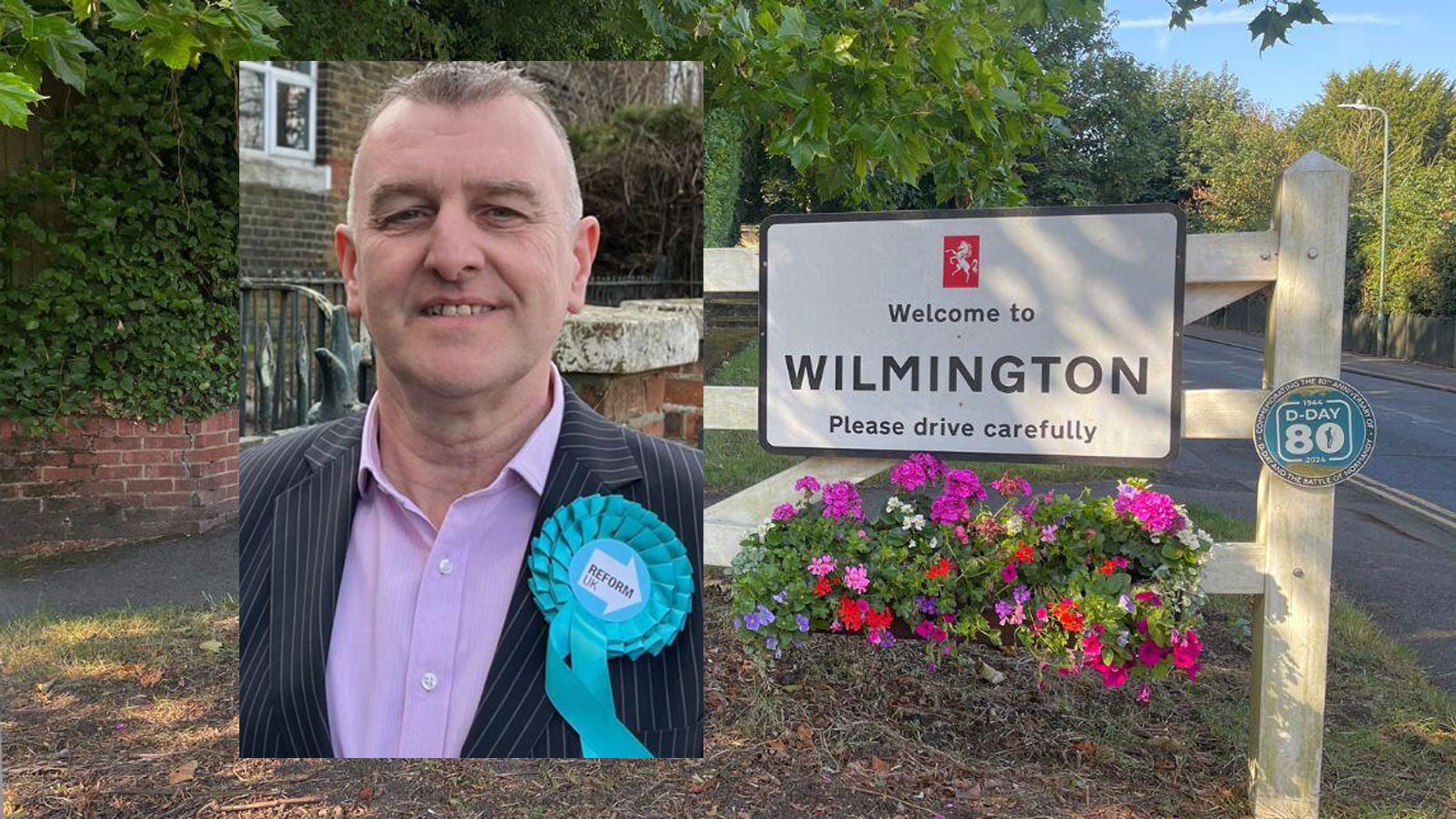
Greenwich Council’s Labour leader, Anthony Okereke, who is standing for re-election in Woolwich Common, questioned whether Cecil could handle the workload of two councils.
“If you want to serve a ward, you must be there,” he told the LDRS. “You must be on the ground.” He added, “You can’t be a councillor if you’re serving two different areas. It just doesn’t work that way.”
The line is obviously politically useful for Labour. There is an election happening. But it is also the obvious question here.
Cecil may have strong personal, political, or business links to Greenwich. He may argue that his existing role at Kent would not prevent him from serving another authority.
But that is a case he has not made to Kent voters.
Local councillors are supposed to be rooted, practical, and available. County councillors cover large areas and complicated services. Borough councillors face their own ward workloads. Trying to do both in two different authorities would be a choice.
Cecil’s own public-facing councillor page remains focused on Wilmington. Posts on his 'Cllr Alan Cecil' Facebook page discuss his work representing the area at Kent County Council. As of publication, the page did not appear to mention his candidacy in Woolwich Common or his role as chair of Reform Greenwich.
The Kent Current asked Cecil on what basis he had qualified to stand in Woolwich Common, whether that qualification was connected to Blue Flame Gas Services Ltd having an office in the Greenwich borough, and whether he would continue serving as Kent county councillor for Wilmington if elected to Greenwich.
We also asked how he would balance representing residents in Wilmington with representing residents in Woolwich Common, and whether he believed Wilmington residents were aware when electing him last year that he might seek election to another council less than a year later.
He did not respond to our questions.
We also approached Reform’s national press office for comment. No response was forthcoming.
For now, a councillor elected to represent Wilmington at Kent County Council is trying to win a second council seat in London.
For Kent voters, the question is not whether Cecil is legally able to stand in another area.
The question is whether Wilmington knew it was electing a councillor with unfinished business elsewhere.
Kent is large, messy and often faintly absurd. The Kent Current is backed by readers, which means we can report on it properly. An annual subscription costs £1.15 a week and helps make that possible.
How KCC’s new finance system became a £30m problem
Kent County Council’s attempt to replace the computer systems it uses to pay bills, run purchasing and manage its back-office operations has already cost £29.2m, with the project’s approved funding rising from an initial £13m to £29.8m and the council now saying the current forecast stands at £30.4m.
Oracle Cloud is KCC’s replacement system for finance and purchasing, with HR systems part of a second phase. The first phase has already gone live, including the purchase order system, and councillors were told earlier this year that the switch had caused delays and reporting problems in accounts payable, pushing one invoice-processing measure into the red.
This is not some obscure IT sideline. It sits at the heart of how the council pays suppliers and runs key internal systems. It is also proving a lot more expensive than first approved.
Responding to a Freedom of Information request from the Kent Current, Kent County Council told us that the original approved budget in February 2022 was £13m, covering the Extended Discovery phase, with no total project cost included at that stage. By November 2024, that had risen to £25.4m. A year later, in November 2025, the funding envelope was pushed up again to £29.8m. Spending to date is now £29.2m.
The council would not provide the current forecast final outturn under FOI, saying it was intended for future publication and was under review with its “strategic partners,” and that disclosure would be prejudicial to ongoing commercial discussions.
But when approached separately for comment, the council did then put a number on it. A spokesperson told the Kent Current that the “current financial forecast” for the Oracle Cloud upgrade is £30.4m, adding that “significant work is underway to avoid having to use the £4.9 million set out in the risk register” and that KCC is reviewing the remaining programme with its implementation partner to make sure the timeline and budget are “accurate and robust.”
That £4.9m figure comes from KCC’s own 2026-27 budget risk register. Under the heading “Oracle Cloud Programme - Cost and Timescale Overruns,” the document says the programme is facing “cost pressures and potential timescale overruns.” It says current forecasts indicate an overspend of £4.9m, warns that figure could rise if the timetable slips further, and says around £2.5m of it is expected in 2026-27.
The same entry also says that current overspends are being met from reserves and that underspends within IT base budgets are being carried forward. It then adds that “additional costs not reported to the Oracle Cloud Programme Board” are expected to be funded from the IT reserve and have therefore not been included in the medium-term financial plan for 2026-27.
Asked about those costs through FOI, KCC did not provide a figure. Instead, it said the value “quoted above” is being funded by the ICT Reserve and flexible capital receipts.
By January, councillors were already raising concerns about how much this was costing and whether they were seeing the full picture.
At KCC’s Governance and Audit Committee on 28 January, Conservative Group leader Harry Rayner said he was concerned about the “potential increased costs” of Oracle Cloud and whether any likely budget overrun had really been drawn to the committee’s attention. He also raised concerns about the link between delay and rising cost. The substantive discussion then moved into an exempt session.
The same meeting heard that the internal audit plan had been revised to include four new Oracle Cloud programme audits, with Oracle-related assurance work again dealt with in the exempt part of the report.
Earlier that month, councillors on the Policy and Resources Committee had already been discussing the fallout from the rollout. Officers said a move to Oracle Cloud in August had caused delays and reporting issues in invoice processing. They also acknowledged that lessons would need to be learned from phase one.
This is not a full-blown council IT meltdown. But there is now a pretty clear trail showing the programme has become far more expensive than originally approved.
This all leaves some awkward questions for County Hall. If the current forecast is £30.4m, why was that figure refused under FOI? If additional Oracle costs were not reported to the Programme Board, who did know about them, and when? And if almost the entire approved funding envelope has already been spent, how settled is the final bill really?
For a council under heavy financial pressure, spending more than £30m on a back-office system is not some technical sideshow. It is a major public spending story, and one KCC has so far explained only in fragments.
Ferry everyone wants back still has no one willing to pay for it
The Gravesend to Tilbury ferry is not dead. It is just not especially alive either.
Two years after the cross-river service stopped running, the current position is familiar enough. Lots of people would like it to come back, nobody has yet worked out how to pay for it, and the most likely answer involves several public bodies standing in a circle waiting to see who blinks first.
The ferry ceased operating in March 2024 after Thurrock Council withdrew its funding. Until then, the service had been supported jointly by Thurrock and Kent County Council, with KCC holding and managing the contract.
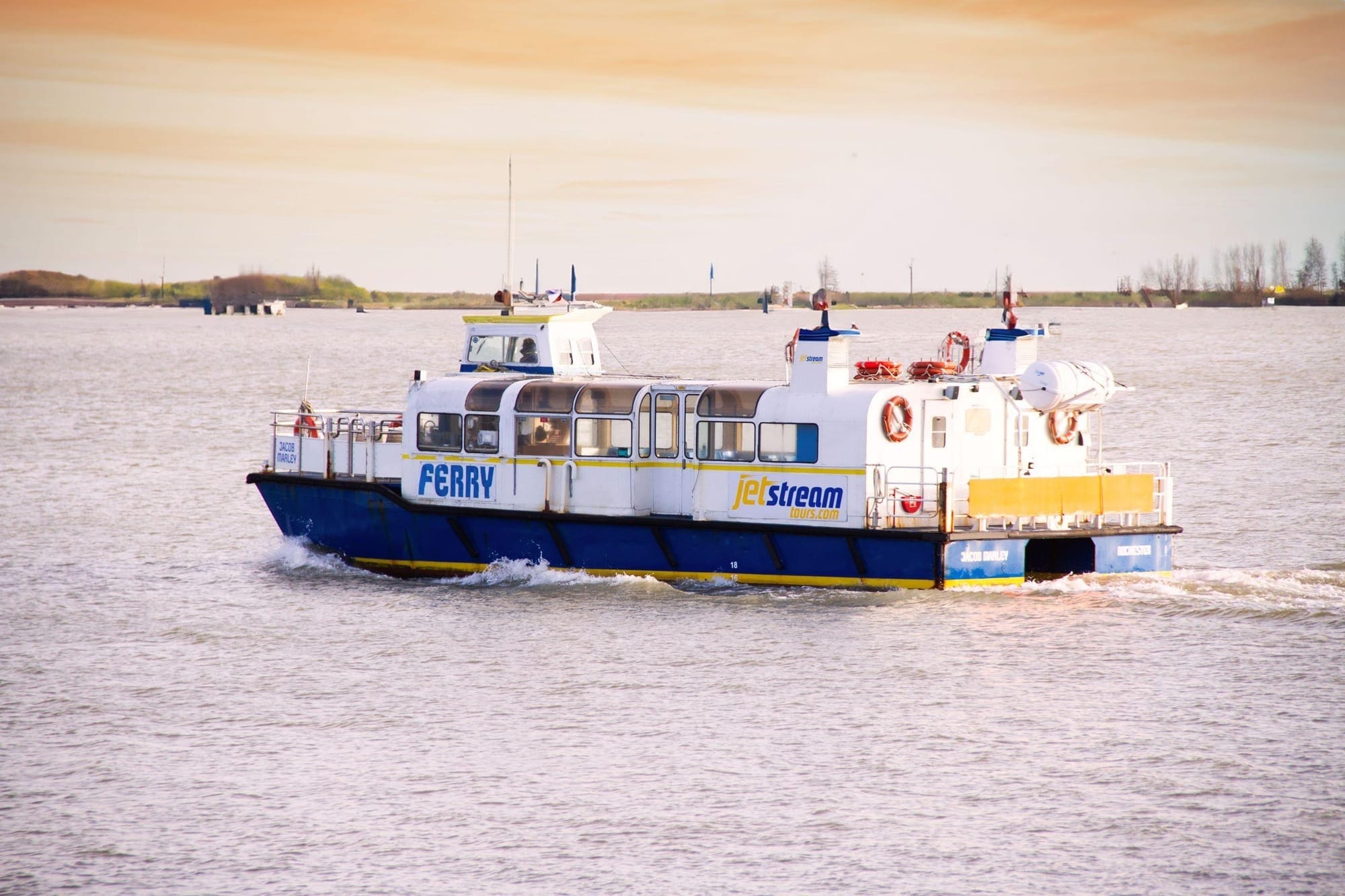
When Thurrock pulled out, KCC kept the service running on its own for a short period to avoid an abrupt stop, but the ferry ceased once that temporary arrangement expired.
KCC’s latest report, going to its Growth, Environment and Transport Cabinet Committee next week, is fairly blunt about where it stands now. The ferry is a non-statutory service, there is no KCC budget set aside for it, and the county council does not believe it can be expected to fund or manage it alone.
The numbers explain some of that reluctance. In its final full year, the ferry carried around 113,000 passengers. Costs were forecast at about £440,000, with fares bringing in around £230,000, leaving a subsidy requirement of roughly £210,000.
That was before the service stopped, before inflation continued doing what inflation does, and before any new operator had to look at vessels, staffing, maintenance, fuel, and the joyful modern ritual of trying to make transport add up on a spreadsheet.
A separate Thurrock Council report gives a more detailed, and arguably more awkward, picture. A feasibility study found that fares on the old service would have needed to rise by 90% to make it financially sustainable. It also suggested a revived ferry would likely need subsidy for several years, with a future service potentially requiring support of £500,000 to £600,000 a year for up to a decade.
That is the bit that makes the whole thing difficult. Everyone can agree that a ferry linking Gravesend and Tilbury is useful. It gives people a direct crossing between Kent and Essex without sending them to Dartford. It connects communities, jobs, education, shopping, and onward transport links. It is also one of those services that feels like it should exist because, for centuries, it did.
But useful is not the same as commercially viable.
The old Thames Estuary Growth Board had been leading attempts to find a route back, bringing together Kent, Thurrock, Gravesham, the Port of London Authority, Port of Tilbury, operators, and National Highways. That board has now been disbanded, which is rarely the point in a process where one expects things to get more streamlined.
The work has now passed to the Port of London Authority, which is looking at whether a future service could be made to work. Early ideas include running seven days a week, operating every 15 minutes at peak times, and using a higher-capacity vessel than the old ferry.
That sounds like a better ferry. It also sounds like a more expensive ferry.
Thurrock’s report does identify some possible funding routes. The council has received more than £40m as part Local Transport Consolidated Funding Settlement covering the next few years, and says some of that money could potentially be used to support ferry services from 2027/28 onwards. There may also be chances to bid for Lower Thames Crossing-related community or active travel funds.
But none of that is a plan yet. Ministers have already rejected calls to use toll revenues from the Lower Thames Crossing or the Dartford Crossing to fund the ferry, saying that money is needed to offset the cost of building the new tunnel. The government has also told local authorities that ferry services are generally private sector enterprises, which is a neat way of saying good luck with that.
So the current position is th the ferry could still return, but almost certainly not as a simple commercial operation. It would likely need a long-term subsidy, shared between multiple organisations, with someone willing to take political responsibility for spending public money on it.
KCC’s stance is that it will stay involved in discussions, but not carry the service alone. Thurrock appears more open to exploring funding routes, but has not committed to paying for anything. The Port of London Authority is now trying to model what a service might look like and what it might cost.
For passengers who used to rely on the ferry, that all adds up to a deeply bureaucratic version of maybe.
Footnotes
Follow us on social media! We’re on Facebook, BlueSky, and Instagram for now.