"You should be able to disagree well"
What we asked Cllr Alister Brady, co-leader of the Labour Group on Kent County Council

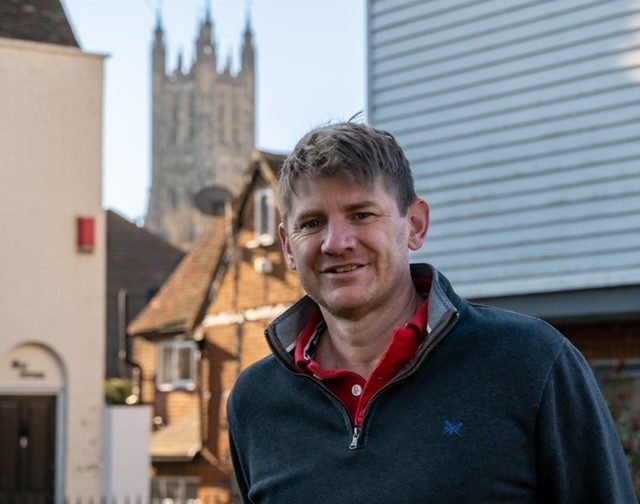
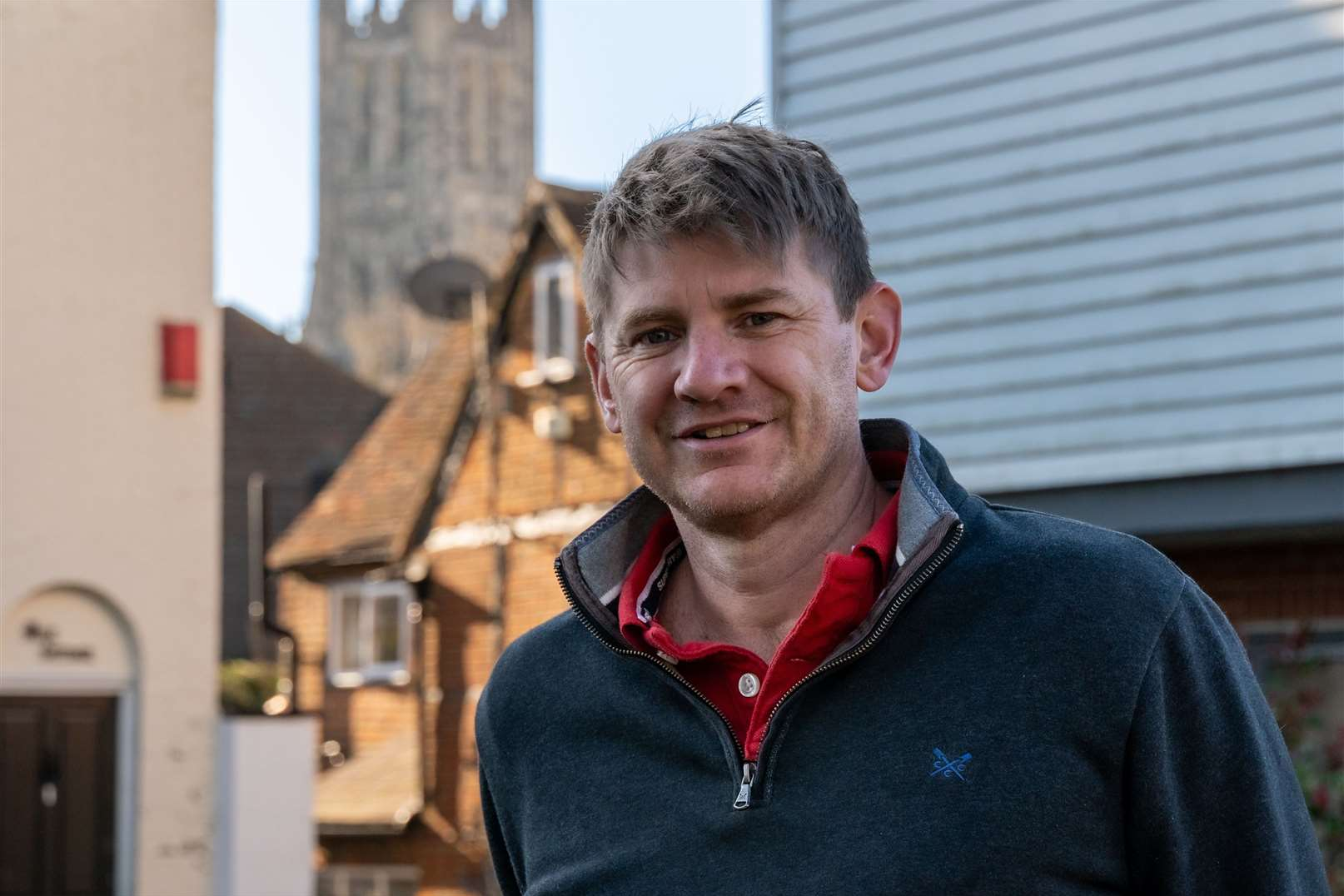
Cllr Alister Brady is co-leader of the Labour Group at Kent County Council. Steven met him in his Canterbury division, where they discussed representing Kent's only city, whether he misses former KCC leader Roger Gough, and if he still works with Canterbury MP Rosie Duffield...
What is your official occupation?
I am a Kent county councillor and a Canterbury city councillor.
Does that pay enough, or do you need to do anything else?
I'm also on the Kent and Medway Fire and Rescue Authority, which is part of KCC. Kent county councillors must sit on that, and that gives a small wage.
There is an argument that, in local authorities, councillors aren't paid enough to do the role. You can do the role as much as you can or as little as you can, but nobody's going to say we want more money, because you'll be voted out and be a laughing stock. You just make do and get on with it. I have a partner who works at the university, who's very understanding, but when I became a councillor five years ago, I wanted to do it properly and throw myself into it properly. My hat goes off to people who have a full-time job and do it. It would be wrong to say that I don't think that's possible because there's some good councillors in districts and at county level who are able to have a professional career and be a councillor.
But there's only so many hours in a day. I wanted to be able to give that my all.
Which division are you the councillor for?
Canterbury City North. I would say the best division in Canterbury. It's the best division because it's home. I moved there in 1988 as a 12-year-old boy. My mum still lives at the house we moved to in the division. My sister, with niece and nephew, still lives there. Not in the same house, but in the division. My mother-in-law lives in the division. I've moved to the outskirts, but hopefully I'm moving this year, fingers crossed, back into the middle. We go from Westgate Tower all the way up to the university.
Which area or ward are you the borough councillor for?
I'm Chartham & Stone Street, which is where I live now, and that's on the outskirts of my division. It's split slightly and that's why when we have local government reorganisation, LGR, it's good to have one council that is on everything, because at the moment I focus on housing, parking, waste collection and environment, the local economy within Chartham & Stone Street, and then I focus on adult social care, children's services, education, highways, disposal, et cetera. in my division.
Could you give us an example of a resident coming to you with an issue? What issue would you deal with as a borough councillor, and which issue would you deal with as a county councillor?
Mostly, you get planning issues for borough. That's probably the fundamental. I'm fortunate within my division and within my borough. Within my borough, I have seven parish councils, and you're able to interact with the parish councils to then find out what needs to be done there. I'm fortunate enough I don't have any parishes in my division. There's some incredible residents' associations and I work with them on projects. The individual casework comes through mostly potholes, road issues, flooding, and this is all division, and then trying to save a pub in Harbledown.
Does Canterbury have a Local Plan?
We've gone to Regulation 19 for the draft 2042-43 Local Plan. At the moment, we’re stuck with the 2017 Local Plan. Any planning issue comes in, you've got to go to that, but we're at the last consultation stage on that Local Plan within the City Council and there's so many good things in there compared to what was in the 2017 one.
Why do you need a new one if it was less than 10 years old?
Because it's like the Forth Bridge. Once this gets ratified, you start working on another one to better it. Things change, the landscape changes, governments change, political affiliations and who runs the council changes. It's an ongoing process.
A big thing that's occurring at the moment is local government reorganisation (LGR). Do you have different views on LGR if you have a borough councillor hat on and if you have a county councillor hat on? Or do you view it as the same thing?
The good thing with my party and district, the Canterbury Labour Group and the Kent Labour Group is we're a team, and LGR for Canterbury means the same for LGR in Kent. LGR makes complete sense. When you look at the disconnect and silo working between public health, adult social care and housing, planning. One of the biggest determinants of health is if you've got a home. To not have those two things together doesn't make sense. Bringing that together makes complete sense. At the moment we've got 14 councils in Kent. I prefer 4D purely because that keeps local identity, and that's incredibly important. People care where they live, and they care about their communities, and that's why 4D is big enough to be able to deliver the services efficiently in the right way and small enough to keep that local identity.
You're also the leader of the Labour Group on Kent County Council?
I would like to say co-leader. There are only two of us. People would laugh at me saying co-leader. Connie Nolan, who is Canterbury City South, we are an incredible team, and there's no point in me saying I'm the leader and you're my deputy, but within KCC, they don't understand that they don't have that within the constitution. We're co-leaders, but I'm the spokesperson. I'm the one that gets up and gives the speeches, and then I put a crosshair on me, and I'm the one that gets argued at and challenged.
The group is smaller than it was before the KCC election. Having had time to process what happened, in your opinion, why did Labour not do well?
It was fallout from the general election. We had an incredible result. I believe, six months leading up to that, because we were so much the favourites, the Conservative government didn't do the best things for the country, putting policies, managed the books in the best way, because they knew that whoever comes in, it would be a headache for whoever came in. When we did come in, and the difference between KCC officers who work for every councillor is we can see the books, we can see the evidence. Civil servants work for the government. They don't have to disclose everything to every MP and opposition parties. When we came in and looked at how bad the situation was, we couldn't get everything done straight away. When they vote on hope and change, people want really quick fixes. When you've been dealt a really bad hand by the previous government, it takes a while to change that. That was the impact. Nobody wanted a Liz Truss budget. Everybody's mortgages doubled. We saw what happened to the markets. It was about not spooking the markets. Unfortunately, we are hostage to them. We weren't able to implement all the things. The opposition, the previous government, and other parties could say, "You lied to everybody" as loud as they could. National press picked that up, and everybody was annoyed.
We're seeing green shoots
Why did Reform do so well?
At the ballot box, they decided not to go for the major parties. Conservatives broke the country, and they had been in KCC for 24 years, and we couldn't deliver anything from day one, so they went for an alternative. But what we saw within the leaflets and what we see now with Reform is they put a lot of misinformation in the leaflets, and people went, “We'll give you a try,” but after a year of chaos, people are turning away from them.
What do you think that says for a post-LGR possibility for Kent? Will we be looking at four Reform councils rather than one?
No, we're seeing green shoots. We're seeing good things come across. We're seeing a stabilised economy, apart from the tangerine tyrant and what he's doing to the economy, which is outside of our control. We're stabilising that, and we’re bringing great things through, like increasing minimum wage, trying to keep energy bills down, breakfast clubs, more funding.
Let's talk about more funding for local authorities. 14 years of underfunding for local authorities, and the very first year we were able, the Labour government were able to give KCC an extra £22m. This year, KCC got an extra £50m, and the day before the budget meeting, it was announced that it was a revenue recovery fund of over £6m. Good things are coming. I think by the shadow elections in May 2027, people will see Reform’s mistakes. I can go through the entire year of what they've done badly, and they'll see how Labour councils have worked really hard, and Labour councils at district level have done the right things and said what they would do during those elections and they'll be convinced by that, instead of nonsense in a leaflet. Just headline grabbing because Reform throw out a headline, but then you look at the detail, and then you look at the action. There's no substance at DOLGE. Look at the cut council tax and all of that nonsense. People will look at what that person has done for the community. Do you trust the person to do a better job than that other person? That will happen in the shadow elections. It's who's done a good job, district level and county level. Can they do that again? Have they got the best ideas?
You can't moan at the people who are trying to fix your mistakes
Having worked within the council, do you agree with statements that come out of the national party that people who support Reform have reasonable concerns and the people who support the Green Party are extremists?
I think people who supported Reform are people who are fed up with politics, and they wanted a change. I'm hoping once good things start to happen nationally and people start to see more money in their pockets and the support that there is there, that they'll turn away from people who say everything's broken. Which is quite funny because most of the people in Reform are ex-Conservatives. If you look at the national party, they're Conservative MPs who broke the country and then Reform supporters and councillors are going, “Look at the country, it's broken.” But you did that. You can't moan at the people who are trying to fix your mistakes. Hopefully, people are going to start to see through that.
With the Greens, it's very easy to come up with policy after policy without truly developing how that can improve people's lives and how that can be funded. The point is, can these things be delivered? Are you going to improve people's lives? Some of the things that the Green Party are saying don't really have much detail or substance, and that's a concern. At the moment, we see the national press are anti-Labour. Just imagine what it's going to be like when the detail of those policies are put out in public. If you look locally, we see a lot of nonsense in the Green Party local leaflets. We need to be incredibly honest on leaflets and what we tell people.
What does it tell us about Canterbury that, of the whole of Kent, not only did it return Labour councillors, but it returned the only Labour councillors?
A number of issues. We have a Canterbury City Council doing very good things. We have councillors doing really good things. We were able to get our messages across, where others, such as Reform, put nonsense on their leaflets, and we were able to explain why that was nonsense. I think within our divisions where we have residents' associations, and you embed yourself in communities, then people see that. I did have colleagues who were hard working. It was really disappointing and surprising that they didn't get back in. It was close. We were second in many of those races. But when you have Nigel Farage spending lots of money sending misinformation directly to people's doorsteps, it's quite hard to cut through all of that nonsense.
When you look at how much councillors Reform has compared to the proportion of the vote they received, would you support proportional representation post-LGR?
I can understand the arguments for and against. I understand Reform is against creating a Foundation Strategic Authority, which would be the path to a Mayoral Strategic Authority. It would be interesting to see, as a test, whether that is the right way for a voting structure to move forward for that.
I understand the arguments for and against it that I hear from other political parties, but when you see the voting rules, and you run your campaign towards those rules, I could put my hand up now and go I'm all for proportional representation.
I'm a Labour and Co-operative Party councillor, and I can explain what that means in a moment. We've got 13% of the vote. If we had PR, we would be the official opposition. We would have more councillors than the Lib Dems. But I'm not changing my tune because it would favour us. It's what would be best for residents in Kent. So maybe there's a way to have a consultation. Consultation is very expensive, and money is very tight. But it's a good question. I don't think I can answer that now. My ears are open to listen to people's views.
In your time as a member, who's been the best leader of the Labour Party?
Keir Starmer is slowly changing society for the better. If you have 14 years of austerity, which basically means you're cutting services that help people. To be able to change that and move that in the right direction, then that's obviously a bonus.
I got into politics looking at the ‘for the many not the few’ manifesto under Jeremy Corbyn, because that manifesto found every single thing that was wrong with society and tried to find a way to improve it. However, when you put everything that's wrong and that everybody agrees with, and say we are going to make the UK better, people don't believe it because it's unrealistic to say we can do all of this all at once.
In the news a lot over the last couple of years are the difficulties that the University of Kent have been going through. How existential would it be for Canterbury if the University of Kent actually failed?
It would be a big deal, and University of Kent won't fail. The government won't let that happen. It's developed a partnership with Greenwich, and Greenwich won't let that happen. It's one of the largest employers in the district, and the student population do a lot for the local economy, for the culture and society within the district. It won't be allowed to fail.
Unfortunately, what we saw in 2016 made them tie one hand behind their backs, because they portrayed themselves as the university of Europe, because we're so close to Europe and when you stop getting European students, and obviously with covid, that's going to be hard, and that's why they needed to merge. It's very important. It won't be allowed to happen.
Do you support government proposals regarding restricting international students from coming to university in the UK?
No.
I don't think our government is doing that. It suggests there is a list of countries, and I think we, as a government, are saying to those countries, if you don't help us with migration and the immigration debate, then we won't help you with your students. I think that is quite a conundrum, because we need to work with students, and students should be able to study where they want to study throughout the world, because it develops and enhances our culture. But I think countries should also be able to work with our government in a fruitful, respectful way.
Since the General Election, there's been a party change for Canterbury MP Rosie Duffield. Do you have a working relationship with the MP now?
I speak to Rosie. It's no secret that I was a caseworker within Rosie's office when I was also a Kent county councillor. I did that to help people in the district. When Rosie became independent, as I was leader of the Kent Labour Group, I wouldn't be able to do that.
But yes, we communicate. Rosie is a person that you can have a conversation with and work together on things with.
Did you support her reasons for going independent? Where did you stand on that?
It was a surprise to me. We had a conversation about it and... (pause) People are able and allowed to do and make choices how they see fit and how they choose. I would have liked our MP to stay as a Labour MP, but you're allowed to make those decisions.
Where were you born?
Dover.
What brought your family to Canterbury?
We slowly moved north. We went from Dover to Whitfield to Shepherdswell, and then my sister went to school in Canterbury. We moved to Sturry whilst we were looking for a house and then bought a house in Canterbury.
What jobs did your parents do when you were growing up?
My mum was a nurse and then a midwife for I don't know how many years, but she worked incredibly hard until she retired. My dad worked abroad within development.
Did you enjoy school?
I enjoyed learning in schools, and I enjoyed sport in schools. Sometimes in schools, when you enjoy learning, you get labelled a certain way, and then sometimes when you're quite good at sport, then school children in years above, resent that you're taking places away from their mates. I liked school, but there's a little bit of bullying in school.
When I was 13, my lung collapsed. It was called a spontaneous pneumothorax. It collapsed about four times over the space of three years. Each time you go to hospital. I had a big operation to strip the lining of my lung, so it stayed open.
How is your lung now?
Oh, I go to the gym regularly. After that was fixed, I played squash at a local level. It was just a thing that happened. I've got scars, and it's all okay now.
Where did you go for university?
I went to Manchester, and when I left, I wanted to travel and see the world and to do that as a teenager or early twenties is very expensive. I came up with the bright idea of 'Why don’t I do that and get paid as an air steward?' I was only going to do that for one season, and you get a month and a half advance. You look at that and go, 'I'm going to Kenya for a week,' and so before I knew it, you get promoted, and I'd been there for 21 years.
Is there anywhere that you wish you'd gone to visit but you never got to?
I've probably been everywhere multiple times in 21 years. Because it was a charter airline, it's all the holiday destinations. It's quite hard to think. South Africa, maybe. I used to be an avid scuba diver. I had 83 dives under my belt since I was lucky enough to go to the Maldives in 2003 and get my PADI [Professional Association of Diving Instructors] certificate, and then in Thailand to get my advanced diving. Then I stopped for nine years. Incidentally, I did a refresher dive in one of the local pools, and it was fantastic.
Amongst Labour Party members, what's an unpopular opinion that you have?
These are hardball questions.
Public Service Protection Orders. I would love to be in a society where we wouldn't need them. Orders to say don't have a bonfire on the beach because it will make the sand hot or the stones really hot, and if you move the bonfire away or whatever, and a child picks up that stone, they could hurt themselves. Bits like that. I think that, unfortunately, we live in a society where they're necessary. Other councillors don't think that they are, but that's allowed. The point is you should be able to disagree well. We can do that as councillors. We disagree well, we have differences of opinion. When you're at County Hall, unfortunately, that doesn't happen. With the Conservatives, we were able to disagree well. Fundamentally, I didn't believe in how they were running the council, and I could tell them that, and they would go, 'Okay, I'll take that on board,' and just ignore my views, but we could disagree well. With Reform, it's very hard to do that because you just get shouted down.
I believe the leader of the council would have an argument in an empty room
Do you find yourself missing Roger Gough [former Conservative leader of KCC]? Or would that be a step too far?
Step too far. I find myself missing the fact that I couldn't have been the decision maker because we had, within our alternative budgets, some fantastic things that would make people's lives better, and we put them forward, and many of the Reform backbenchers and some cabinet members agreed with what we wanted to put forward but they were shot down by their leadership, because the leadership is a dictatorship. I think there's a lot of backbenchers who disagree, and they're just ignored. We saw the famous ‘suck it up’ video, and I think that's what it's like. Disagreeing well is you're there because you're meant to put your residents’ views across, and I believe the leader of the council would have an argument in an empty room.
Who has been the best prime minister of your lifetime?
I'd have to say Tony Blair. There were mistakes, and I don't think we should have gone into Iraq at the time, but I think he injected hope into the nation.
Where do you like to go for dinner in Canterbury?
Ooh, lots of places. I cut my teeth at Café des Amis. You've got Café du Soleil, you've got the Ivy, you've got El Pochettino. We are so lucky in Canterbury. Come and visit and help out the local economy.
What improvements have there been in Canterbury in the last 25 years?
Green spaces are getting protected. If you look at the high street, we are bucking the trend. We've got an incredible high street where people love to come. If you look at Whitefriars, there's a hundred per cent capacity. I think the way that residents’ associations and friends groups have been set up within areas that aren't parished, where residents can go to and help, they're like a community in themselves. I think that's a brilliant thing.
Footnotes
This interview has been lightly edited for length and clarity.
Join us next week when we speak to journalist Gavin Esler about being vice-chancellor of the University of Kent, becoming a podcaster, and standing for election with Change UK.
We previously spoke with KCC group Leaders, Linden Kemkaran, Antony Hook, Harry Rayner, Paul Thomas and Mark Hood.
If you are/were involved with international travel or represent someone who is, and want to organise an interview, email Steven.