“Dartford suffers from having the crossing there”
Our interview with Jim Dickson, MP for Dartford

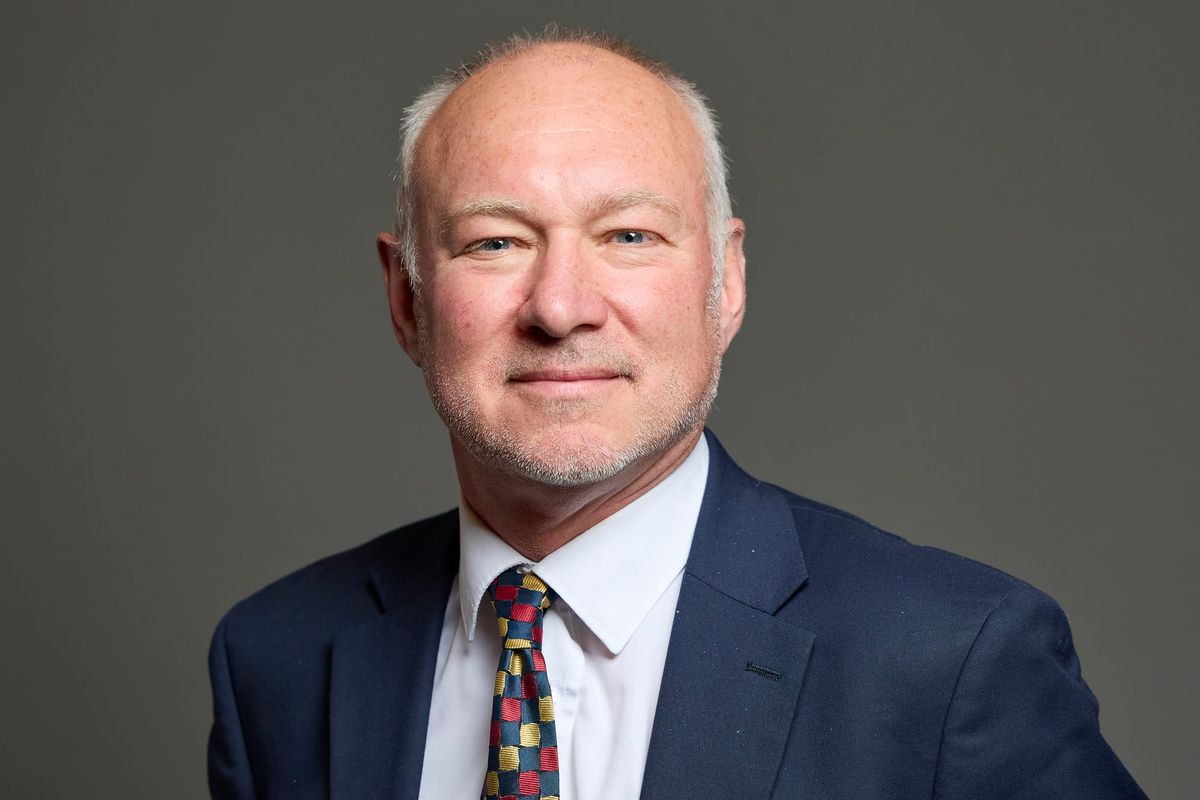
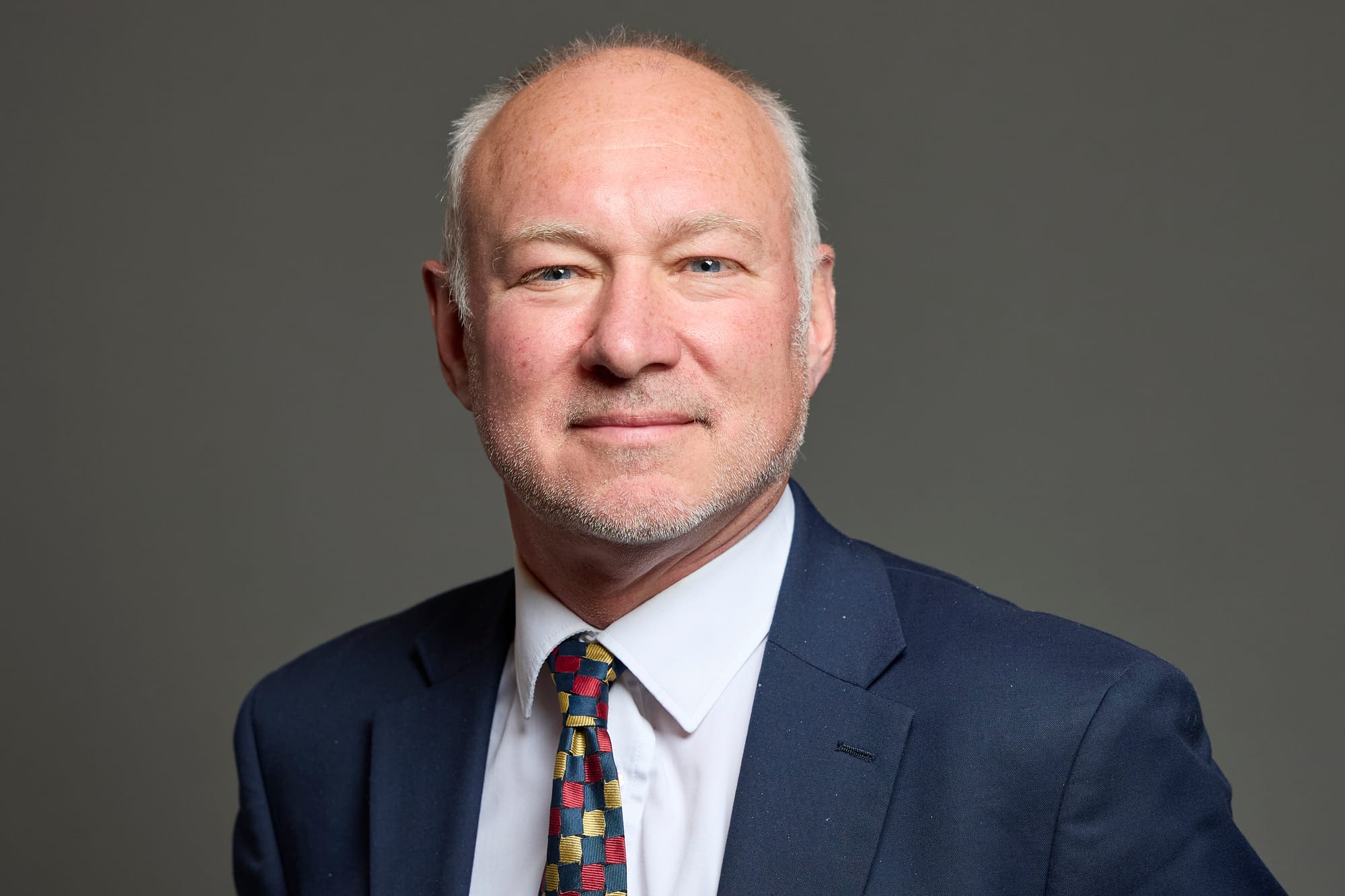
Steven met Dartford MP Jim Dickson in his constituency office, a converted former police station, to discuss the Dartford Crossing, Swanscombe Hole, the jumping spider and Morgan McSweeny.
What is your official occupation?
Member of Parliament for Dartford.
Why, of all the constituencies, is Dartford yours?
I've been involved in Labour politics for a long time. Along the way, I've been strongly involved in local government in southeast London. I stood in Old Bexley and Sidcup in 2001, attempting to be Ted Heath's successor in what was an interesting election because obviously it was one term of a Labour government and the Tories trying to peg us back or even chuck us out. Obviously, Labour did well, and there was a moment where I thought I might become the MP for Old Bexley and Sidcup. While I was down there, it was my first experience with Dartford because I came over and helped Dr Howard Stoate, who's still fondly remembered in these parts and was the last Labour MP for Dartford and a GP. Actually, he came out and helped me in my election. That was my first experience of Dartford. I've kept in touch with Dartford ever since. I've done bits of work here in the communications business. I worked with an organisational Kent-Thameside regeneration partnership, which is all about getting Ingress Park built and some of the other housing east of Dartford, in Gravesend and other places. I've come back and campaigned here on and off ever since. I have known the Dartford Labour Party members for some time.
When it became clear in late ‘23, early ‘24 that there's a potential vacancy for the candidate, I was very keen to put myself forward because it's a town and a community I like and since being elected, I've developed a really strong affection for, and absolutely love being here. I now live here, and that's been a very positive thing for me too.
Dartford is an incredibly dynamic place.
Dartford is somewhere that has jobs and opportunities
Every MP will insist that their constituency is the best, if not in the UK, at least in Kent. What is the pitch for Dartford? Why is it a great constituency?
I think the reason why it's so special is because it has a really strong cultural history and sense of cultural identity. Going back to Anne of Cleves lived here, and Richard Trevithick, the father of the steam engine, did quite a lot of his early research here. All the way through to more recent cultural stuff. You've got the Orchard Theatre, the largest regional. Birthplace of the Rolling Stones with Mick and Keith. Incidentally, just as a little side element to this, it's just fantastic the way Mick, who's probably one of the ten most famous people in the world, still comes back to Dartford and keeps in touch with his roots here because he has a real affection for the place. That tells you something. Peter Blake, amazing pop art icon of the 60s, still keeps closely in touch with Dartford. A rich cultural tradition we've got here, but it's changing very quickly as well. One of the other things I like is it harnesses that deep sense of cultural identity in place with an openness to change. Over the last 15 years, lots of new homes have been built, and people have moved from places like southeast London, east London or Essex or other parts of Kent and come to Dartford. It's changed its complexion, and we've got a much more diverse community, everything from having an emerging Indian heritage population, lots more West African heritage residents moving from southeast London, residents from other parts of Kent making it really quite an interesting place that I think is good. An example of how a vibrant multicultural Britain can actually be a successful multicultural Britain. Dartford is somewhere that has jobs and opportunities. It's somewhere that has some new housing. If we can make all that work together, that's a hopeful thing.
Having said all that, there are lots of things that need fixing, and those are the things I'm focused on, as well as trying to make sure that everyone does get along together and that we bring those new traditions that the incoming population bring with them and harness them well with the traditions of a historic market town.
Looking at the future, there are a number of towns and villages that over time used to be in Kent and now part of Greater London. Would you welcome any reorganisation that moved towards Dartford becoming part of London?
Not at all. I think Dartford is distinctively Kent. The northern bits of Dartford have a stronger Thames estuary identity as well, and I think those things aren't the same as a London identity. I think anyone who suggests that Dartford is any way likely to be submerged into some notion of greater London is completely wrong. I would never suggest such a thing. I think it has a lot of the advantages of being close to London, people can commute into London to work and take advantage of the job opportunities there, but it's also got opportunities facing east and being able to take advantage of infrastructure investment. We're getting, along the estuary and new homes, the Lower Thames Crossing, which we may come on to talk about. Lots of the infrastructure that needs to be developed as a result of the fact that we do have new housing alongside being a traditional place. It's also the second fastest growing local authority in the UK. Tower Hamlets is growing more quickly, but we don't count that as a town. So, it’s the fastest growing town in the UK. The big issue is the infrastructure that people need. The schools, the hospitals, the road space hasn’t really kept pace. Part of my job is to make a strong argument to government that we get to make a community that works.
The Lower Thames Crossing can't come soon enough
From an infrastructure point of view, how much of your time is spent dealing with complaints about the tunnel or the bridge?
I have five key priorities for Dartford, which I won't bore you with by going through, but the biggest one of all is to get Dartford moving, because we have the fantastic Dartford Crossing, which is an extremely mixed blessing. I use the word fantastic in an ironic sense, because Dartford suffers from having the Crossing there and having so much traffic both passing near Dartford, but also backing up into Dartford when something goes wrong with the Crossing. Something goes wrong with the Crossing a lot, because it's massively over capacity. It was built for 50,000 vehicles a day, and it's now taking 100,000 vehicles a day.
When anything goes wrong, all of the Dartford circulatory system, the Dartford road system, just completely seizes up. The Lower Thames Crossing can't come soon enough. One thing I'm really pleased about with my first 20 months as the MP is that I've been able to, I think, raise and get noticed the voices of Dartford residents around the need for the Lower Thames Crossing. Absolute credit to the government, it's responded well. I was elected in July 2024, and by March 2025, the Development Consent Order was being approved by the Department for Transport, and Rachel Reeves was making a point of it.
We now need a private sector package to add to that. That will happen. Spades are already in the ground, and we're expecting the boring machine to actually build the tunnel. That's the point at which people will say, yes, the Lower Thames Crossing is definitely happening when they see the boring machine actually creating the tunnel. That's going to probably start 2028 with lots of the road being built around the river prior to that. I'm really pleased about that. International rail links for Kent has been a big campaign, and that's part of getting Dartford moving and making sure Ebbsfleet is properly an international station again. I think we've made good progress on that with Virgin winning the capacity at Temple Mills to run services down the St Pancras high-speed line. Another win which will definitely happen. We need to make sure it happens as quickly as possible.
What is happening about the Swanscombe Hole?
A third strand to my activities around getting Dartford moving has been to try and make sure we get the money to rebuild Galley Hill Road. Swanscombe has hugely suffered from having a main artery running alongside it, taking everybody from Greenhithe and Dartford to Gravesend. That's been obviously sitting there broken since April 2023. I've been working incredibly hard to get government interested in this and...
Is government interested?
Government is interested. What's brilliant is I managed to get our wonderful previous roads minister, Lillian Greenwood, down in September 2024. One of her earliest engagements as Roads Minister. She came down, saw Galley Hill Road, the state it was in, saw the effect it was having on Swanscombe residents with obviously large vehicles thundering through small streets and other cars diverted into Swanscombe. She said something needs to be done about this. At the point at which I invited her down, central government had washed its hands of the problem. Kent didn't have any money and was never likely to get any. Thames Water, who could have been partly responsible and that probably will play out as part of a litigation process going forward, haven't got any money, famously. Essentially, it needed to be a central government problem to fix. But central government didn't have any money for a distressed transport asset that should have been the responsibility of its local authority. She went back, and to her absolute credit, she went back to the treasury and said, we need money for distressed transport assets around the country, but with Galley Hill Road as a massive example. In the comprehensive spending review that followed, Rachel Reeves allocated a billion pounds for a Transport Structures Fund, as it's called. Colleagues in the Department for Transport now are busy working out how it's going to be allocated, but I'm pretty confident that we're going to have an announcement that this fund is now open, here's how local authorities can bid, and here's how previously distressed assets with no obvious solution in sight can now be fixed using central government money. I'm working closely with Kent. We put politics completely aside on these things. This is all about Swanscombe residents and our local infrastructure. I'm saying I've got the government to produce this money. It's now up to Kent to get the best business case into government so that we can get the 50 or 60 million pounds. That is a staggering amount of money to get a short stretch of road fixed. But such is the nature of the place the road is located.
I'm saying Kent now has to step up and make sure that we get an allocation that can get Galley Hill Road up and running. Meanwhile, I need to be continuing to explain this to local residents. What I can say to people is we've had we've made real progress, and I'm confident that by the time I face the election electorate again in 2029, we will see the road open again or be pretty close to having the road open again.
You mentioned Ebbsfleet. You also have the excitement of the jumping spiders in the constituency.
All of that played out before I arrived. Actually, I've been involved in Ebbsfleet for longer than that because I remember when I was working for Kent Thameside Regeneration Partnership, being taken up to the Observatory and seeing the empty space that was the former quarry land that government was planning to put new homes on. It's fantastic to actually see the progress that's been made. There is an issue of development versus biodiversity. I'm absolutely a strong advocate that biodiversity is incredibly important. I wouldn't want to see any of the Swanscombe Peninsula built on. It's an amazing place for bird species and biodiversity generally. But you then have to take a judgment about how far away you need to be in order to safely develop without affecting the biodiversity. Obviously, the jumping spiders conversation happened some time back. I think, to be honest, there's a little bit of slightly fake controversy because Ebbsfleet have always had both the money and the land to get on with building 15,000 homes, which is what they will have done by the middle of the next decade. The issue about the spider species really only affects a thousand or so at most. Development can happily crack on whilst that issue is debated. I think it's perfectly possible to develop and make sure you build the houses you need, whilst making sure biodiversity is fully supported.
Have you ever been a member of any other political parties?
No, I haven't.
At what age did you join the Labour Party?
I joined the Labour Party when I arrived at university in 1983, aged 19. It's interesting because I grew up in the late 70s and early 80s. It was a divisive time. Obviously, we had the problems of the 70s with hyperinflation and the Labour government's inability to work as well in partnership with the unions as it should have done, resulting in Margaret Thatcher winning in 79. Pretty soon into the Thatcher administration, it became clear to me that her agenda was fairly divisive and that communities were going to suffer as a result.
Age 16, I started thinking there must be a way of dealing with the problems of social fracture that had emerged in the 70s, without employing the steamroller that was Thatcherism to try and boost an economy without any regard to what effect that had on people on the ground, communities and people who require opportunities but aren't necessarily provided with them by the Thatcher government. I think that pushed me towards a Labour agenda that was learning from the mistakes of the past and trying to make sure that we could create a growing economy with the equality that I think a society needs to have in order for it to be a unified entity. As I got to university, I joined the Labour Party, and about two years later, I was the chair of my Labour students’ organisation, and since then I've been involved politically, but I always thought it was important to have skills and a career to run alongside that. I was never going to be someone who was purely a politician, looking for a job in Parliament, then as a special advisor, and then hoping to be selected as a candidate somewhere. It was always important to me that I actually go into a useful job and try and develop a career that practically helped people alongside being politically involved.
I did a Social Science degree, and the first job I took after university was as a volunteer in a homeless charity in London, which focused on trying to take people off the streets and give them somewhere settled to live and your job was to support people, provide friendship, provide extra skills and expertise, help them with benefit claims, help them with relationships with the local authority or with the medical side of things. Try and make sure they could start to sustain a life off the streets with the networks that a lot of people who have been on the streets don't already have. I still think of it as a great model.
When did your name first appear on a ballot?
1998, when I ran to be the Labour candidate in Herne Hill in southeast London and was lucky enough to be elected. Interesting time in Lambeth because it had just been through a pretty appalling period under what I'm very happy to identify as poor, hard left, Trotskyite leadership in the council, which saw the council as a place to campaign and try to score points off central government, rather than provide good services. The task was to come on the council and try and pick up and mend local services and get them supporting local people again, rather than people playing political games with them.
I very much saw my trajectory over the next decade as working with others to try and make Lambeth as somewhere that actually worked for people again, rather than worked against people.
And in that time, did you interact with Morgan McSweeney? Because it was part of his origin story.
Morgan came along later. I became leader of the Labour group in ‘94 under a hung council. I was co-leading the council whilst trying to get the Labour group back in a way that would make us electable again, and thinking about how you build services again. We won in '98. Before Morgan and other people had turned up, although interesting enough, I'm the person who got Steve Reed into the Labour Party originally because he was involved in tenant association and voluntary sector politics, and I encouraged him to stand for the council because I thought he was a dynamic community organiser and figure. Steve stood in ‘98, got elected as well. Steve succeeded me as leader of the council at a later point. I stood down from the leadership position in 2000 and decided that I'd had ten years of really hard politics as it were, taking leadership position in a local authority, and I needed to spend a bit of time being a normal human being.
I passed my driving, got an MBA and had kids. Developed a great relationship with my partner Nicola, who I'm still with, I'm very pleased to say. Another five years and then I returned to the cabinet under Steve Reed's leadership in 2006 and that was the election at which Morgan McSweeney had been the organiser and helped to get us elected in 2006. I think I'm right in saying we were the only local authority that was a Labour gain from, in this case, the Lib Dems and Tories anywhere in the country, because 2006 weren't great elections for Labour, because we've been in power for nine years by then. Morgan played a strong part in that. He was a good local organiser, and obviously Steve was an extremely good and capable council leader. It was a privilege to work with both of them.
In the time you have been a member, who has been the best leader of the Labour Party?
I think from ‘83 onwards you've got to think about the elections. I think Neil Kinnock played an amazing role in making us electable again and getting people who didn't want to accept hard truths about what you needed to do to get into government to accept those hard truths, i.e. needing to have budgets which added up, and you needed to have programmes for genuinely supporting people which worked. Clearly, he lost in ‘92. We learnt lessons from that.
Tony Blair won a fantastic victory in '97 and some of the things that were achieved under the Blair government, from ending rough sleeping, which we'd done by 2010 pretty much, transforming the NHS, introducing the minimum wage, reducing inequality, sorting out some of the country's housing problems as well. All of those things were things I think Tony Blair deserves great credit for, but also Gordon Brown, who was obviously making sure that we could afford it and that we were taxing in a way that allowed us to invest in public services, but didn't stifle economic growth. I think they both deserve a huge amount of credit. Tony and Gordon, I think was an amazing partnership. Tony deserves a lot of credit for being a popular leader who was a brilliant political communicator. Gordon deserves a lot of credit for being somebody who thought through the relationship between a growing economy and better public services, and greater equality. They're my lodestars as a politician, the two of them. But I wouldn’t naively argue that if we just went back to doing those things, things would be perfect, because actually things have moved on a huge amount since then, and we need to be setting ourselves new objectives, as obviously this government's done.
There's a big dishonesty about the agenda that Reform is pursuing in Kent
From your experience in the Dartford area, what is the more extreme party? Is it Reform or is it the Greens?
I'd say they're both trying to do a similar thing, which is to offer people simple solutions which aren't properly thought through and which won't work in practice, but sound attractive.
On the one hand, you have the Greens offering a wealth tax, which they claim would give us an enormous amount of extra funding to rebuild public services or address inequality. Wherever a wealth tax has been tried anywhere in the world, they've seldom yielded even a fraction of what people thought they would. I think we're being sold a pup there by the Greens.
For Reform, we're being sold an extremely divisive and unpleasant message that the reason for the country's ills is the fact that we've had people emigrate to the country over the last 20 years and that if we got rid of those people, it would somehow make the country a better place. I think there is a role for controlling immigration, and I think the government is working on that, but the idea that if you get rid of people who are already part of our community, it makes it a better place is completely wrong.
I think the ideology of Reform in Kent has already been shown to be based on a degree of dishonesty. They said they would cut council tax and reduce waste on winning Kent County Council, and they've not done either. They pretended there were areas that were going to yield large amounts of savings that would enable them either to invest in services or reduce council tax, and they haven't been able to do that. There's a big dishonesty about the agenda that Reform is pursuing in Kent. However, I think there are some representatives of Reform in Kent, on a personal level, they're often committed and care about their community. I wouldn't want to personally criticise them. I just think they're following the wrong ideology or following the wrong policy agenda. But I think they personally do believe in creating a better Dartford. I think they're going about it completely the wrong way.
I think my one Green colleague on Dartford Borough Council is a nice person, who I think is doing her best, but I think her party is selling snake oil solutions for local people, and I think that's wrong.
Where were you born?
I was born in Plymouth. Son of a naval officer. The armed services play an important part in my background. Both my grandfathers were in the army. One died in the Second World War, the other was one of the unique people who fought in both the First and the Second World War. I spent my childhood looking around warships, visiting naval bases and understanding the military history of both my father and mother's side of the family. My mum was in the navy as well, before I was born. She was a social worker when I was young, but because my dad was in the navy, we tended to move around. It was difficult for her to maintain a career. She was a marriage guidance counsellor. Trying to support people through difficult times is what motivates her.
Did you enjoy school?
Yes, I did. One, because I enjoyed the subjects I was interested in. English, History, Geography. Struggled a bit more with STEM stuff, but managed to get my qualifications in the end. I loved sport as well. If you ask me one of my defining motivations in life, it's sport and recreation and the amazing power and direction that it can give to people who are interested in it.
What did you specialise in at sixth form?
A-levels, I did English, History and Politics, but lots of playing sport, football, rugby, cricket, tennis alongside all that, which I always look back on and feel were equally important forces in my life.
Where did you go to university?
Social and Political Science at Jesus College, Cambridge.
What role does faith play in your life?
I was brought up in the Church of England. I got confirmed. I would say I'm probably a secular Christian. I lost faith in the cosmology of Christianity some time back and so when I first came into Parliament and was asked whether I wanted to swear or affirm, swearing being swearing an oath to the monarch being the Christian way, and affirming being the secular way, I affirmed because I felt it would be a little hypocritical to swear when I don't actually necessarily believe in all the cosmology of the Bible and Christianity. But I feel a strong affinity with Christians, because I think the values of loving your neighbour as much as yourself, and trying to create a society in which everyone has an opportunity, and everyone feels part of, and there is love. I think Christianity is part of what motivates me in that way.
Have you ever been arrested?
The only time I've been arrested, when I was about 18, I went over the top of the barbed wire in Molesworth Air Base in Cambridgeshire as a protest against nuclear weapons and was carried out and not charged.
I've never done anything which would get me arrested again.
Amongst your Labour colleagues, what's an unpopular opinion that you have?
I'm a strong believer in proportional voting. I've always supported a change in the electoral system. It's probably not as popular now as in the past, given that we won 412 seats based on 35% of the vote. Clearly proportionally, we would be a minority party. We might have been able to do a deal with another party to form a government. We would have been the largest party, but certainly not with a majority.
But I actually think that changing the electoral system is essential. It's become more essential as we've potentially got five, or even six, political parties all on somewhere between 15 and 24% of the vote. There could be very odd, and I think extremely unwelcome, results for the next election under first past the post. I would love to see us contest the next election under proportional voting, but we won't be.
Where do you like to go for dinner in Dartford?
Probably the restaurant I go to most is Efes, a Turkish restaurant at the top end of the High Street. They do brilliant lunches, evening dinner as well, lovely restaurant. Always recommend if people come into Dartford to go to Efes.
But there are lots of nice places to eat in Dartford.
What advice would you have for someone thinking about combatting homelessness today?
I think it's obviously about the availability of housing, but it's also about getting close to the individual who's homeless and working out what the issues were that led to that person being homeless. You will usually find there is childhood trauma, there is relationship breakups, there's addiction, there's failures in their working life that have led them to a place where they find they're unable to help themselves. I think understand the issues that that person is facing and try to address those at the same time as providing a roof over their head because both of those are equally important.
Footnotes
This interview has been lightly edited for length and clarity.
Join us next week when we speak to the comedian Mark Thomas ahead of his comedy gigs in Faversham, about his new show 40 in Stand-Up Years, being arrested multiple times and finding out your best friend is spying on you.
We previously spoke with MPs Kevin McKenna, Tris Osborne, and, on our sister title, Naushabah Khan.
 Steven Keevil
 Steven Keevil
If you are or were a member of parliament or represent someone who is, and want to organise an interview, email Steven.