“What have we done? It's bonkers”
What we asked Gavin Esler, journalist, podcaster and former Chancellor of the University of Kent

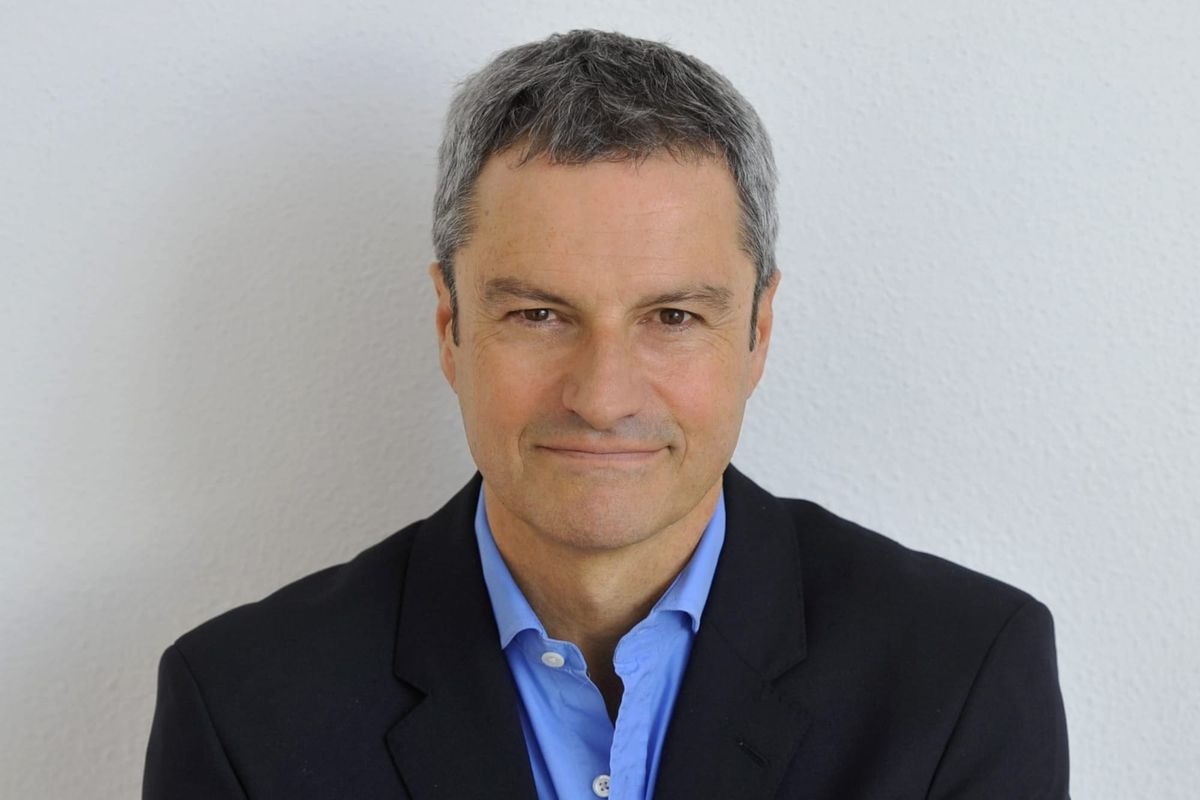
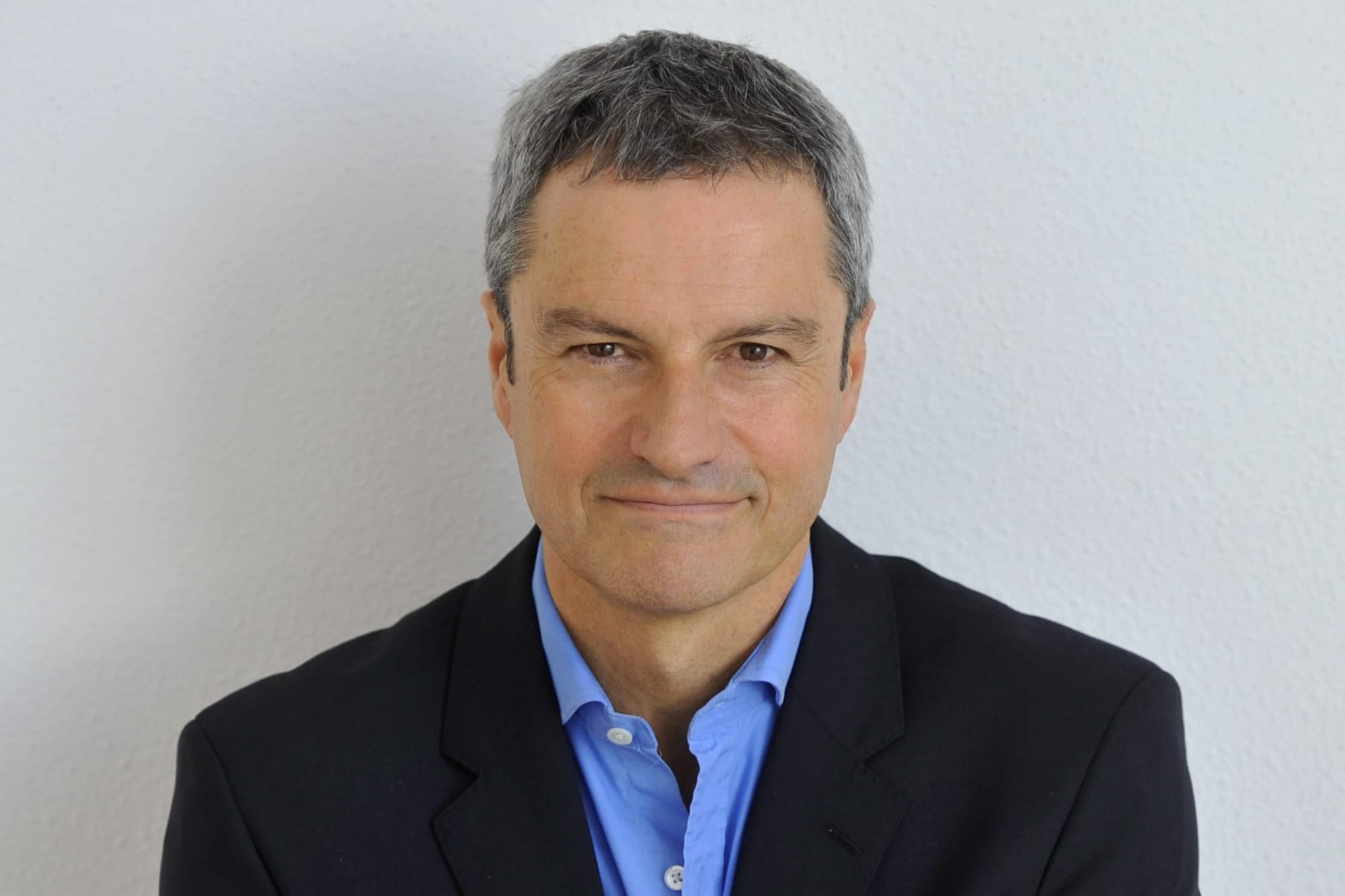
Gavin Esler is the host of This Is Not A Drill, a podcast about national security, and has recently served two terms as Chancellor of the University of Kent. He currently lives on the Kent coast, and Steven met him via Zoom to talk about working with Mark Kermode, the conflict in Iran and his advice for somebody thinking about becoming a political journalist.
What is your official occupation?
No idea. I haven't got any official occupation. I'm a writer and broadcaster, and I write novels and non-fiction books. I present a podcast and make documentaries.
Is there one that, from a time or income perspective, is the biggest percentage?
Not really, no. Keep it very varied.
How did you become a podcaster?
I was asked to do it. That was it. Essentially, lots of people in different spheres of podcasting activity have asked me to do things, and I've done it. Currently, I'm working with Podmasters, but I did a couple of six-part series for another company, called The Big Steal, which is about Putin, and how Putin is essentially the world's biggest criminal. And we won a Lovie Award, which is a very prestigious podcasting award for those series. What it was about was how Putin has simply cornered so much money from so many people, and he's probably the world's richest man rather than Elon Musk, and what he did with the money. We got some sponsorship for that. Although I have to say, once Putin decided to invade Ukraine, we didn't get sponsorship anymore because everybody knew how bad he was. It was only before he did that that we got people to actually be interested in knowing how bad Putin is. Now everybody knows.
What is This Is Not A Drill?
This Is Not A Drill started about two years ago as a podcast about national security issues. Everything from NATO to the prospect that China will ever invade Taiwan, or the United States military interests in NATO and so on. But of course, simply since the Ukraine war, but more recently since what's been happening in the Middle East, it's just gone crazy because people are very interested. Well, they're interested in the prospect that Iran could develop a nuclear weapon, that Saudi Arabia would have ambitions to do the same thing if it came to that and that the Americans have embarked on a somewhat risky mission to try to stop the Iranians from doing what they think they're up to.
It's really, really taken off because national security issues, particularly in the Trump era, are on everybody's mind. Even if you think you can hide under the bed covers, you can't.
What would be your explanation for why there is currently a conflict with Iran, and whether the UK should be involved in it?
Well, we're involved in it whether we like it or not. Everybody's involved in it because it affects the entire world. There's a conflict with Iran because Iran is a very complicated country, and I'm not sure everybody in the Trump administration just understands how complicated it is. It's a very diverse country. It was explained to me by someone near the top of the Iranian regime a few years ago, who said “You've got to realise that what we have done since 1979 and the Iranian revolution when we got rid of the Shah, we got rid of effectively our monarch, we substituted for that, it's sometimes called a Mosaic System of lots of different centres of power.” I said, “What do you mean?” They said, “We've got the army, we've got the Revolutionary Guards, we've got the Basij, we've got the police, we've got the Air Force, we've got the Supreme Leader, we've got the President, we've got the parliament.” And he went on and on and on about all these different bits. I said, “Why did you do that?” He said, “Because we realised, having overthrown the Shah, if ever there was one leader above all, even though they call him the Supreme Leader, actually it's a very devolved system, and you can't just simply knock off the head of state or head of government to neutralise us.” I said, “Where did you get that from?” And he said, “Well, we learned it because many of us were students in the United States and they have a very devolved system.” It's kind of ironic that we're currently in a war, that some sections of the United States government thinks that if you knock off the Supreme Leader, you've solved your Iran problem. Well, clearly you haven't.
At the moment, the real world is so interesting that I'm not sure if fiction can keep up with it
You mentioned you've written fiction and nonfiction. Do you have a preference?
No, that's why I write both. It's quite interesting. Fiction is actually quite gendered. Books of fiction, modern fiction, are bought by women, and men tend to write thrillers and genre fiction. It's not true of everybody, of course. There are men who read all kinds of things, and there are women who are more interested in nonfiction. But that is the way the book industry works. At the moment, the real world is so interesting that I'm not sure if fiction can keep up with it.
Your last non-fiction book was about the state of Britain?
The most recent non-fiction book I've written is called Britain is Better Than This, and it's based simply on an observation that there are more Nobel Prize winners associated with Cambridge University than any country in the world except the United States. So, we're not stupid. Why do we keep doing stupid things? And by stupid things, I mean, we’re so desperate to have some kind of functioning government that does something that might cheer us all up that we thrash around, and we don't really know what we're doing. Just to give you one example, in 2014, the people of Scotland voted not to be independent.
One of the main reasons, because I was there at the time, one of the main reasons they voted not to be independent was they were told that if you break up the United Kingdom, you will not be in the European Union, which was a perfectly reasonable thing to say, because people were worried that parts of Spain might secede and if they seceded, they should not be a part of the European Union. But then two years later, in 2016, the people of Scotland were taken out of the European Union against their will by votes that they didn't cast because they voted to stay in the European Union. Now, this just seems to me to be a completely idiotic system.
In Kent, for example, we have 40% of people in Kent don't vote who could vote, but don't vote. I understand why. I don't think they're apathetic. The ones I know are angry. They're not apathetic at all. But all of those 40%, once you take that away, and a third essentially voted for Labour and Labour won by a landslide, but actually that only amounts to one in five of those who could have voted, so we just don't vote. What kind of system have we got? I'm not making an argument for any one party, but if you're a Green voter, you're not going to get in, but you might in the future. If you were a Reform voter or whatever the previous incarnation was, you weren't going to get in because we don't have a proportional representation system, but we do in Wales and Scotland. And we do in Northern Ireland. What is it about England that doesn't quite get it? There is no other country in Europe, except Belarus, that has the same system as we've got. Strikes me as completely daft. I don't aspire to be Belarus. I'm not saying any system is perfect, but at least if you feel, if I go to the polls, there's a chance the person I like is possibly going to get represented in parliament, then you go to the polls. If you think there's no point in voting because they, whoever they are that you don't like, always win, you don't vote. It's just a really daft system. We are so hidebound by it that we get these very strange governments. Again, I'm not talking about politics, but the simple arithmetic is we have got a massive Labour majority based on a third of the vote. That's a third of those who did vote, but it's still one in five of those who could have voted. So, four out of five people who could have voted didn't vote for the current government. Again, it's not an argument about the current government. It's an argument about our stupid politics.
Why do we have a system dating back to the time of putting small boys up chimneys to clean them?
We have that again at a regional level, where we've now got Reform running Kent County Council, but on 30% of the vote.
Yeah, 30% of those who did vote, but most of us didn't vote in that. I think even the turnout rate, I think, for the local government elections was about 40%. If they got a third of that, do the maths. That's 13 to 14% of the potential voters gave us a council who's spending our money. Now, again, it's not anti-Reform or pro-Reform, but it's stupid. I wrote a book about why we do stupid things when we're quite sensible as people. One of the reasons is that we, I love many of our British traditions, but just because we've always done something doesn't mean to say we should always do it. We used to put small boys up chimneys to clean them. We don't do that anymore. Why do we have a system dating back to the time of putting small boys up chimneys to clean them? It's stupid.