How Kent got stuck with Britain’s border problem
Operation Brock was meant to keep Kent moving. Years later, it has become a recurring reminder that nobody has found a better way to do this.

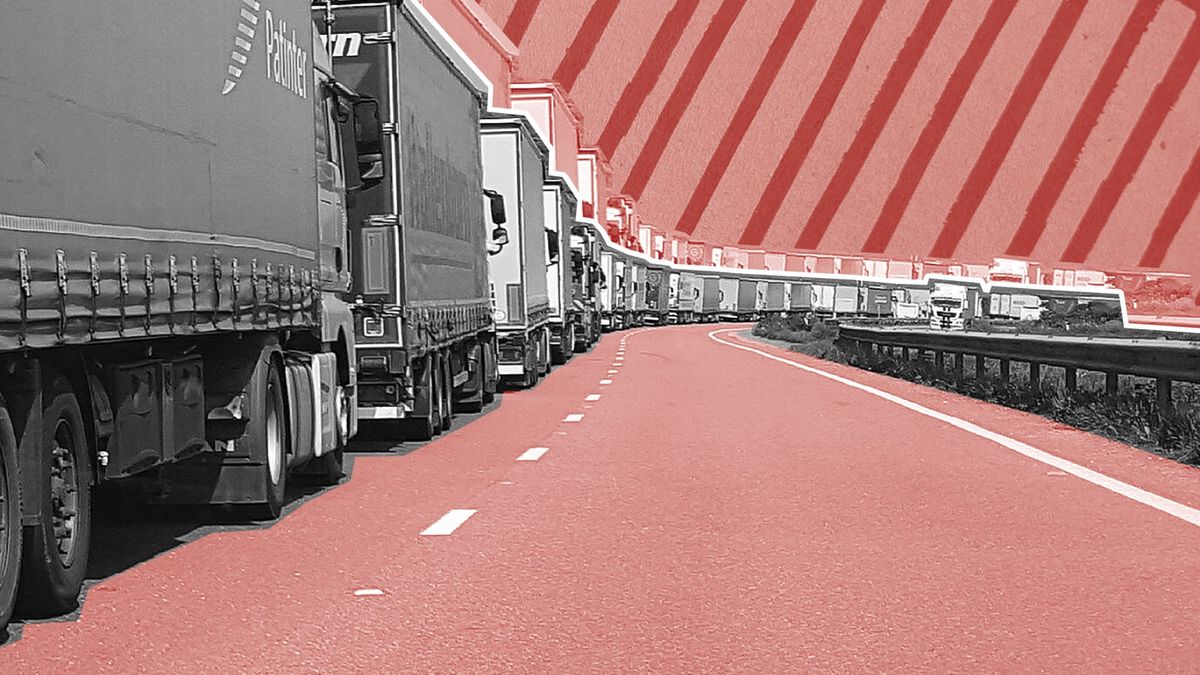
Operation Brock was designed as a contingency measure to manage disruption at Dover and Eurotunnel, but its repeated return has made it a regular part of life on the M20. This edition looks at how Kent became the place where Britain stores its border problems, why alternatives have proved so difficult, and why almost everyone agrees Brock is not a long-term answer while continuing to rely on it anyway.
How Kent got stuck with Britain’s border problem
The M20 was not built to be a waiting room for the border.
For most of the year, it looks like any other major motorway. Commuters head between Kent towns, freight moves between Britain and Europe, families drive to the coast, and the ordinary traffic of a county between London and the Channel carries on.
Then, as the holiday period approaches, industrial action occurs in France, or the ports begin issuing warnings of pressure, barriers go up, speed limits fall, and signs direct Europe-bound lorries into place. Suddenly, one of Kent’s main roads starts doing a very different job.
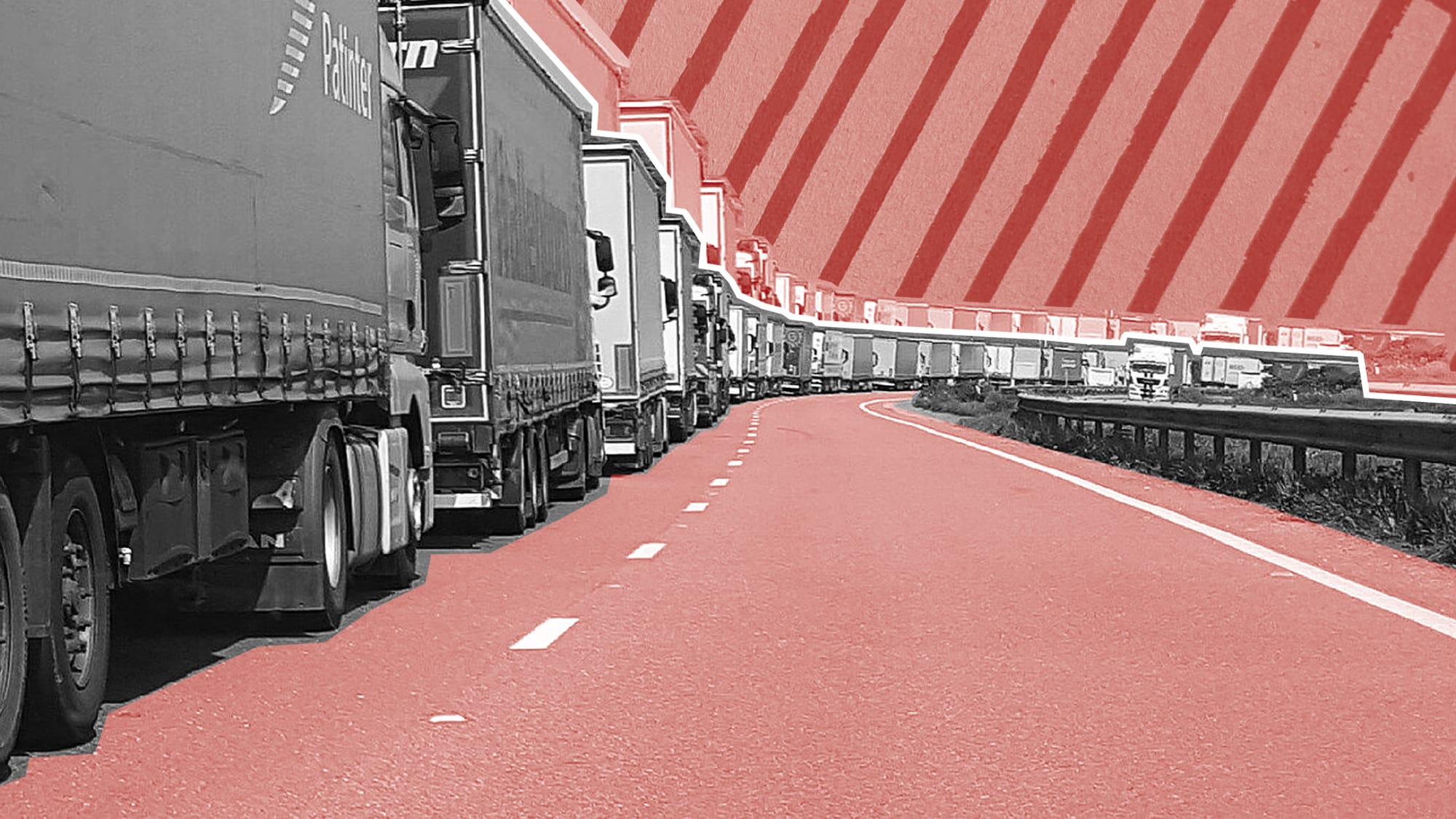
By now, the ritual is familiar enough to have lost some of its shock. Operation Brock arrives before Easter, half-term, summer getaways and Christmas. It is discussed by MPs, defended by traffic planners, criticised by haulage groups and endured by residents who may not be going anywhere near France.
Brock was introduced as contingency planning, but it has become part of Kent’s seasonal infrastructure.
Almost everyone now agrees it is not the long-term answer. Kent is still waiting for someone to produce one.
Before Brock, there was Operation Stack. When disruption hit the Port of Dover or the Channel Tunnel, sections of the M20 were closed and used to park lorries. It was crude, but clear. The freight had to go somewhere, so it went on the motorway.
That arrangement reached its breaking point in 2015. Industrial action, disruption around Calais and problems with cross-Channel services left parts of Kent snarled up for weeks. The M20 became a lorry park, while other traffic was pushed onto local roads. Businesses lost time and money. Residents found routine journeys becoming unpredictable. Kent once again became the place where a national border problem was stored.
Operation Brock was meant to be the smarter answer.
Rather than shutting the motorway completely, Brock uses a contraflow system between junction 8 near Maidstone and junction 9 near Ashford. Europe-bound HGVs can be held on the coastbound carriageway while other traffic uses the opposite side of the motorway in both directions. The route stays open, but in a narrower, slower and more fragile form.
When the system is active, lorries heading for Dover or Eurotunnel are legally required to join Brock at junction 8. Those who try to dodge the queue can be turned back and fined. Enforcement can also take place elsewhere, including at Brenley Corner near Faversham, where lorries using the A2 towards Dover can be redirected back towards the M20.
Brock controls the border before traffic reaches it. Thousands of lorries are held in one place rather than allowed to arrive independently at Dover and Folkestone when the system ahead of them cannot cope. The pressure is metered before it spills into Ashford, Folkestone, Dover, the A20 villages, the A2, the M2 and the smaller roads never designed for this kind of load.
That is why the argument becomes so frustrating. Residents see a contraflow, a 50mph limit and disruption on a day when no obvious crisis has materialised. The authorities see a risk that has not yet become visible.
The Kent Current is now on WhatsApp.
We’ve launched a WhatsApp channel for Kent Current. We won’t flood it with posts, but we will use it to share new stories and occasional major updates from across the county.
If you’d like our journalism somewhere a little closer to your lock screen, you can follow along there.
The Kent and Medway Resilience Forum says decisions to deploy Brock are based on intelligence, traffic modelling, passenger bookings and freight bookings. Brock is not only used when Kent is already in trouble. It is also used when officials think Kent might be about to be.
That is the official defence, but it is also the source of much of the anger.
A Freedom of Information request reported by the BBC found that Brock costs around £226,000 to deploy, followed by nearly £35,000 for every 24 hours it remains in place. In 2025, more than £3m was spent implementing it. The same reporting found that Brock was deployed across a 69 day period, but only actually used to hold freight for 136 hours.
To critics, that looks absurd. Millions spent, weeks of reduced motorway capacity, and only a few days of actual lorry parking.
To those responsible for Kent’s roads, it looks like contingency planning. The point of Brock is not only what happens when the queue fills. It is what might happen if there is nowhere for the queue to go.
Brock causes disruption in order to prevent worse disruption. After years of using it, the question is whether Kent should still accept that bargain as normal.
Brock's strongest defence is Ashford.
At a recent Ashford Joint Transportation Board meeting, Kent’s highways and transport strategic resilience manager, Toby Howe, defended the system by saying it protected the town from gridlock. In particular, he pointed to junction 10A and access to the William Harvey Hospital. For people delayed on the M20, Brock can look like the problem. For those planning the wider network, it is intended to prevent the problem from reaching places where the consequences would be more serious.
The Roundhill Tunnel near Folkestone is another recurring pressure point. If queues from Dover build back towards the tunnel, it can be closed because stationary traffic is not allowed inside. Once that happens, disruption can quickly spread, affecting traffic heading for Eurotunnel as well as Dover. Brock is partly designed to stop that chain reaction from beginning.
The honest version is that Brock clearly does something. It keeps freight in a managed queue. It keeps parts of the motorway open, and it reduces the chance of uncontrolled congestion spreading across east Kent.
The harder question is whether this is the best a country can manage for one of its most important trade routes.
Logistics UK does not think so. The business group has described Brock as an “inefficient and expensive workaround” and says a permanent solution is long overdue. More than half of goods traded between Great Britain and mainland Europe pass through the English Channel, with up to 16,000 freight vehicles using Dover and Eurotunnel each day. A crossing of that importance is still relying on a motorway holding pen.
The driver welfare issue is just as stark. Official guidance acknowledges that providing toilets or food on a live carriageway is difficult and often unsafe. Drivers are told to prepare with food, water and medication before joining the queue. That may be understandable from a traffic safety point of view, but it is a bleak way to treat people doing essential work.
Kent businesses have been making the same point for years, though usually from the other side of the queue. A 2022 survey by the Kent and Medway Economic Partnership found that 86% of respondents said Brock had a negative or severely negative impact on their business when operating over capacity, while 76% said the same even in its default mode. Business travel, staff morale, income, deliveries, visitor numbers and recruitment were all affected.
The most revealing finding was not simply that businesses disliked the worst days. Many said they were affected even when Brock was working as intended. A reduced speed contraflow still meant longer journeys, less reliable travel, delayed staff, missed deliveries and customers deciding not to bother.
In the same survey, one in six respondents said they expected to move away from Kent because of Brock, with another one in six unsure whether they would stay. This introduces an economic warning to what sounds like a road problem.
Brock also changes the map of disruption. The most obvious effect is on the M20, but the knock-on effects are scattered across the county. Villages along the A20. Ashford. Folkestone. Dover. Brenley Corner. The A2 towards Canterbury. The M2 near Faversham. When enforcement is stepped up at Brenley Corner to stop lorries heading to Dover via the A2, traffic can back up there too. When drivers try to avoid the motorway, smaller roads take the strain.
Brock may be a freight system, but its consequences are not limited to freight.
That will become more important as the EU’s Entry/Exit System adds another layer of border processing. The new digital checks are intended to replace manual passport stamping, but they also risk increasing processing times for passengers. For Kent, that raises a separate problem. Brock was built around lorries, while the next wave of disruption may also come from tourist traffic.
A Liberal Democrat motion at Kent County Council last month warned of significant summer delays caused by tourist traffic subject to EES on top of freight delays managed through Brock. It called for government to produce a credible plan to manage freight without Brock, provide more funding and operational powers for KCC, and consider using the Inland Border Facility at Sevington or another suitable facility for queuing.
What stood out was not only the motion but the breadth of agreement around the issue. Reform councillor Nick Wibberley, who represents Ashford South, said he backed it and wanted greater support, funding and planning. Conservative MP Helen Whately has linked Brock to wider concerns about Kent’s overstretched infrastructure and the loss of planned improvements at Brenley Corner. Labour MP Tony Vaughan has argued for more freight to be moved onto rail to reduce pressure on the M20.
These are politicians who disagree on plenty. On Brock, the common ground is obvious. It may be necessary, but Kent should not still be relying on it as the main answer.
The alternatives all come with problems of their own.
A lorry park is the most obvious solution, and also one of the hardest. Kent has been here before. After the 2015 Stack crisis, the government promised up to £250m for a major lorry park near Stanford, between Ashford and Folkestone, capable of holding thousands of HGVs. The scheme was eventually scrapped after legal challenge and local opposition. Since then, the idea has kept returning in different forms, but without producing the permanent alternative Kent was promised.
A new off-road holding area would need to be in the right place, with the right access, and on the right side of the motorway. Officials have said any site would ideally need to sit between Ashford and Folkestone and on the coastbound side of the M20. That limits the options.
Sevington is often raised because it already exists. The Inland Border Facility near Ashford is large, visible and closely associated with post-Brexit border arrangements. But officials have repeatedly argued that it is on the wrong side of the motorway and not suitable for the role people want it to play.
Mini Brock is more realistic, but less transformative. The idea being considered by government would move the start of the contraflow closer to junction 9, reducing the impact on places such as Harrietsham, Lenham and Charing. The trade-off is reduced capacity, from around 2,000 lorries to about 1,700.
Other ideas are more ambitious. One would use technology to hold freight elsewhere in the country until there is space at the ports, rather than allowing lorries to keep flowing into Kent. Officials have described this as being at beta stage, with a trial expected through a haulier. In theory, that could be cleaner than repeatedly using the M20. In practice, it would require reliable data, enforcement, compliance and coordination across the freight network.
Rail freight has its supporters, too. Moving more cargo off the roads would reduce emissions and motorway pressure, but it would require infrastructure, capacity, and commercial arrangements that do not appear to be close to replacing the present system.
Everyone can describe a better world. Nobody can point to one arriving soon.
Perhaps the most telling evidence comes from National Highways itself. In response to a Freedom of Information request, the agency said it did not hold documentation on the effectiveness or impact of Operation Brock. National Highways said it was responsible for implementing the traffic management on the M20, but the decision on when to activate it and for how long was made by the Kent and Medway Resilience Forum. It added that KMRF bases its decisions on data from port authorities and analysis from the Department for Transport, and that the exact data is not shared with National Highways.
The organisation that physically operates Brock says it does not conduct assessments of Brock's effectiveness. The body that decides when to use it is a multi-agency resilience forum. The funding comes from the Department for Transport. The data comes from ports and government analysis. The consequences are felt by residents, businesses, hauliers, councils, emergency services and anyone trying to move through east Kent at the wrong time.
There are many hands on the system, but no obvious owner for ending it.
Keeping track of Kent properly takes time, travel and a fair amount of patience. Kent Current only exists because some readers choose to support that work. An annual subscription costs £1.15 a week and helps keep it going.
Brock is no longer a short-term emergency measure in any meaningful public sense. It may still be temporary each time it is installed, but its repeated return has made it part of how Kent functions. It is now expected in advance of predictable travel peaks. It is planned for, warned about, budgeted for, argued over, removed, and reinstalled.
That is how temporary measures become permanent. Not with one decision, but through repetition.
The risk is that Kent becomes used to a level of disruption that would be considered extraordinary elsewhere. A major motorway narrowed and slowed for weeks at a time. Freight drivers expected to wait without proper facilities. Villages absorbing diverted traffic. Businesses adjusting hours, rerouting deliveries and warning customers not to trust journey times. Councillors passing motions asking government to recognise that the county is carrying a national burden.
Brock may be better than Stack. That is not the same as being good enough.
There is a reason the system survives. Dover and Eurotunnel are too important to fail. The English Channel is too important to the economy. If disruption hits the border, the consequences have to be managed somewhere. For now, that place is still Kent.
The county has been told, in different ways and by different people, that alternatives are being explored. Some of these ideas may help, some may never happen. None has yet replaced the thing that everyone says should not be the long-term answer.
So this summer, once again, Kent will prepare. Barriers will go up, and drivers will be told to check before they travel.
The M20 will remain a motorway.
And, when required, it will become Britain’s waiting room for the border once again.
Footnotes
Follow us elsewhere: Facebook, Instagram, BlueSky, and now WhatsApp for new story alerts.