Taking apart Kent’s most famous wreck
For 82 years, Kent has mostly dealt with the SS Richard Montgomery by leaving it alone. Now, the masts are coming down.

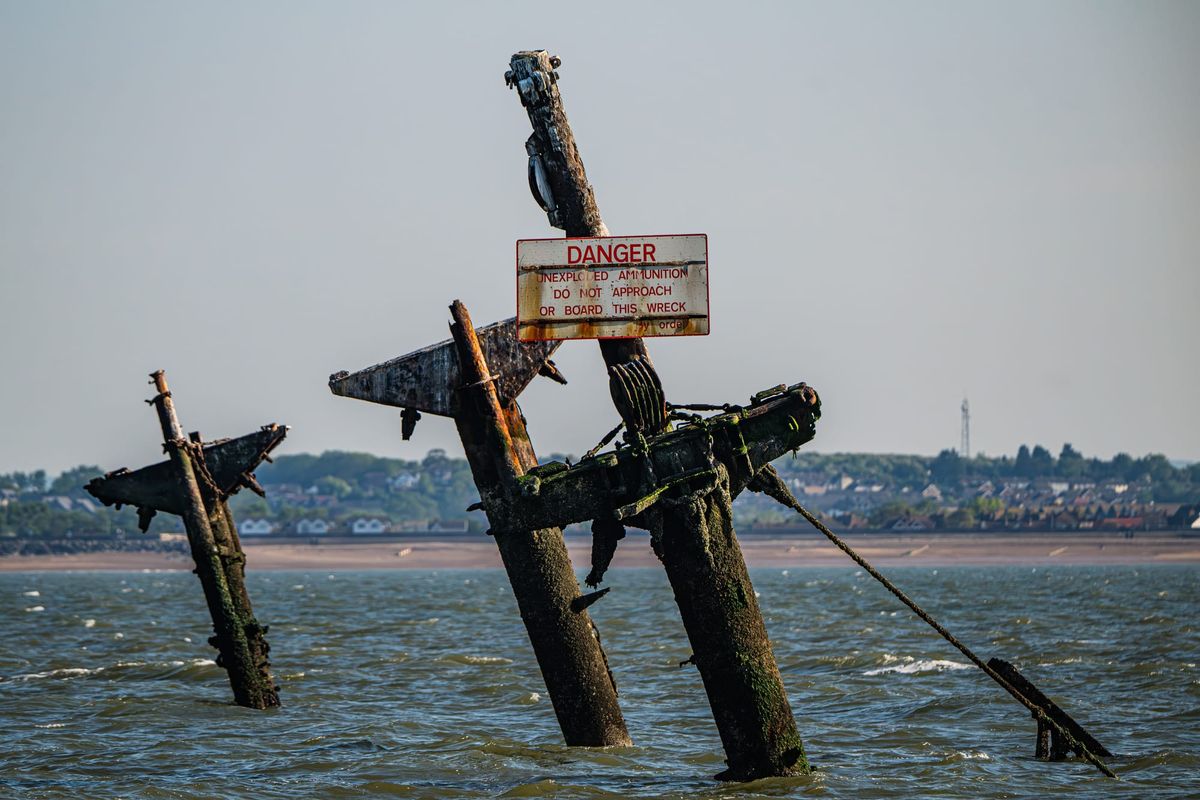
In September, a team of specialist maritime engineers will travel into the Thames Estuary, build an underwater platform beside a ship containing around 1,400 tonnes of wartime explosives, and begin cutting bits off it.
This is, according to the government, the safer option.
For the past 82 years, the SS Richard Montgomery has sat around one and a half miles off Sheerness, surrounded by an exclusion zone and carrying a substantial quantity of the explosives it was supposed to deliver to the Allied war effort. Most of the ship is underwater, but three masts still protrude from the estuary, becoming an unlikely part of the landscape around Sheppey and a useful reminder to passing ships that this particular part of the Thames is best avoided.
Now, they are finally coming down.
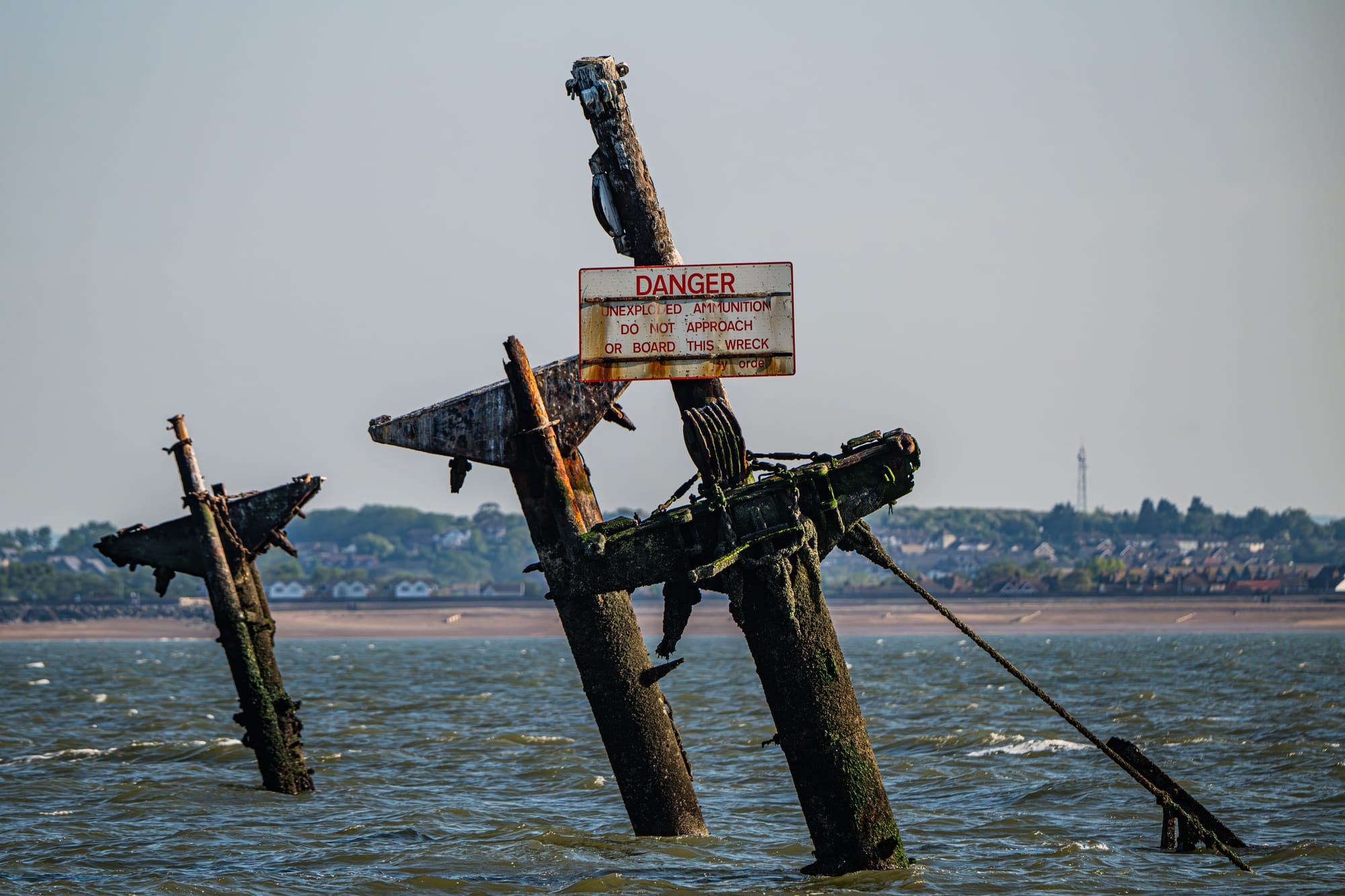
The government confirmed this week that work will begin in early September to remove the three masts, following years of surveys, planning and delays. Specialist contractors Resolve Marine will construct an underwater platform before carefully cutting the structures below sea level over several weeks. The project is backed by £9.5 million of government funding and could be completed by the end of September, assuming the weather cooperates.
The explosives are staying exactly where they are.
The mast removal is not the beginning of an attempt to clear the SS Richard Montgomery. It is the latest stage in an eight decade long effort to manage a problem that successive governments have generally concluded is safest when disturbed as little as possible.
The masts themselves have gradually become an exception. As the wreck has deteriorated, experts have become increasingly concerned about the possibility of the structures collapsing onto the ship below. In 2018, an expert advisory group recommended removing them to reduce the weight and stress on the wreck.
A project was launched, but detailed investigations found that the site was more complicated than expected, with legacy munitions from both world wars lying beneath the surrounding seabed. The work was paused in 2023 while the government reconsidered how to manage that risk.
Now, after further surveys, reviews and modelling, ministers say the operation can be carried out safely.
It will be a rare intervention in a place where the usual policy has been to intervene as little as possible.
The SS Richard Montgomery arrived in the Thames Estuary in August 1944, when the outcome of the Second World War was beginning to turn but was far from settled. The American Liberty ship had been built in Florida the previous year, one of more than 2,700 relatively cheap, rapidly constructed cargo vessels produced to keep the Allied war effort supplied.
Its cargo on this particular journey was considerably less mundane.
The Montgomery was carrying thousands of tonnes of munitions intended for the war in Europe when it was directed to wait at the Great Nore anchorage before continuing towards Cherbourg. On 20 August, it dragged its anchor and grounded on a sandbank close to the Medway Approach Channel.
By the following day, a crack had appeared in the hull, and the forward end was beginning to flood. Salvage crews spent the following weeks unloading what they could, removing around half of the cargo before the ship deteriorated further. The operation was abandoned on 25 September.
What remained was left behind.
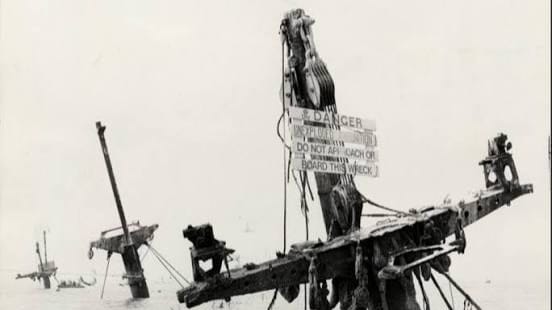
More than eight decades later, around 1,400 tonnes of explosives are still believed to be aboard the wreck. Larger numbers are sometimes given for the remaining cargo, but the 1,400 tonnes used by the government refers to the estimated net explosive quantity rather than the total weight of every bomb, casing and piece of ammunition.
Either way, it is a substantial amount of wartime ordnance to have sitting just offshore from Kent.
Over the decades, governments, engineers and assorted interested parties have repeatedly considered what might eventually be done about it. The answer has generally been not very much.
The problem is straightforward enough. Some of the munitions remaining aboard are still considered capable of exploding, while working close enough to remove them would require people and equipment to disturb the very cargo they were trying to make safe. Government assessments have repeatedly concluded that intervention could create a greater immediate danger than leaving the wreck where it is.
So the Montgomery has instead spent decades under unusually close surveillance. An exclusion zone surrounds it, ships are prohibited from entering, and the site is monitored around the clock and subjected to regular surveys.
The wreck is considered stable, but it is not static.
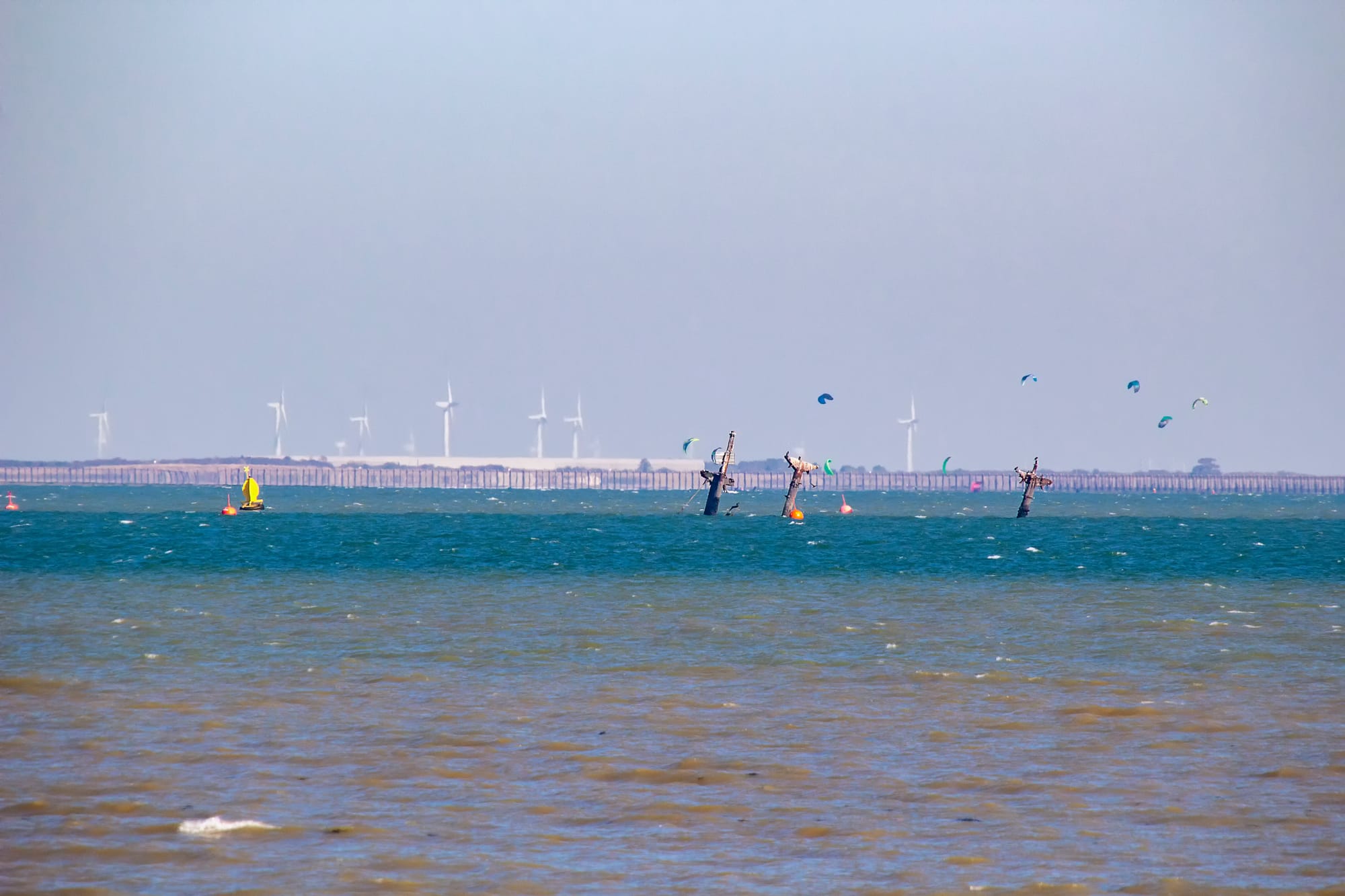
The Montgomery is a steel ship that has spent 82 years in salt water. Its hull has corroded, parts of its structure have failed, the seabed around it changes, and the condition of the wreck continues to evolve. For decades, the government has effectively been balancing two risks, the danger of interfering with the Montgomery against the danger of eventually having interfered with it too little.
Official studies have considered everything from continued monitoring to containment, complete entombment and outright removal. One possibility involved building a protective barrier around the wreck, potentially using dredged material. A more elaborate version would have enclosed it within a rigid structure.
Neither was particularly attractive. Constructing an entombment around a ship full of explosives was itself judged to pose a considerable risk of a mass detonation, and the structure would eventually become another ageing piece of infrastructure requiring its own solution.
At the more ambitious end of the scale was the only option that would actually make the Montgomery problem go away: Remove the remaining munitions and clear the wreck.
This has the slight disadvantage of requiring someone to remove the remaining munitions and clear the wreck.
Any such operation would involve working directly around a deteriorating ship containing a large quantity of ageing explosives. Depending on the method chosen, it could take years and require extensive safety measures for the surrounding area.
The Montgomery even became a problem for an airport that did not exist.
When proposals for a major Thames Estuary airport, or 'Boris Island' as it came to be known, were being seriously considered in the early 2010s, the wreck became one of the many difficulties confronting the scheme. The airport was not expected necessarily to make the Montgomery more likely to explode. It would, however, have placed thousands of people and billions of pounds of infrastructure much closer to it, making the consequences of the same low-probability event considerably greater.
Studies suggested that the wreck might therefore have needed to be addressed before construction could begin.
The airport was eventually rejected for several reasons. The Montgomery remained exactly where it was.
There’s more to this story.
Sign up for free to the Kent Current to continue reading.