“Life is meaningless and short, but it's life”
Our interview with Rob Earl, Chartered Environmentalist and co-founder of the Medway Poets

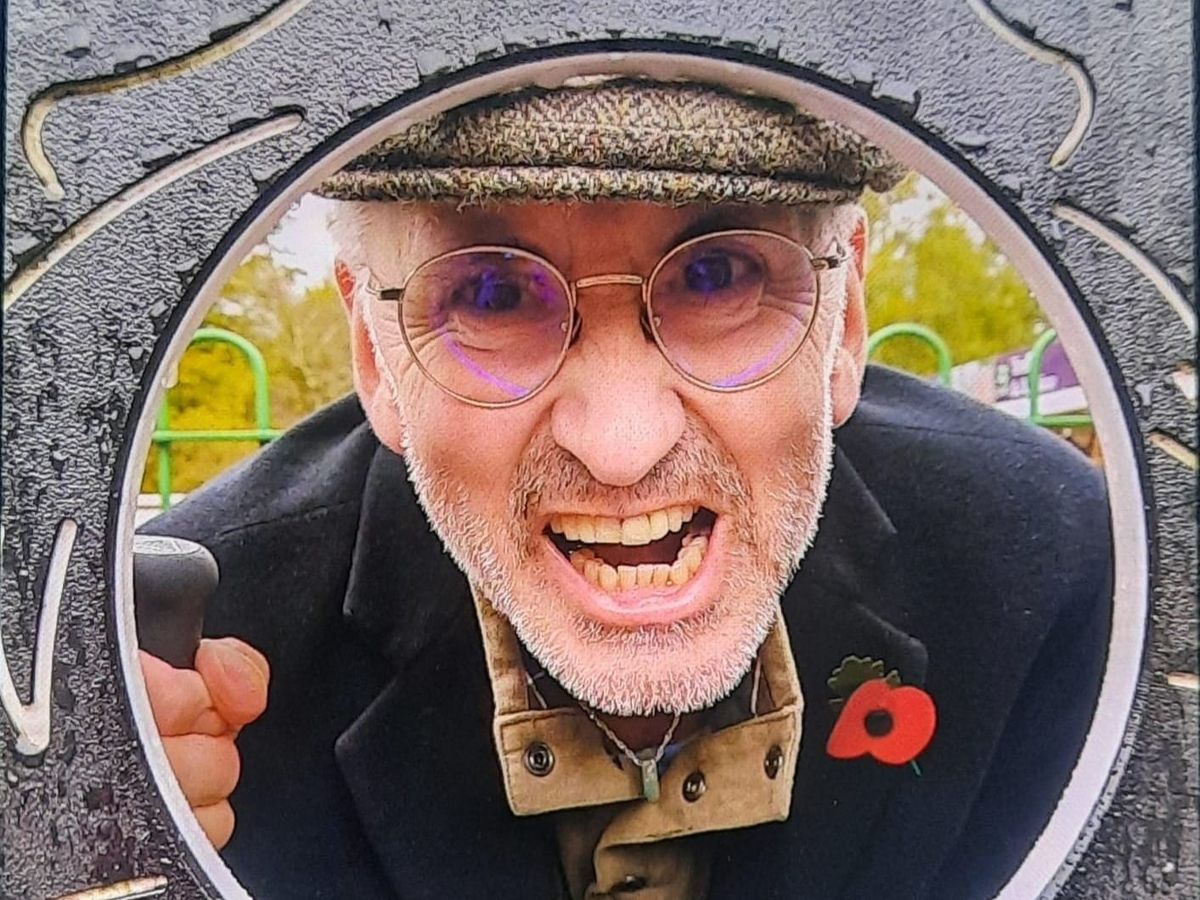
Rob Earl is a Chartered Environmentalist and a co-founder of the Medway Poets. Poet. He'll be giving a poetry reading at this year's Rainham Poetry Festival, promoting a new anthology he's involved with. Steven met him to talk about his upcoming reading, the quality of soil across Kent, and the time he helped the police with a raid...
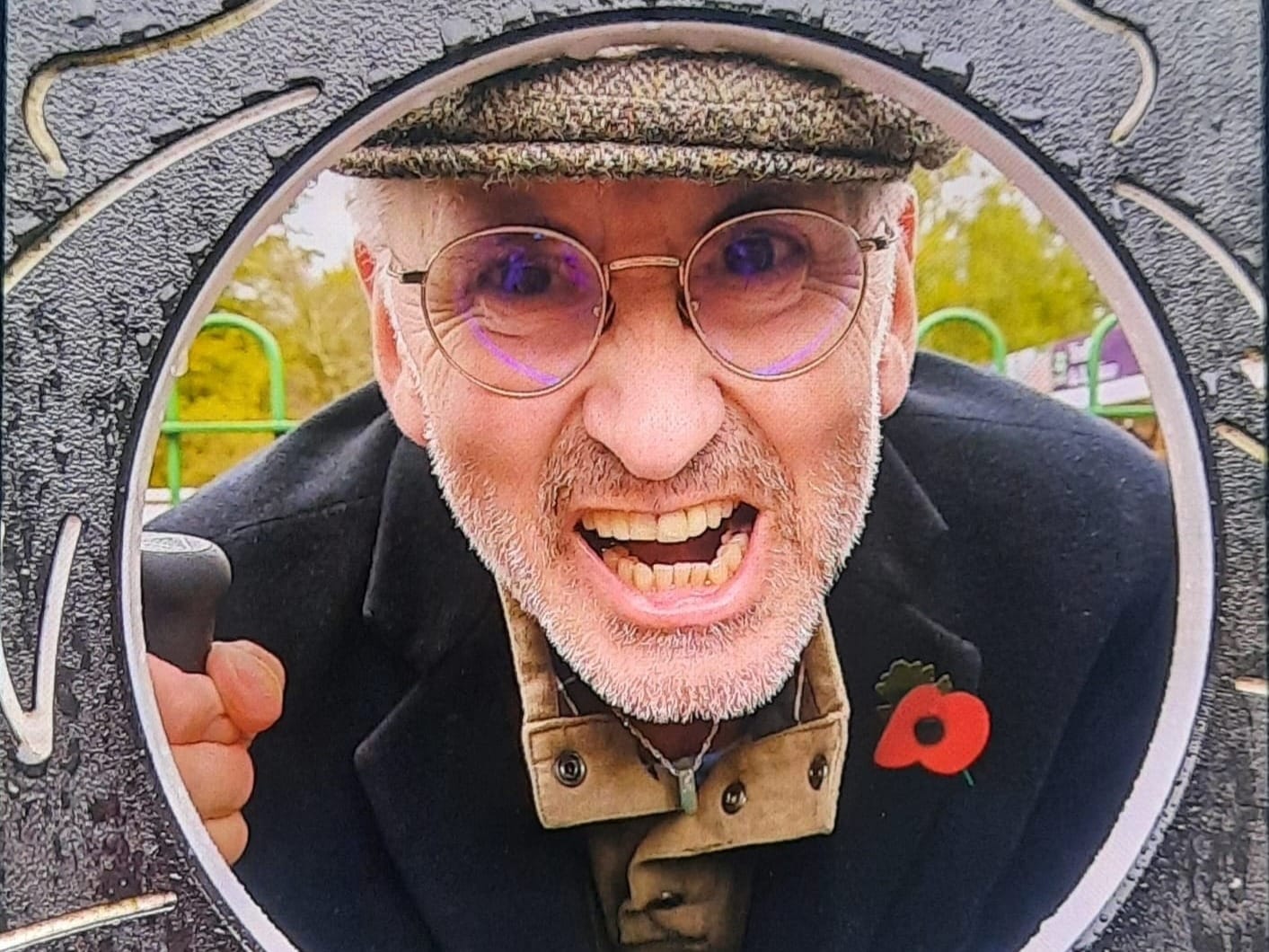
What is your official occupation?
I am retired, but I'm a Chartered Environmentalist. I was one of the first tranche to come through about 20 years ago. I still keep a hand in that, but I am officially retired. Nobody pays me for anything.
What did that role entail?
This could get frightfully boring. It was environmental management, looking after environmental legislation for a large water utility.
Do you have any other roles?
I'm a trustee of a local charity that has about £250,000 to give away each year to churches, archaeology, Maidstone arts, and things like that.
I write local history papers, about archaeology and what have you. Wherever the mood takes me. I had a piece published by the Society for the Environment last year on soils.
It is the Rainham Poetry Festival on the 5th and 6th of June. What is your involvement?
It's Bill [Lewis] who's got me involved. He looks after my interests, because I like my anonymity, really. It seems to be an international thing. We have this book 'Beyond the Acorn Door.' Have you seen it? It is quite impressive. Bill's very careful about poetry. He has a lot of quality control over it. What he's produced there, with Anne [Bill's wife], is an amazing document. Forty-odd poets, and it is international. He's pulled in quite a lot of favours for this. I believe there are quite a lot of other people who have been dragged in. I'm very impressed and privileged as well to be part of it.
I haven't read in Medway for some years, probably two or three years that I've read at all. I'm waiting to see what happens. We don't normally do that sort of thing in a church though.
I haven't been shy about giving offence in the past
Do you feel there might be a challenge with your poetry in a church?
I just have to tone it down, actually. I think what I read at the library a couple of years ago wouldn't be suitable. I haven't been shy about giving offence in the past, but I've also occupied positions within the church that would perhaps compromise my interests were I to be too strong.
How did you first meet Bill?
We grew up in the same village, in fact. We met probably at the age of five. My mother worked on the local farms, and his mum and dad were involved in the local farms. He went to the same school. He was a year or so older than me. But we shared a very active imagination. We were almost like soul brothers.
This led to the formation of what became known as the Medway Poets?
We had been writing and doing all sorts of things. Even in primary school, we used to knock out comics. It wasn’t very good artistically. I can't draw, but I learned to write, and you get praise from certain teachers.
I went away to university but dropped out and came back really to champion a little group called OutCrowd, which was meant to reflect the outside nature that we had because I think people looked down on us and saw us, and myself, as rats rather than people. We had fairly lowly backgrounds, and I’m sure sometimes people wanted to call the police on us.
Anyway, that's another story.
I came back from university and started this little poetry magazine that grew into performance, rather than this intellectual stuff. Bill illustrated that, Bill had poems in it. Then we had these meetings in Maidstone, a pub right next door to a hostel for alcoholics. Wonderful place. All sorts of people met there, and the landlord was very sweet. He let us have a room on a Sunday evening for 50p, and we could do what we liked, provided we didn't touch the organ.
There's another story about that.
Anyway, that went on for a little while and after some embarrassing and difficult readings, when people just mumbled into their chests, really. We decided that we'd take it forward as a performance group. By that time, I think Billy [Childish] had joined us, because Bill had met him at art college, Charles [Thomson] had, he was living in Maidstone, and then Sexton [Ming] joined us, and the five of us got going really as a performing group after that.
I was always going to be someone who had a foot in too many camps, and I didn't really see myself as being a professional poet or anything of that nature. But I still wrote. They took it off in their own direction, and I always joined in when I could.
Was there a particular moment when you decided to stop performing with them?
It kind of petered out, I suppose. But there are pressures around families, pressures around jobs.
Probably until the early years of this century.
Then it took off again with Urban Fox, David Wise's work in the Medway Towns, which was exciting. It really was, and some of the gigs were just great. About 2005, I stopped completely, and that was it.
Since then, I've been back a couple of times, but it's not been the frequency that I had in the early years of this century.
How would you describe your poetry?
Well, not very good really, is it?
It's schizophrenic poetry, because on the one hand, there's stuff that I write for the stage, for the performance, which has to be a little bit hard-hitting, because people will not see the nuance of a more structured poem. I've written stuff which is a bit too intellectual, because you probably think I've got my head up my backside. But with the performance stuff, I just loved satire.
I've been thinking about this, satire written on razor blades. You don't realise how it's cut you until you walk away and realise you're bleeding. I was basically taking the rise out of a lot of attitudes of people and it's difficult to satire. There are things you can't satirise anymore because they're beyond satire. Society has changed to the extent that humour has actually changed. It's quite hard, because people take you so seriously and think that you are what you say. You're acting something out.
I would say that perhaps some of that stuff is of its time.
Then we have the non-poetry side. How did you make the leap into soil?
An email from somebody looking for a volunteer. I didn't realise what I was getting myself into. Leap into the soil. Good one.