“If you don't have hope, you're essentially complicit in the thing you hate”
What we asked Dorian Lynskey, writer and podcaster
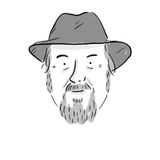
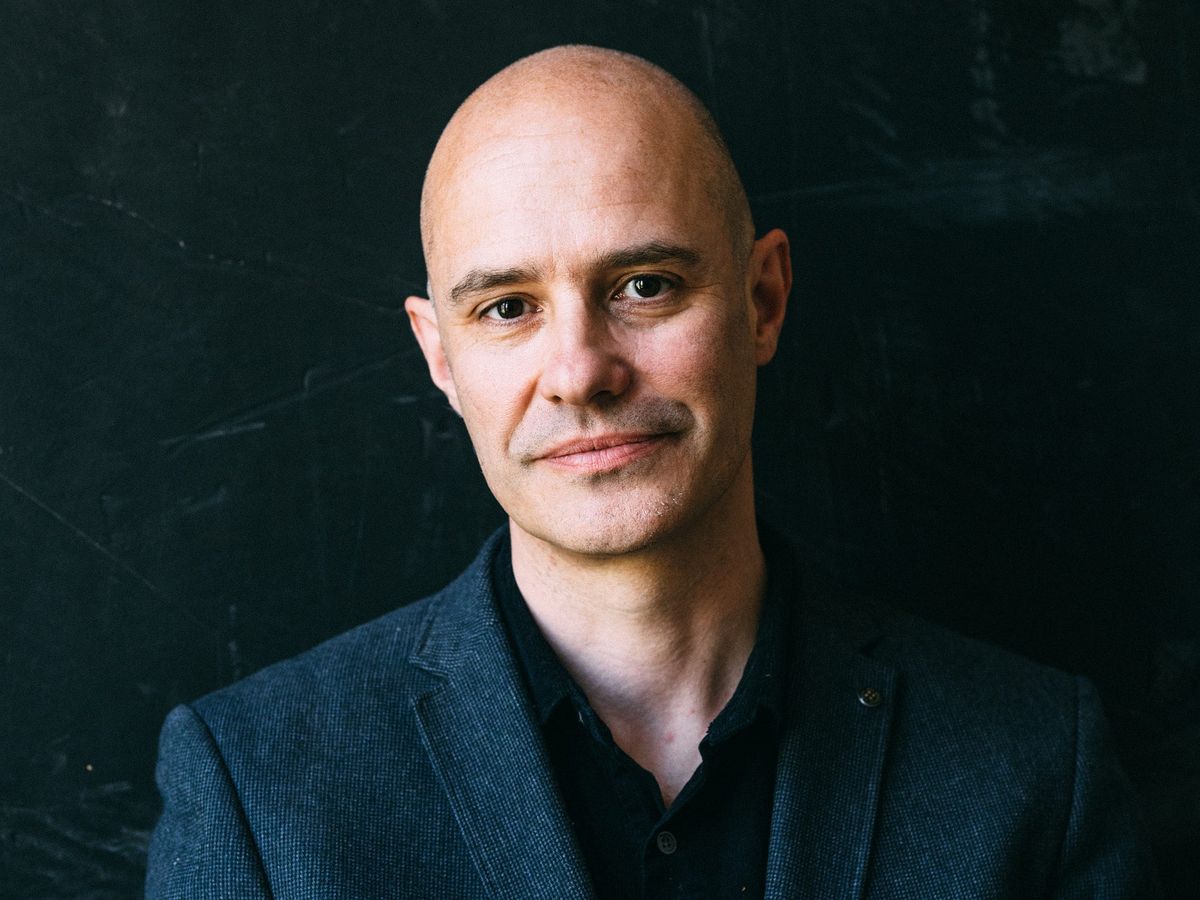
Dorian Lynskey is a music journalist who became a podcaster during the Brexit years and has written on dystopias. Steven met him at the British Library, where Dorian can be found researching Origin Story, the successful podcast he co-hosts. They talked about podcasting, if Remain could have won the referendum, where hope can be found, and lots more.
What is your official occupation?
I think that I am a journalist, author and podcaster now.
How did you come to be a podcaster? What was the first step?
That was Spring 2017. A friend called Andrew Harrison, who I'd worked for on various music magazines, was moving into podcasting. They already had a culture podcast. He approached me here, in fact, in this very area (a café outside the British Library) to say that he wanted to do a podcast, an anti-Brexit podcast, and would I consider hosting it? That was called Remainiacs. I hadn't done any podcasting, but like a lot of people, I was very agitated about Brexit. I thought it was a really interesting idea that there was no outlet for people who were explicitly anti-Brexit and wanted to cover the story from that angle, not from a neutral political angle that you would get from places like The Guardian and The New Statesman in their podcast coverage. Even though they were obviously remain publications, they still had that sort of BBC approach. Not neutrality, but of trying to get some balance.
What we realised we could do, which you couldn't get anywhere else, was just be really passionate and robust about it. We realised it was even just being able to swear, being able to give pro-Brexit politicians stupid nicknames, being able to have running jokes. It felt like people needed that emotionally. They just didn't want to hear ‘now we've got a pro-leave politician to provide balance.’ We launched the week that Theresa May called the 2017 election just by chance. We found that we could get all kinds of guests, could get people who were remain activists, MPs. But we could also get public figures who sympathised like Al Murray or Mark Gatiss. It was a really nice period, and so I felt that I was able to use my political knowledge, but also this experience of interviewing, because that's what I'd mostly done for the preceding 20 years. I was doing album reviews and essays and things like that, but I'd mainly been interviewing musicians, actors and authors, so I knew how to do that. But then there was this whole other skill set, which I was developing on the fly, which was how to organise a panel, how to fold guests into the vibe of the regular panellists, how to then do that on stage at live shows.
It was really enjoyable. Particularly since, I think like a lot of journalists, it's very painful when you're listening back to an interview. You might hear yourself doing a stupid laugh or a question that's way too long. I hated hearing my own voice, and with podcasting, you have got to get over that. I felt much more confident talking and doing this live. It was not live, obviously, but it's not edited much. This whole thing that I had, listening to me interviewing, was quite uncomfortable. I was doing all this sleight of hand on the page and obviously eliminating my bad questions and making the interview like smoke and mirrors, making it seem very different on the page and then on podcasts, you can't do that, and you just have to get better. But you also get a bit more relaxed about how it sounds, and maybe one of your questions is going to be long-winded or maybe you're not going to get the answer that you wanted. Then you have to deal with it because you can't cover it up on the page later. You've got to make it work. The interview is the experience. There is nothing to write up. That was actually really nice and funny. Sometimes I find if I'm doing a lot of podcasting, I actually have to make sure that I'm also doing some writing and specifically some interviews, because otherwise I forget how to do that, because I'm so used to doing the talking version of my opinions or questions.
Wouldn't it be great if we just explained the origins of neoliberalism? What does it mean?
What led to the creation of your Origin Story podcast?
Well, when we started Remainiacs, we had somebody, Peter Collins, who Andrew knew, a former Economist journalist. Then we needed somebody else. He was quite dry, we needed somebody else who combined knowledge, but with a kind of looser, more informal style. We really liked Ian Dunt's writing on politics.co.uk and his social media presence. I'm sure that I must have had some interactions with him on Twitter. Andrew suggested him, and I said, he's the person I suggest. We met up with him, just to see what he thought, if it was something he wanted to do. Because early on, for quite a few months, it was unpaid. See if we got on, which we did. Peter left, other people came in, but me and Ian were always the core of the podcast.
In ‘22, Ian suggested that we do a podcast together. We talked about what that might be. We wanted something that was broad, but not so broad that it didn't make any sense. At first, he was like, ‘We could just talk about anything we're interested in.’ I was like, ‘I think we need a concept.’ The concept originally became the history of certain ideas, because we got so annoyed with the way that, particularly in online discourse, certain words would be used, ‘left,’ ‘right,’ and ‘centre’ in an either deliberately misleading way or just ignorant. Wouldn't it be great if we just explained the origins of neoliberalism? What does it mean? As we've gone on, we've made it a bit more narrative. Not so many of these very broad concepts with a story. We did one on satire. We started with the ancient Greeks, and we're going up to The Onion or whatever. We do try and still do the history of certain ideas for sure, but we found ourselves leaning towards more people to more events. Do Winston Churchill, do Margaret Thatcher, we do Martin Luther King, we do events like the Partition of India, because the storytelling is very exciting and so we're always trying to explain things in a way that are relevant to politics now.
My take was that it's a history podcast, with a current affairs slant, and Ian's interpretation of it is that it's a current affairs podcast, using history. What are people talking about? What are people arguing about if it's something that seems relevant now? People were throwing the word eugenics around. What actually is eugenics? We wanted it to be useful, and sometimes we cover contemporary ones, like Russell Brand. Not because we're fascinated by Russell Brand per se, but it was both a story of radicalisation and how you can go from the left via conspiracy theories to the right. But it was also a story, I think, about how popular culture changed and how tolerated his misogyny was in the 2000s. What happens is that these topics that we take on, some of them we know how they're going to work straight away. Other times we don't. It might be one of Ian's suggestions that I didn't quite understand, or vice versa. But we just know from experience now that it will be interesting.
Is there a clear division of labour?
The bonus episodes, it's very clear, because it's almost a solo podcast with a listener. The other person will know stuff, they'll ask interesting questions, they'll make interesting observations, but the bulk of the research and the storytelling is one of us. In the regular episodes, we tend to split up angles or periods. With Thatcher, I was very much doing from birth up to the Falklands War, and Ian was leading on the later bit. But then both of us would make sure that we knew a fair amount about what the other person was doing so that we didn't just sit back.
How did that lead to the Origin Story books?
That was Ian's publisher, his regular publisher. We had interest from a few publishers after the first season, and Ian's publisher had the idea of a series. We'd start with three. There may be more, but we started with fascism, conspiracy theory, and centrism. That was a whole other experiment, because neither of us had written books in partnership before. That was quite a fun experience, because we thought we would argue a lot. We thought that was the thing, because we've got quite different styles. But actually, you just work them out, even things like paragraph length. I write quite long paragraphs, Ian likes really short ones. We just end up writing medium-sized ones. With the audiobook, we had to read alternating chapters, and because of the way that we've done it, each chapter one person would lead, then the other person would add bits, and then we'd edit, and then we'd hybridise it. There were definitely chapters where I had done the bulk of the writing, but he was the one reading them, and vice versa. It did become quite hard. There are definitely lines in there, individual lines, they're very clearly mine, or they're very clearly his.
But overall, I felt that we just got a really nice blend of voices. It was interesting because I've never been an editor, really. But I was editing his text, and he was editing my text, and then we go back and forth, ‘actually I really don't want you to cut that bit’ or ‘I think that that edit loses a really important nuance’ or ‘I really love that quote, I want to keep it in.’ There's just a lot of mutually respectful compromise involved, which was great, because the podcasting teaches you already to be more collaborative. It's a different thing to being a journalist. If you're an author, if you're writing a book, a copy editor can do this and that. But you don't have to go with their suggestions. Ultimately, if the author insists on something, the author gets their way. With journalism, the editor has more power. They can genuinely go, ‘I don't like this intro.’ You can push back. You can't win if they really don't like it. They're paying you. In both of those cases, there's an imbalance. Whereas with the origin of the podcast and the books, me and Ian are entirely equal. If one person doing the work is more knowledgeable about one area, etc. Overall, you have to be equal, and you have to agree, and you have to learn to be a bit more flexible, which I think is a good life skill, particularly at this age.
Is there a possibility of further books?
Yeah, it would be good to write more. It was very stressful. Nothing's confirmed. It also depends on individual books that me and Ian might want to write, or whether there's another way of doing a book tied to an origin story. But funnily enough, I just read a Substack post by a non-fiction author, who said how hard it was to sell non-fiction books, how hard it is to market. You can do all this social media activity, you can do all these book events, and it might not make a huge difference. Actually, a lot of non-fiction authors that she knew were instead channelling that research into podcasts, where you can build up this loyal following. The money is better. If you can get to a certain level of support on Patreon, then the money is better. Right now, I'm working on a bonus episode and, as usual, over-researching. Getting a book and I probably don't need this book, and then you discover there's a whole other area, I have no idea about, and then it makes it so much richer and it’s a really strong bonus episode and there is enough research for me to start writing, probably a short book, or certainly a chapter in a book, but I'm thinking maybe, the podcast is the better way to do this. It's just a format. You're going to reach more people. We have maybe 50,000 listeners. It's hard to sell 50,000 books. In terms of audience and instant reward, maybe podcasting is better.
As you mentioned, you have written your own books. One of them is The Ministry of Truth. How aware of George Orwell were you before you started that project?
Well, with anything that I write about or anything I do for the podcast, as soon as you commit yourself to digging into something, you know how much you don't know. Obviously, I've read Orwell's Nineteen Eighty-Four and Animal Farm. I had read all of his essays. You come across him quoted all the time. I knew the basic outline of his life.
The idea came about because I was really interested in dystopian fiction, how much dystopian fiction there was. I love tracing influence. I love doing it in music, literally finding out when was the first record to use a wah-wah pedal. What effect did that have? Where did this genre start? How did soul suddenly become political?
I got interested in doing that with fiction and was going to maybe do a history of dystopian fiction. And then immediately I realised that most of it comes from Nineteen Eighty-Four and that Orwell had read pretty much all the important dystopian fiction up to that point. If you were doing a history of dystopian fiction, you'd have Orwell in the middle, you'd have some books flowing into it, and then a whole load of books flowing out of it. Then I thought, I could do a biography of Nineteen Eighty-Four, which was therefore partly a biography of Orwell, but because it's the story of the book, you get to follow its influence and its life after he dies. I don't know that there's many books that you can do that with, where the influence is so broad and so massive and then it cuts across all these different fields, not just in fiction. It's in politics and it's in journalism, it's even in psychology. That just really appealed to me.
What I find with my books is I'm always trying to cover a lot of things. I'm always interested in a lot of things. I've never done a book that is just about one subject, really. It's always trying to accommodate all these different things that are interesting. The book is the first book about Orwell that has a significant bit about David Bowie and his attempts to do a rock musical version of Nineteen Eighty-Four, because the Orwell experts aren't that interested, but I was really interested in that, and I'm interested in how it influenced different movies. I've realised that the way I approach things is bringing in a lot of the high, low and middle brow and spotting all these connections and influences.
Looking back, could remain have won the referendum? Or was it always destined to fail?
One of the things that we did on Origin Story, one of the themes is that everything is contingent and nothing is inevitable. There might be trends that push in another direction, but nothing is inevitable. You go back over many elections, and there is some you think, okay, the 1997 election probably was inevitable, Labour would win. But a lot of the time it's not. It changes. It's really quite close, different things happen. So sure, if you could go back to the beginning, change how you were running that campaign, be more alert to the kind of forces that were driving a leave vote. Think about the weakness of a pure status quo establishment campaign. I think there are ways, because it was so close. I think undoubtedly there would have been a huge leave vote. When you're looking at numbers like that, I think any number of different decisions might have led to a different outcome, but probably still a narrow outcome, 52-48 in the other direction.
Have you ever been a member of a political party?
I've been a member, not currently, but I've been a member for various periods.
When did you first join?
I didn't join until 2010, because I didn't really think of myself as that, I didn't really feel like I had to join. I was furiously left-wing in sixth form, in university. But again, didn't really join groups. I remember the campaign against the arms trade, and we'd go on protests, anti-Nazi protests, the Anti-Nazi League and the Criminal Justice Bill, those kinds of protests, because that was quite big around southeast London. I knew a lot of squatters and things like that. I was very much grounded in that kind of politics. But then I went to music journalism, and it was the late 90s, and it was a less political time, and it took up less space in my head, and probably my politics became a bit more moderately, not quite centre-left, soft left in late party terms.
I remember after 9/11, I was at the Mercury Awards, and I was interviewing Super Furry Animals, and it was delayed by 9/11, and everyone was just watching the news. After a while, I had to go and interview Super Furry Animals, and it was so uncomfortable. It was such an awkward interview. Nobody really wanted to be talking about music, neither me nor the band. I did feel like, ‘Oh I need to write about some other things.’ I did start doing more stories about music and politics, and then wrote a book, 33 Revolutions Per Minute, which is a history of protest songs, because I felt like ‘I've got to write about more than just music.’ That was a long path that then leads to Remainiacs and The Ministry of Truth.
Would you ever consider putting your name on a ballot?
To go into an election? No, because I'm not diplomatic enough, I'm not canny enough. My opinions are quite unguarded. I think I'd be impatient. I don't have any of those skills. I do think that even the worst MP does have to have a certain set of skills. I've got the humility to realise that I don't have that. The campaigning bit. I made a joke with my wife that I wouldn't mind doing the work of politics, but she would have to do the campaign, because she's got much better social skills. She knows what not to say. I'm better in that role of journalist or a podcaster where I can just say what I think, and I don't have to worry about the consequences, and I don't have to hedge my bets and dial things back. I'm just not very good at compromise in that sense.
Who has been the best Prime Minister of your lifetime? I apologise if this ends up being our final question.
Maybe it shouldn't be the last one. Well, there's just not many to choose from, is there? I would suppose I would say pre-Iraq Tony Blair.
Very common answer.
But I mean, what are the options? If I was a bit older? Maybe Harold Wilson, but late Harold Wilson wasn't very good at all.
If you don't have hope, you're essentially complicit in the thing you hate.
Having covered Brexit, modern politics, and Orwellian dystopia, do you agree that it's the hope that kills you?
No, because the hope is the thing. Despair kills you. And despair is, as Rebecca Solnit says, despair is like a form of collaboration. If you don't have hope, you're essentially complicit in the thing you hate. But of course, it's very hard, because there are times when you're just at moments being very disappointed with the government, not really expecting anything from the new left-wing party, horrified by what's happening in America, horrified by the inability for anything to change what's happening in Gaza, in Ukraine, horrified by the rise of transphobia in a very short space of time. These things are just... So much that happens is very distressing and depressing.
What is the new version of hope?
Hope was quite simple, I think, in the late 90s, mid-late 90s. Because you could put some faith in the government, the Labour Party. Now, I think it's very difficult. But the alternative is worse. My last book, Everything Must Go, is about narratives at the end of the world. I didn't find that depressing to write, it's not depressing to read. I found it was really interesting, history, seeing patterns, learning more about the past, and realising that so many things we're worried about now, people have been worried about in the past. Few thoughts are truly original. You're constantly learning all these echoes and realising how we got out of very difficult periods, having this affinity. There's almost affinity with people in the past. Or, a really obvious example, wrestling with similar problems to what we're wrestling with now, but much worse. Not just right-wing populism, but a Nazi regime.
What do you do? How can you be a moral person? How can you see things clearly? How can you act on your principles without being dogmatic? How do you interpret the world? How do you remain flexible in your understanding of what is going on? How do you not become grumpy and cantankerous and despairing? That’s where history and art, I think are constantly showing me ways to resolve these problems in the present.
Let's do some background stuff. Where were you born?
I was born in Norwich. And then we lived in the Wirral for a bit.
There's always a feeling that when you're leaving London, you're going home. You really are going somewhere else, going somewhere much quieter, more homogenous.
How did you end up in Kent?
I think when I was six, I moved to Sidcup, because my dad got a job at a school in southeast London. Some of our other relatives had moved to that general area. Bexley and Bromley and so on. That was where we settled. I came with a kind of Liverpool accent, which didn't last very long, as you can imagine. I was 11 I think, moved to Bexley, which is where my mum still lives, that same house. Moving around quite a lot as a kid and then really settling, and I just found that there was a very strange identity issue because your postal address, it’s Sidcup, or Bexley, Kent, and then it has a Dartford postcode. Because there's no tube, I very much felt like I was in Kent coming into London.
It was only later, when I went to university, I was talking to people who said they were from London, and they were from zone 6. But because they were on the tube, were from North London. I was like zone 5, but I realised that a lot of it was the postal code. It was psychological that it didn't feel like London, even though I was going to school there. Maybe it's something that was cultural. It just didn't feel like London, but of course it feels very different to Canterbury, Maidstone or Rochester. It's relatively urban, there was always that feeling that you see so often in the history of pop music, Robert Smith, Paul Weller, Bowie, they're from these between spaces. They're close enough to London to visit, go record shopping, to go and see gigs, and yet there's always a feeling that when you're leaving London, you're going home. You really are going somewhere else, going somewhere much quieter, more homogenous. I had that classic, frustrated, suburban-eyed thing. Where you're just close enough, you're outside, you've got your nose pressed against the shop window, but you're not inside the shop. I think there is just a real suburban mindset where if you don't feel at home there.
Did you enjoy school?
School was okay. I don't know. I didn't not enjoy... I think I was quite an unhappy teenager for various reasons. I think I was quite depressed, a dissatisfied teenager. I don't know how much you could blame the school, or Bexley or my family or a Dartford postcode or anything. I think I blamed those things at the time.
Did you stay on for sixth form?
Yeah, I did English, History, Politics and Economics. You can very much see a connection. It's always been there in one form or another. It's pretty consistent. I was very much an arts guy, not a scientist.
What did you study at university?
I studied English Literature at Cambridge. I was also interested in politics there, writing for the university paper and obsessed with music.
Do you play any instruments yourself?
I played bass, and I had a band. We wrote some songs, but like the bass playing, wasn't very good. It was a nice thing to do, and I do think that it teaches you an understanding that it is actually quite hard to be, it's not hard to be in a band, but it's hard to be in a good band.
When I came to music journalism, which is what happened after university, there really was a general appreciation of what it takes to get a record that sounds good, to get a song which doesn't just have one good bit, but the verse, the chorus, the middle, they're all good.
What's a dystopian film you'd recommend?
Oh, Children of Men is one of the best. For ideas, for the execution, for the style of it.
What do you do to unwind? Do you unwind?
Well, the problem with that is that most of the things that I do to unwind are in some ways work-related. Music, I find much more relaxing now. I write a bit about film, but I'm not a film journalist. Mostly I want to read, listen to music, watch films. Some of those things are tainted by work, since I'll be reading a book late at night, it gets me thinking about work, and I can't sleep. I have to strategically choose what I read. Walking and cooking. They're really good things that are not to do with work. I'm trying to detach a bit more from politics. Because politics is very stressful and depressing.
What advice would you have for a young writer before engaging on a research project that requires reading hundreds of books?
I would say I like this question, because my advice is always just do as much research as you can, because what you're trying to do is basically layering.
You read the first book, and it gives you the basic narrative, the basic facts, almost like an equivalent to a Wikipedia entry, but better. I know when what happened in this person's life. Then the next one will explore areas that you didn't know. And then it might challenge a fact in the previous one. And then you're fact-checking and ‘I thought that happened in different year,’ and you're checking, and then that happens over and over again. The more that you read, the more ideas come up and the more you'll spot mistakes. There's always mistakes in books, and you'll spot a contradiction, or you'll spot a simplification. You don't think that's quite what happened. That's what I'm always trying to do. What everyone should try and do is get to that point where what you would have written based on that first book would be completely simplistic and unsatisfying. You really want that sense that you're developing your knowledge and the sophistication of your understanding.
Also, try and build up the reading muscles so you read fast. I think it was during my first book, I became a much faster reader. I can read a non-fiction book in three hours. That's a certain kind of reading. That's not luxuriating the prose. That's looking for information. Just before I met you, I skimmed two books for podcast research, and it took about an hour. Build it up and learn to like skimming, learn to know what it is that you're looking for. Because it's a completely different tempo to pleasure reading. It's almost a different word. It's not really reading, it's looking for stuff. But it's brilliant because sometimes I would take out a book and I would maybe take nothing from it, but one amazing quote. One brilliant fact that I hadn't found anywhere else. Everything you read is going to tell you something new, you just have to read fast.
This interview has been lightly edited for length and clarity.