KCC meeting implodes as opposition walks out
A migration motion ends in chaos as Swale hardens security and Canterbury’s meningitis outbreak grows
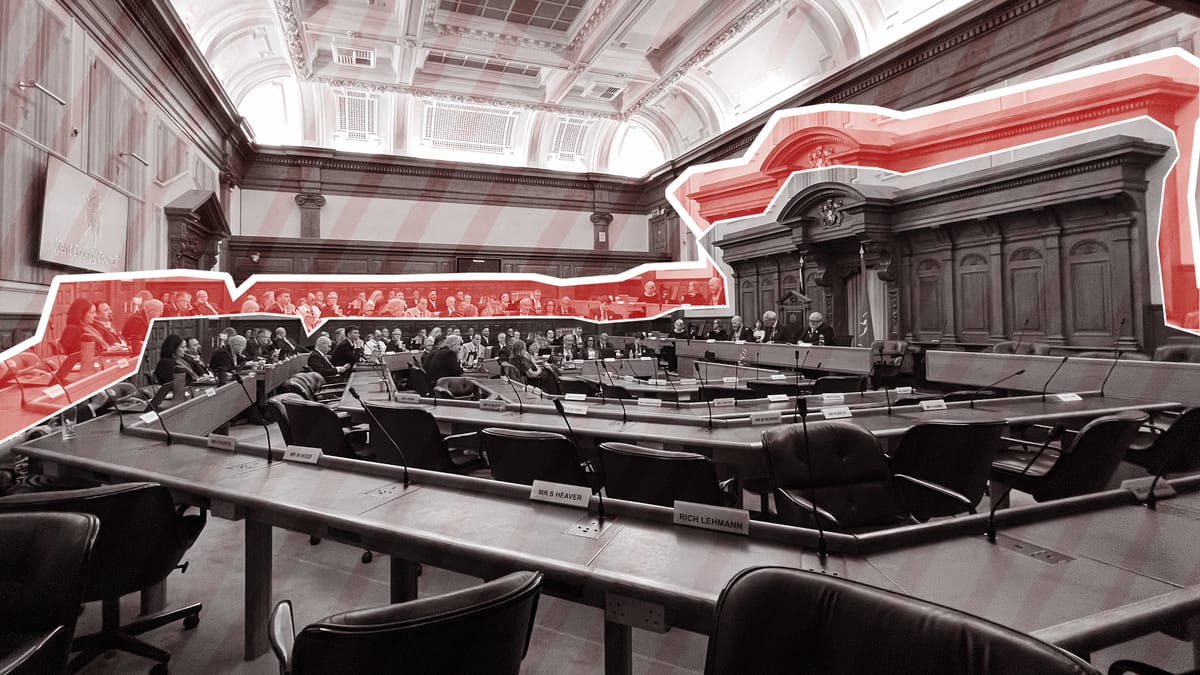
Kent County Council descended into chaos today as opposition parties walked out of the chamber over Reform’s migration motion, leaving the administration to pass it alone after a meeting marked by rows over process, politics and what councillors were even allowed to say. We also look at Swale’s tightening security response after repeated far-right disruption, and the latest on the growing meningitis outbreak around Canterbury.
KCC meeting implodes as opposition walks out and Reform votes alone
Kent County Council descended into chaos today (Thursday) after opposition parties walked out of the chamber, accusing Reform of turning full council into a political stunt and making meaningful debate impossible, before the administration went on to pass its 'illegal migration emergency' motion with nobody else left in the room.
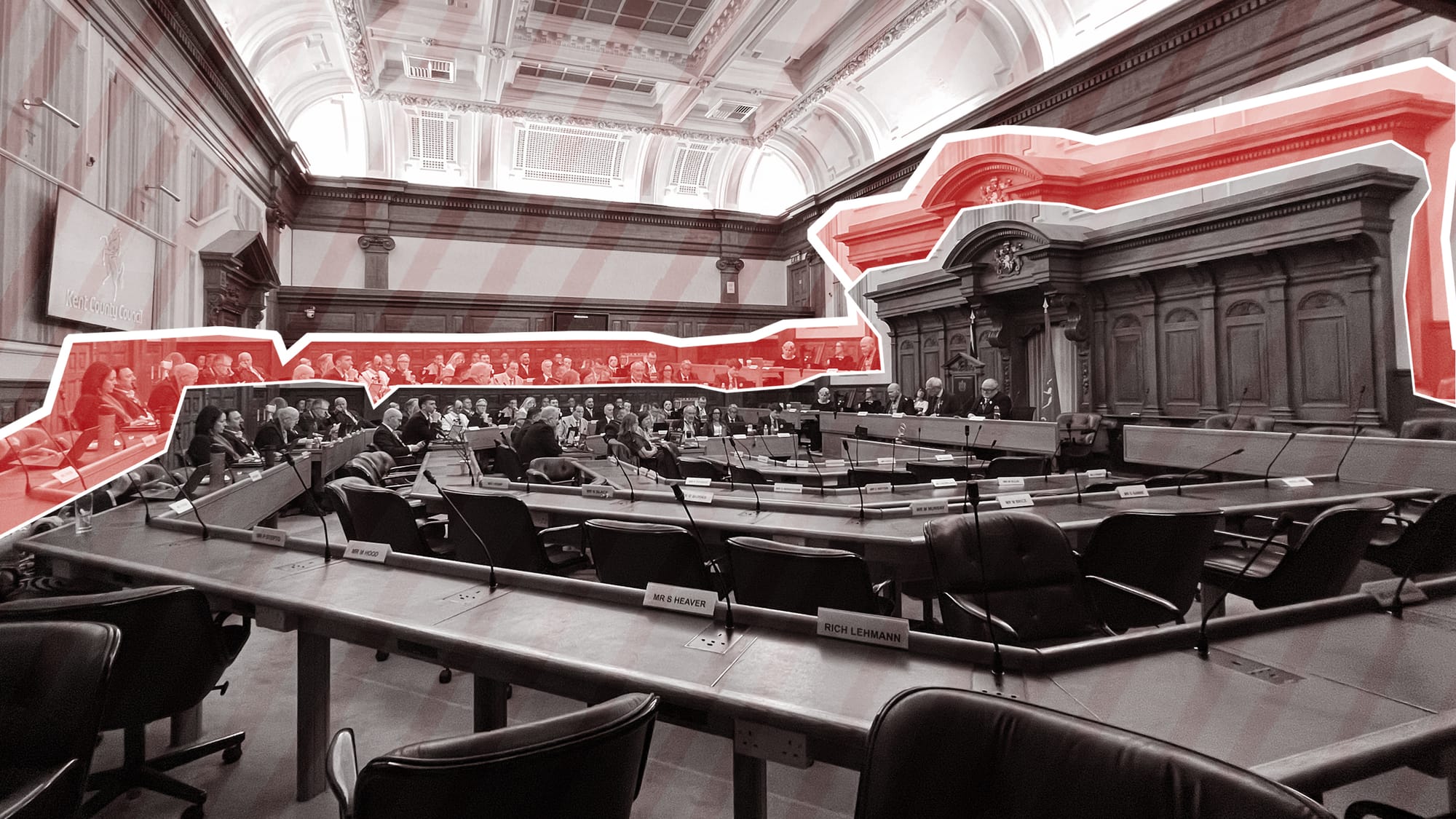
By the end of the afternoon, the whole thing had become faintly ridiculous. This was a full council meeting where political criticism was repeatedly ruled out of order during a highly political agenda, where councillors argued over what they were even allowed to say, and where Reform ended up voting through its headline motion on migration with only its own members present.
The warning signs came early.
At the start of the meeting, Conservative councillor Sarah Hudson raised a point of order, saying she had seen Reform group WhatsApp messages discussing her medical issues, including what she described as mocking comments.
Chair Richard Palmer said the chamber was not the place to deal with it, prompting visible disquiet.
In screenshots seen by the Kent Current, messages in what appears to be a Reform group chat discuss Hudson’s diabetes and whether the chair should be made aware of it. One of the messages appears to come from Diane Morton, KCC’s cabinet member for Adult Social Care and Public Health, followed by a separate 'lol' response. Hudson later said the issue arose because Palmer had allowed the meeting to continue until 2pm without breaking for lunch, forcing her to explain her medical condition.
That was before the main row had even properly started.
Hanging over the whole day was Reform’s motion declaring an 'illegal migration emergency' in Kent. There had already been a dispute about whether it should be debated at all during the pre-election period ahead of the Cliftonville by-election. The monitoring officer’s position, as relayed in the chamber, was that the motion could proceed so long as the by-election itself was not referenced. Opposition groups made clear they thought that was nowhere near good enough.
That clash between a live by-election period and an openly political agenda ended up swallowing much of the meeting.
Throughout the morning, opposition councillors were repeatedly cut off for remarks deemed too political, while Reform figures appeared to get rather more room. The chamber was left trying to operate under a strange new rulebook in which politics was apparently to be avoided at all costs during meetings on political issues.
The pattern was hard to miss during responses to leader Linden Kemkaran’s report.
Kemkaran began by saying she “hopes we can get through this meeting without a member of the Lib Dems defecating into a bag and waving it around,” before moving abruptly on to the meningitis outbreak in Canterbury and the situation in the Gulf.
Later in the same session, councillors trying to criticise Reform’s record or describe the budget as the administration’s were stopped by Palmer, who repeatedly cited the pre-election period. Restore group leader Paul Thomas was warned off during his response. Conservative group leader Harry Rayner was cut off for talking about Reform’s “lack of experience” and later again for saying the party had taken “an unacceptable risk with their budget.” Green and Lib Dem councillors complained that Kemkaran had been allowed to criticise opponents while anyone criticising the administration was being shut down.
At one point, Green group leader Mark Hood described the position as “completely ludicrous.” Later, after being banged down by Palmer for referring to the “administration’s reckless budget”, he called the whole thing “a farce.”
He was not alone.
The monitoring officer repeatedly urged caution, at one stage saying councillors needed to be “very cautious” and that criticism of other parties was to be avoided “at all costs.” But the way that caution was being applied looked increasingly subjective. Opposition parties were left trying to work out how a meeting with agenda items on allowances, pay policy, devolution, strategy and a migration motion explicitly attacking the Labour government was supposed to function if nobody was allowed to make political arguments about any of it.
There was a ten minute break after the row over the leader’s report, but that did not settle anything. If anything, it gave opposition groups time to compare notes and conclude that the meeting had become impossible to conduct on any sensible basis.
The rest of the pre-lunch business carried on, but with the same odd atmosphere hanging over it.
Reform secured a 3.8% increase in councillor allowances despite having made a great play last year of cutting them by 5% when it took office. Councillors were told the increase would still leave allowances below the 2024/25 level, though confusion remained over whether extra money would, in fact, swell the councillor grants pot as Kemkaran suggested. Officers also confirmed that, while the Member Remuneration Panel had recommended 3.6%, the administration had opted for 3.8% anyway.
Council also backed the administration’s position against submitting an expression of interest for a Foundation Strategic Authority, despite criticism from opposition members that KCC had effectively already communicated that stance to the government before full council had the chance to debate it. Technical items on committee proportionality and the annual pay policy statement were pushed through more quickly.
But by then, the real question was no longer what sat on the agenda. It was what would happen when the meeting returned to Reform’s migration motion after lunch.
That question was answered almost immediately.
As the meeting resumed, Lib Dem opposition leader Antony Hook moved to object, arguing that the motion was discriminatory and inappropriate during an election period. Palmer tried to stop him.
At that point, Lib Dems, Greens, Conservatives, Restore and UKIP councillors got up and walked out together.
Watch: Opposition councillors walk out of the chamber.
For a few minutes, Labour remained in the chamber with Reform. Then Labour group leader Alister Brady delivered his own intervention, saying his group believed the motion broke pre-election rules, that independent legal advice had been withheld despite repeated requests to see it, and that Labour had lost trust and confidence in the process. He said the matter would be reported to the Electoral Commission. Labour then left too.
That left Reform alone in the chamber.
The meeting moved on to the motion itself, with Palmer still reiterating that councillors could not stray into party political campaigning despite the fact that only Reform members remained present. Reform councillors David Wimble and Jeremy Eustace moved the motion. There was no debate because there was no opposition left to take part in it, and even Reform councillors didn't seem very interested in speaking on the issue.
The 45 Reform councillors remaining in the chamber resulted in a vote of 45 in favour, none against and no abstentions.
So Kent County Council ended the day having formally passed a declaration of an 'illegal migration emergency' in Kent after a meeting in which criticism of Reform had repeatedly been shut down, the text of any supposed amended version of the motion had not been shared in the chamber before the vote, and every other political group had either walked out in protest or, in Labour’s case, left after formally denouncing the process.
The motion itself was as political as its critics suggested. It described Kent as the “frontier” for small boat arrivals, claimed residents were bearing the consequences in terms of cost, culture, community cohesion and crime, and called on the leader to demand that the Labour government stop the arrivals “immediately” and fully fund the costs facing KCC and its partners.
That gets to the heart of what went wrong. This was not some dry bit of council business that accidentally brushed against election sensitivity. It was an overtly political motion on a national issue, debated during a by-election period under restrictions that opposition councillors said made meaningful opposition impossible.
Afterwards, opposition groups were not exactly subtle about what they thought had happened.
Hook said councillors had “refused to give legitimacy to a political stunt from the Reform Party,” arguing that Channel crossings were not a KCC responsibility and that the outcome had been pre-ordained. The Kent Lib Dems said Reform had chosen to focus on a national culture-war issue rather than worsening local services such as adult care, SEND support and highways.
The Greens said they had “no choice but to walk out” rather than legitimise what they called a “toxic and illegal” debate. Labour said Reform’s leadership had chosen political manoeuvring over public safety at a time when Canterbury was dealing with a meningitis outbreak. Conservative Sarah Hudson described the episode as Reform “gagging” democracy, while fellow Conservative Andrew Kennedy said the opposition had agreed over lunch that the rules set by the chair made it impossible to do its job. UKIP councillor Amelia Randall said she joined the walkout because councillors had been told to be careful not to influence the Cliftonville by-election, only for Reform to bring forward a motion on one of its core campaign issues anyway.
Reform’s own public tone was rather different.
Kemkaran posted a group photo afterwards and wrote: “Standing up and speaking up for the people of Kent. Always.”
Reform's local social media channels were blunter still, with Reform Canterbury hailing the result on Facebook as proof that “Illegal Migration is a National Emergency and Kent County Council have just recognised the fact.”
That is one way of presenting it.
Another is that Kent County Council took an already politically charged meeting, ran it under a set of rules nobody in the room seemed able to apply consistently, and ended up with a vote on migration taken in a half empty chamber after everyone else had given up on the process.
For a meeting meant to show the council at work, it mostly showed a chamber that had stopped functioning properly.
After two ugly meetings, Swale tightens security
Swale Borough Council is setting out how security at its Swale House headquarters has been tightened after two consecutive meetings were disrupted by far-right activists, forcing the authority to move well beyond the usual quiet world of local government concerns about passes, locks and who is meant to be where.
A report going before the council’s Economy and Property Committee next week shows how the response to the chaos of recent months is becoming more formal and more permanent. New measures for public meetings now include body-worn cameras for staff and security, extra CCTV covering the public gallery, improved radios, designated safe spaces inside the building, a reception overflow area with ticketing to stop the gallery exceeding seated capacity, age restrictions for unaccompanied young people, and a Kent Police-backed risk rating system to determine what extra security is needed for particular meetings.
That is a long way from where this started. Officers were originally asked for a report after councillors raised concerns last autumn that safety and security issues at Swale House could affect lettings. But the paper was then delayed so it could take account of the December full council meeting, when a coordinated group of far-right activists subjected councillors to abuse and intimidation during a debate on whether Swale should support a national sanctuary scheme.
 Ed Jennings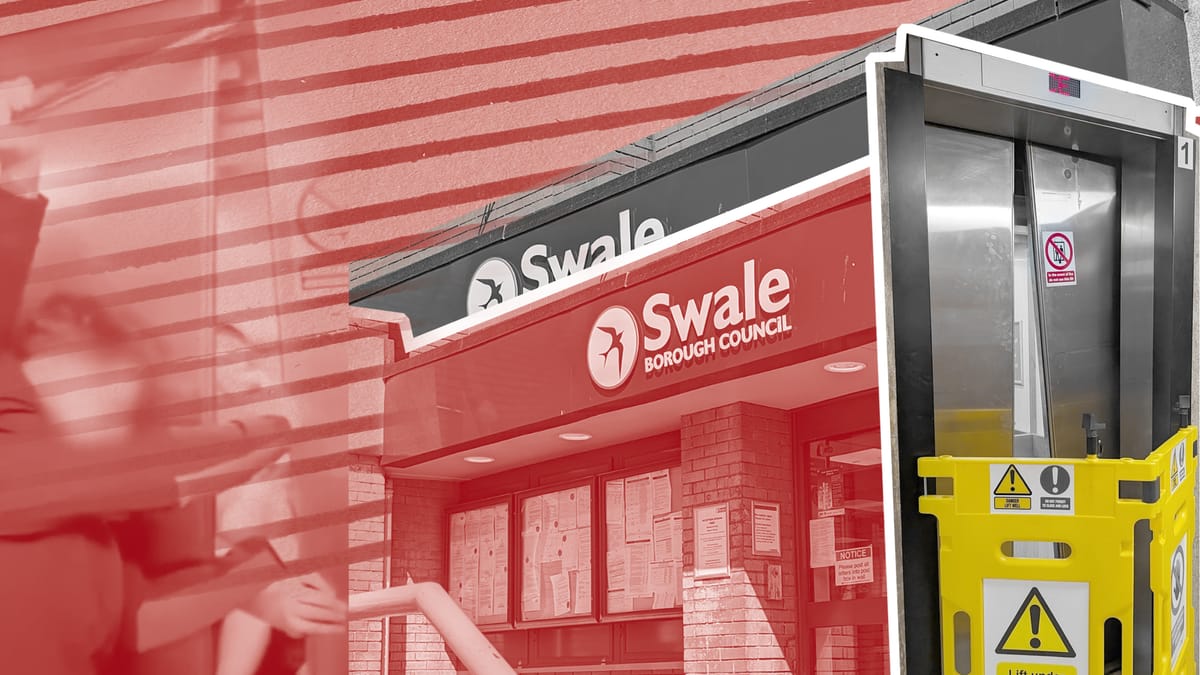
That meeting was suspended, the building was damaged, toilets were vandalised and flooded, and councillors described some of the worst scenes they had experienced in office. Swale House closed afterwards while the damage was assessed.
The council had already tightened arrangements by January, when another Swale meeting descended into disorder during a Reform motion on immigration. That time, attendance was ticketed, gallery numbers were capped, and police and security were heavily present. Even so, activists again shouted at councillors from the gallery before the meeting was adjourned and the public was removed.
What this latest report makes clear is that those January-style precautions are not being treated as a one-off. They are becoming part of the way Swale now expects to run contentious public meetings.
The report also shows that the security review extends beyond the council chamber. It references anti-social behaviour and rough sleeping in the undercroft during summer 2025, with updated risk assessments, work with Kent Police, and further options under consideration, ranging from enforcement action to possible physical measures to protect the area.
Some tougher steps are still only being explored. Moving all meetings online has been rejected, but a screen between the public gallery and chamber and mandatory ID checks remain under review.
The broader point is hard to miss. Open meetings and public galleries are supposed to be a basic part of local democracy. But at Swale, they are now increasingly being planned for as a security risk.
Meningitis outbreak latest
- The outbreak has continued to grow. As of today (Thursday), officials say there are now 27 cases in total, comprising 15 confirmed and 12 probable. Two young people have died.
- The public health response has widened with it. The UK Health Security Agency said on Thursday that the MenB vaccine will now be offered to everyone who has already been offered preventative antibiotics as part of the outbreak response, not just the initial student group. That means the net now extends beyond the University of Kent campus to include close contacts of confirmed or suspected cases, as well as Year 12 and 13 students in Kent schools and colleges where confirmed or probable cases have been identified.
- Canterbury Christ Church Students’ Union says it did not cancel its events and core activities “out of choice,” but because it was instructed to follow CCCU guidance. At the same time, it accused the university of a “double standard”, with student-focused activity cancelled while Canterbury Festival’s Step into Spring event still being allowed to go ahead this weekend.
- Canterbury Festival says the event will proceed under UKHSA guidance, with audiences capped at 50% in Augustine Hall, the café closed, earlier auditorium opening to reduce queuing, enhanced cleaning, and masks left as a matter of personal preference.
- The University of Kent says more than 6,500 precautionary antibiotic courses have now been handed out on campus, and 600 vaccines were administered there on Wednesday alone.
- Hopes that the situation may already have been brought under control are being tempered. Kent’s director of public health, Dr Anjan Ghosh, said on Thursday that it is still too early to say the outbreak has been contained, as secondary transmission still needs to be ruled out.
- It also did not take long for the misinformation to arrive. Within four days of the outbreak becoming public, anti-vaccine and conspiracy theory content had started proliferating across local Facebook groups, adding another layer of noise to an already anxious situation.
- The official message to the wider public remains that the overall risk is low, but this is still a serious disease. Anyone contacted and told to take preventative antibiotics should do so promptly, and anyone with symptoms should seek urgent medical help.
Footnotes
Follow us on social media! We’re on Facebook, BlueSky, and Instagram for now.