"Publishers and booksellers underestimate the public"
What we asked Martin Latham, writer, bookseller and the man who opened Waterstones Canterbury
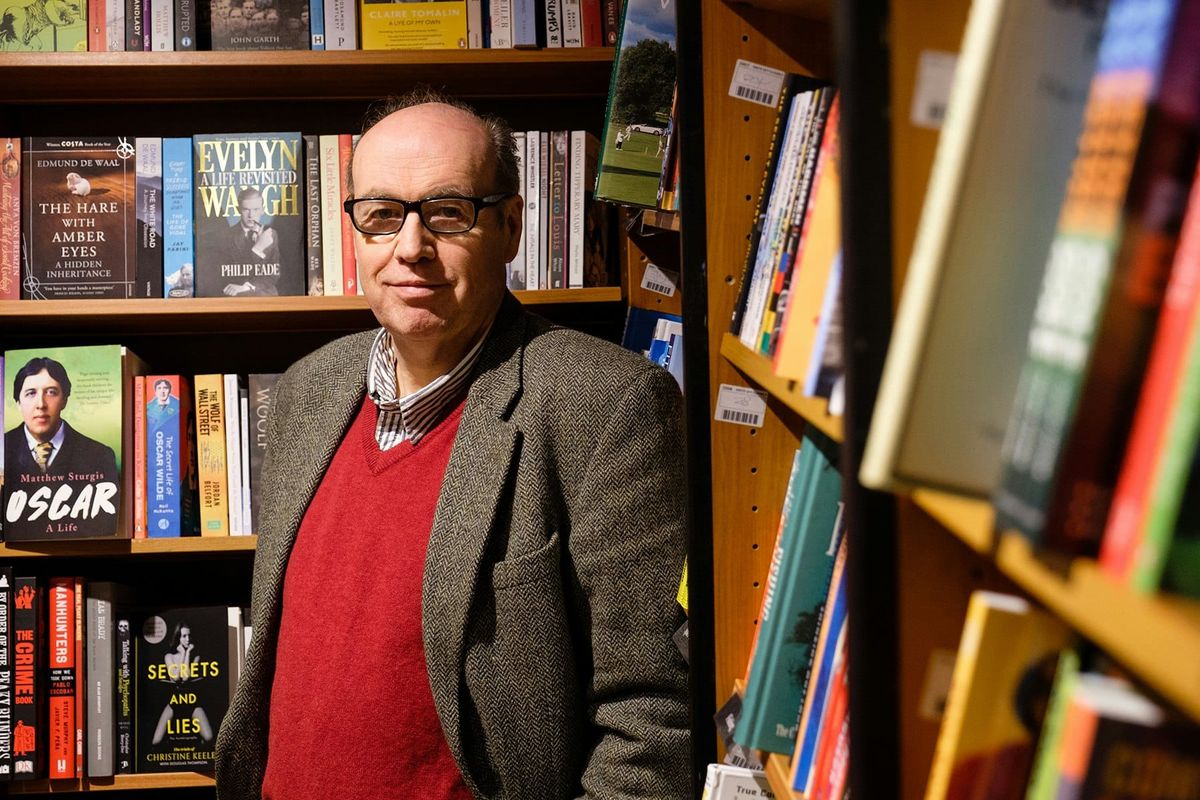
The Bookseller’s Tale by Martin Latham is part cultural history of bookselling, part love letter to books and part reluctant memoir of more than three decades spent behind the counter. Steven met the former manager of Waterstones Canterbury at his home to talk about why bookshops still matter, judging books by their covers, hiring staff through questions about werewolves and vampires, and the day Umberto Eco came to work in the basement.
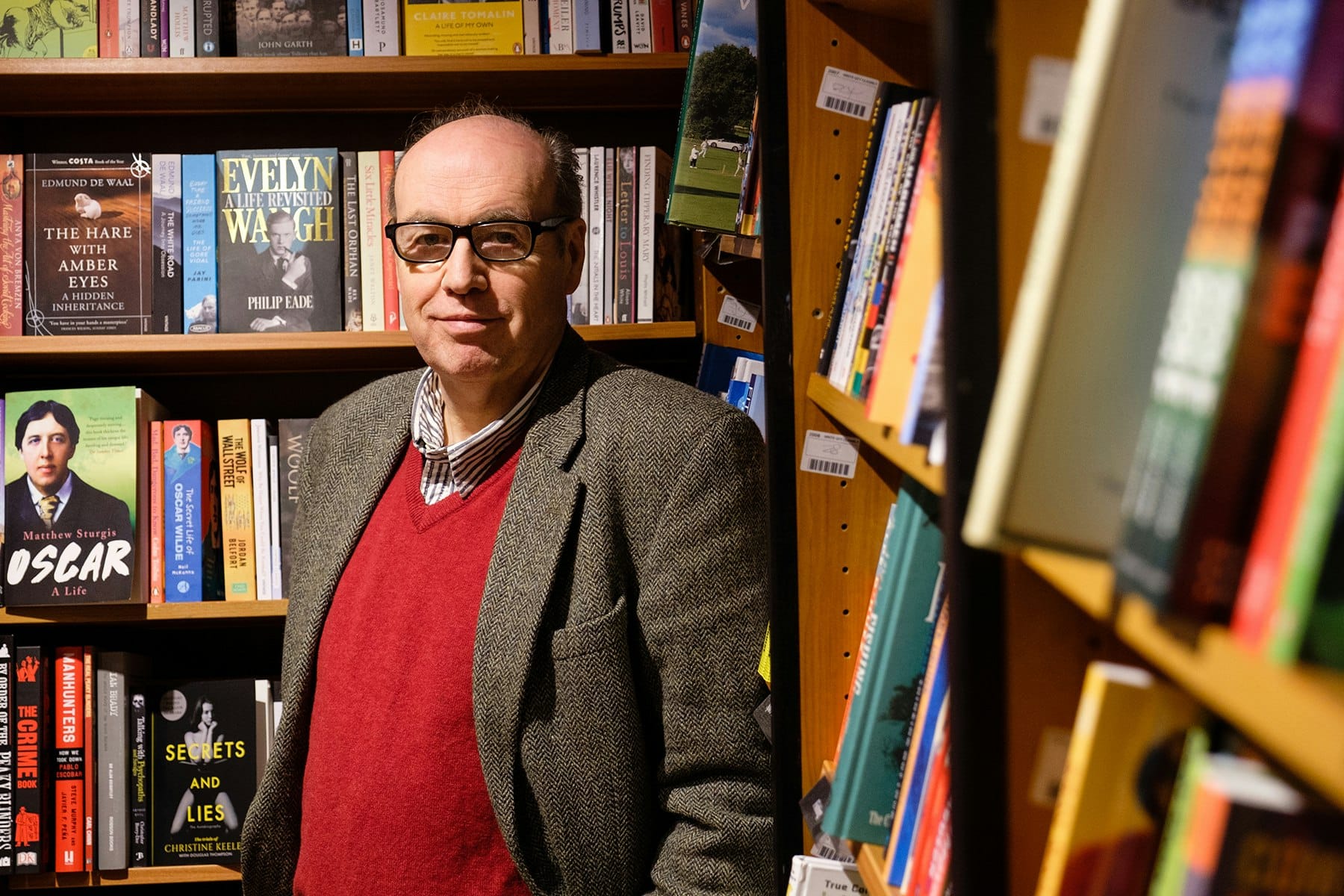
Martin Latham is a Canterbury-based writer, author of Kent’s Strangest Tales and The Bookseller’s Tale, and a former weekly columnist for The Bookseller.
For the eagle-eyed reader, there may be a theme emerging. Before becoming a full-time writer, Latham spent decades as a bookseller, opening and managing Waterstones in Canterbury. He has now retired from management, but still organises events at the store and is helping establish the Folkestone Book Festival.
Sitting at the kitchen table of his country home, he tells me: “I write about bookshops and how rumours of their death are greatly exaggerated.”
I think part of me still wants to be robbing from the rich and giving to the poor
Fiction remains something he would like to try. A childhood novelisation of Robin Hood left a particular mark. “I think I wanted to be Robin Hood. I think part of me still wants to be robbing from the rich and giving to the poor.”
From there, the conversation takes a detour into why Robin Hood seems to lack a single definitive literary text. “Why isn't there one? It's strange. TH White's done Arthur, so has Malory.”
Born at home in Earls Court, he was the seventh of eight children. His father had left school at 14 before joining the army and rising to sergeant major, later working as a painter and decorator, gardener and undertaker.
His parents met on the Arabian Peninsula during the Second World War. “She was posh, and he was cockney. The only place they were allowed to meet was in the Catholic canteen for some reason, which is a good advert for Catholicism.”
His father converted to Catholicism and the children were raised in the faith.
Books were everywhere at home. His mother was an avid reader, while every Saturday his father headed to the booksellers on Portobello Road and “bought so many books.”
History took him through university and eventually into a doctorate on the Punjab. “All my life, all I wanted to do is travel, do crap jobs, then travel again.”
The PhD also had another advantage: postponing a proper job. “I certainly didn't want an office job,” he says, and stretching the doctorate over several years “seemed a good way to carry on being an eternal student.”
Bookselling finally provided something approaching a career in 1984, first in the independent sector and then in second-hand books in Cheltenham. When the Chelsea independent where he worked closed because of rising rent, he joined Waterstones in Kensington in 1988, where “people like Princess Diana were coming in.”
Canterbury followed in 1990, when he opened the city’s Waterstones and became its sole manager. That arrangement lasted until a few years ago, “but now there are about four different managers with long, different abbreviated titles,” he comments dryly.
Author events remain part of his life at the store, “which is what I love.” Interviewing writers, he says, was always one of the best parts of the job.
One thing bookshops have genuinely improved is accessibility. “The fact they've got lifts. One of the few good things about moving from the old shop was that you could get disabled people up and down.”
At the previous Canterbury store, wheelchair users sometimes had to be physically carried upstairs for events.
Martin is also helping with this year’s Folkestone Book Festival, having become involved after an event with its director, novelist Sophie Haydock. His contribution includes helping with some of the historians appearing on the programme.
Tim Waterstone was still heavily involved in the business when Martin worked at Kensington. “He hired and fired everyone.” On one occasion, that apparently included instructing the store to hire an Algerian man he had met on the London Underground.
His previous shop in Cheltenham had already given him a sense of what Waterstones could be. It carried the complete 15-volume edition of Byron’s journals “under the biography table in case anyone wanted it,” two shelves on Saint Helena in the travel section and a large graphic novel collection.
“That was an extraordinary shop. I liked this company.”
When Tim Waterstone interviewed him for the Canterbury manager’s job, the competition was apparently fierce.
“He said, ‘Everybody wants this shop. Why should I give it to you?’ And my answer was, and it’s slightly embarrassing to tell you this, ‘because I'll set Canterbury on fire.’”
“He was quite a glorious eccentric. He'd been sacked from WH Smith for buying too many books. He was quite Keevil-esque.”
Martin is referring here to this writer’s own book collection. You can never have too many books
“I'm still in touch with him. He came to my farewell lunch.”
Martin Latham spent decades inside bookshops, opening Waterstones Canterbury and helping turn it into the kind of place people could linger, browse, meet and discover something unexpected.
Register for free to keep reading about why he thinks bookshops should resist algorithms, the strange questions he asked job applicants, the day Umberto Eco worked in the basement, and what he would tell anyone thinking of opening a bookshop of their own.
When it comes to stocking a bookshop, Martin is quite happy to judge a book by its cover. “I think that publishers like Faber have become too formulaic. They imitate other covers too much. Whatever the latest popular craze had been.”
He prefers publishers who go “off-piste a bit” with their covers, including sprayed edges and “all the way they're jazzing up books, people love that.”
Changes to familiar editions can provoke strong reactions. “I love seeing how angry sci-fi customers get if you change the format.”
Particular disdain is reserved for “the film tie-in cover with some soon-to-be-forgotten micro-star on the cover, grinning, with a false beard.” Which, to be clear, he is right about.
After a career in bookselling, he believes “that publishers and booksellers underestimate the public. Not just their eclecticism, but their discernment and their weirdness.”
That unpredictability is why he worries about algorithms trying to reduce readers’ tastes to predictable choices. “They're not as algorithmic as Amazon, constantly telling you, you're like this, you must like that. You think, what the fuck, I'm onto something else.”
Calling upon the spirit of Robin Hood, he was always happy to discount books that had been sitting around too long. “The MD agreed with that, if you haven't sold an art book for two years, sell it for whatever you can sell it for.”
Martin still thinks booksellers should offer more random reductions on old stock, “rather than just matching online prices.”
Bookshops should be welcoming, child-friendly, and the best ones will survive
Chairs were another point of principle. “I insisted on it. You need to relax.”
He also installed a chessboard and, when that became so popular there was regularly a queue, “I put three chess boards on the top floor of Waterstones.”
What Martin wanted to create was what he calls, “I think the pretentious phrase is third space.”
The wider erosion of public space, particularly through library closures, clearly irritates him. “I think that's what the bookshop is about.”
One customer would come into the Canterbury store on their lunch break, sit down and read, eventually working through an entire book. “Somehow this got in the Guardian, and I thought that was good, that people should lounge around more in bookshops. Bookshops should be welcoming, child-friendly, and the best ones will survive.”
When it came to hiring staff, Martin took a leaf out of Tim Waterstone’s book. “There was a bloke painting the front of the shop, and he walked in and seemed more interesting than some of the people I was interviewing.”
Martin invited him into the office and “he climbed through the window off the scaffolding.” He got the job and became one of the store’s best booksellers.
Character mattered more to Martin than polished interview answers, so candidates might be asked who would win a fight in a pub car park between a werewolf and a vampire*, or simply: “tell me about a book that changed your life.”
Odd as the questions seemed, they had a purpose. “The reason I ask these crazy questions is because you get asked all sorts of things in a bookshop.”
Over the years, Martin has been asked for everything from ordinary recommendations to a book proving the existence of God. “It's no good looking down your nose at somebody.”
“We had one staff member who was quite pompous, and he corrected a customer who was buying philosophy books and wanted something by Nietzsche, and he corrected the customer on his pronunciation of the name. The customer was a tourist and patient, and when he handed over his cheque, his name was Nietzsche. It transpired that he was a relation, and he said, ‘I think I can tell you how to pronounce this name.’”
For Martin, “reading is reading,” and he has little time for anyone dismissive of graphic novels or manga. If something encourages people of any age or ability to read, he is all for it.
The manga section in particular always cheered him, with customers comparing series and swapping recommendations.
At their best, he believes Waterstones shops “offer an experience and a haven” for customers. The café in Canterbury is regularly full of young people. “It's a meeting place. They're not just there to buy the book.”
One person who did work at the store, if only for a day, was Umberto Eco.
“I tried to get him for an event and was told he would not do workshop events.”
Martin contacted the publisher in Milan instead and was told that, while Eco was in Canterbury to receive an honorary degree from Kent, “he'd love to work a day in the bookshop, which he did in the basement. I've got the photo.”
“He was great, and he sold Travels in Hyperreality to a customer, and I thought, 'You've got to tell this customer who you are,' and he just shook his head. Someone is out there, with a signed copy of a book personally sold to them.”
Turning one of his own interview questions back on him, I ask whether he can name a book that changed his life.
“Blimey, now you've put me on the spot.”
After seeing Lawrence of Arabia, Martin became obsessed with the story and read Seven Pillars of Wisdom, drawn to the idea of the maverick and of extravagant travel.
To anyone out there who's having hell at work, follow your dream in the evenings
Kent’s Strangest Tales emerged during a period at Waterstones that Martin describes as “bloody awful.” The company had been taken over by HMV, “who were barbarians in those days.”
“I was so disillusioned and stressed, because I didn't want to leave Waterstones.”
Whatever frustrations came from head office, the customers remained the reason to stay.
“I wrote the book as a counterweight. To anyone out there who's having hell at work, follow your dream in the evenings.”
The book is still selling, helped perhaps by the sort of encounters that fed Martin’s interest in Kent’s stranger corners. One customer walked into the old Canterbury store, looked at the Mind Body Spirit section and said: “‘I can feel it. This is the portal, isn't it?’ And I thought, yeah, why not? Quite possible.”
“I believe in strange psychic experiences, and there's more things in heaven and earth. Pascal said the key thing is to make a decision, and he preferred atheists to the agnostics. I don't really know.”
Asked whether certain authors should be cancelled, Martin begins cautiously. “I won't get into mentioning any individual authors,” while pointing out that “we sell Mein Kampf.”
He then immediately starts mentioning individual authors. “Virginia Woolf was a virulent anti-Semite. I read some of her stuff. Read Dostoevsky's journals. He makes Hitler look like a lightweight.”
For Martin, the principle is that a bookshop should be somewhere you can find almost anything.
“Don't associate the bookseller with some of the shit that's on the shelf, but that's how you learn to preserve good, not evil.”
What advice would Martin give someone hypothetically considering selling up and investing everything in an independent bookshop?
“Well, first of all, contact someone called Kate Gunning at the Booksellers Association, who runs a training course. It doesn't cost much, about how to do that and what the opening stock costs.”
Martin has seriously considered opening a bookshop cinema. I think it could work.
More broadly, he believes an independent shop needs to become a destination for events, reading groups, knitting groups, outreach and other community activity, “but without making yourself into a mug and doing things for nothing.”
Even a small shop can attract authors. “Big authors will come to small shops because writers are all romantic about bookshops.”
Martin has one final piece of advice for me, by which I mean the general reading public.
“The rent will shaft you in the end if you go for the typical high street rent. There'll be a big bounce when you open, there'll be Christmas, and it'll feel great, but a rainy week in February, you'll think, what have I done?”
Footnotes
* “the answer depends on what time of day it is.”
This interview has been edited for length and clarity.
In our sister title, we previously interviewed bookseller Patrick Fysh of Rochester's Store 104.
 Steven Keevil
If you are a bookseller, or know somebody who is, who was born, lived or worked in Kent, and want to organise an interview, email Steven.