The Reform litter pick that edited reality
A routine Facebook post becomes a story about AI in political imagery and whether photographs can still be trusted

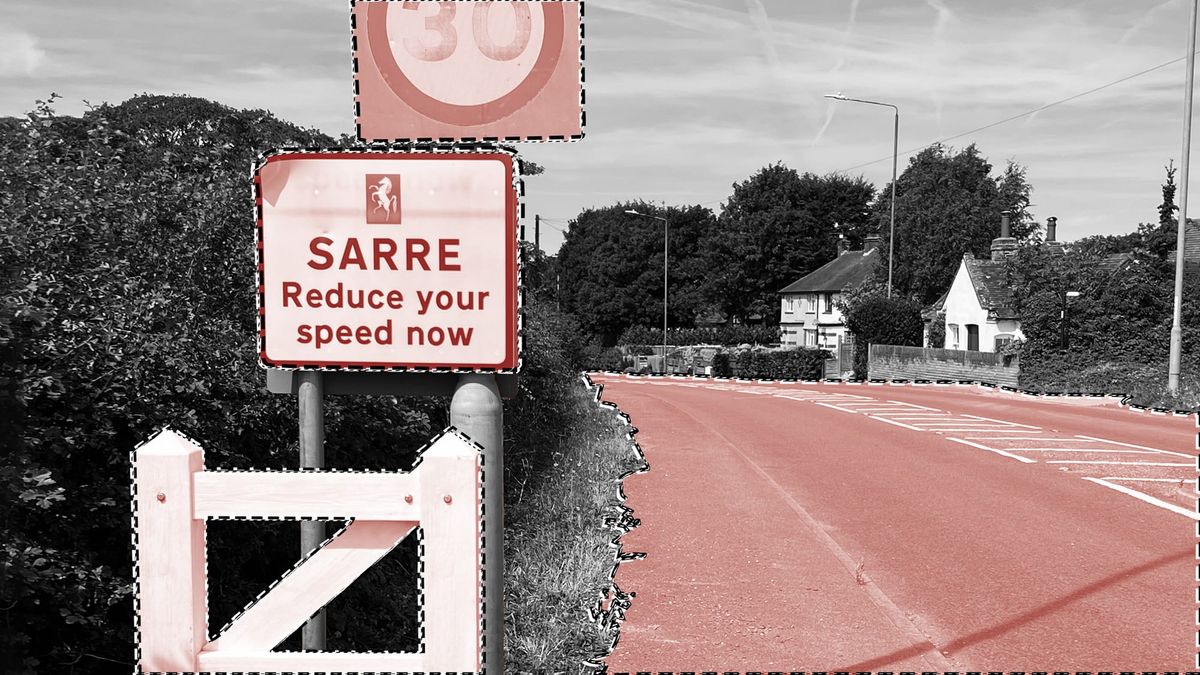
A Reform litter pick in Sarre has become a wider row over edited political imagery after the branch posted a before-and-after photo that appeared to show more than just litter being cleared. The event itself appears to have happened, but the image, its replacement, and the explanations that followed raise broader questions about AI tools, political photographs and whether voters can still trust what parties show them online.
The Reform litter pick that edited reality
Somewhere between picking up litter and posting on Facebook, reality took a wrong turn.
According to Reform Herne Bay and Sandwich’s Facebook page, volunteers cleaning the entrance to Sarre had somehow managed to brighten a weathered fence, green the vegetation, and resurface a stretch of pavement.
We needed to see this for ourselves.
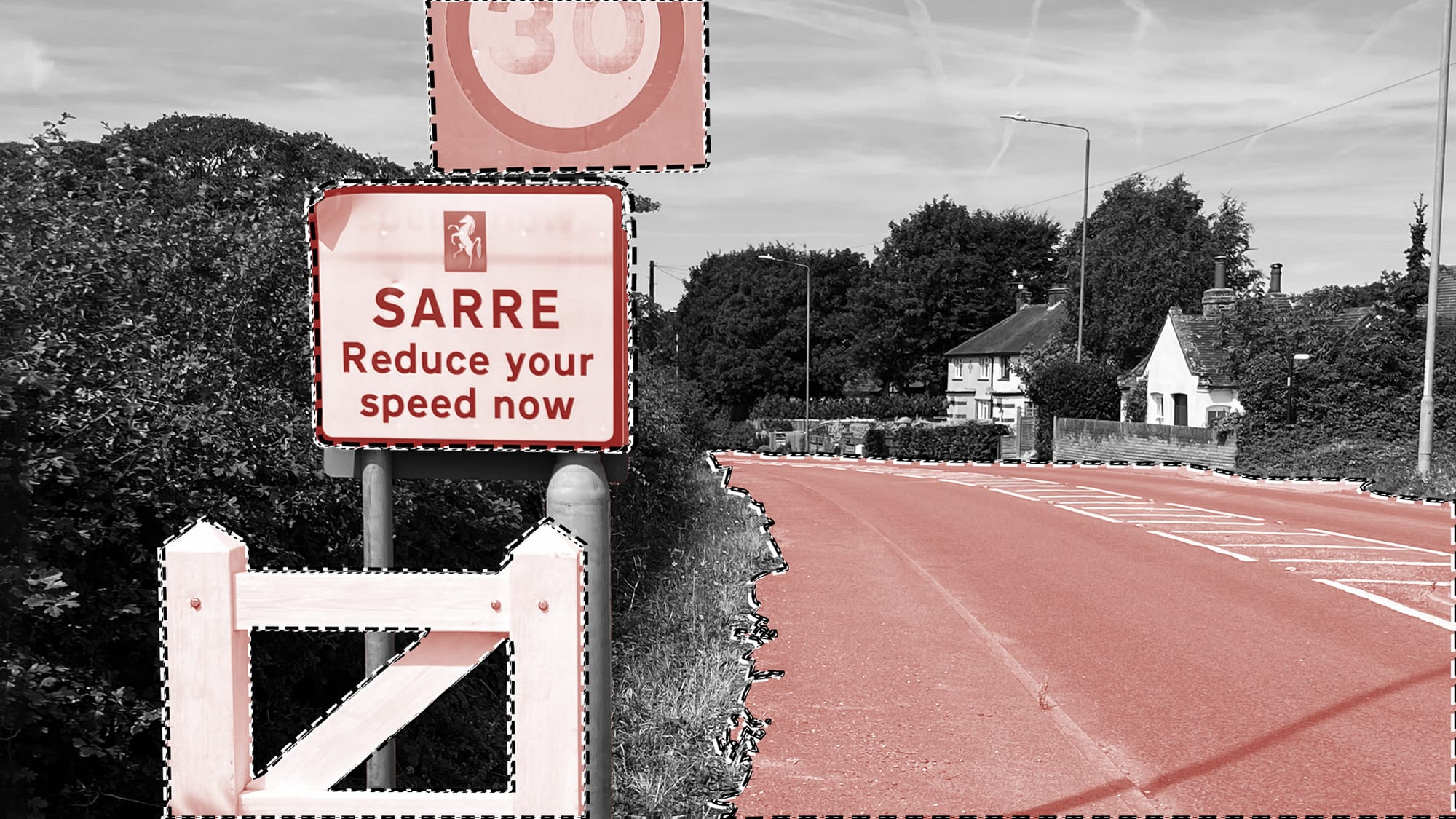
That is how the Kent Current found itself standing at the entrance to the small Kent village on Tuesday morning, phone in one hand, looking back and forth between the scene in front of us and the Facebook image that had prompted our journey. If the photograph were to be believed, Reform volunteers had spent part of Saturday not only clearing litter, but quietly carrying out a programme of public realm improvements while they were at it.
The Sarre we found was considerably less ambitious.
Cars rolled steadily along the A28. The village sign stood where it always had, backed by a lightly weathered white fence that had plainly spent years beside a busy road. The pavement looked exactly like the sort of pavement motorists and pedestrians pass every day without giving it a second thought. There was nothing remotely unusual about the scene.
The photograph was another matter.
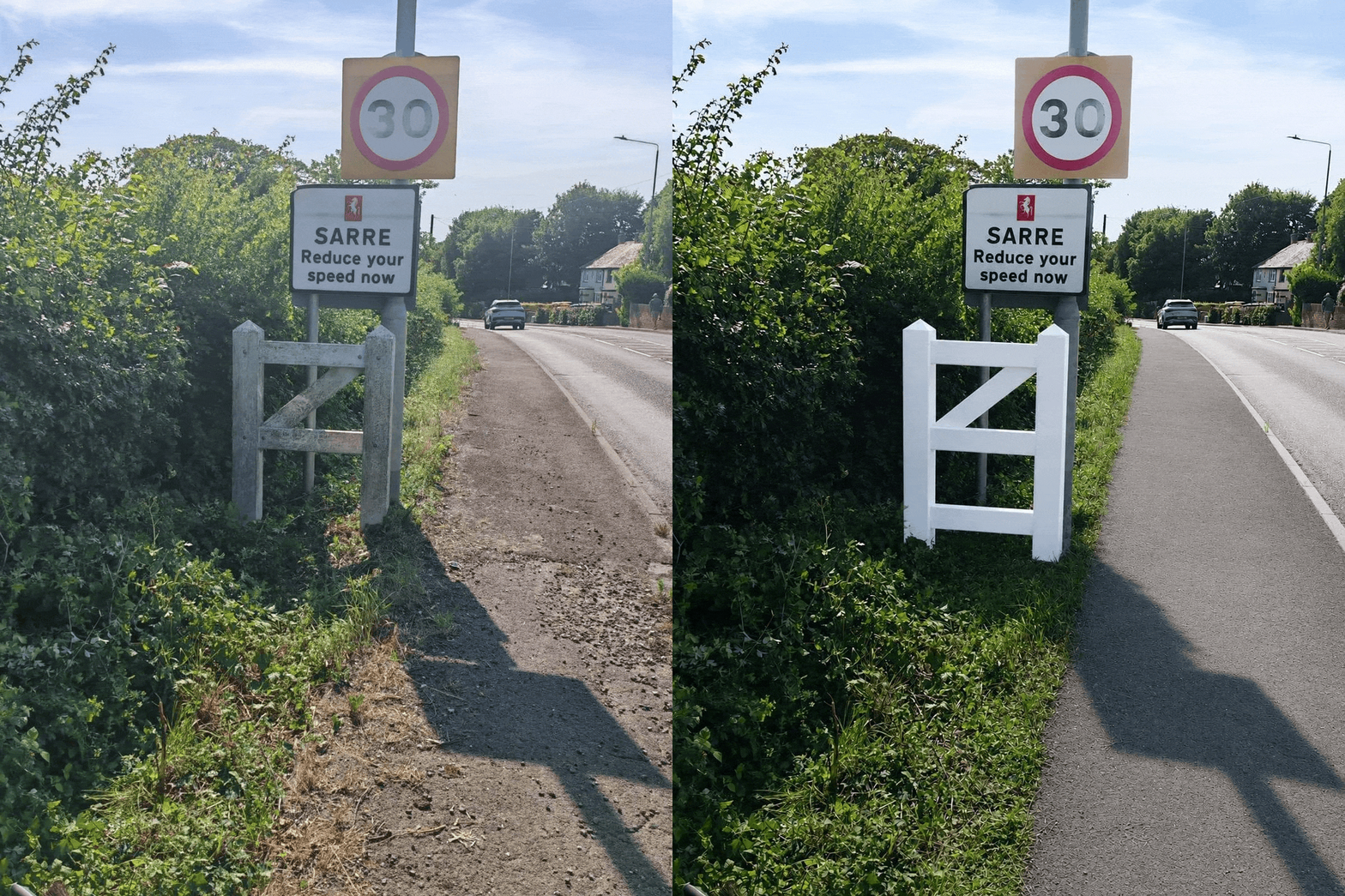
It had appeared in a Facebook post celebrating Reform’s involvement in the party’s national 'Clear Up Britain' campaign on Saturday. Branch members, the post said, had been litter picking in Sarre, Herne Bay, Garlinge, Westgate and Westbrook. Alongside a handful of photographs sat a familiar piece of political social media: A before-and-after comparison intended to show the difference a few hours of community volunteering had made.
Except the 'after' image appeared to show considerably more than that.
The fence looked brighter than the one standing in front of us, and had somehow acquired an additional beam. The pavement appeared freshly resurfaced rather than the rough, overgrown path we were standing on. Most remarkably, a car visible in the distance occupied exactly the same position in both images despite everything around it apparently changing.
Litter picking is undoubtedly a worthwhile civic activity. Highway maintenance has never been a regular part of it.
Facebook users reached much the same conclusion.
Within hours, the comments beneath the post had become less about congratulating Reform’s volunteers than trying to work out what had happened to the photograph. Some concluded it had been generated using AI. Others simply sarcastically marvelled at the apparent ability of a handful of litter pickers to restore fencing and relay pavements over the course of an afternoon. One commenter described it as “a lesson in how not to use AI.”
Something clearly wasn’t right.
Before getting into everything that followed, it is worth establishing one important point.
This is not a story about a litter pick that never happened.
Reform’s 'Clear Up Britain' campaign took place across the country on Saturday, with local branches organising community clean-up events in their own areas. In east Kent, members of the Herne Bay and Sandwich branch appear to have spent part of the day in Sarre as well as other locations.
The branch posted a short video from the day, showing four volunteers standing beside the village sign and chanting 'Clear Up Britain, Reform UK.' They may not have actually been chanting, but Facebook's looping video system very much gives that impression. Among the volunteers was Cllr Luke Evans, Reform’s Kent County Council member for Birchington & Rural and the council’s deputy cabinet member for education and skills. This was not an anonymous Facebook page posting into the void. It was an official branch event involving serving elected representatives.
There is little reason to doubt the clean-up itself took place. Reform has consistently maintained that volunteers cleaned around the village entrance, and nothing we found during our visit to Sarre suggested otherwise. Indeed, one of the more curious aspects of this story is that the branch appears to have had perfectly good evidence of what happened. It had volunteers at the scene. It had video from the day. It almost certainly had genuine photographs documenting the work.
So this is not a story about politicians inventing a community event. It is a story about a genuine community event becoming associated with an image that appeared to depict something entirely different.
All of which leaves a much more interesting question. If the litter pick was real, why wasn’t the photograph?
The disputed image wasn’t particularly convincing.
There are AI-generated pictures that leave people squinting at hands or zooming into reflections, trying to work out whether something is genuine. This wasn’t one of them. Nobody needed specialist software or forensic image analysis. The overall impression felt wrong almost immediately. Looking closer simply made it worse.
Take the fence.
In the original photograph, it sits in front of the Sarre village sign looking exactly as a roadside fence should after years of exposure to traffic and the weather. In the 'after' image, it appears noticeably brighter, and, intriguingly, it also seems to have gained an additional horizontal beam. The branch had advertised a litter pick. It had apparently delivered a modest carpentry project as well.
The pavement required an even greater suspension of disbelief.
Standing in Sarre on Tuesday, it looked exactly as it had for years: A perfectly ordinary stretch of village footway, somewhat bumpy and overgrown. In the disputed image it had somehow become smoother, cleaner and considerably newer-looking. If Reform volunteers had genuinely discovered a way of resurfacing public pavements with nothing more than litter pickers and black sacks, Kent County Council’s highways department would probably be interested.
Then there was the car.
Sitting quietly in the background, it became the unlikely star of the entire affair. It appears in both the 'before' and 'after' images in precisely the same position. That left viewers of the image with two possibilities. Either the driver had displayed extraordinary patience while a group of volunteers apparently transformed the surrounding landscape, or the second image wasn’t simply a photograph taken a little later in the afternoon.
By this point, the discussion had almost entirely detached itself from the clean-up. The volunteers had become incidental. The photograph had become the story.
It was around then that the Facebook post started changing.
Exactly when each edit was made is difficult to establish, but the broad sequence is clear.
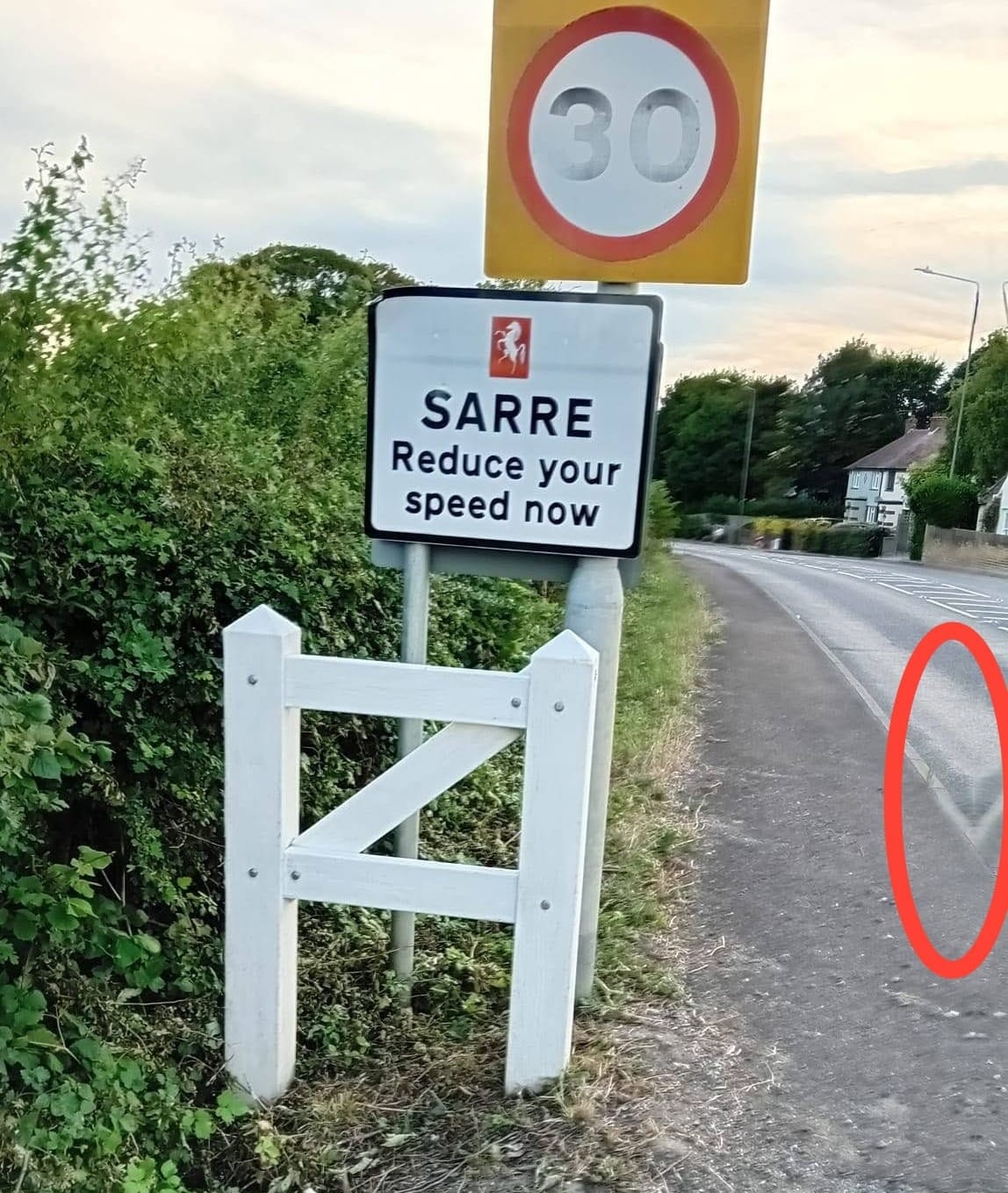
The original 'after' image disappeared first. In its place appeared another photograph of the entrance to Sarre, one that looked considerably closer to reality than its predecessor. At first glance, it appeared the mystery had been resolved.
Looking more closely, however, another question emerged.
Along the right-hand edge of the replacement image, the kerb line appeared distorted, suggesting it, too, had been digitally altered. The changes were far more subtle than in the original image, but they were there. The Kent Current contacted the branch to ask how the replacement image had been produced, whether it had also been edited, and how the original image had come to be published in the first place.
After that, the image changed again.
This time it wasn’t replaced altogether. Instead, it was cropped, neatly removing the section of the image where the most obvious distortion had appeared. No explanation accompanied the change.
The first response from the branch to our questions arrived later on Tuesday, along with a Facebook post containing the same text.
It said the “incorrect image” had been uploaded “due to an administrative oversight,” describing the page as one run by unpaid volunteers independently of Reform’s national organisation. While acknowledging the image was wrong, the statement insisted the clean-up itself had taken place and apologised “for any confusion or misunderstanding it may have caused.”
It was a perfectly reasonable place to begin. It just wasn’t the end of the story.
The Kent Current followed up with a series of further questions. What exactly was the “incorrect image”? How had it been created? Had AI been used? Why had the replacement image also appeared to contain signs of digital editing before being cropped? And, perhaps most fundamentally, why had nobody spotted the differences before publication?
Those questions went unanswered.
Instead, on Wednesday, the branch returned to Facebook with another statement.
Headlined “EXCLUSIVE: The Truth About Gate Gate!” - and carrying the warning “VERY DULL” - it offered a much fuller explanation of events. According to the branch, the disputed image had been “inadvertently created” on the new phone of the volunteer who had taken the original photograph before being shared via WhatsApp. Because the images were selected from “very small tiles on a telephone screen”, it said, “the sender did not realise the incorrect image had been created, nor could they distinguish between the correct and incorrect image when selecting.”
Alongside the statement came another gallery of photographs showing volunteers at the entrance to Sarre from several different angles. Unlike the disputed image, these simply showed an ordinary village entrance with no evidence of any manipulation.
By this point, what had begun as a routine Facebook post about a Saturday afternoon litter pick had acquired multiple versions of the same image, two separate public explanations, an apology, an unanswered list of follow-up questions and, somehow, the title 'Gate Gate.'
The litter pick itself had lasted little more than an afternoon. Working out exactly what had happened to the photograph was taking rather longer.
The branch’s final explanation undoubtedly answers one important question.
For much of the week, the obvious mystery was where the disputed image had come from. Reform’s latest account offers an answer.
In 2026, that is not an inherently implausible explanation. Modern smartphones increasingly include AI-powered editing tools capable of generating alternative versions of photographs, removing objects, filling backgrounds and making subtle, or not so subtle, alterations. Whether the image was created automatically or via a phone feature is something the branch has not explained, but the existence of an altered version is no longer particularly difficult to understand.
The more interesting question is whether that explanation actually makes the story better.
It accounts for why there may have been two versions of the same photograph. It does not explain why no one involved noticed that the altered version appeared to depict a village noticeably different from the one they had spent the afternoon cleaning. Nor does it explain why the replacement image also appeared to contain signs of digital editing before later being cropped, or why those questions went unanswered.
Most fundamentally, it still leaves one obvious question hanging in the air.
Why did the altered image become the centrepiece of the Facebook post at all?
By the branch’s own account, it already had genuine photographs from the day. It had video of volunteers standing beside the village sign with refuse sacks. It had exactly the sort of material local political parties publish every weekend to show members out doing something useful in their communities.
Yet none of those became the image people remember.
Instead, attention focused on a picture the branch now accepts was “incorrect.”
Perhaps that really was the result of an unfortunate chain of small mistakes involving a new phone, WhatsApp and volunteers unfamiliar with modern AI tools. If so, it illustrates a different problem from the one many people first assumed.
The concern is no longer simply that convincing synthetic images can be created.
It is that they can be created, selected and published by people who, by their own account, no longer recognise the difference.
That is also why this story extends beyond one Facebook post in one Kent village.
Artificial intelligence has dominated headlines through spectacular examples: cloned voices, deepfake videos and fabricated images of public figures. But much of the concern among researchers is less dramatic. It is about the gradual erosion of confidence in photographs as reliable records of what happened.
Recent research suggests that the process is already underway. The Social Market Foundation found misinformation in local Facebook groups quadrupled during the Makerfield by-election campaign, with AI-generated images among the misleading content circulating online. Some showed streets lined with Reform flags or political scenes that had never happened. Others were dismissed by some users as obvious 'AI slop' while being accepted as genuine by others.
The Electoral Commission has meanwhile found that three quarters of the public now regard misinformation and disinformation as a problem for UK elections. Earlier this year it also began examining the impact of political deepfakes, with the findings expected later this year.
Asked about the wider issue of false imagery being used in political campaigning, Steve Nowottny, editor of Full Fact, an independent fact checking organisation, told the Kent Current that AI-generated imagery was becoming an increasingly common feature of the organisation’s fact-checking work, including in political contexts.
“AI-generated imagery increasingly features in our day-to-day fact checking, including in political contexts,” he said. “During elections earlier this year, we saw it used in various ways – from social media users sharing faked images with misleading claims, to one candidate using AI to make ‘illustrative’ videos and a party making minor edits to a campaign image.”
He cautioned, however, against focusing solely on artificial intelligence.
“A heavily edited, misleadingly cropped or miscaptioned photo can be just as harmful if it gives voters a false impression of what happened.”
“At a time when trust in politics is fragile, parties have a responsibility to be clear, transparent and accountable in how they use images. If an image has been created or significantly altered with AI, or substantially edited in another way, that should be clearly explained.”
Full Fact’s comments relate to the wider issue rather than the Sarre photographs specifically. They nevertheless help explain why a story that began with one village litter pick quickly became something larger.
For generations, political photographs have carried an implicit promise. They may have been carefully framed, selectively timed or accompanied by optimistic press releases, but they were generally understood to show something that actually happened. As image editing becomes more sophisticated and increasingly built into everyday devices, that assumption becomes harder to sustain.
The debate is no longer simply about whether AI can create convincing images.
It is about whether the public can still rely on political photographs as evidence at all.
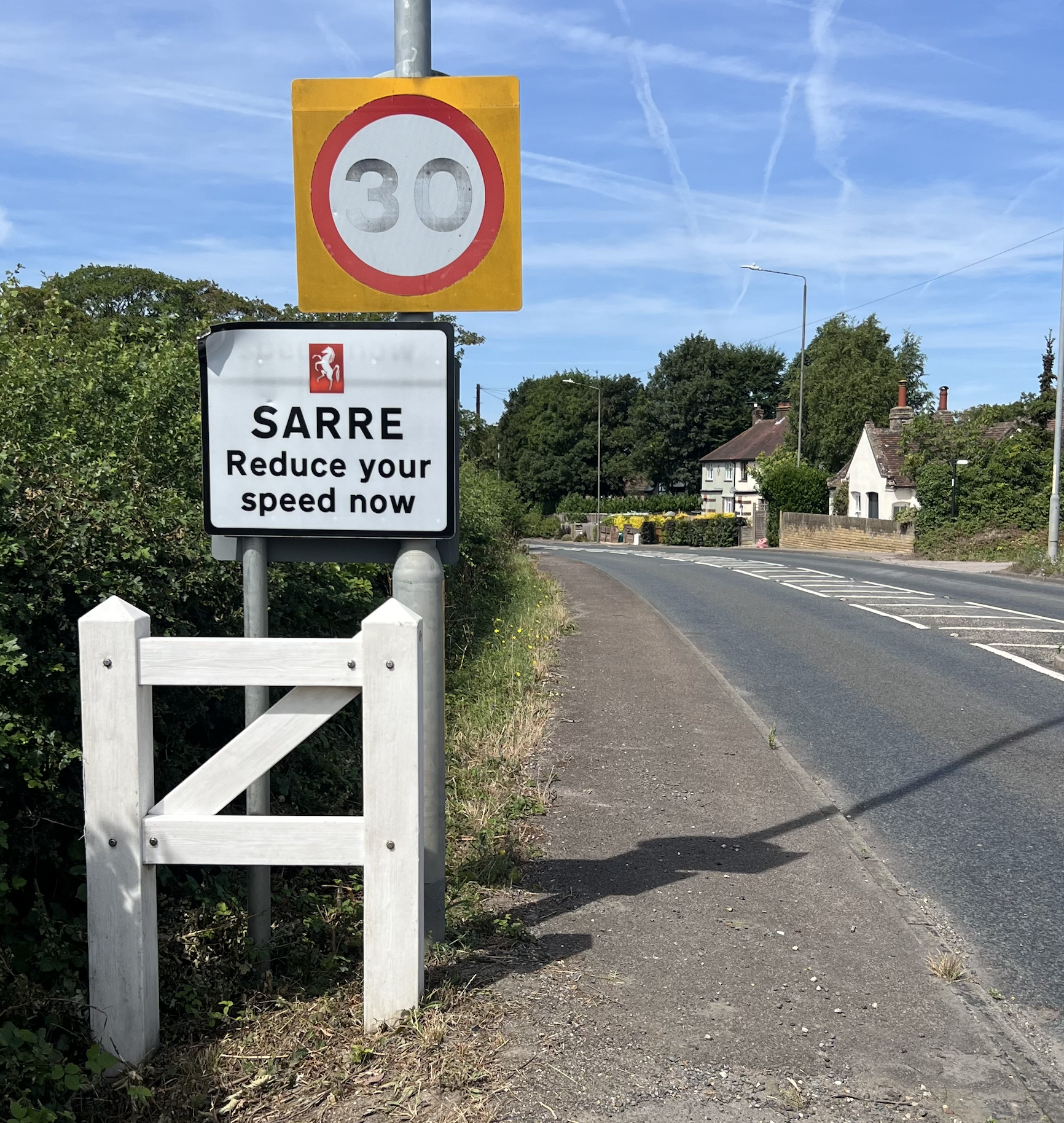
By the time we left Sarre, the village looked exactly like it had been before any of this started.
Traffic continued to roll along the A28. The village sign stood beside its weathered white fence. Drivers passed through without noticing anything remarkable about the entrance.
Which, in many ways, is the point. Sarre was never really the story.
The volunteers probably weren’t either. Everything available suggests Reform members spent part of Saturday doing exactly what they said they had done, turning up with litter pickers and cleaning part of their community.
The story began later, when an entirely ordinary afternoon was illustrated by an image that appeared to show something rather different.
From there came the comments, the replacement image, the crop, the apology, the unanswered questions, 'Gate Gate,' the explanation involving a new phone and, finally, a fresh gallery of genuine photographs. Each step answered one question while creating another.
That makes this more than an entertaining political mishap. It is an early glimpse of a much larger problem. When photographs stop being accepted as straightforward records of reality, every image published by a political party carries a little more doubt than it did before. Sometimes that doubt will be justified. Sometimes it won’t.
Either way, trust becomes harder to earn.
Reform might have spent Saturday cleaning the entrance to Sarre. They then spent the best part of a week trying to clean up the photograph.
Footnotes
Have a Kent story you think we might be interested in? Get in touch via hello(at)kentcurrent(dot)news - We’re always happy to talk off the record in the first instance…
Follow us elsewhere: Facebook, Instagram, BlueSky, and now WhatsApp for new story alerts.