“Their ambition was ridiculous”
What we asked Kevin Ligget and Phil Gomm, formerly of the Kent Institute of Art and Design at Rochester.


Still in Motion is an online archive revisiting an extraordinary student photography exhibition staged in an abandoned London school 25 years ago. Steven met former Kent Institute of Art and Design colleagues Kevin Liggett and Phil Gomm at the Coopers Arms in Rochester to talk about giving students the freedom to take over a derelict building, what creative education is actually for, and what happened to the people who took part.

Kevin Liggett, who says he has “retired ungracefully”, is a former dean at University for the Creative Arts, previously the Kent Institute of Art and Design. There he worked with Phil Gomm, then a lecturer and now a director of an educational design company.
Kevin had “a lot of roles” at KIAD. He began teaching photography there in 1974, became course leader in 1995 and head of school in 1998.
“Eventually I became a Dean of Fashion Design and Culture.”
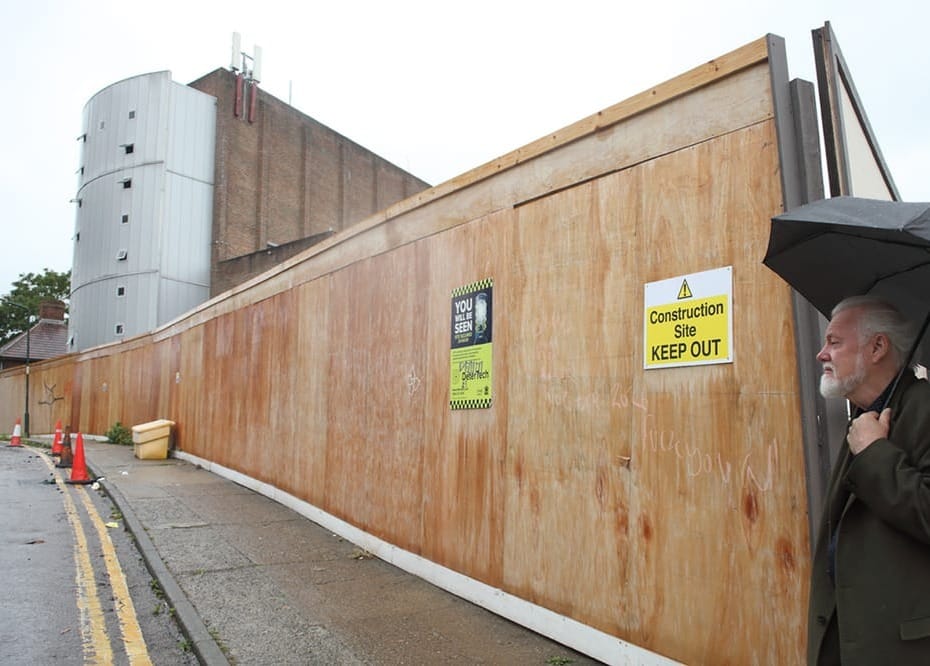
Phil first encountered KIAD as a student in the early 1990s, studying three-dimensional design and model making before pursuing a Master’s.
“Through accident, I ended up in a teaching place, and that's largely where my professional relationship with Kevin began.”
Working around the photography department, Phil established himself as “someone who wasn't a complete idiot around film editing.” He ultimately became course leader for the animation degree.
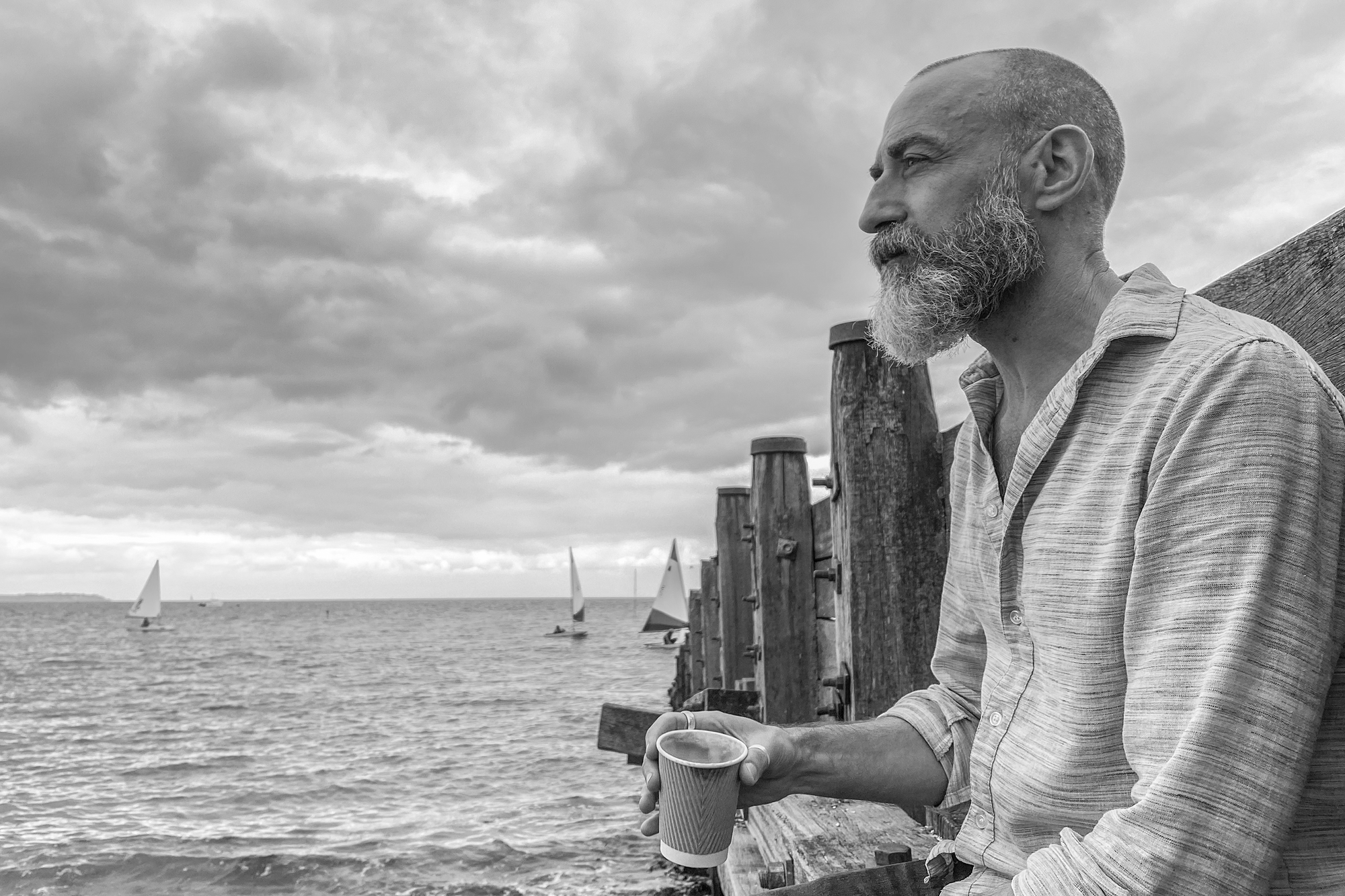
When I ask Kevin how his relationship with KIAD ended, he tells me that part is not suitable for comment. He left in 2010.
“It was a good time for me to retire. I felt that the constrictions in terms of funding student numbers required a radical rethink about how you would actually address that and at that stage the vision for that wasn't in the air.”
Twenty-five years later, Kevin and Phil have returned to one of the most ambitious student projects they supervised together.
Still in Motion is an online archive built around a student exhibition staged at the former Hackney Downs Secondary School.
“I would say that we started with an embryonic idea that we wanted the archive to be preserved and not disappear into the ether.”
The graduating students took over an abandoned school, made it usable, transformed it into a multi-site exhibition space, and staged their degree show there.
As the archive developed, its ambitions grew beyond simply preserving the exhibition.
“It's actually got multiple ambitions.”
The site explores the history of art education, but also the educational philosophy behind the original project: “which is basically the idea that you learn by doing things.”
Kevin reaches for Bronowski to explain it, the mathematician and historian of science whose 1973 BBC series The Ascent of Man argued that human progress is driven by the act of making.
“The idea that as an artist, you take abstract ideas and concepts, but you bring them into the real world by actually producing an object, which enables you to actually communicate those ideas.”
Still in Motion began with an old film, assembled from footage shot by Phil and the students during the original project.
The master copies are now “lost in the dust”, though Phil says “there might be surviving copies that we don't know about.”
The archive project began after they watched a 4K transfer of the surviving film.
“It's a bit ropey. There are dropouts, soundtrack, glitching, because it was a transfer from a physical tape.”
Restoring the footage prompted a much bigger reassessment of the project.
“If the films hadn't existed, I think our memories of it would have been less well formed.”
The website launched on 8 May 2026, 25 years to the day after the exhibition’s private view opened.
To understand the archive, you have to understand the course it grew out of.
The BA (Hons) in Editorial and Advertising Photography launched in 1997, a three-year degree course targeting the idea, says Kevin, "that we would actually look at what was going on in the commercial world. There was a big demand for students to actually make a living and go into the industry."
For Kevin, there was no contradiction between commercial work and a serious cultural education.
“There didn't need to be a conflict about the two things. You actually needed to embrace it.”
“Whilst we have this reputation for being a successful course in terms of going into the industry, it was based on an in-depth cultural knowledge.”
Phil sees the original exhibition as containing several different stories.
“If you look at the original show and then the website. One of the nice things about the whole project was there were about seven different stories going on around that show.”
“The students in the films, they're all photographers in their own right, but they're also moving wheelbarrows around, they're resolving logistics, they're project managing on site.”
For Kevin and Phil, the project challenges the idea that creative education exists in isolation from the rest of working life.
Kevin says one of the archive’s aims is “to dispel the idea creative education is niche. It doesn't mean that you're unable to participate in the real world.”
Watching the films again, Phil was struck by the range of skills the students were using.
They were a group with “this whole portfolio of skills doing something, and you realise that there is something there that needs to be said again.”
Kevin says he turned white when the students first showed him the proposed exhibition site.
“We go and look at it. It's a massive space in Brick Lane, four stories high and somehow, we've got to actually populate this with a photography exhibit.”
The third year was designed around publishing the students’ work to a real audience.
“The work had to go somewhere.”
“It's not an abstract exercise.”
“The point is that it was about making sure the work was in front of people and that people could encounter the work in spaces that weren't galleries.”
It enabled people to reach their full potential
The course culture expected students to be active participants rather than passive recipients.
“The ambition of the students, they had to work together as a group that was really important, not individuals. What I'm emphasising is their ambition was ridiculous.”

Most lecturers, Kevin admits, “if you were sensible”, would probably have said no.
“It enabled people to reach their full potential, and what we never did is actually inhibit students by setting low grade expectations.”