Kent's council reorganisation has entered its legal action era
Kent County Council is taking the government to court over plans to abolish it, even as ministers reconsider whether those plans should go ahead at all


Kent's local government reorganisation saga has taken another turn, with KCC launching legal action against a government that has already paused the decision it wants to challenge. Legitimate arguments exist on both sides, a potentially expensive court battle looms, and no clear answer remains about what will happen to Kent's 14 councils.
Kent's council reorganisation has entered its legal action era
Kent County Council is taking the government to court over plans to abolish Kent County Council. The complication is that the government has already paused those plans and is reconsidering whether abolishing Kent County Council in its proposed form was such a good idea after all.
Still, better to be safe than sorry.
On Monday, the Reform-controlled authority announced it was proceeding with a legal challenge against the government's decision to replace Kent's fourteen existing councils with four new unitary authorities. Council leader Linden Kemkaran says ministers have repeatedly failed to explain how they reached that decision, despite months of requests for answers.
But with the government already reviewing its plans, opposition councillors are questioning whether taking legal action is a sensible use of public money. Kemkaran argues that waiting any longer could leave KCC unable to challenge the decision at all.
Unusually for the ongoing local government reorganisation saga, both sides have a point.

The immediate problem is a legal deadline. Judicial review proceedings generally have to be brought promptly and within three months of the decision being challenged. Three months after the government's announcement on 16 July brings us to today, although the precise procedural position in KCC's case has not been made public.
Although ministers announced a pause to Kent's reorganisation in September, they never formally withdrew the original decision. That means KCC could potentially find itself in a position where the government eventually decides to proceed with its original plans, but the council has missed its opportunity to challenge how that decision was made.
At September's full council meeting, Kemkaran warned councillors about precisely this possibility.
"That is not a risk I am prepared to take," she said.
KCC says it is now proceeding with its legal challenge, with the matter in the hands of the government's legal department and the court. It has not published its claim, detailed legal grounds or information about when proceedings were formally issued.
According to KCC, Kemkaran first wrote to the government in July asking why it had selected the four-council model, followed by two letters in August and another in September. None have produced the answers she wants.
Kemkaran has questioned why ministers selected the proposal, how they reached their decision and what evidence supported it. She argues that residents deserve to understand the reasoning behind changes that will fundamentally reshape local government in Kent for decades.
For anyone who has managed to avoid the finer details of local government reorganisation until now, some background is probably necessary.
 Ed Jennings
In July, the government announced that Kent's existing councils would be replaced by four new authorities from April 2028. Each would take responsibility for everything currently divided between the county, district and borough councils, from social care and highways to planning and bin collections.
The decision followed months of competing proposals, financial assessments and arguments over which bits of Kent should be grouped together.
KCC proposed the most radical option of one enormous authority covering almost 1.9 million people. It argued that keeping countywide services together would avoid the disruption and expense of dividing them between smaller councils.
Other authorities preferred three or four councils, arguing that a single Kent-wide organisation would be too remote from the communities it served.
Ministers eventually chose a four-council proposal submitted by Dover, Swale and Thanet councils. KCC's preferred single-authority model was the only proposal the government judged to have failed its assessment criteria.
The announcement should have settled the argument, at least temporarily. Instead, 47 days later, the government paused the whole thing.
 Ed Jennings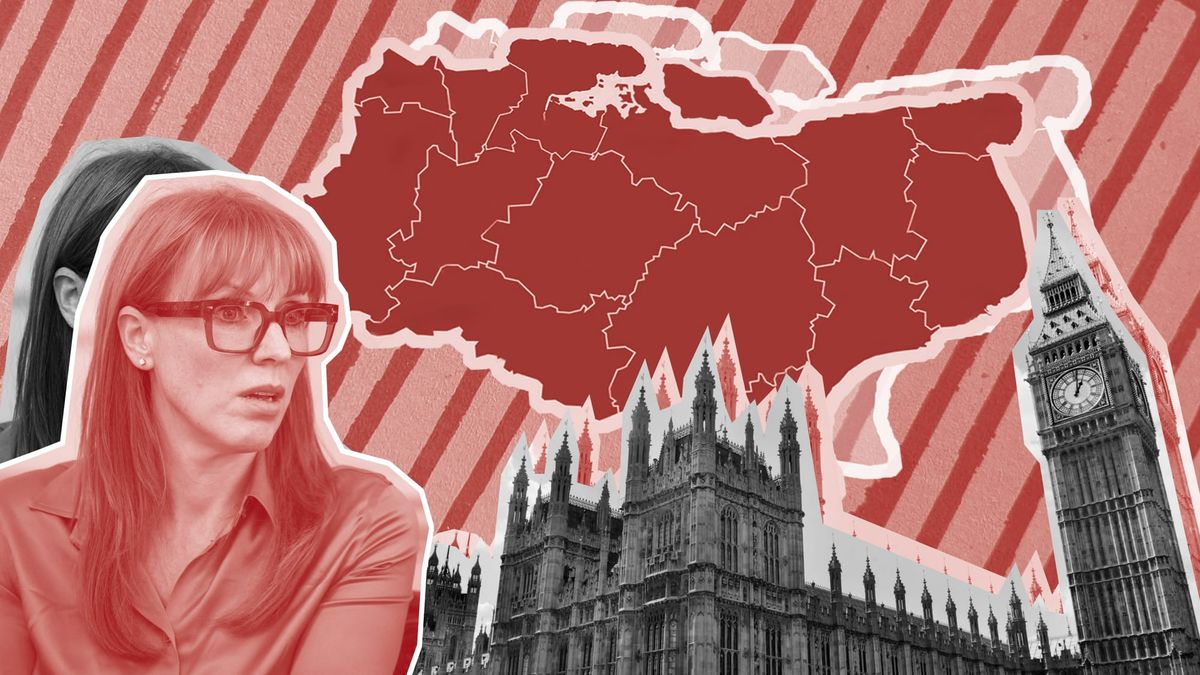
In September, communities secretary Angela Rayner announced a review of local government reorganisation following fresh legal advice. Decisions in four other areas were withdrawn altogether, while Kent and thirteen others were told to stop work on implementing their new structures.
The government insisted this was not a U-turn. Whatever terminology ministers prefer, it left Kent's councils having spent considerable time and money preparing for a future that might no longer happen.
KCC's legal challenge is the latest consequence of that uncertainty.