What happens to the Grand Burstin now?
The uncertain future of a Folkestone landmark, plus electoral hubris and an unexpected bug invasion

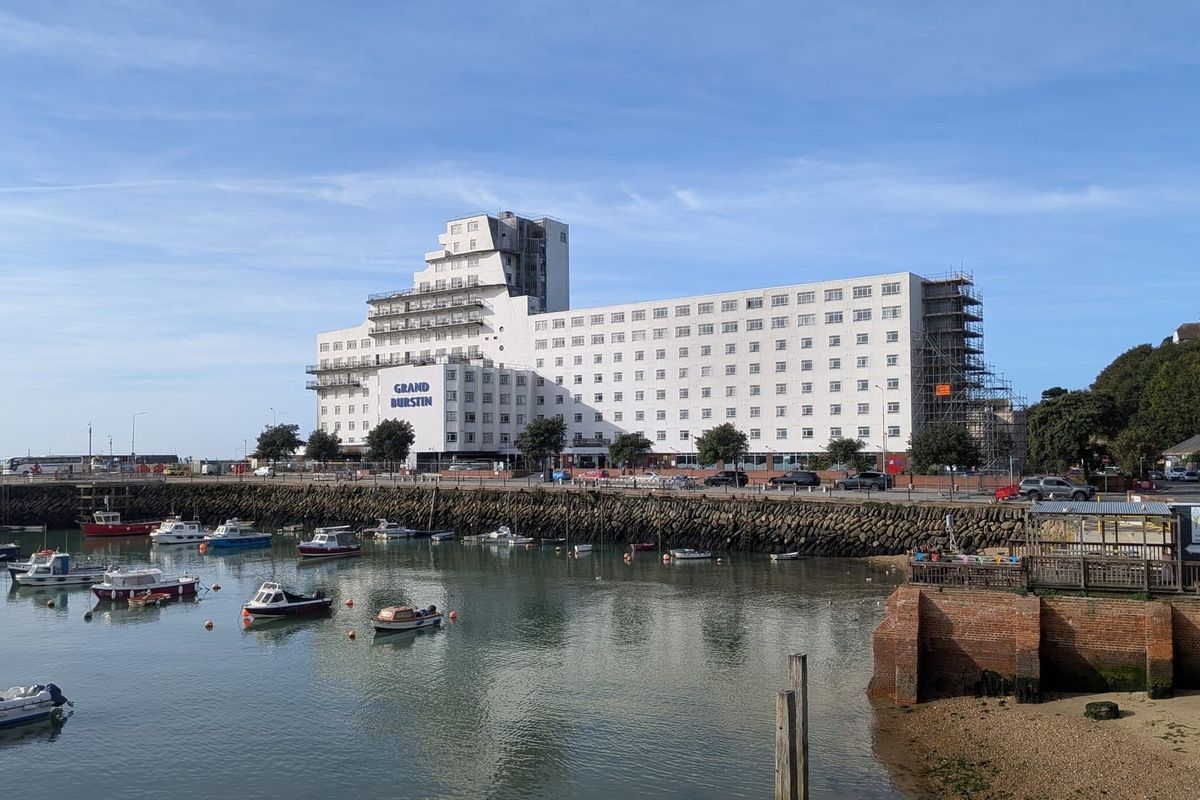
Five days after the Grand Burstin fire, engineers believe part of Folkestone's enormous harbour hotel could collapse, and 90 neighbouring flats remain evacuated. Nobody yet knows whether it can reopen. We look at what happens now, why the Burstin matters to Folkestone even if nobody would call it beautiful, plus an awkward Conservative by-election result and Maidstone's invasion of tiny bugs.
What happens to the Grand Burstin now?
For most of the past 50 years, the Grand Burstin has been one of those buildings Folkestone has simply had to accept as part of the skyline.
It dominates the harbour, looks vaguely like a cruise ship, and has survived while almost everything around it has been rebuilt, restored or reinvented.
Now structural engineers believe part of it could collapse.
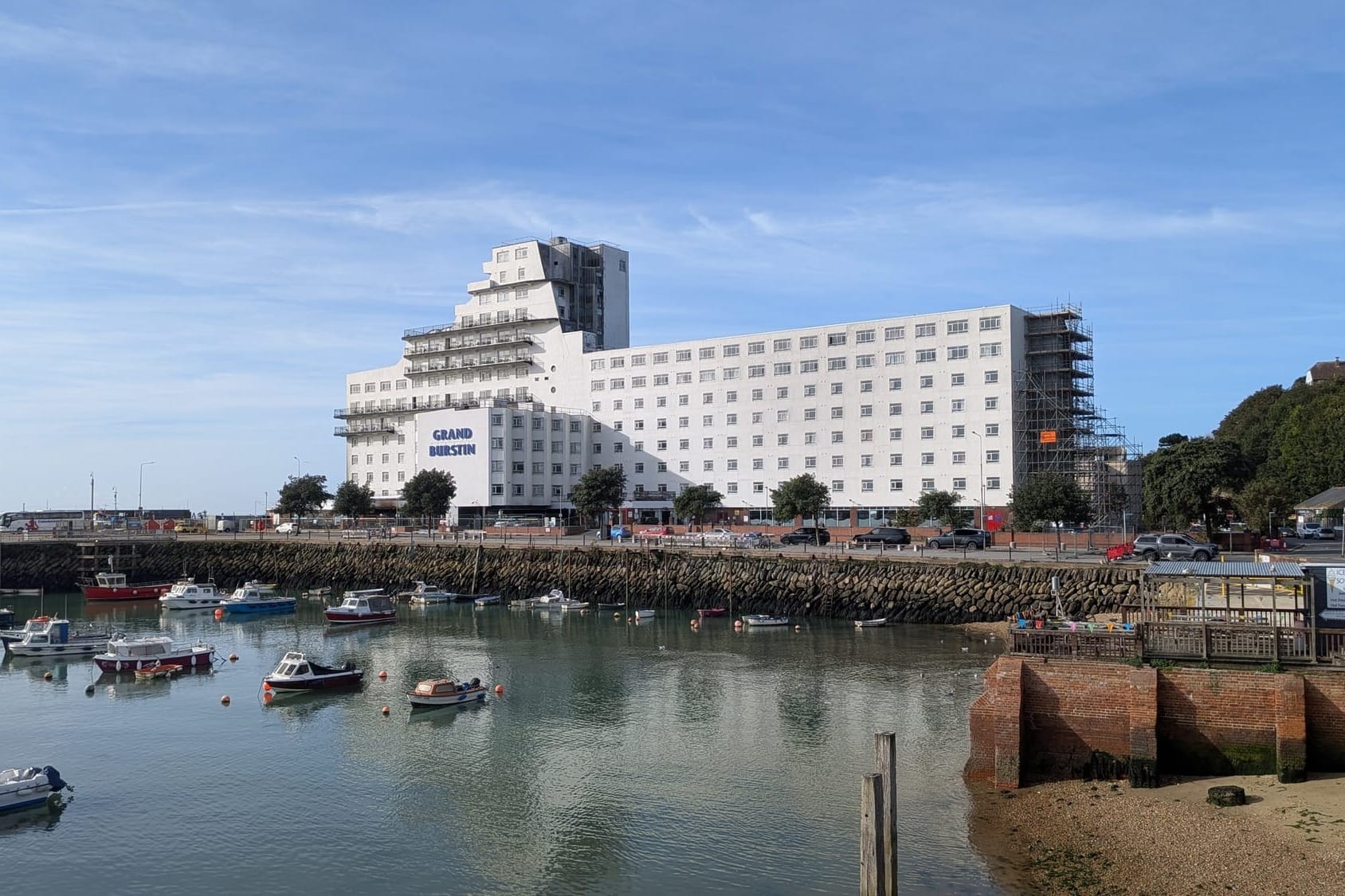
Five days after a major fire tore through the hotel’s basement car park, the Grand Burstin remains closed, people living next door are still unable to return home, and roads around the site are expected to stay shut into October while work is carried out to make the building safe.
Owner Britannia Hotels has given no indication of when it might reopen.
The immediate problem is serious enough without trying to predict what comes next.
At Folkestone and Hythe District Council’s Overview and Scrutiny Committee on Tuesday, council leader Jim Martin said structural specialists were continuing to investigate the hotel and had identified a possible collapse risk.
“At the moment, the structural engineers are saying that there is a risk of part of the building collapsing,” he told councillors.
That is why Pavilion Court, immediately alongside the hotel, has been cleared. Martin told the meeting that the council had temporarily evacuated all 90 flats, despite them being privately occupied rather than council housing.
An emergency prohibition notice prevents residents from entering while the structure is assessed. The council has said it is too early to know when people will be able to return.
“You can’t rush things when it comes to this sort of structural impairment of the building,” Martin said.
Around 280 people were evacuated from the Grand Burstin after the fire broke out in the early hours of Saturday. Remarkably, there were no fire-related injuries. Martin said the few people taken to hospital had largely suffered bumps and scrapes during the evacuation.
At the height of the incident, 26 fire engines and an aerial appliance were at the scene. Martin also praised staff at Three Hills Sports Park, the Salvation Army and Morrisons for helping look after people forced out in the middle of the night.
The fire appears to have been concentrated in the basement car park, where Martin said vehicles were likely involved.
“When a vehicle catches fire in a basement car park, the heat is very, very, very intense,” he said. “And it’s that intense heat that caused the damage.”
The slightly counterintuitive part is that, in Martin’s professional assessment as a chartered building surveyor, some of the hotel’s fire protection appears to have worked exactly as intended.
“The fire resistant material was fire resistant, and the compartmentation that’s required by building regulations held up,” he said.
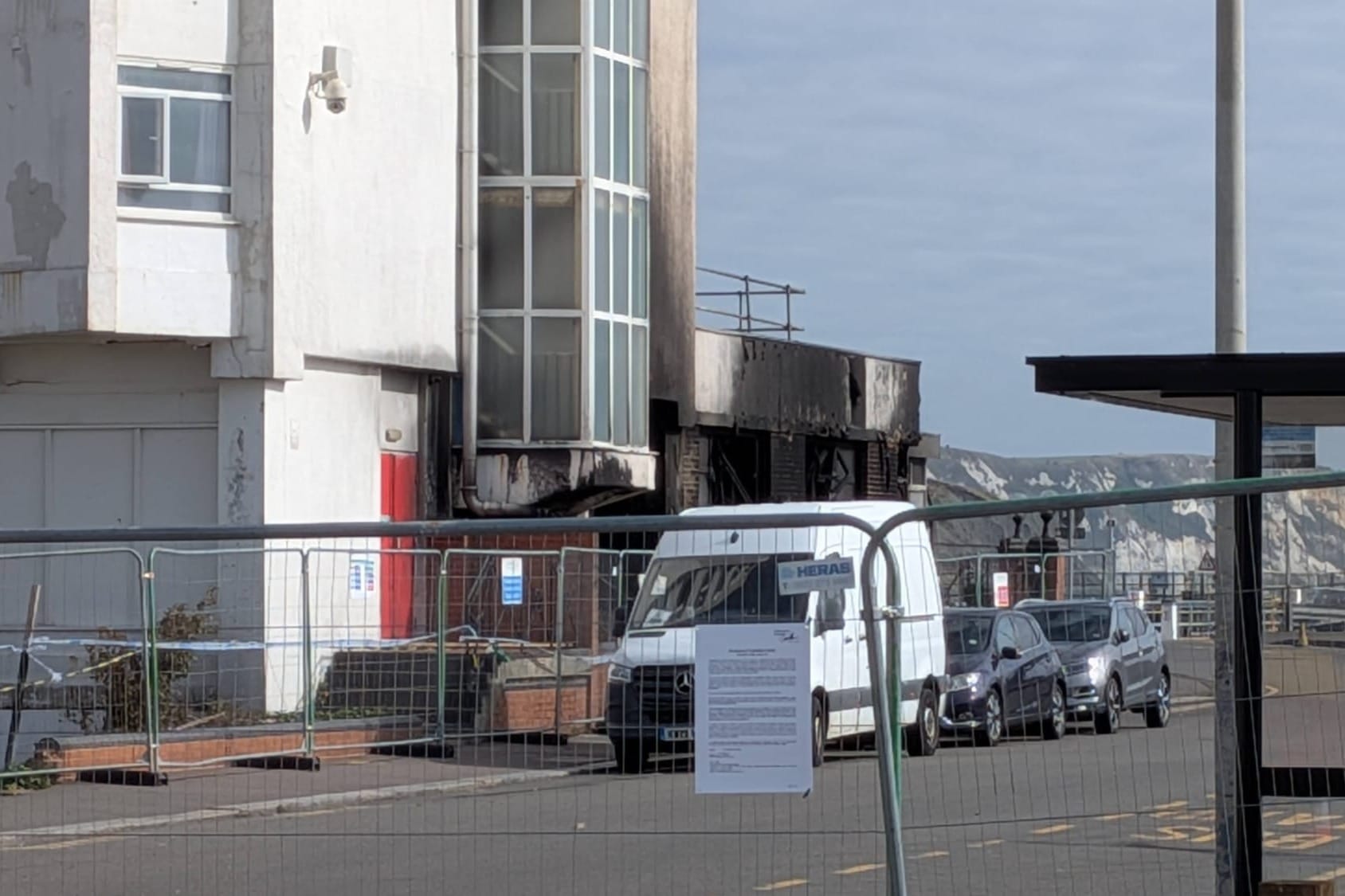
In other words, the fire appears to have been contained rather than spreading unchecked through the hotel, while still generating enough heat to leave part of the structure potentially unsafe.
That risk was underlined again yesterday when fire crews returned after smoke was seen coming from the building. Because of concerns about its structure, firefighters used a robot rather than sending crews into the affected area. The smoke was later believed to have come from smouldering laundry.
The safety operation is not expected to disappear quickly either.
Kent County Council has closed Harbour Approach Road and Marine Parade around the hotel while works are carried out “to make the hotel safe after the fire.” The temporary order currently runs until an estimated 11 October, with altered traffic arrangements and parking restrictions around the harbour.
So before anyone gets to what ultimately happens to the Grand Burstin, a more basic job is underway of making sure it is safe enough for everyone else around it.
The fire is also now a criminal investigation. Kent Police has said it is treating the cause as suspicious. A 38-year-old man and a 21-year-old woman from the local area were arrested on Sunday and have since been released while enquiries continue.
The wider impact is already being felt beyond the hotel and its immediate neighbours. Our friends at the Folkestone Dispatch have looked at what the closure could mean for businesses around the harbour, where traders are suddenly facing the loss of hundreds of hotel guests who would normally be passing through the area.
Brittania’s website currently says only that the hotel is “currently closed”, directs former guests to a dedicated contact for belongings left inside, and asks people with future bookings to contact them separately. No reopening date is offered.
If this were almost any other hotel, that might be where the story ended. Engineers assess the damage, insurers become involved, and everyone waits to find out when it can reopen.
The Burstin is rather harder for Folkestone to ignore.
The current hotel opened in 1975 on the site of the old Royal Pavilion Hotel and was later expanded. It has 550 rooms across 14 floors and was deliberately designed to resemble a cruise ship.
For decades, it has been one of the defining features of Folkestone’s harbour skyline, although defining should not necessarily be confused with beloved.
Its size and appearance have repeatedly surfaced in arguments about what should and should not be built around the seafront.
During consultation over the redevelopment of Folkestone Harbour, objectors warned against creating new buildings 'comparable in height to the unattractive and out of scale Grand Burstin hotel.'
More recent council planning documents have continued to describe the hotel as very different in scale and form from the rest of the town. Few buildings manage to become both a landmark and a planning cautionary tale.
That position has become more conspicuous as Folkestone has changed around it. The Harbour Arm has been restored and turned into one of the town’s main leisure destinations. The previously derelict waterfront has been opened up and developed. The seafront has become central to Folkestone’s attempt to reinvent itself as a cultural and visitor destination.
Through it all, the Burstin largely stayed as it was.
Before Saturday, Britannia was still advertising the hotel around live entertainment, bingo, late night discos and cheap rooms. The company describes it as one of its leading entertainment hotels.
Its recent history has also been eventful.
Britannia bought the hotel in 2004. In 2013, the company was fined £160,000 and ordered to pay more than £40,000 in costs after admitting health and safety offences connected with refurbishment work at the Burstin. The case followed the discovery of widespread asbestos after work began, with the Health and Safety Executive saying workers and guests were put at risk of exposure.
The hotel has also been used at points for emergency asylum accommodation, including temporary placements in 2014 and again in 2019. Those were short-term arrangements, not a long-term asylum hotel.
For now, nobody has announced that the Grand Burstin will be demolished. Nobody has said it cannot be repaired. Britannia has not said it is abandoning the hotel.
The only firm position is that the building is closed, engineers are still investigating, neighbours cannot return home, and work is expected to continue for weeks simply to make the site safe.
For more than 50 years, the Grand Burstin has been one of those parts of Folkestone that seemed destined simply to remain there, however much the town changed around it.
Five days after the fire, that is no longer something anyone can take for granted.
A lesson in hubris
Some campaign graphics age badly, and this is one the Tunbridge Wells Conservatives circulated ahead of yesterday’s by-election in Cranbrook, Sissinghurst and Frittenden.
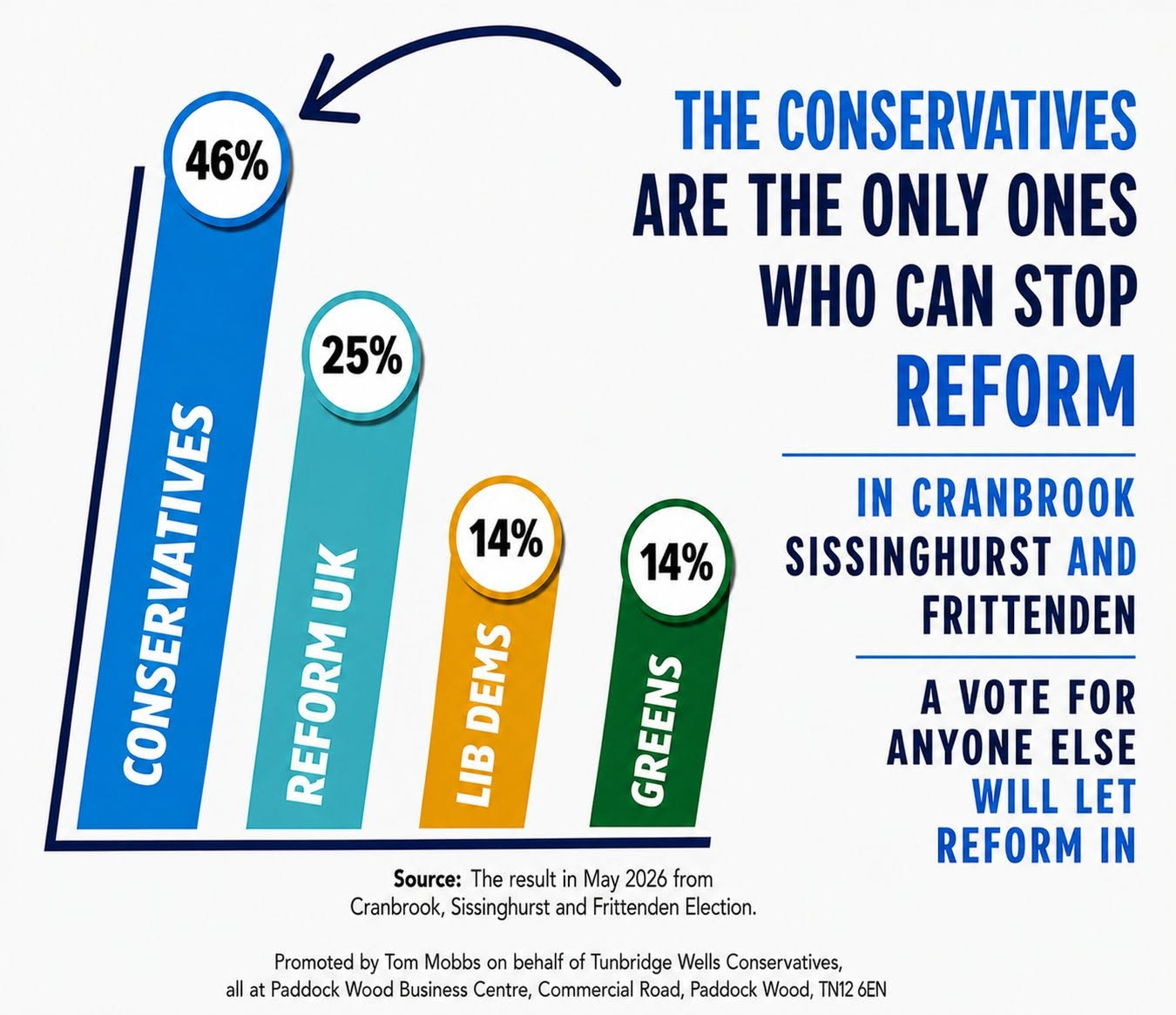
Using the result from May, it showed the Conservatives on 46%, Reform on 25%, and both the Liberal Democrats and Greens on 14%.
“The Conservatives are the only ones who can stop Reform,” it declared. “A vote for anyone else will let Reform in.”
Four months later, the Liberal Democrats won the seat.
Cranbrook, Sissinghurst and Frittenden by-election result
🔶 Harry Wormington (Liberal Democrat) - 697 - Elected
🌳 Nicolas Lees (Conservative) - 590
➡️ David Somers (Reform) - 392
🟢 Max Chesters (Green) - 186
So far, so embarrassing for whoever approved the graphic.
The result looks particularly striking because this was not obviously Liberal Democrat territory. At the ordinary borough elections in May, the Conservatives comfortably topped the ward, with Alexander Ellison taking 46% of the vote. Reform came second on 25%, while the Liberal Democrats were back on 14%.
The Conservatives used that result to make their tactical voting argument this time around.
Which did not work.
However, there are a few reasons not to read this as a simple collapse from 46% to 32%.
This was a by-election with substantially lower turnout than May’s borough elections. The seat being contested was also not actually Conservative-held.
The vacancy was created by the resignation of Nancy Warne, who represented the Tunbridge Wells Alliance. The Alliance did not field a candidate yesterday, perhaps a sign that the party that was once signifcant in borough politics has now had it. Instead, the ballot consisted of Conservative, Liberal Democrat, Reform and Green candidates.
That means a pool of voters who previously had a localist option suddenly had to go somewhere else. From the result alone, we cannot know how much of the Liberal Democrat gain came directly from former Conservative voters, how much came from Alliance supporters, or how much was simply the product of a different group of people turning out.
Still, the wider political direction in Tunbridge Wells is difficult to miss.
The borough was once the sort of place where Conservative control could largely be taken for granted. That has steadily unravelled. At May’s elections, the Liberal Democrats won 11 of the 14 seats being contested, while the Conservatives won two and Reform won none. The Lib Dems emerged with 25 of the council’s 39 seats.
Cranbrook, Sissinghurst and Frittenden had been among the places where the Conservatives still appeared relatively secure.
Another complication sat on the ballot paper. Reform candidate David Somers previously represented the ward as a Conservative councillor, before returning this time under a different banner.
That gave Reform a candidate with an existing profile in the area, while the Conservatives told voters only they could keep Reform out.
Instead, Reform finished third, with the Conservatives more than 100 votes behind the Lib Dems.
None of this means Cranbrook, Sissinghurst and Frittenden has suddenly become a safe Liberal Democrat ward. By-elections are strange things. But the Conservatives made this particular contest very easy to judge by one standard. They told voters that the May result proved only they could beat Reform.
In the end, the voters elected the Liberal Democrat instead.
Maidstone has a bug problem
Parts of Maidstone are currently being invaded by thousands of tiny bugs, and officials largely advise closing windows and getting the vacuum out.
Maidstone Borough Council has issued guidance after residents around Fant reported large numbers of false chinch bugs appearing around their homes.
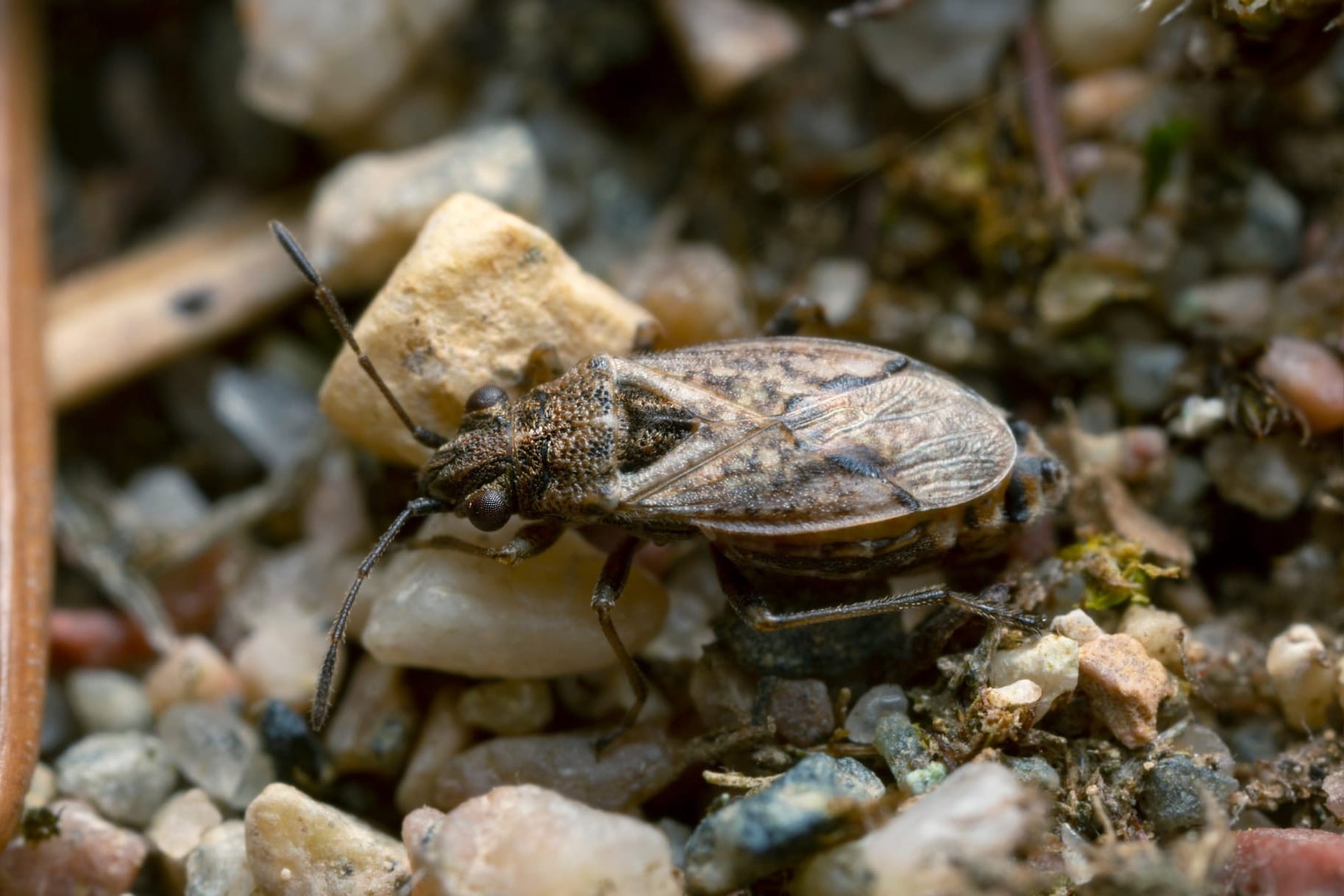
Reports have come from Chamberlain Avenue, Pitt Road, and Shelley Road, as well as other nearby streets.
False chinch bugs are small plant-feeding insects usually found outdoors among vegetation. Under the right conditions, their numbers can increase rapidly before they start moving when plants dry out, crops are harvested, or their normal food disappears.
After one of the hottest and driest summers on record, that appears to be roughly what has happened.
Maidstone isn't entirely alone either. Large numbers of Nysius bugs were reported in Somerset during August after nearby oilseed rape fields were harvested, while entomologists have recorded unusually high numbers of some members of the same species in Britain this year.
It's less clear exactly which Nysius has descended on Fant. Several species are difficult to tell apart without close examination, and the council doesn't seem overly concerned about carrying out a scientific identification.
Fortunately, they aren't considered dangerous. They don't bite people or pets, aren't known to spread disease and shouldn't cause structural damage to homes.
They are, however, bugs. And there are lots of them.
This is where the council's advice becomes admirably straightforward. It says no single organisation is responsible for dealing with the outbreak, there's no practical way to eradicate insects across such a wide area, and officers have no reason to inspect every affected property.
Instead, residents should keep doors and windows closed where possible, seal gaps, remove weeds from around buildings and vacuum up anything that gets inside.
The outbreak should eventually disappear as conditions change, with the insects unlikely to establish permanent colonies inside people's homes.
Until then, residents of Fant are essentially being asked to sit this one out with a Hoover.
Footnotes
Have a Kent story you think we might be interested in? Get in touch via hello(at)kentcurrent(dot)news - We’re always happy to talk off the record in the first instance…
Follow us elsewhere: Facebook, Instagram, BlueSky, and now WhatsApp for new story alerts.