“You get a lot more political power by persuading people than you do by crushing them”
What we asked Tim Aker, former Member of the European Parliament
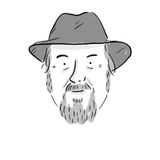
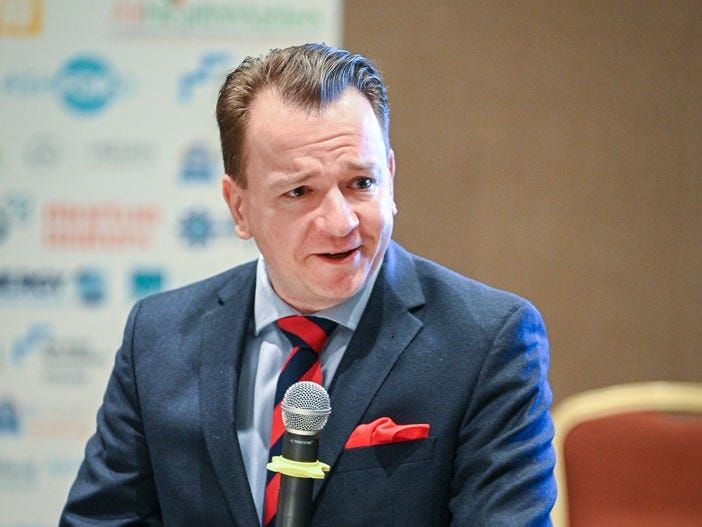
Tim Aker is the Development Manager for the Federation of Small Businesses in Kent and Medway. He did his doctoral thesis on Margaret Thatcher and was a UKIP Member of the European Parliament. Steven met Tim to talk about Thatcher’s Praetorian Guard, his journey from MEP to FSB, his book The First Brexiteer, and lots more.
How would you describe the Federation of Small Businesses?
It's a support organisation to encourage people into self-employment. To support small businesses through their journey and to provide essential backup if and when things go wrong. For instance, there's a 24/7 legal hub, there's free tax investigation support and cover, there's a HR hub, there's lots there, and it's very comprehensive to support small businesses as and when they need it, because, as you and your readers will appreciate, it's a tough journey. It's getting a lot tougher. But when done right, it can be one of the most rewarding things people can do.
And how did you end up there?
A very convoluted journey that starts by leaving the European Parliament via an Amazon warehouse and seeing a job advertised. I thought with my experience being a local authority councillor, with my public affairs experience in local government and European government and with the media, PR, and press requirements that come with this job that I've done on-the-job training over the years. I ticked all the boxes and I've been able to put a strategy and plan in place, and seeing that play out has increased the new joiners by 25% in the four years I've been doing it, which, in two recessions, if I may modestly say, ain't half bad.
How did you successfully negotiate periods of free parking in Medway?
I asked for them. This is the thing, right? Everybody believes public affairs can be very convoluted, but start with a start. Everything's in negotiation. You go high, they go low. Seeing the problems that retail had, particularly with covid, I spoke with the officers and said that the banks leaving the high street was the third or fourth domino down the line. And when people go to Hempstead Valley or go to Bluewater, they get free parking. You need that extra pull factor for the high street. Free parking incentivises that. We said that you need periods of free parking. If you want to stay all day, of course you should pay something. Particularly if you're going onto the train to go into London. You're not spending your pounds and shillings on Rochester High Street, for instance. We wanted periods of free parking, so that if people wanted to go do their banking, they can have a cup of tea at Store 104. They can buy a book there, can do more impulse purchases, and it's a pull factor on it. And we got it.
The problem is local government is told what to do by central government and given barely any resource to be able to do that and the sad reality was the period of free parking didn't last that long, but when it did, it really helped our members in Medway and we will keep banging the drum for this, but as I say to Vince (Maple, leader of Medway Council), I don't envy the task he's got. I actually think they should call it local administration rather than local government. Government implies a sense of control. What they've got is unfunded mandates and very, very little wiggle room. I know, for people who aren't so clued up on local government, they are told what they've got to do. If they don't do that, it doesn't matter whether they've got the money to do it, they've got to find the money to do it. Everything else comes second to that.
They have a priority list of things to do and very, very, very few resources to do it, and they've got the spectre of reorganisation over their head. Yeah, I really don't envy them their task. We have a lot of positive work with Medway Council, and the best thing that they did was sign our FSB pledge when they came in within their first 50 days, not even their first 100 days. It designated an officer, who is the point of contact for small businesses. You go to any local government website, I don't know who makes them, but please stop, they're unusable and unworkable. People just don't bother. They want to speak to someone with a name who can meet them, empathise with them, which a recording can't, which an AI automated chatbot can't yet. They want to either vent or talk through their problems. I've tried to export that revolution to other boroughs. It's been a challenge, but you've got to ask.
In a convoluted way, to answer your question, we asked.
Just picking up on what you said there about local administration rather than government, when you look at what the new KCC administration is saying, and their Department of Local Government Efficiency, do you think that they will be able to find areas for efficiency?
I wish them every success, but there is a problem between highlighting what has been spent and the judgment that one calls it waste and saving money on future spend because that money has already been spent. If they're seeing wasteful programmes that continue to be spent and aren't mandated by central government, because if a local authority is told what to do by central government, there is no wiggle room. Anyone who has experience of planning will emphasise, you don't want it built on that green bit, but it's in the plan, you've got no choice. If they can find delegated decisions that are wasteful and can cut them and save money for taxpayers, marvellous. But the best bit of advice I'd give them is to learn. It's a very difficult task. I spent a period of time at Thurrock Council learning, just taking everything in. They've been given a great task by the people of Kent, and in politics, you seldom get a second bite of the cherry. Take your time, there's no need to rush.
Who was Sir Neil Marten?
He was the first Brexiteer, I'm reliably told by this wonderful book that is on Amazon, in Waterstones and any reputable bookshop. Sir Neil Marten was the First Brexiteer, chairman of the No Campaign in the ‘75 referendum. He was the Conservative MP for Banbury, a member of the executive of the 1922 committee, which is the Conservatives' trade union for MPs. They're the ones who MPs go to if they've got a problem, and then they take it to the leader or the Prime Minister. It's a very important committee in the Conservative parliamentary party. He was a transformational politician because he introduced the notion of rebellion into parliamentary politics, which we take for granted today. If you look back at the first application to join Europe in 1961, only one Conservative MP voted against it. Only one. I think only five or seven MPs in total voted against. The defiance of the whip was very rare.
Neil Martin decided that the sovereignty of the country was too important to put party before country, and he corralled a group of Conservative MPs to rebel against the accession to the European Economic Community, as the EU was then known, in 1972. On 17 February 1972, 15 Conservative and Unionist MPs voted against a confidence measure which very nearly brought the Ted Heath government down. And they were only saved by Liberal votes. At the time, your readers and subscribers, particularly younger ones, will be shocked to hear that at that time the Labour Party were against Europe and the Conservatives were fully in favour. The Labour MPs were fervently against it, and some were so upset that the Liberal leader had saved Heath that they grabbed him by the lapels and dragged him over to the benches. An extraordinary scene, absolutely extraordinary scene. Labour pro-marketeers, as pro-Europeans were then known, were seen crying, their faces as they were being basically pushed through the lobbies to vote against it.
On the Conservative side, MPs were threatened with deselection, and you very nearly had UKIP 20 years before they formed. Several constituency associations threatened their MPs with deselection because, at the time, boundaries were changing, and Conservative associations could use a technicality as the boundaries were changing to reopen nominations for the next election. That happened to one MP, Ronald Bell. Marten and his colleagues decided to pre-empt all of this. Their associations weren't happy. They said, if you push us too far, we will cause a by-election. There were six Conservative MPs that threatened their associations one way or another to do it. One of them, Robin Turton, the Father of the House, elected during Baldwin's time. This is how far back it goes. He was Father of the House, not what you'd call a swivel-eyed headbanger. And on the 29th of February 1972, he goes to the front page of the Times and says, I will stand in the by-election against my own party on the provision that Labour step aside. Labour don't take him up on that offer. But imagine for a moment if they had, you've got the man whose family goes back generations in the constituency, been there 40 years, you would have had the Tories fighting each other openly. It would have been the Clacton by-election 40 years before the event.
Why did you decide that you needed to finish a book about him?
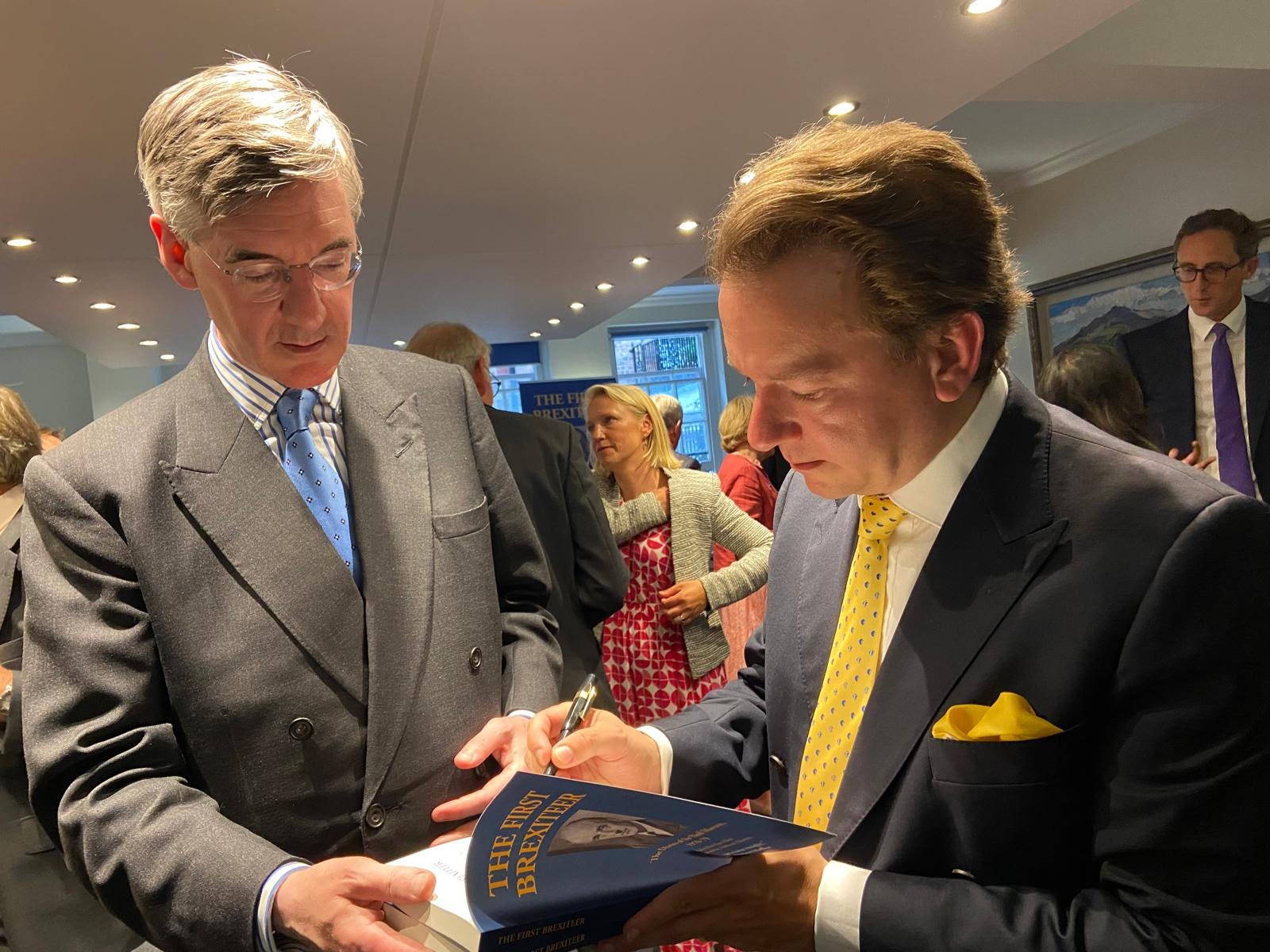
This is where, as a historian, you find things that you'd assume would never be there. My Master’s, I wrote a thesis on the rebellion. I have a personal interest in this, having been, for my sins, a Conservative and also being an MEP and with a fascination of history. This was interesting, and nobody had really written about it. There's a fascinating book called Conservative Dissidents by Lord Norton. Wonderful historian. It just glosses over this. You go through the archives, and I saw there was an archive, Neil Marten's papers were deposited at the Bodleian Library in 1986, a year after he died. I consulted the archives, and there's a lot here. I thought, let's turn it into an academic paper, get some peer review element in all this. I had the best peer reviewer of my exam, Dominic Sandbrook. I went to visit the son of Sir Neil Marten, who's the copyright holder, to talk about my research and get his permission. After lunch, he says, ‘You might be interested in these,’ and comes up with a stack of his father's diaries. When I picked myself up off the floor, I asked him, ‘Can I do this?’ Diaries for historians are the real primary source. He said yes. I did that alongside my doctoral studies and alongside my job. We had a successful launch. We had Lord Hannon, who gave the address, Sir Jacob Rees-Mogg was there, Lord Frost, Mark Francois. It's been great, and it's been nice to elevate the career and life of a man who deserves it and to see the respect that Neil Marten deserves and the pride that's given the family. It was wonderful, a real labour of love.
What political parties have you been a member of?
Oh goodness, Conservative Party and UKIP.
What age were you a member of the Conservatives?
Oh God, I was a dreadful Tory boy with the glasses and all sorts. I think I was about 15. I don't come from a political family. I had a very good history teacher at GCSE who encouraged me to read newspapers. Great education for anyone. I know they're all going online, but there's something great about holding a newspaper, because you keep a scrapbook. Don't hoard the whole things, but it helps with your education, your awareness around the world. I didn't like the idea of this Euro business. I remember at the time thinking, leaving Europe would be a bridge too far. Let's just keep things as it is. Let's conserve what we have. And it just escalated from there. The more I knew, the more I knew that I didn't know. It got to a point in 2009 where I saw UKIP and thought, particularly with my community and people I knew in Aveley, that something's changing.
I didn't get into politics to sit on the side. I left the Taxpayers’ Alliance to work for David Campbell Bannerman and thought, I can help and contribute to this, and all roads led to Brussels in one way or another and very nearly Westminster.
What is the Taxpayers’ Alliance?
The Taxpayer’s Alliance is a campaign group, a pressure group for lower taxes and better government.
Can you have better government if you don't pay more tax?
Oh absolutely. The economy is the billions of individual micro transactions, and anytime government intervenes, it has a plan for that snapshot that it has at that time. By the time it comes to act, those circumstances have changed, and government can't keep up with that. Now, of course, everything is a trade-off and a compromise, but I do believe that the more you can decentralise power and decision making, and that includes economic decision making, I genuinely believe the better off we will be.
Were you a candidate whilst in the Conservatives?
Very nearly, and not a lot of people know this. I did put in to become a Conservative candidate in Thurrock in 2006.
That would have been for a council?
Yeah. And looking back on the rings I ran around them and the sleepless nights I gave certain members of parliament who will remain nameless, wouldn't I have been in a much better position to have given me that council seat?
I was too outspoken. One important matter in politics is that all the parties need pastoral care, particularly for young people coming into it and particularly a mentoring system. It sounds paradoxical, but it isn't. To keep that radicalism and enthusiasm of youth alive, but also to temper it. And realise that now what you say and do lasts forever. It's a long game. You don't need to go in and make enemies from day one. Take people with you on the journey because you may have got in with 40% but there's nothing stopping you turning that 45 and 50 and so on, and you get a lot more political power by persuading people than you do by crushing them.
So your first official ballot was with UKIP?
In 2010. It was a local election. We had no idea what we were doing. This was in Thurrock. I'll never forget that I was out on my own, always on your own, soul destroying. Three knockbacks and you're out. You hear, “not interested,” “I'm not voting,” “I'm voting for one of the other parties,” your shoulders slump. I remember an avenue and seeing 40 Tories. I thought, I can't do this. But I did alright in the local. In 2011, I lost by only 98. Then I thought, no, I can't spend my life doing this. I went to live in London. Everyone should live in London for a bit just for the experience. Big city, enjoy that life. I got a job as the head of policy for UKIP and got myself on the list, and the rest is history. After that, five elections in five years. Please don't try that at home. Won three, lost two. Not a bad record. The last election I fought in 2018 was as an independent.
We’ll get to that, don't spoil it. When you say “won three”, were they for European Parliament?
Europe. I had a by-election in 2014. Then locals.
You were serving as an MEP and a councillor at the same time?
Yeah. Not advisable.
In 2016, we were one vote in one seat away from becoming the largest party in Thurrock. Talk about on the precipice. Having the largest party would give you rights to form a cabinet, and considering the opposition was Labour and the Conservatives, if they wanted to team up against us, they'd prove our point there and then. Something to keep an eye on for Wales next year.
All the good work we were doing on the ground was being completely destroyed by what was going on at the top of the party. We all switched to become Thurrock Independents because we thought the borough is too important, our residents are too important for this. I went in for one last hurrah. I wasn't going to, but I thought I owe it to my team.
You were still a UKIP MEP whilst you were Thurrock Independents councillor?
I designated as that because there were two different elections, and there was actually nothing in the rules. We'd actually had UKIP members stand as local independents in local government elections. There was nothing in the rules that I was aware of that prohibited me doing that. After the 2017 General Election, I was done with national politics. I was going in 2019. ‘What were they going to do? Kick me out?’ I was semi-detached in that regard, but still cared very passionately about my local community.
It was about Christmas time, 2017. Somebody phoned me up and David Van Day is standing against you for the Conservatives. I thought it was a joke. They these big campaign days, they billed them as ‘Get Aker’ campaign days. Goading me, and I got my highest vote that I'd ever got. It was fantastic. I had people that respected the work I'd done locally. People that said, ‘I couldn't have voted for you when you were at the other party, but I can now. I feel liberated by what you've done.’
It was, for me, the most fun campaign because it was local. We wanted to really turn the borough around. I'd taken all my councillors' allowance and put that back into the community. I set up a community bus service. In 2014, I stood in that by-election and all of them actually pledged to bring a bus service back to my ward. The negotiations with bus companies were just ridiculous. When a decision has been made and people not to have that open mind to even hear out the other side, it's very frustrating. I thought, let's use the allowance, it's not my money, it's the people's money. I set up a community bus service that ran from my ward to Romford Market every Friday. I did fish and chip nights to try and alleviate loneliness. I've got to tell you, that was the one that visibly moved me.
If you go into politics for any other reason than seeing the difference that you can make in people's lives, don't. Life is not an abstraction. It's flesh and bone and hopes and dreams and emotions and feelings.
Were you ever a member of the Brexit Party?
I helped them. I think I did join. Not for long because it didn't last long, did it? I did help Richard Tice for that General Election.
Have you considered becoming a member of Reform UK?
I've got a lot of good friends in Reform and like seeing them succeed, but for the immediate time being in my current role, I can’t.
Where were you born?
Essex.
What brought you to Kent?
New start.
What jobs did your parents do growing up?
My father was a mechanic. My mother had a very difficult job in mental health in the NHS.
Did you enjoy school?
I don't look back on it with any real emotion really. It was just a part of life.
What did you study in sixth form?
I loved my specialisms. My GCSEs were crap. I underperformed across the board. Anyone doing any GCSEs, it is not the end. Nothing is the end. A-levels allowed me to do English Language, Economics, Politics, History, Law and General Studies. As you know, I don't like free time.
What did you study at university?
I went to the University of Nottingham, History and Politics.
Then you did your MA?
The University of Buckingham, many years later.
Why did you decide to go back?
It was lockdown. A friend of mine had started his PhD in 2006 and then left it, went back into it. I was listening to all of this, and I was going to the archives, and I thought, well I'm quite inspired by this, and the penny dropped. I'd known Simon Hanford for a good few years. He'd spoken for me at public meetings in Thurrock. He's professor of history at the University of Buckingham. I made contact with him and he gave me great advice. He said read and a subject will, a thesis title will emerge, and the rest is history, literally.
You have a PhD?
I do, yeah.
What can you tell us about Margaret Thatcher's praetorian guard?
How long do you want us to do this one?
30 seconds.
Quite contrary to the received wisdom, Margaret Thatcher could have been ousted in 1981. The backbench committee were the barometer of opinion for the parliamentary party. They'd got rid of Heath, they felt empowered to get rid of a leader that was not steadying the ship or improving the polls. There was this group called the 92 Group, so named after 92 Cheyne Walk in Chelsea, where its founder lived and their first meetings were held. It evolved over time into a group, backbench group, that was supported by Margaret Thatcher. By organising the backbench committee elections, it put her supporters in key positions. In 1981, these became a proxy war, and the Thatcherites won. I don't think she would have survived to the Falklands because Roy Jenkins won an SDP by-election. The Tories had been losing by-elections. He won another one, just before the Falklands War. Economy was improving though, but their politicians, they look at polls as much as they look at economic data. She would have been in a very precarious position, and maybe with very few of her supporters on the backbench committees, with the Argentines invading the Falklands, maybe that would have precipitated, but she would have been in a far weaker position had the ‘92 not been there. That's the crux of it.
I’m interviewing Iain Dale about his book on Margaret Thatcher. What is a question I should ask him about Margaret Thatcher?
It's a great on-the-spot question.
He spoke at the Margaret Thatcher Centre Symposium, and he's got a Q&A that dispels some of the myths. I think to ask is ‘Why did she not promote more supporters to her cabinet?’
Of course, you can't really answer it because primary sources aren't there. She promoted people that obviously were not in tune with her line of thinking, but somehow managed to work with her. Peter Walker, being one of them. He managed Ted Heath's election campaign. He was also Energy Secretary during the miners' strike. Similarly, she fell out with the late Norman Tebbit. She almost had a revolving door of personnel people she trusted and didn't trust. The paradox is that she kept people. Peter Walker lasted the longest in her cabinet. She got completely hoodwinked by John Major.
What is the last book you read that you would recommend?
Well, obviously, The First Brexiteer. The problem in answering that question is a lot of it is focused upon very niche history to do with my PhD.
Any fiction?
My favourite fiction author is Dean Koontz. Odd Thomas, watch the film after the book. The film is true to the book, and when you read the book, you'll know why you watched the film after. But that was a very, it's a moving book, it's an exciting book. It is just absolutely breathtaking.
Who is the most famous person you are one degree of separation from?
(pause) Nigel Farage (laughs). I'd say he's pretty famous.
He gave me a chance. I'm grateful always to everyone that gave me a chance and an opportunity. This isn't a political point. It's one thing for people who never been on a ballot paper to mock. When they used to say to him, he's stood for parliament nine times and not won and mocking him for that, well, how many times have they done it? To see him succeed in Clacton was very moving because it was graft. Never give in and never give up.
What do you do to unwind?
I like watching films with the wife at the end of the day. That's nice. Going for meals. I love dining out, finding new restaurants, for the purposes of people reading this, I'm pointing, fervently and enthusiastically, to the Copper Rivet Distillery. It was glorious, and it pains me to use the past tense. It was Mayfair quality at Medway prices, three-course set lunch for £25. The food was delicious, absolutely first class, everything was sourced as locally as they could get it, and it was destroyed by the last budget. It's unforgivable what the government have done. I'm very upset. There's other great shoutouts, The New Delhi in Grays that was next to my old office. Wonderful food, flawless food. Yeah, finding new hidden gems out there. They don't have to be silver service, but good places that have good service that are small businesses, independents, that offer an experience. Because it's not just a plate of food. If you want to go and have a meal, that's now a very serious cost with how the economy is going. You want to go for that complete experience, good service, to be made to feel welcomed, looked after. Finding those gems is another thing I do.
Who has been the best Prime Minister of your lifetime?
Margaret Thatcher. There's the immense number of opportunities, excellent opportunities. You have the right to be able to own their own council homes, broadening ownership. People feel they have a stake in something if they own something. We're perhaps missing that now. It's a statistic that needs more extrapolation, particularly with the Local Plan that's gone on around here. The Greens took Bristol Central, and I saw a statistic that over half of the voters rent there. Ownership is important. If you believe in a system that's based on ownership, you need more people to own things.
When you look at the current economic and financial situation, what advice would you have for someone looking to launch a small business today?
Uncertainty is always there. You can only control things you can control. Taxes will go up as they go down, but good ideas are invaluable. What problem are you going to fix? Who are you going to help? They're the two things. Collaboration is important. Communication is vital. First impressions count. AI now means that content can be produced at remarkable speeds and rates, which makes the online community saturated. The online marketplace is going to become even more competitive. Business and leads are generated through person-to-person interactions, by communication and speaking in public. Get comfortable with it, because that's the key to your success. You've got to be able to diagnose a problem and tell people how you're going to solve that problem.
This interview has been lightly edited for length and clarity.