Happy birthday to us
One year of the Kent Current


A year ago last week, we sent the first edition of the Kent Current.
Usually, this would be our main Thursday newsletter. But with the Cliftonville by-election count taking place tomorrow, we've moved our regular edition to then to include the result. As such, this seemed like a good moment to do something slightly different.
At launch, I said we wanted to take county-level reporting seriously, make sense of County Hall, and stick with the stories that are easy to ignore because they are slow-moving, technical, uncomfortable, or simply not seen as worth much attention.
A year on, I think that promise has held up.

The Kent Current is still small. It is still, at heart, two people trying to cover a very large and often unruly county. But one of the most encouraging things about this first year has been discovering that there really is an appetite for serious county-wide reporting in Kent. Thousands of you now subscribe to receive this by email, and thousands more read our work on the web. For something that only launched a year ago, that feels significant.
More importantly, it suggests something we suspected from the start. There are plenty of readers in Kent who do want journalism that goes a bit deeper, joins the dots, and treats what happens here as worth understanding properly.
That has been the guiding idea behind the Kent Current from the start.
The year County Hall changed
A large part of our first year was shaped by Reform’s takeover of Kent County Council and everything that followed.
That story was never just about an election result. The interesting part came afterwards. How power was exercised, how the culture of County Hall began to shift, how scrutiny held up under pressure, and what happened when a council long used to operating one way suddenly found itself in a very different political moment.
We spent a lot of time there, in the chamber, in the documents, and in the follow-up questions needed to work out what was really going on.
That work produced some of the most important reporting we’ve done in our first year. We were the only outlet to report on five Reform councillors posing for photographs alongside a man draped in a neo-Nazi flag. We were there when a KCC meeting imploded, and opposition councillors walked out of the chamber. We stuck with the broader story of how Reform was reshaping County Hall long after the novelty of the election result had worn off.
 Ed Jennings
It also underlined something we have found repeatedly over the past year: Being there matters. More than once, at by-election counts and other local political moments, we have been the only press in the room. That is not me trying to make us sound heroic. It is simply a sign of how much of Kent now goes underreported unless someone makes the effort to show up.
That broader body of work also led to me being commissioned by The New World to write about what was happening in Kent. I mention that not as a trophy, but because it reinforced something important. What was happening at County Hall was not just local colour or internal council drama. It spoke to a wider political story, and the Kent Current was well placed to explain it because we had been there following it closely from the start.
That, really, is a big part of the case for this publication. Kent is often treated as somewhere people glance at when it produces a dramatic headline, then ignore again. But what happens here often tells you quite a lot, and it is worth covering seriously.
The stories that made the case
Some of the reporting I’m proudest of from our first year came from exactly that instinct.
The neo-Nazi photo story was one example. It was obviously in the public interest. It raised clear questions about judgment, vetting, and political culture. Yet no one else touched it. We did.
The County Hall walkout was another. Being in the room made a difference. It meant we could report what actually happened, capture the atmosphere, and publish the video rather than relying on the tidied-up version that tends to emerge afterwards.
Elsewhere, we spent a lot of time on stories that required persistence over speed. Our reporting on the water failures in Tunbridge Wells was not just about one outage. It became a wider story about resilience, accountability, and the gap between official reassurance and what residents were actually experiencing. We stayed with it because the story plainly was not over just because the first burst of attention had passed.
 Ed Jennings
The same applied in Swale, where a council meeting was suspended after intimidation from the public gallery. That was not just an odd or chaotic evening. It was about what happens when local democracy starts to feel less like debate and more like threat and performance.
And then there were the slower structural stories. Our deep dive into the long wait for international rail services to return to Kent was one of those. It would have been easy to do the quick version and move on. Instead, we wanted to explain why it had dragged on, what the obstacles actually were, and why it still mattered.
Those stories were very different, but they all came from the same place. Kent needs journalism that is prepared to go beyond the surface.
Not just politics
That said, I have never wanted the Kent Current to become a publication that only talks in the language of council papers and governance structures.
One of the pleasures of this first year has been showing more of Kent than that. The county is full of interesting people doing interesting things, and some of our interviews have been among my favourite things we’ve published.
 Steven Keevil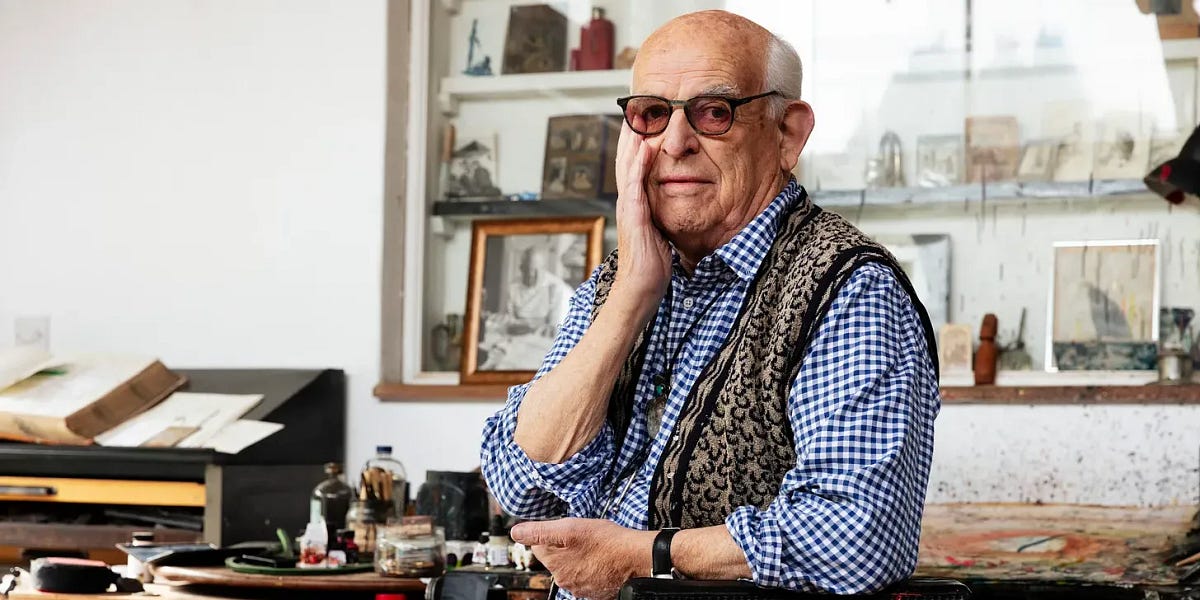
Over the past year, we’ve spoken to people like artist Ralph Steadman, comedian Harriet Kemsley, KCC leader Linden Kemkaran, writer and podcaster Dorian Lynskey, Police and Crime Commissioner Matthew Scott, and musician Lupen Crook. That range matters. Public life in Kent extends beyond elected office, and some of the most revealing conversations come from artists, writers, performers, and people whose connection to the county offers a different angle on the place.
 Steven Keevil
That broader mix has always mattered to me. Kent is shaped by politics, obviously, but also by culture, personality, ambition, oddness, creativity, and the people trying to make a life here. I want the Kent Current to keep reflecting that.
What readers don’t always see
The Kent Current is still, fundamentally, a very small operation.
A lot of what goes into it is not especially glamorous. It is reading the lengthy papers, sitting through meetings that may or may not produce anything useful, and chasing public bodies for answers to fairly basic questions. It is travelling across the county because being there still tells you things that remote reporting does not, having a sense that a story has not quite been answered yet, and sticking with it until it is.
The obvious limitation in all of this is resources.
We cannot cover everything, and pretending otherwise would be ridiculous. There are parts of Kent we would like to spend more time in. There are investigations we would like to push further. There are more stories from around the county we would like to tell.
With more resources, we could simply do more. That is the frustrating part, but it is also the opportunity.
The awkward but necessary bit
The encouraging news from year one is that the Kent Current has found an audience.
The harder truth is that audience and sustainability are not quite the same thing.
This kind of journalism only works if enough readers choose to support it. We do not fill the site with junk ads, autoplay videos, and all the other digital clutter that makes so much local news such a miserable experience. Our core reporting remains free. But the deeper reporting, the interviews, the long reads, the live coverage, the hours spent sticking with difficult stories, all of that depends on reader backing.
So this birthday post is partly a chance to look back, but it is also the moment for a fairly straightforward ask. If you value what we do and want to help us do more of it in year two, supporting the Kent Current is the best way to do that.
Back the Kent Current and get 25% off for a year
If you’ve been reading the Kent Current for free and have been meaning to support our work, this is a good moment to do it. To mark our first birthday, free subscribers can currently get 25% off an annual subscription.
And if you already do support our work financially, thank you. Quite a lot of what I’ve described above only happened because enough of you decided this was worth backing.
Where we want to go next
The core idea of the Kent Current is not changing.
We still want to make sense of County Hall and the surrounding structures. We still want to cover the stories that unfold over months rather than hours. We still want to show up in person where it matters. We still want to tell a wider range of Kent stories, from politics and public services to culture and the people who make this county what it is.
What I’d like to do next is more of it, and better.
More investigations, more time spent outside the obvious centres of power, more stories from a wider spread of Kent. More of the kind of journalism that only really works if you are prepared to spend time on it.
Whether we can do that depends largely on the resources available. That is not a particularly glamorous conclusion, but it is the honest one.
Still, one year in, I feel more convinced of the case for the Kent Current than I did when we launched it. Not because the need for it has somehow lessened, but because the past year has shown that readers across Kent do want this county to be covered properly. They want journalism that is clear, serious, fair, and prepared to stick with the story after everyone else has moved on.
That feels like a decent place to reach a first birthday.
Thank you for reading, sharing, replying, sending tips, forwarding editions to friends, and backing our work over this first year. It genuinely means a lot.
Here’s to year two.
Ed.
PS. Whether you pay or not, one of the best ways to help is still to tell someone about us. Forward an edition to a friend, colleague, family member, or even your enemies.