The road that fell off the map
Three years after Galley Hill collapsed, north Kent may finally have a route back

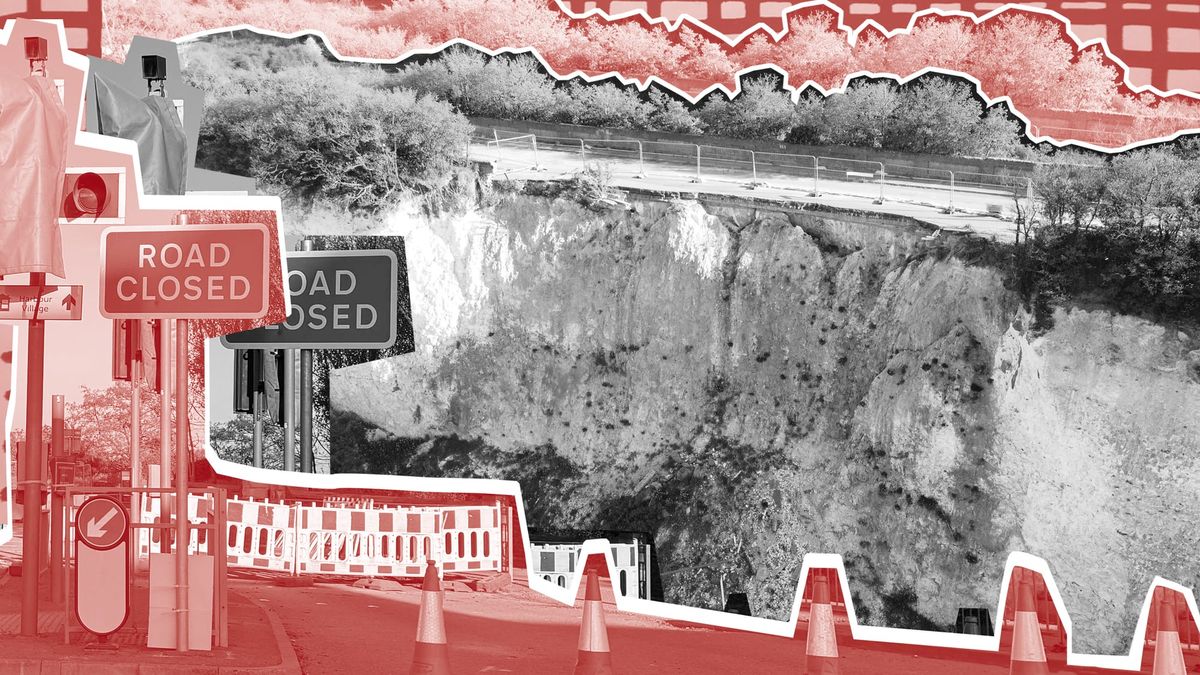
More than three years after Galley Hill Road in Swanscombe collapsed, Kent County Council has submitted a bid for government funding to restore the severed link between Dartford and Gravesend. We look at how the missing road has reshaped daily life in north Kent, why the repair still depends on national funding, and why KCC’s decision to submit a second Structures Fund bid has raised fresh political questions.
The road that fell off the map
For three years, a road in north Kent has simply not been there.
Not closed for a few days while someone digs a trench. Not temporarily narrowed while contractors fiddle around with cones. Gone. A piece of the A226 Galley Hill Road in Swanscombe, once one of the main connecting routes between Dartford and Gravesend, vanished from daily life after the chalk cliff beneath it gave way in April 2023.
The road did not just close. It fell off the map.
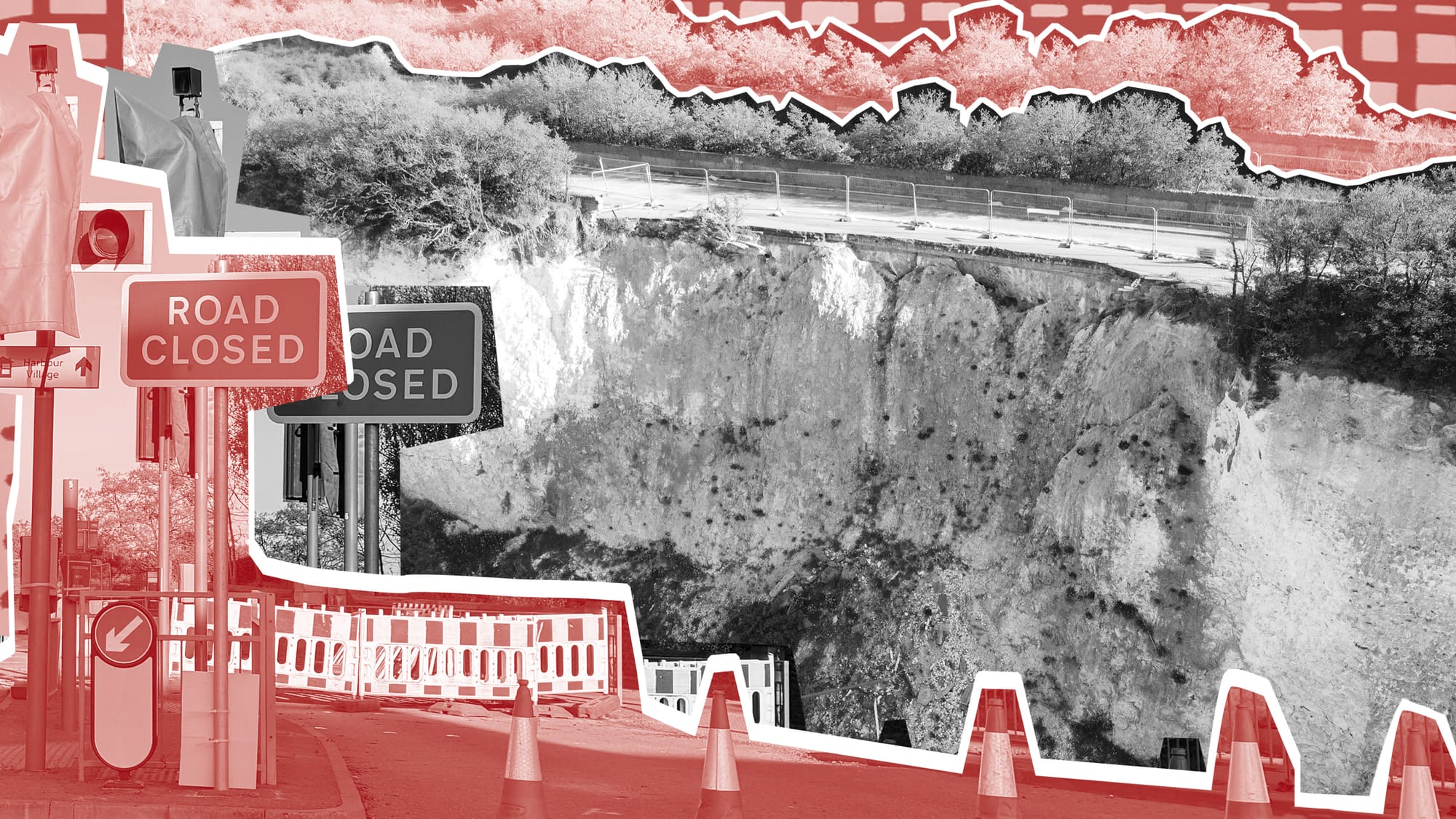
Since then, anyone moving between the two towns has had to learn a new geography. Traffic that once passed along the top of the cliff has been pushed through Swanscombe, Greenhithe and Ebbsfleet. Lorries have been sent along roads that were never built to take them. Bus routes have been repeatedly reorganised, with normal Fastrack services withdrawn from Swanscombe and Ingress Park until the road can reopen. Residents have grown accustomed to diversions, pinch points, and the low-level fury of journeys that were once straightforward.
A missing road is an odd thing. At first, it is a crisis. Then it becomes an inconvenience. Eventually, if nobody fixes it, it becomes a fact of life.
Now, more than three years after the collapse, there is finally a route that could lead to Galley Hill being reopened. Kent County Council has submitted a bid to the Government’s Structures Fund, asking for between £40.6m and £46.3m to reinstate the road and restore the severed link between Gravesend and Dartford.
It is the closest the area has come to a serious answer since the cliff fell away.
But even that answer comes with complications. KCC has not submitted a bid for Galley Hill alone. It has also asked for around £20m for work on the A299 between Whitstable and Ramsgate, taking the total submission to roughly £63m. To the council, these are two high-priority road schemes in need of government backing. To critics in north Kent, it raises a more uncomfortable question.
If Galley Hill is the priority, why is Kent asking ministers to choose between two?
The story of Galley Hill begins with a piece of cliff.
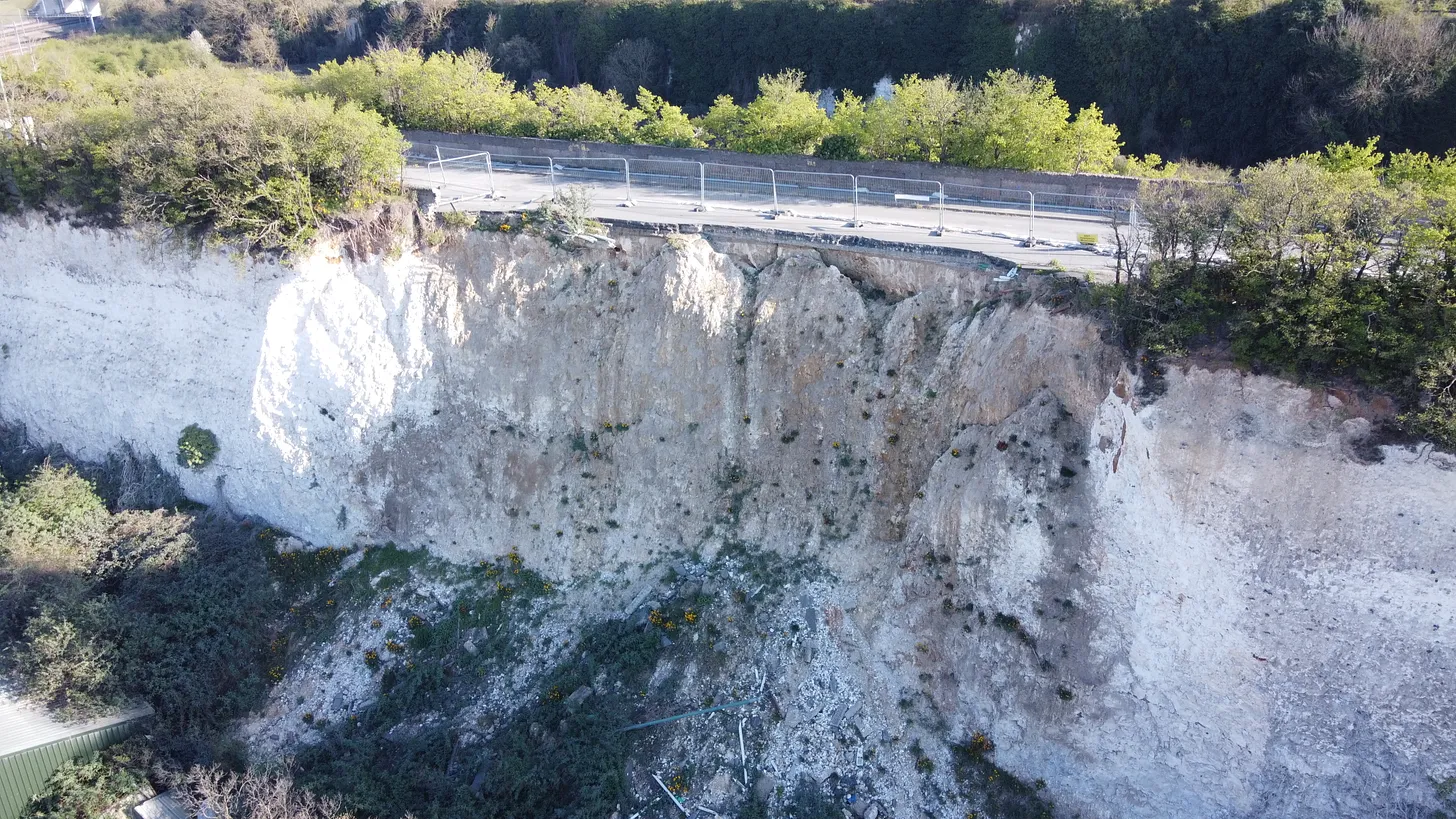
On 10 April 2023, the chalk face below the A226 collapsed, taking with it the stability of the road above. At the time, industry publication New Civil Engineer reported that a burst Thames Water main had triggered the landslip, though the water company said geotechnical investigations would determine the cause. Three years on, questions over legal liability remain unresolved.
The closure severed one of the most useful east-west links in this part of Kent. On paper, this might look like a local highway problem. In practice, it disrupted the everyday movements of a part of north Kent that does not behave neatly according to council boundaries.
Swanscombe and Ebbsfleet sit within Dartford borough, but they are closer in miles to Gravesend town centre than Dartford town centre. Residents travel that way for shops, work, school, family, and all the small reasons people cross invisible administrative lines without thinking about them. Galley Hill was the natural route for them to do this without subjecting themselves to the eight lane and often congested A2.
Cllr Jonathon Hawkes, Labour leader of the opposition on Dartford Borough Council and a councillor for Ebbsfleet, says that is part of what outsiders often miss.
“Sometimes people who aren’t close to it don’t realise,” he says. “It was the main connecting route essentially between Dartford and Gravesend.”
The traffic did not disappear when the road closed. It went somewhere else. Hawkes points to freight and ordinary car journeys now being pushed through “the quite small and narrow streets of Swanscombe” and across routes near Ebbsfleet that feed onto the A2. The result, he says, is not merely longer journeys, but a reshaping of local roads around a failure they were never meant to absorb.
“Those might seem a little bit like mild inconveniences,” he says, “but the effect, particularly in Swanscombe, of lorries that are going along roads that very plainly are not built for that level of traffic, the kind of build-up of parked cars and dangerous parking. It’s not just that the road has closed. It is the knock-on effect on the road network.”
That is the thing about a broken road. The damage spreads. The obvious failure is at the cliff edge, but the consequences appear in residential streets, bus timetables, junctions, school runs, delivery routes and morning commutes. Three years on, Galley Hill is no longer only a place where something happened. It is an absence around which daily life has had to reorganise.
KCC’s own announcement acknowledges some of that impact. Since the collapse, the council says communities and businesses in Swanscombe, Greenhithe and Ebbsfleet have seen increased traffic and a reduction in bus routes. Its bid to the Structures Fund is intended to “reinstate a major connection between Gravesend and Dartford” and restore what has been cut off.
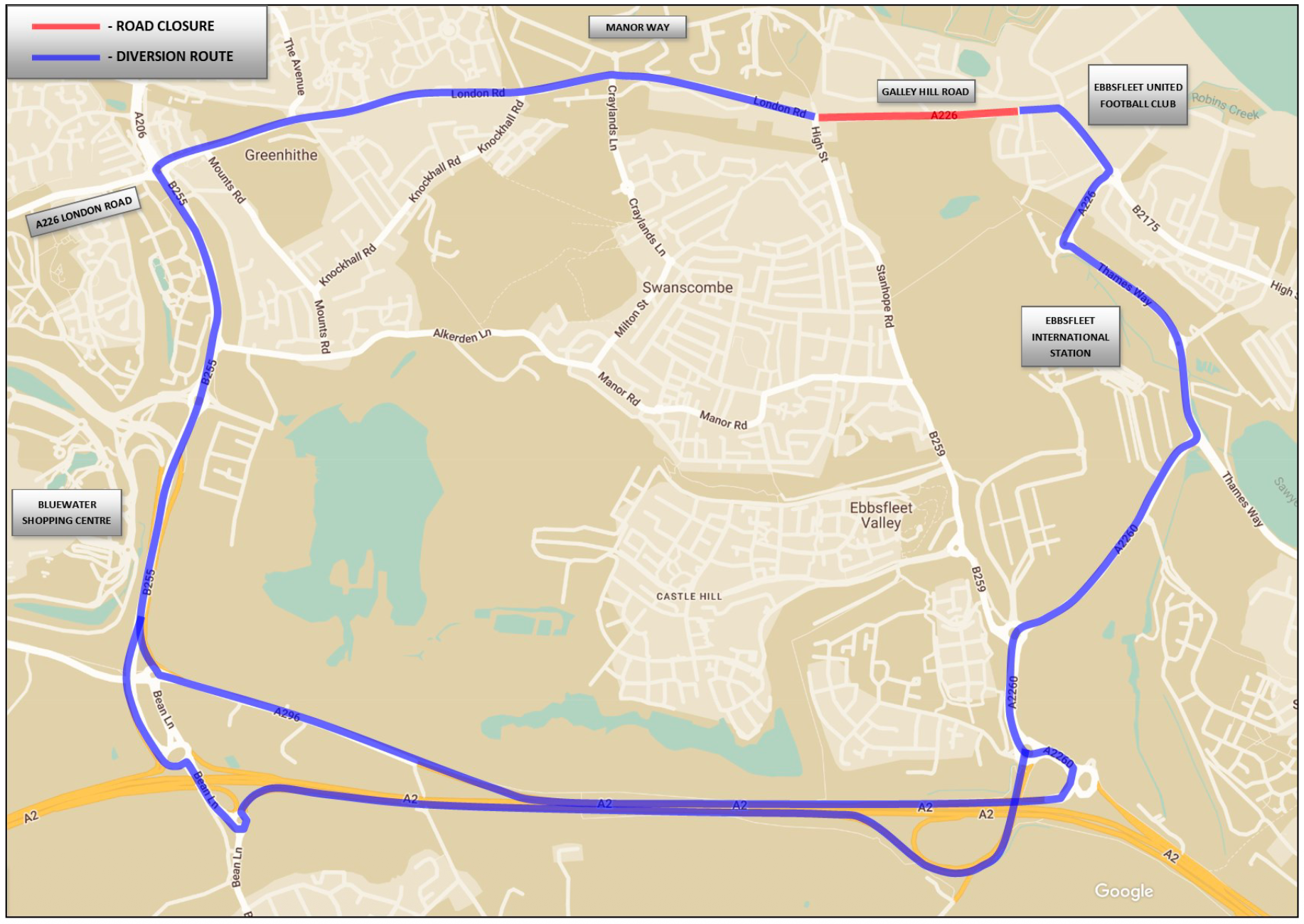
The disruption has rippled through the area’s transport network. Fastrack B no longer serves Swanscombe or Ingress Park, Fastrack AZ has also been diverted away from the area, and school bus routes have been altered. Officially, traffic is directed on a lengthy diversion via the A2, Southfleet Road, Ebbsfleet Gateway and Thames Way. In practice, many drivers simply cut through Swanscombe’s residential streets instead.
The scale of the ask shows the scale of the problem. This is not a case of resurfacing a carriageway and painting the lines back on. KCC is seeking between £40.6m and £46.3m for Galley Hill alone. The road cannot simply be patched. The cliff has to be dealt with. The route has to be made safe. The council has been saying since the collapse that national funding would be essential to deliver a permanent solution.
This is where the story becomes less about engineering and more about the strange machinery of government.
Galley Hill is a KCC road. Highways are KCC’s responsibility. But Dartford Borough Council represents many of the residents most directly affected. The government controls the kind of funding that might make a repair possible. Thames Water has faced questions about whether leaks may have contributed to the collapse, though liability is difficult to establish until work gets underway.
Everyone is involved. Nobody, at least for a long time, appeared able to solve it.
Hawkes is blunt about where he thinks responsibility lies for the delay. He blames the previous Conservative government and Conservative administration at KCC for what he describes as inertia after the collapse. KCC, he says, quickly worked out that it did not have the money to fix the road, but there was no joined-up response from the then Conservative government.
“Zero pounds committed to it for the time that they were in power and control,” he says.
He also argues that Dartford Borough Council, while technically correct that highways were not its statutory responsibility, failed to show political leadership. “They said, we’re not roads, we’re not highways, we’re not getting involved in this. Although that was correct from a statutory responsibilities point of view, it wasn’t correct from a political leadership point of view.”
This is one of those problems local government seems almost designed to make more confusing. Residents see a closed road and want it reopened. They do not necessarily care which tier of government owns the relevant budget line, which legal department is investigating liability, or which ministerial funding stream might one day become available. Nor should they have to care very much. The system is supposed to make those distinctions work. Instead, for three years, the practical answer has been a road closed sign.
The legal question still hangs over the collapse. Thames Water has been repeatedly mentioned in connection with the issue because of water leaks along that stretch of road, but Hawkes is careful not to overstate what has been proven.
“We don’t truly know,” he says. “We know that there’s been widespread water leaks along that stretch of road. We know that the cliff collapsed. It didn’t collapse on its own. So there is kind of some circumstantial things pointing there. But I am not aware that that legal case has been established yet.”
His view is that any organisation found liable should ultimately be held to account and asked to contribute to the cost of repairs. But he argues that the road cannot wait for the legal process to play out before work begins.
“If that’s what you’re waiting for, the road will be closed for a decade before you even make a start,” he says.
This is the bind. To know exactly what happened and who may be liable may require the kind of investigation that happens properly once work begins. But work cannot begin without money. And the money has to come from somewhere before anyone can know whether some of it might later be recovered.
That somewhere is now the Government’s Structures Fund.
The £1bn fund opened this year for major local road structures. For Galley Hill campaigners, it was the first moment since 2023 when the prospect of reopening the road moved from vague aspiration to possible funding route. The road had gone from a local problem without a budget to a scheme that could plausibly meet the criteria of a national fund.
Hawkes says Dartford MP Jim Dickson spent months lobbying ministers to open the Structures Fund and brought then roads minister Lilian Greenwood to see the site shortly after taking office.
When the fund finally opened, Hawkes expected urgency from KCC’s Reform administration. Instead, he was unimpressed by the initial response from Peter Osborne, KCC’s Cabinet Member for Highways and Transport, who said the council would “move quickly to submit a strong bid.”
For Hawkes, that phrasing was not enough.
“What I wanted to hear from Reform that day, or anyone charged with doing this, is, yes, right, we’re ready, we’ve got a bid ready to go, the fund’s open, we’ll be moving straight ahead with this. That’s not what we got.”
KCC did submit the bid. On 29 April, the council announced that it had asked the government for funding for Galley Hill and the A299. Osborne said the money would help fix “long-standing problems, prevent future closures and give local communities the confidence that these routes are safe and reliable for the long term.”
“We have made a strong case for the funding,” he said, “and I hope the government sees just how important this is for communities in Kent.”
The Kent Current is now on WhatsApp.
We’ve launched a WhatsApp channel for the Kent Current. We won’t flood it with posts, but we will use it to share new stories and occasional major updates from across the county.
If you’d like our journalism somewhere a little closer to your lock screen, you can follow along there.
The council’s submission puts Galley Hill first. It describes the A226 scheme as a project to reinstate the major connection severed by the cliff collapse. The A299 scheme is of a different nature. It would fund work on the Thanet Way between Whitstable and Ramsgate, including the refurbishment of two tunnels, repairs to four overbridges affected by ground movement, and reconstruction of sections of carriageway. KCC says the investment would help remove the current 50mph speed restriction and reduce the risk of future closures caused by ageing tunnel safety equipment and deteriorating structures.
Nobody is suggesting that the A299 does not need work. Kent has more than one crumbling road, which is not exactly a shock revelation to anyone who has travelled around the county recently. But in politics, as in transport, routes matter. Hawkes’ objection is not that the Thanet Way is irrelevant. It is that Galley Hill, a road that has completely disappeared from use, should have been the single, united priority.
“One of the ways you could do that is to make sure this is the only bid that Kent is submitting and that KCC is full square behind it and the whole of Kent is full square behind it,” he says. “I thought that was a bit of an open goal for Reform to take.”
Instead, he says, there are two bids. He describes that as “an own goal” and argues it can only dilute the strength of the Galley Hill case.
“You’re telling me on one hand that Galley Hill is the priority,” he says. “Well, there’s a very easy way to show that something is a priority, and that’s for every single Reform councillor to get behind it and to show a united front.”
His concern is that the existence of the A299 bid introduces an unnecessary risk. If Galley Hill is the priority, he argues, KCC should not have given ministers a second Kent scheme to consider from the same fund. In the worst case scenario, the government could fund the A299 and not Galley Hill. Hawkes does not think that is the likely outcome, but he says it would raise serious questions about how KCC approached the process.
“I’m still optimistic that it will get the funding that it needs,” he says. “It ticks all the boxes. If this bid isn’t designed for what the Structures Fund is intended for, I’m not sure what is.”
The politics here are sharper because Galley Hill is one of those rare issues on which everyone broadly agrees. Nobody is campaigning to leave the road shut forever. Nobody is arguing that Swanscombe should simply learn to enjoy the additional lorries. The disagreement is not over the destination, but the route.
That should make it easier. Somehow, it has not.
Hawkes says he only discovered KCC intended to submit a second Structures Fund bid when the council announced it publicly. He describes engagement from County Hall as “very little,” arguing the issue should have been approached collaboratively rather than as a party political dispute.
“Galley Hill is a really good example of something that shouldn’t be political,” he says. “It needn’t be political. There is nobody that is taking the position that we should just leave it and not do anything about it. We have a shared high-level object that we can all agree on.”
That phrase is unlikely to appear on a campaign leaflet. But it captures the oddity of the situation. The road is missing. Everyone wants it back. The fund exists. The bid has been submitted. Yet the political atmosphere around it remains brittle.
Keeping track of Kent properly takes time, travel and a fair amount of patience.
The Kent Current exists only because some readers choose to support it. An annual subscription costs £1.15 a week and helps keep it going.
There is also a bigger north Kent story sitting beneath all this.
Galley Hill is not in the middle of Ebbsfleet Garden City, but it sits close enough to make the comparison unavoidable. Here is one of the country’s major growth areas, a place that has spent years being discussed in the language of new homes, new communities, and long-term development. Beside it is a road that has been closed for more than three years because the cliff fell away, and nobody has yet found the money to put it back.
For Hawkes, the lesson is not only about one road. It is about the way infrastructure is planned, funded and delivered in the south east.
“There has not been the kind of public conversation that perhaps there needs to be, particularly in the south east and Kent, around what is necessary for this country,” he says. “We are going to need to build more, even more than we have. The infrastructure needs to go with it, and we need to find ways as a country to speed that up.”
He links this to the coming reorganisation of local government in Kent. Hawkes supports the 4D option, which would, with some boundary tweaks, create a North Kent council around Dartford, Gravesham, Medway and Swale. His argument is that a council drawn around the Thames Gateway and North Kent economic area would be better focused on growth and infrastructure than the current county structure.
This is not a digression as much as it might first appear. Galley Hill is a boundary problem as well as a road problem. It affects movements between Dartford and Gravesend. It sits near Ebbsfleet. Its closure spills into Swanscombe and Greenhithe. The borough boundary does not reflect how people actually use the area.
“Local government boundaries are not real people’s boundaries,” Hawkes says.
That may be the most useful sentence in the whole debate. The collapse of Galley Hill exposed how much of north Kent’s daily life depends on connections that are obvious to residents but awkwardly distributed across institutions. When the road was open, nobody had to think too hard about that. Once it disappeared, the cracks started showing.
For residents, the most frustrating part has been the pace. There has been work happening in the background. Options drawn up, while questions of funding, access, ownership of the cliff, the businesses below it, legal liability, and engineering solutions remain. None of that is simple or imaginary. But from the outside, it can look very much like nothing.
“If you went down to it now, you would probably not see many people or anything happening,” Hawkes says. “That’s not to say there’s nothing happening, but they’re not on site working.”
Even if ministers approve the funding, nobody is promising a quick reopening. No official reopening date has been published, and the project would still have to progress through detailed business cases, engineering design and construction before traffic could return.
The Kent Current asked Kent County Council additional questions about the project, but did not receive a response. Thames Water acknowledged our enquiries but did not provide a substantive response by publication.
For now, Galley Hill remains as it has been since the collapse. Fenced off, inaccessible, and oddly suspended between past and future. On one side is the road as people remember it, a useful connection between Gravesend and Dartford that did its job so well most people barely thought about it. On the other is the road as it might one day be again, rebuilt at great expense, reopened after years of disruption, and treated briefly as a triumph before slipping back into ordinary use.
That is what successful infrastructure does. It disappears into the background.
Galley Hill has done the opposite. By vanishing, it has made itself impossible to ignore. It has exposed the fragility of local roads, the limits of council budgets, the mess of overlapping responsibilities, and the way north Kent keeps being asked to grow around infrastructure that is already under strain.
The barriers are still there. The cliff still waits. For the first time since April 2023, though, there is at least a credible path towards removing them. Whether that path leads anywhere now rests with ministers.
The Structures Fund bid is not the end of the story. It is barely the start of the practical part. Final business case details are due to be submitted later this year. The government then has to decide what it is prepared to fund. If Galley Hill is successful, KCC will still have to move from bid to construction, through all the engineering and legal complexity that comes with rebuilding a road on a collapsed chalk cliff.
But for the first time in three years, there is at least a process that could lead somewhere.
After three years of diversions and delays, it is a fairly major shift. Residents who have watched the road remain closed since April 2023 finally have something more substantial than reassurance to show for it.
Whether residents have confidence in the process is another matter.
Footnotes
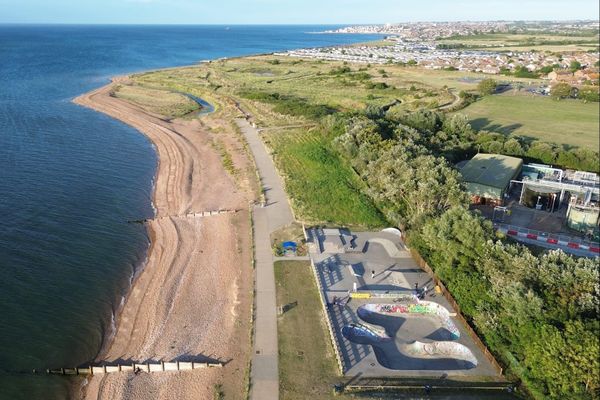
Thanks to James O'Malley for letting me steal one of his drone shots of the collapse at Galley Hill Road. He wrote an excellent piece on the situation on his Substack.
 James O’Malley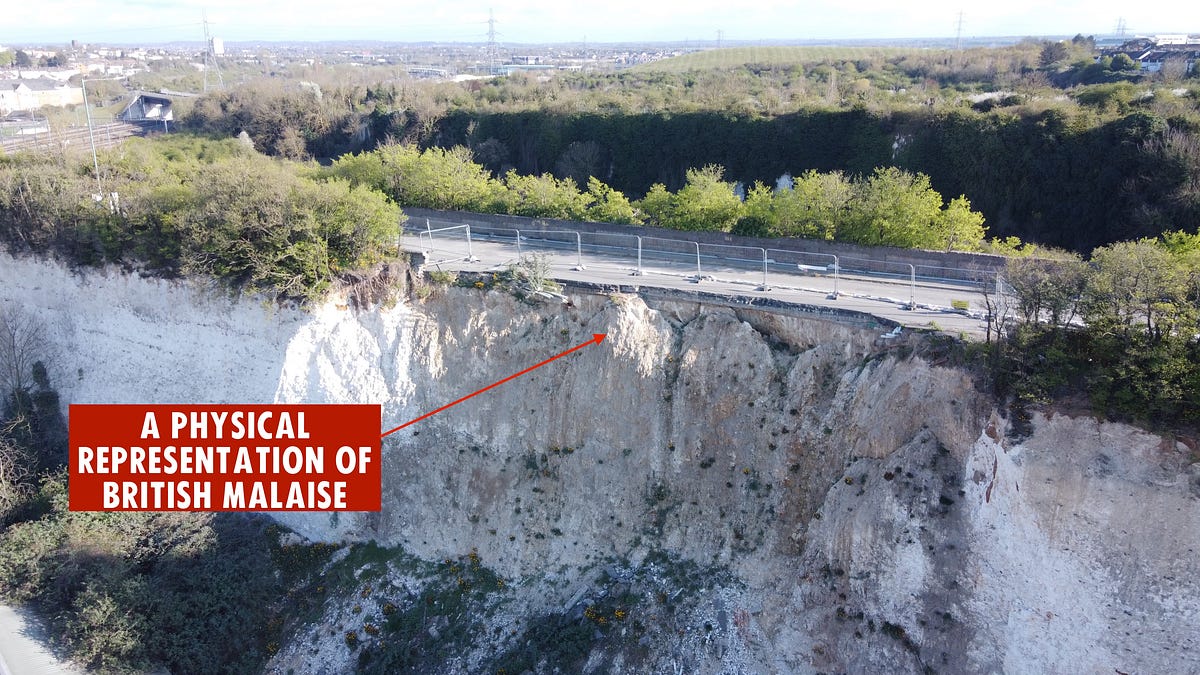
Follow us elsewhere: Facebook, Instagram, BlueSky, and now WhatsApp for new story alerts.