What has gone wrong at East Kent Hospitals?
A hospital trust in trouble, KCC chooses prayers over water, and a very good video about one very broken road

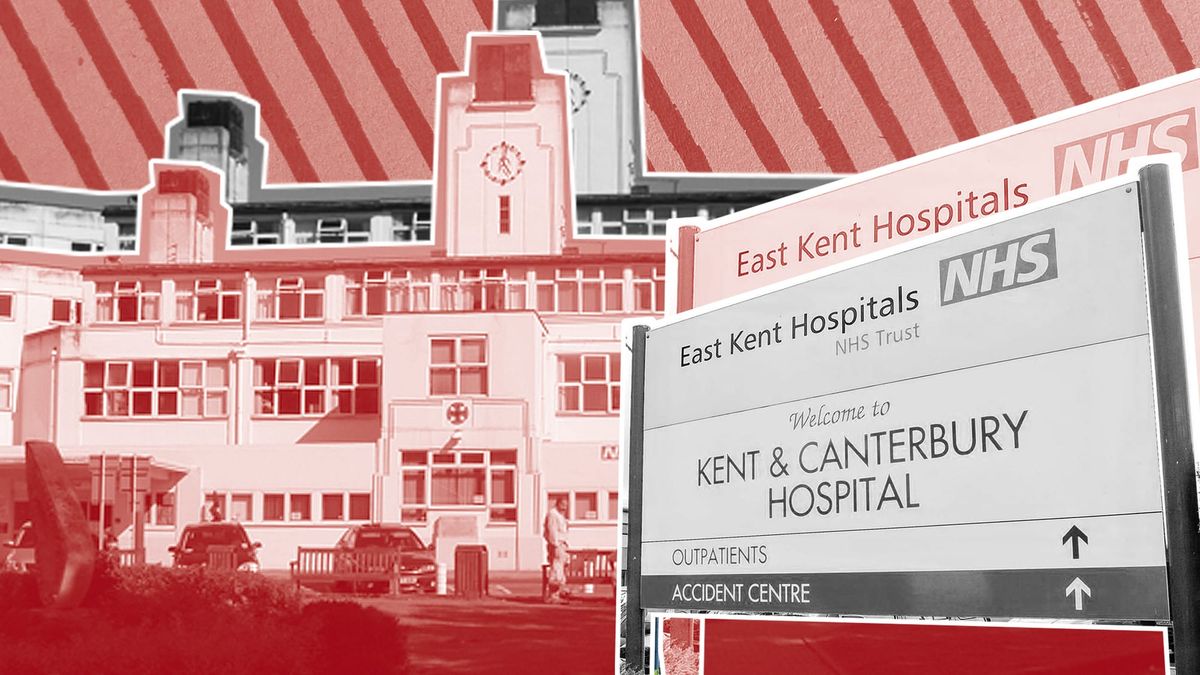
East Kent Hospitals is facing leadership turmoil, national intervention, and mounting pressure across its services after months of critical incidents, financial strain, and questions about transparency. We also look at KCC’s decision to introduce prayers and the national anthem while cutting opposition speaking time, and a sharp new video on the long-running Swanscombe Hole.
What has gone wrong at East Kent Hospitals?
There is rarely a quiet week at East Kent Hospitals.
In January, the Queen Elizabeth The Queen Mother Hospital in Margate was in a critical incident. In February, the William Harvey Hospital in Ashford declared one too. In March, the trust was named as one of five in England being placed into a new NHS Intensive Recovery programme for some of the worst-performing hospital organisations in the country. The same month, it admitted there had been an earlier opportunity to alert health protection officials during the Kent meningitis outbreak, in which two students died.
Then came the boardroom crisis.
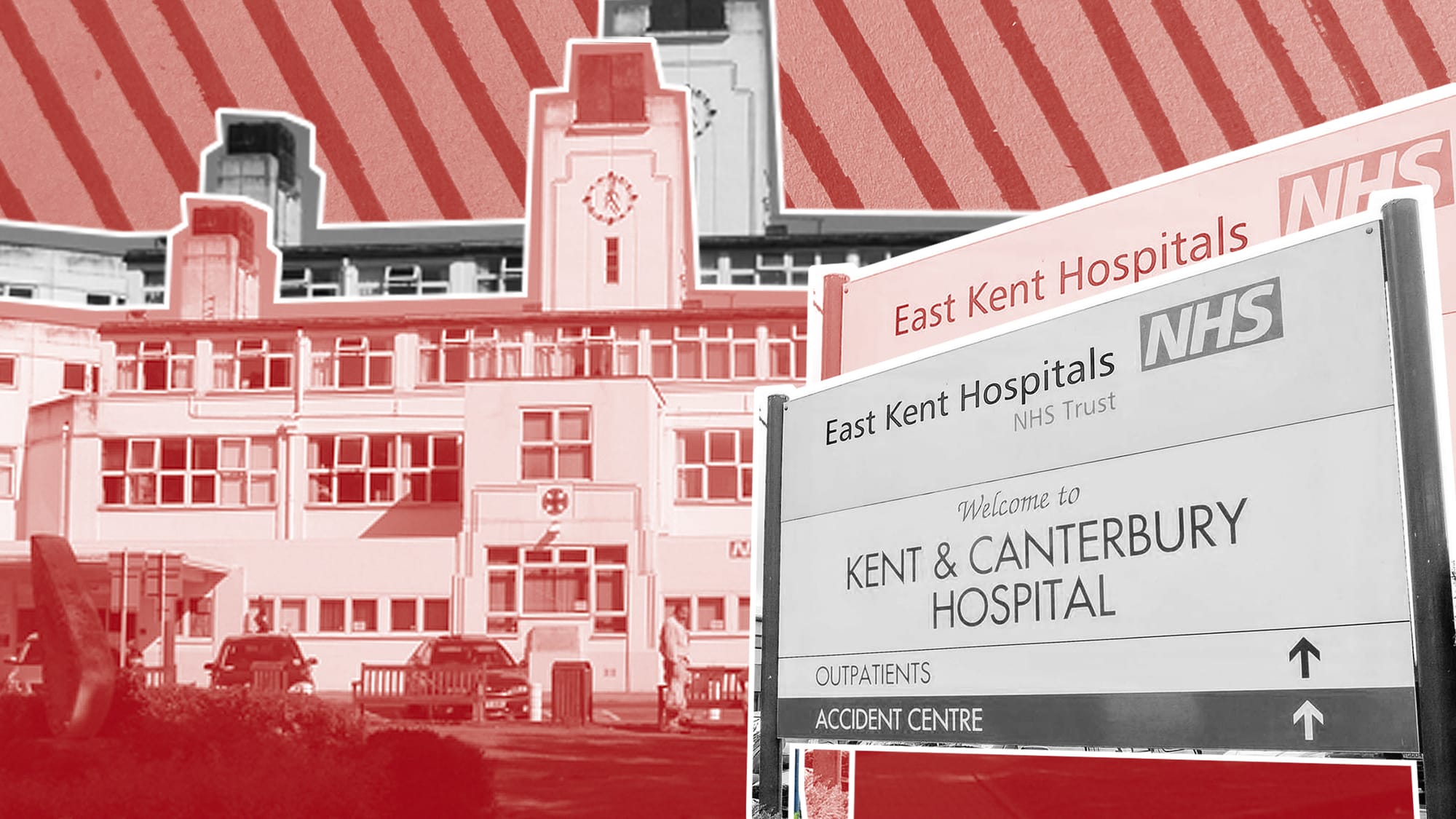
The chief executive had been absent for months. The trust said she was on 'unplanned leave.' Reporting later revealed she had, in fact, been formally suspended. A grievance followed, and the chair stepped down. Two non-executive directors left or gave notice. NHS England downgraded the trust’s capability rating over “significant concerns.” This week, the trust confirmed that Tracey Fletcher, its chief executive since 2022, is leaving altogether.
East Kent Hospitals University NHS Foundation Trust runs the Kent and Canterbury Hospital, the William Harvey Hospital in Ashford, the Queen Elizabeth The Queen Mother Hospital in Margate, and smaller hospitals in Dover and Folkestone. It serves around 700,000 people across a wide and awkward geography.
It is now a trust under pressure on almost every front.
The official announcement of Fletcher’s departure was short and careful. Fletcher said it had been “a privilege” to work in her local trust. Dr Olu Olasode, the trust’s interim chair, said East Kent Hospitals had made “significant progress” under her leadership, pointing to maternity services being upgraded from 'inadequate' to 'good' by the Care Quality Commission and investment in buildings, facilities and equipment.
Dr Des Holden, the trust’s chief medical officer, will continue as acting chief executive until a permanent appointment is made.
All of that is true as far as it goes. But it does not go very far.
The statement made no mention of the months of turmoil that preceded Fletcher’s departure, including her suspension, the grievance she raised over how it was handled, the chair who has since gone too, or NHS England’s decision to downgrade the trust’s provider capability rating to red.
Fletcher had been absent from her role since November. When KentOnline asked the trust in December why she was not at work, it was told she was taking a period of ''unplanned leave' and that her privacy should be respected.
It later emerged that she had been formally suspended. According to HSJ, Fletcher’s suspension followed a mid-year performance review with the then chair, Annette Doherty, during which she was allegedly told to accept a settlement package or face suspension. Three days later, she was suspended. Fletcher later raised a formal grievance over the process.
A draft report into that complaint, seen by HSJ, reportedly found Doherty had “exceeded her authority” and “badly handled” the situation. Separately, an independent review into concerns about Fletcher’s conduct reportedly found no evidence of misconduct.
Fletcher’s suspension was lifted, but she did not return to active duty. In April, Doherty stepped down as chair. Dr Olasode became interim chair with immediate effect.
The leadership turmoil might be less alarming if the rest of the organisation was steady.
It is not.
In March, East Kent Hospitals was placed into the new NHS Intensive Recovery programme. The programme is aimed at trusts facing long waits for care, persistent financial problems and frequent leadership churn. East Kent ranked 124th out of 134 in NHS league tables, according to the BBC.
Health Secretary (at the time) Wes Streeting said the trusts involved were not failing due to a lack of effort or hard work by staff, but because of structural constraints and financial imbalances. Polly Billington, the Labour MP for East Thanet, said the decision reflected “the scale of the challenge” and that patients needed to see real improvements in waiting times, safety and standards of care.
“For too long, services in East Kent have fallen short compared to other parts of the country,” she said.
That is the optimistic interpretation. The less comfortable version is that East Kent Hospitals has reached the point where it can no longer plausibly be left to turn itself around.
Patients have already seen what that pressure looks like.
In January, the trust said QEQM in Margate was in an internal critical incident, with “exceptionally high demand,” very long waits for non-life-threatening cases, and planned procedures and appointments under review. Five days later, the critical incident was stood down, but the hospital remained at “critical incident standby.”
In February, the William Harvey Hospital in Ashford declared its own internal critical incident. Beds across the trust’s hospitals were full. Emergency department attendance was extremely high. There was very limited capacity to admit additional patients needing urgent hospital care. The incident was stood down three days later, but the hospital was still described as “extremely busy.”
Critical incidents are not unique to East Kent. The NHS is under pressure everywhere. But two major hospitals in the same trust reaching that point within weeks suggests a system running with very little slack.
Then came the meningitis outbreak.
In March, an outbreak linked largely to Club Chemistry in Canterbury and University of Kent students led to 20 confirmed cases, where two students died. All patients in the outbreak required hospital admission. Nine were admitted to intensive care.
During that outbreak, East Kent Hospitals acknowledged there had been an earlier opportunity to notify the UK Health Security Agency. The agency said an earlier report could have meant its investigation began sooner, and antibiotics could have been provided earlier to close contacts.
Outbreaks are complicated, and not every delay is evidence of systemic failure. But for patients watching from outside, the episodes stack up.
This week, the BBC reported that the trust was inviting staff to resign under a Mutually Agreed Resignation Scheme. The trust said it needed to make “difficult decisions to significantly reduce costs,” while stressing that roles essential to safe staffing or critical service delivery would not be removed. Staffing costs account for £750m a year, around 65% of the trust’s annual spend.
David Shortt, the former vice-chair of the trust’s council of governors and founder of Concern for Health in East Kent, told the BBC the trust needed to “weed out the deadwood.” He said he believed the trust wanted to remove people who did not appear to have proper jobs, not clinical staff.
That is a harsh phrase. It is also a revealing one. Every large public organisation accumulates layers. Some are necessary, some may not be. But cutting costs in a hospital trust is not like trimming a household budget. Savings can look easy on a spreadsheet and become dangerous on a ward.
The trust is already in a difficult financial position. The BBC reported that bosses had previously said they were on track to deliver major savings but still expected a £88.5m deficit for the 2024/25 financial year.
The deeper problems are familiar by now. East Kent Hospitals still carries the legacy of its maternity scandal, though services at the William Harvey and QEQM were rated good by the Care Quality Commission in 2025. It runs five hospitals across a large area. Its buildings are ageing. It serves coastal communities with high levels of need. It faces recruitment challenges, care home closures, bed-blocking, and patients who are medically fit to leave hospital but have nowhere suitable to go.
None of those problems begin at the hospital door, but all of them end up there.
There is a temptation in stories like this to hunt for the person who broke the thing. That is too simple here.
East Kent Hospitals has at times had poor leadership. It has had serious failures. It has made decisions that deserve scrutiny. Describing a formal suspension as 'unplanned leave' while the chief executive of a major NHS trust was absent from work raises obvious questions about transparency.
But it would be foolish to pretend that a new chief executive alone can solve this.
Whoever takes over East Kent Hospitals will inherit a trust in national recovery, under financial pressure, with an ageing estate, a complicated hospital map, a battered public reputation, and staff who have already been asked to work through critical incidents, outbreak response, winter pressure and years of scrutiny.
They will also inherit a population that cannot shop around for an alternative hospital trust.
For much of east Kent, this is the NHS. These are the hospitals where people go when they are ill, frightened, in labour, in pain, or waiting for test results they do not want.
East Kent Hospitals now needs a permanent chief executive, a permanent chair, a credible financial plan, a serious answer to its estate problems, and proof that national intervention will produce more than another layer of meetings.
Above all, it needs patients in east Kent to believe that when the trust says things are improving, the words mean something.
County Hall starts with prayer and ends with less scrutiny
Kent County Council says its annual meeting marked the start of a new civic year and progress on Reform’s strategic priorities.
The meeting itself was more complicated than that.
Councillors spent much of Thursday arguing over the Lord’s Prayer, the national anthem, reduced speaking time for opposition leaders, the accuracy of the previous meeting’s minutes, blocked points of order, and whether a motion on Kent’s water infrastructure should be allowed to continue.
By the end of the meeting, KCC had a new chair, a new vice-chair, a formal commitment to begin future full council meetings with the Lord’s Prayer, a new requirement to end them with God Save the King, and less time for opposition leaders to respond to the leader of the council.
The meeting began with the election of Reform councillor Jeremy Eustace as chair of the council for the coming year. Restore broke with convention by nominating Conservative councillor Sarah Hudson as an alternative, but her nomination was defeated by 45 votes to 21. Eustace was then elected by 43 votes to 22, with four abstentions.
Reform councillor Dodger Sian was elected vice-chair without opposition. KCC later said he was the first person of British Asian heritage to hold the role.
Eustace used his first speech in the chair to promise fairness, dignity and proper debate. He said every member had a mandate from the people of Kent and deserved to be heard.
It did not take long for that to be tested.
The meeting almost immediately returned to the unfinished business of March’s full council, when opposition councillors walked out over a Reform motion on illegal migration, which they argued should not have been debated during the pre-election period.
This time, the minutes became the first battleground. Labour’s Alister Brady and Conservative Harry Rayner asked for the record to reflect why opposition councillors had left the chamber. Rayner also asked for the minutes to note that he had been cut off incorrectly at the previous meeting.
The new chair said the changes had to be put to a vote. Accuracy, at Kent County Council, now requires a vote.
Councillors voted 45 to 25 to include Brady’s change and 47 to 24 to include Rayner’s. Other councillors then pointed out errors in how their votes had been recorded, including members listed as voting both for and against the same amendment.
Then came the leader’s report, which Linden Kemkaran used to set out Reform’s version of its first year in charge.
She said the people of Kent had voted for change, accountability and a council that put residents first. She said her administration had reduced long-term debt from £732m to £590m, saving taxpayers more than £1.2m a year in interest payments.
She talked up KCC’s savings work, commercial strategy, balanced budget, pothole repairs, SEND support, adult social care grip, scrapping of the climate emergency declaration, plans for small nuclear reactors, opposition to large solar farms on agricultural land, a flytipping conference, and work to restore international rail services at Ashford and Ebbsfleet.
She said voters across the country had looked at Reform in Kent and “liked what they saw.” She also said they “liked the suck it up approach” that had become associated with Reform in Kent.
Opposition councillors pushed back on reserves, school transport, breakfast clubs, political assistants, food and fuel prices, governance, active travel and the teachers protesting outside County Hall.
Kemkaran’s reply was not gentle. She mocked the opposition walkout, attacked each opposition group in turn, and said Reform councillors had “got the popcorn ready” in case councillors walked out again.
Brady tried to raise a point of order. Green leader Mark Hood tried to raise another. The chair said he was not taking points of order during the leader’s speech and replies.
Alongside not accepting fairly usual points of order, Eustace reminded councillors to read the constitution’s rules on conduct and said he wanted to encourage civility “on both sides.”
The sharpest row came later, when councillors debated constitutional changes.
From July, full council meetings will begin with the Lord’s Prayer and end with the national anthem.
A Liberal Democrat amendment to replace the prayer with 30 seconds of quiet reflection was defeated. Kemkaran opposed it, saying she wanted the Lord’s Prayer to “take up that space of quiet reflection.” She described it as a “shared spiritual template” and said Britain was a Christian country.
A Restore amendment to hold the prayer and anthem outside the formal meeting was also defeated.
The debate split in unusual ways. Reform councillors strongly supported the changes. Conservative Bill Barrett, an atheist, said he had not been elected to say prayers in the chamber. Green councillor Rob Yates called the proposal “a ridiculous farce” and said he was “not paid £16,885 from taxpayers to sing songs or pray.”
Restore councillor Oliver Bradshaw, a practising Anglican, said the Lord’s Prayer was deeply important to him but warned Reform not to turn his religion into “political theatre.”
That may have been the quiet centre of the debate. The issue was not only whether councillors should pray. It was what the prayer was being made to do.
The council voted 48 to 15 to introduce the Lord’s Prayer, with six abstentions. It voted 46 to 16 to introduce the national anthem, with seven abstentions.
Councillors also voted to cut the total time given to opposition group leaders to respond to the leader’s report. Liberal Democrat leader Antony Hook’s response will fall from six minutes to five. Other opposition leaders will also lose a minute each. Kemkaran’s ten minute leader’s report and six-minute right of reply remain unchanged.
Reform argued that this restored overall opposition speaking time to its level before more political groups were formed. Opposition councillors described it as a cut to scrutiny.
The vote passed by 44 to 25.
KCC’s official press release later described the package only as “changes to the Council’s constitution, ensuring the organisation remains fit for the future.”
That is one way to describe prayers, anthems and reduced opposition speaking time.
The final procedural row came when Green councillor Stuart Heaver began proposing a motion on Kent’s water infrastructure. He warned that the county was “sleepwalking into a water catastrophe,” citing water outages, sewage discharges, pressure from housebuilding and climate change.
Before the motion could be debated, Eustace deferred it to July, saying he needed written advice from the monitoring officer on whether it was procedurally valid.
KCC’s annual meeting began with a new chair promising dignity and proper debate. It ended with councillors having voted for prayer, anthem singing and shorter opposition responses, while a motion on Kent’s water infrastructure was pushed back to July.
For a council facing pressure on SEND, adult social care, highways, local government reorganisation and water resilience, it was a revealing choice of what had to be dealt with immediately, and what could wait.
Keeping track of Kent properly takes time, travel and a fair amount of patience. Kent Current only exists because some readers choose to support that work. An annual subscription costs £1.15 a week and helps keep it going.
A very good video about a very broken road
Finally, a recommendation. Martin Robbins has made a video about the Swanscombe Hole, which is exactly the kind of Kent weirdness that deserves 15 minutes of slow, cynical attention.
Robbins is something like a baroque Tom Scott, if Tom Scott had decided that the real joy of British infrastructure lay not in explaining it neatly, but in standing in a field and quietly picking apart every absurd thing that led to it. His videos are almost anti-YouTube: slow, analytical, funny in a dryly bruised way, and entirely uninterested in pretending Britain is a well-functioning country. His recent output has covered potholes, bat tunnels, and odd HS2 decisions that make you stare into the middle distance for a while.
This time, his subject is the Swanscombe Hole, more boringly known as Galley Hill Road, which collapsed three years ago and no one seems to do anything about.. The video also features James O’Malley, Robbins’ YIMBY Pod co-host, who Current readers may recognise from his previous writing for us.
It is an excellent match of subject and presenter: a strange hole in Kent, explained by a man with the exact level of exasperation required.
Footnotes
Follow us on social media! We’re on Facebook, BlueSky, and Instagram for now.